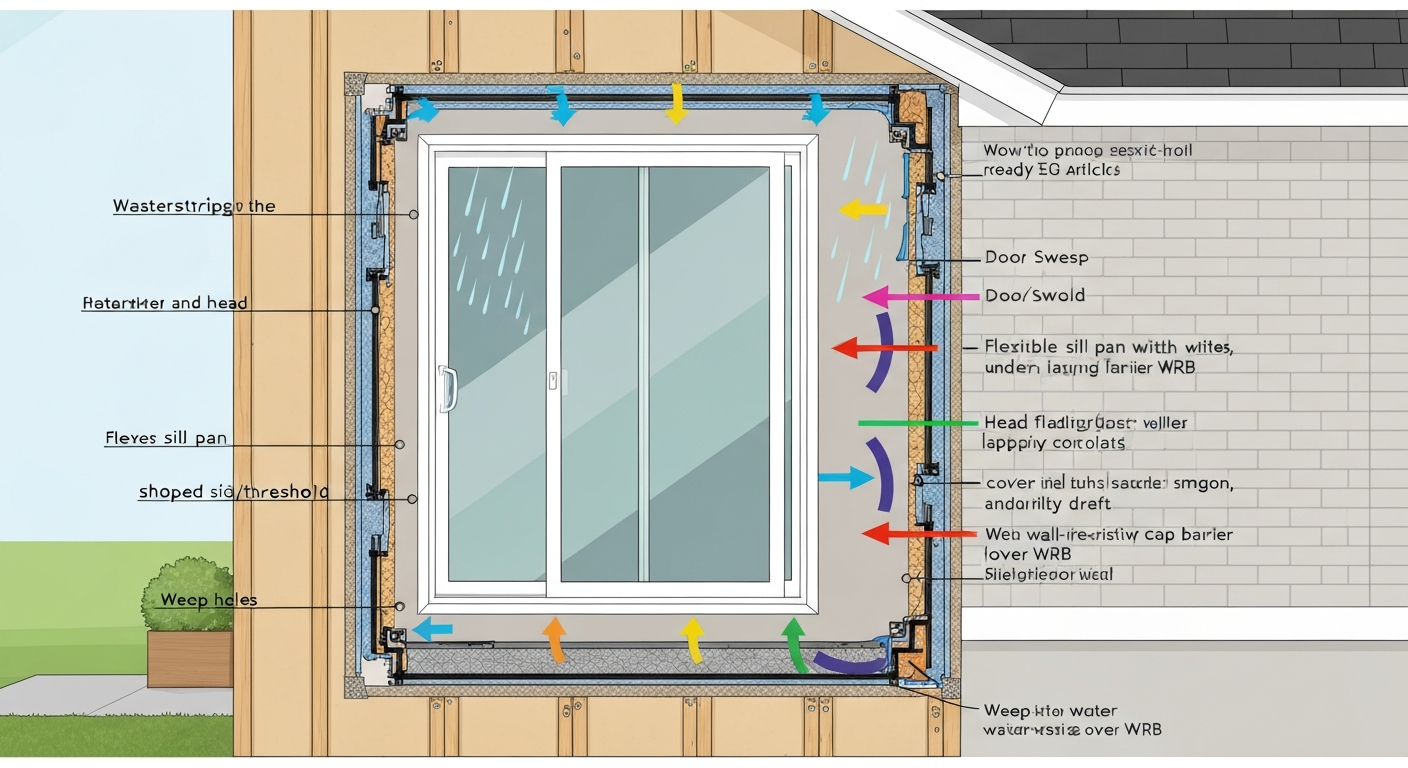
Yes, you can replace the glass in a patio door yourself, but what that actually means depends on how your door is built. Most sliding patio doors use a factory-sealed insulated glass unit (IGU), which is two panes of glass bonded together with a spacer and gas fill between them. You're not re-glazing loose glass into a frame the way old single-pane windows worked. You're swapping out the entire sealed panel or just the IGU inside the frame.
How to Replace Glass in a Patio Door Step by Step

Jamie Archer
28 May 2026
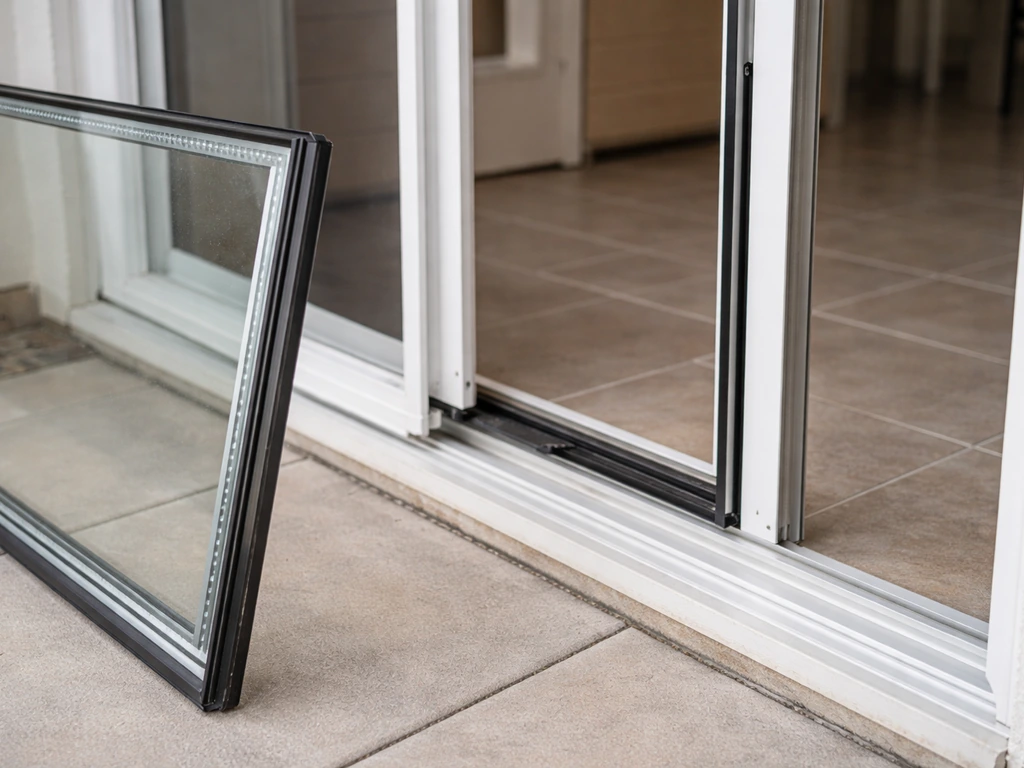
Either way, it's a manageable DIY project if you measure carefully, buy the right part, and follow a methodical process. If you're dealing with patio door glass broken, the same DIY approach can apply, but make sure you identify whether you need an IGU-only insert or a full panel replacement.
Can patio door glass actually be replaced, and what kind of replacement do you need?
The glass in a sliding patio door can almost always be replaced. The question is which component you're actually replacing, because that changes what you order and how you do the job.
Most modern sliding patio doors fall into one of two categories. The first is a full panel replacement, where the entire movable door panel (frame, rollers, glass, and all) gets swapped out as a unit. Manufacturers like Andersen publish series-specific panel replacement instructions precisely because this is the intended repair path for their doors. The second is an IGU-only replacement (sometimes called an insert), where the outer frame and hardware stay in place and you remove just the sealed glass unit from inside the frame, then seat a new one. JELD-WEN, for example, has a documented field-glazing procedure for IGU replacement in vinyl sliding patio doors that covers exactly this scenario.
If your door frame, rollers, and hardware are intact and in good shape, IGU replacement is usually the smarter and less expensive route. If the frame is warped, the rollers are shot, or this is an older door without good parts availability, a full panel swap often makes more sense. Either way, replacing shattered patio door glass without addressing the frame is a temporary fix at best.
Figure out your door type and glass configuration before you buy anything
Before you order glass or a replacement panel, you need to know exactly what you have. Getting this wrong means returning parts and losing days. Here's what to check.
Sliding door vs. hinged or folding patio door
This guide is focused on sliding glass patio doors, which are by far the most common setup. If you have a French door (two hinged panels), a multi-fold door, or a lift-and-slide unit, the glass removal process is different because the door swings rather than rolls. That said, the IGU identification steps below still apply to any of those configurations.
Is it an insert (IGU) or a full panel?
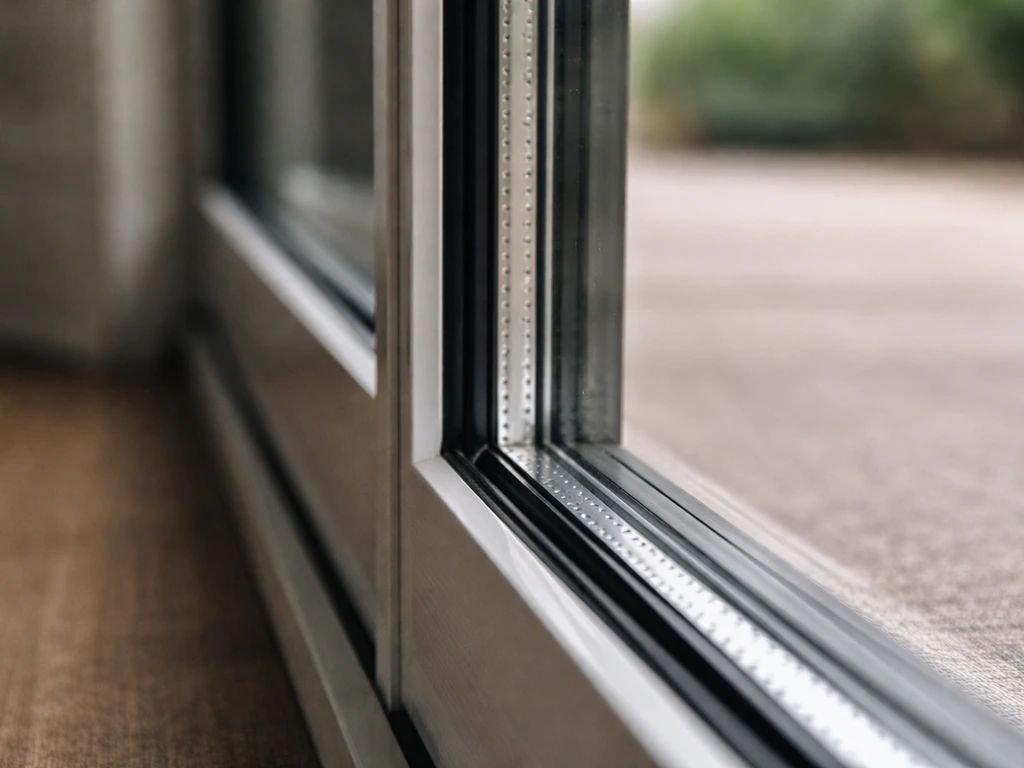
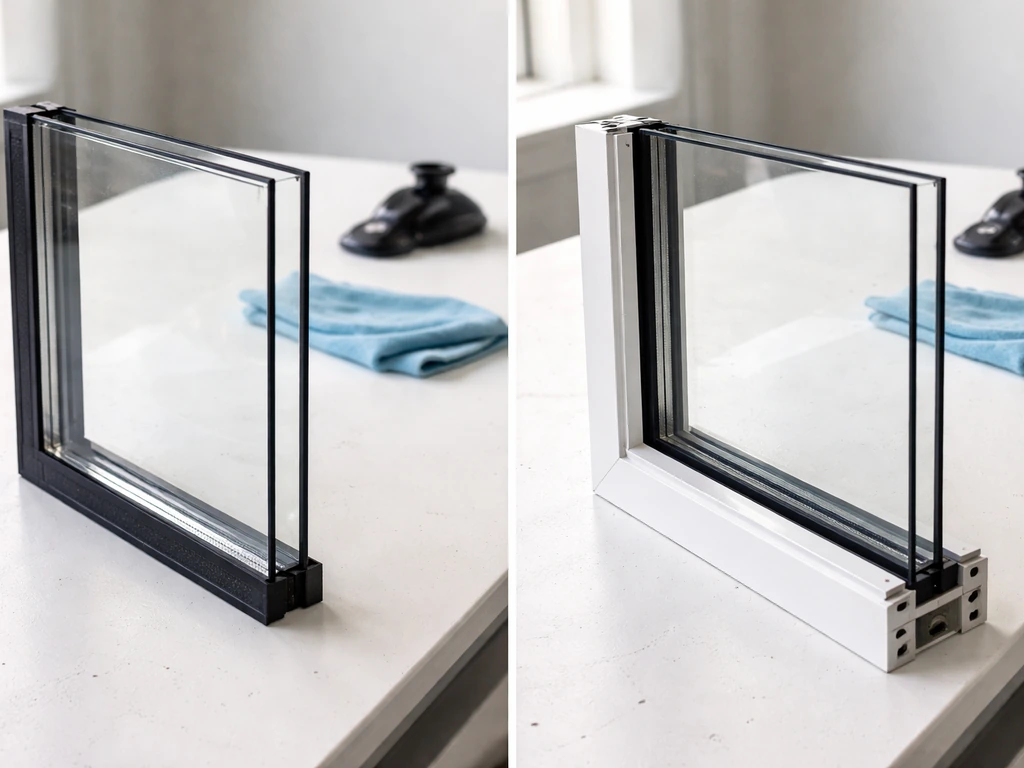
Look at the edge of your door panel from the side. If you see a metal or foam spacer sandwiched between two panes of glass, that's an insulated glass unit. The spacer is usually silver, black, or bronze and sits roughly 1/2 to 3/4 inch from the glass edge. This is a sealed unit, meaning the gas fill and the seal are part of the assembly. You cannot disassemble an IGU and reuse it. You order a new one cut to your exact dimensions.
If you can see that your glass is held in the door frame by glazing tape, silicone, or vinyl glazing beads (strips that snap or press in around the glass perimeter), then your door is designed for IGU field replacement. If the glass appears to be permanently bonded to the frame with no removable stops, you're likely looking at a full panel replacement.
Measure for your replacement glass
Measure the width and height of the existing IGU from edge to edge of the glass unit itself, not the door frame opening. Also measure the thickness of the unit at the edge spacer. Standard residential IGU thickness is commonly 5/8 inch or 1 inch (with thicker units in newer, high-performance doors). Note the glass type too: tempered glass is required by code in patio doors and should be marked with a small etched bug in a corner. Any replacement you order must also be tempered. If your door has Low-E coating or argon fill, tell your glass supplier so they can match the performance specs.
Tools, safety gear, and materials you'll need
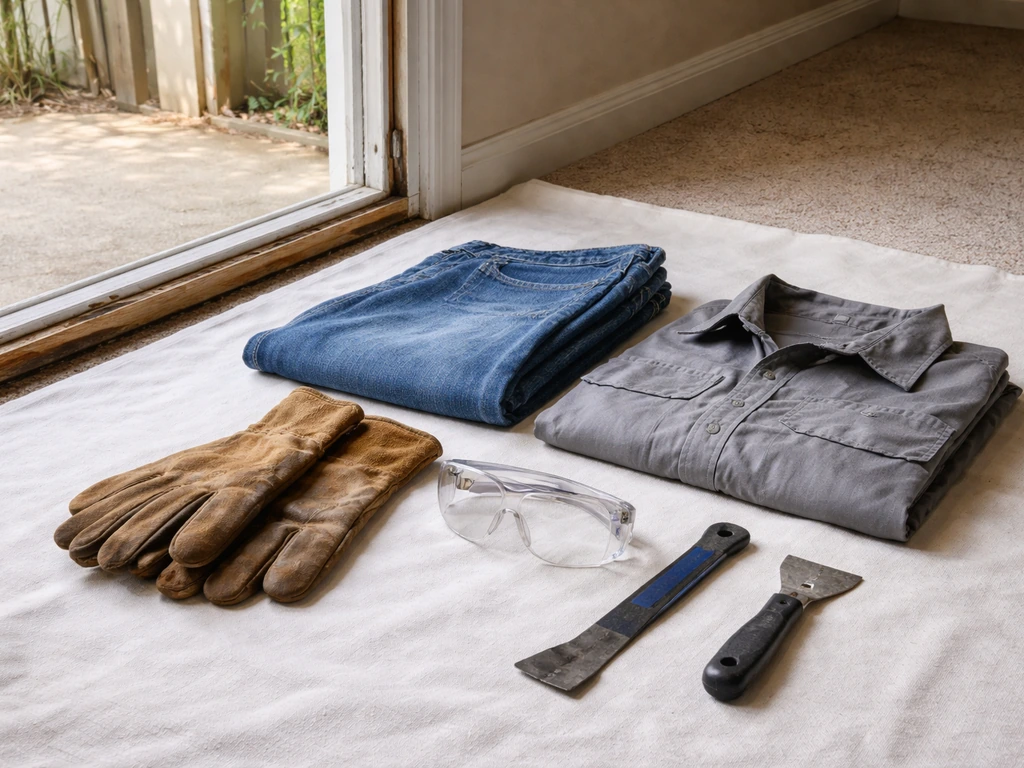
Get everything together before you start. Running to the hardware store mid-project with broken glass in your door frame is not fun.
- Heavy leather work gloves (not rubber or thin cotton, actual leather)
- Safety glasses or goggles
- Long-sleeve shirt and pants (glass dust and small shards are invisible until they're in your skin)
- Utility knife
- Flat pry bar or stiff putty knife
- Screwdrivers (flathead and Phillips)
- Needle-nose pliers
- Rubber mallet
- Tape measure
- Painter's tape or masking tape (for stabilizing cracked glass during removal)
- Shop vacuum with fine-dust filter
- Glass setting blocks (rubber or plastic, usually 1/8 inch and available at glass shops)
- New IGU or replacement panel sized to your measurements
- Glazing tape or self-adhesive foam tape (if your door uses it)
- Silicone sealant compatible with your frame material (for perimeter sealing if required)
- Replacement glazing beads if the old ones crack during removal
- A helper, especially for a full-size sliding door panel
A note on cost and lead time: a custom-cut tempered IGU for a standard 6-foot sliding door typically runs $150 to $400 depending on glass type, coatings, and gas fill. Your local glass shop can usually cut one in one to three business days. A full replacement panel from the door manufacturer will cost more, often $400 to $900 or higher, and may need to be ordered. Plan accordingly before you remove the old glass.
How to safely remove the old patio door glass
If the glass is already shattered, tape a thick layer of painter's tape over the cracked surface in an X pattern before you touch anything. This holds the pieces together and makes handling the panel much safer. For dealing with a patio door where the glass is fully shattered and loose, working from the outside in is generally safer since you have more control.
- Slide the door panel to an open position and lift it off the track. Most sliding doors lift straight up then tilt toward you off the bottom track. Have your helper steady it. Set the panel on a flat surface like sawhorses or a padded workbench.
- Locate the glazing beads or stops around the interior perimeter of the door panel. These are the strips that hold the glass into the door frame. Use a flat pry bar or stiff putty knife to gently pop them free, starting at a corner. Work slowly. Older vinyl beads get brittle and snap, so have replacements on hand.
- Once the beads are off, the glass unit should be free from the frame. Do not grab the glass edge with bare hands. Grip both sides of the IGU with gloved hands and tilt it slightly toward you to break the seal of any tape.
- Lift the IGU straight up and out. This is awkward with a full door panel, so make sure your helper is holding the door frame while you handle the glass. Set the old IGU flat on the ground or in a large trash bag.
- Use your shop vacuum to clean out the frame channel where the glass sat. Remove any old glazing tape, dried silicone, or debris. The channel needs to be clean and flat for the new unit to seat properly.
- Inspect the setting blocks at the bottom of the frame channel. These small rubber or plastic blocks support the weight of the glass and keep it centered. Replace them if they're cracked, compressed flat, or missing. Place two new setting blocks at the quarter-point positions along the bottom of the channel (roughly one-quarter of the way in from each side).
Disposing of the old glass: wrap it in newspaper or cardboard, tape the bundle closed, and label it clearly as broken glass before putting it in the trash. Some areas require glass to go to a recycling center rather than curbside. Check your local rules.
How to install the new glass or insert correctly
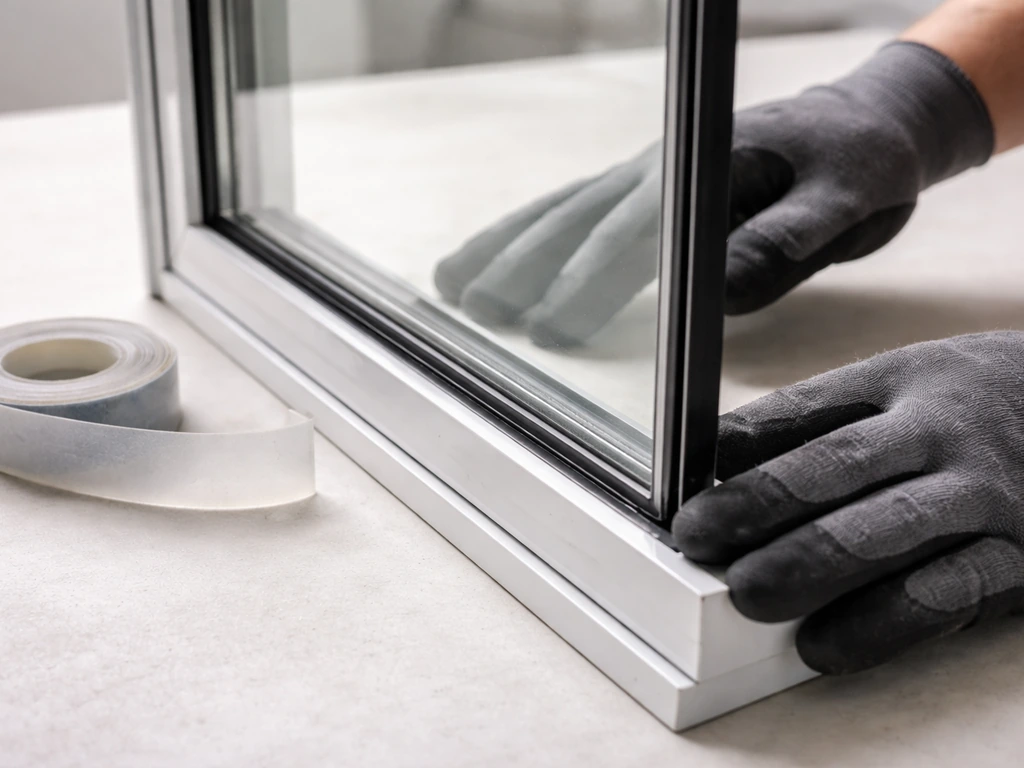
This is the step where precision matters most. A poorly seated IGU will rock in the frame, put stress on the seal, and eventually fail or leak air. Take your time here.
- If your door uses glazing tape, apply a continuous strip of tape to all four sides of the frame channel before inserting the new glass. Some doors use a channel gasket instead, in which case make sure the gasket is seated properly all the way around.
- With your helper, lift the new IGU and tilt it slightly to lower the bottom edge into the frame channel first. Rest it on the setting blocks you placed earlier. Do not let the glass edge rest directly on the aluminum or vinyl frame without setting blocks, as this causes stress cracks over time.
- Tilt the top edge into the frame channel. The glass should sit centered and flush in the opening. You should have roughly equal spacing (typically 1/8 inch) on all four sides if the IGU was cut to correct dimensions.
- Press the new glazing beads or stops into place around the perimeter. Start at the corners and work toward the middle of each side. Use a rubber mallet to snap them fully into their channels. They should sit flush with the door frame surface.
- If silicone sealant is required on the exterior side (check your door manufacturer's specs), apply a thin, continuous bead now and tool it smooth. Wipe away excess with a damp cloth before it cures.
- Allow any sealant to cure per the manufacturer's directions (usually at least one hour before the door is used, 24 hours before rain exposure).
One thing worth mentioning: if your IGU came with a breather tube (a small metal tube at the edge of the spacer), do not block it during installation. This tube allows the unit to equalize pressure during shipping and installation, and some manufacturers require it to be accessible during the glazing process. Once the door is reassembled and operating normally, this tube can be bent flush or left as-is per the instructions that came with your unit.
Reassemble the door, test it, and check for drafts
Once the glass is installed and the glazing beads are in place, it's time to rehang the door and confirm everything works correctly.
- Lift the door panel back into place. Tilt the top into the upper track first, then lower the bottom onto the lower track rollers. The door should drop into position smoothly.
- Slide the door open and closed several times. It should move without excessive resistance and without wobbling side to side. If it drags or feels heavy, the rollers may need adjustment (most sliding doors have a roller height adjuster screw accessible through a small hole in the bottom of the door frame).
- Check the door alignment along the frame. The gap between the door panel and the stationary panel or door jamb should be consistent from top to bottom, roughly 1/8 inch. If it's wider at the top than the bottom or vice versa, adjust the rollers on one side.
- Lock the door and verify the lock engages fully without forcing it. If the latch doesn't reach the strike plate, roller or frame adjustment is needed.
- Do a draft check: on a windy day or with a helper standing outside, run your hand along the interior perimeter of the door, especially the corners and the meeting stile (the vertical edge where the sliding panel meets the stationary panel). You should feel no air movement.
- For a more thorough seal check, hold a lit stick of incense or a smoke pencil near the perimeter while the door is closed. If the smoke drifts, that's a draft. The most common spots are the bottom sweep and the corners of the glazing beads.
What to do if the glass won't fit or the door is off after replacement
A few problems come up regularly after a glass replacement, and most of them are fixable without ordering new parts.
The new IGU is slightly too large or too small
If the unit is too large by more than 1/8 inch on any side, do not force it. Return it to the glass shop. Forcing an oversized IGU into a frame will stress the seal and can crack the glass. If it's slightly too small and the gap is larger than 3/16 inch on any side, the glazing beads may not hold it securely. In this case, a thicker glazing tape on the appropriate sides can compensate for small gaps, but anything more than 1/4 inch undersized is worth getting cut again.
The door drags or won't slide smoothly after reinstallation
This almost always means the rollers need adjustment. If you still end up with visible scratches on the glass, you can often reduce them with proper glass polishing or a scratch repair kit rollers need adjustment. Locate the adjustment screws at the bottom of the door panel (there's typically one on each end). Turning them clockwise raises the door, counterclockwise lowers it. Raise the door slightly and try again. Also check that the new glass hasn't added unexpected weight. Upgrading from a thin, single-pane glass to a thicker IGU can stress older rollers that were already marginal. If the rollers are worn, replace them while you have the door off the track.
Drafts persist after the new glass is installed
If you're still getting air infiltration after replacing the glass, the glazing beads or seals are the first place to look. Make sure every bead is fully snapped in with no gaps at the corners. If the draft is along the bottom of the door, the door sweep or pile weatherstripping may be worn and need replacement. That's a separate repair but worth doing while you already have the door out.
When to call a pro
If your door frame is visibly warped, the track is bent, or the door is so old that replacement parts aren't available, you may be at the point where a full door replacement is the better investment. Similarly, if your door uses a proprietary glass unit that can only be ordered through the manufacturer and requires specific installation tooling, a certified dealer installation will protect your warranty and get the fit right. For standard sliding patio doors with straightforward IGU construction, though, this is a genuinely doable DIY repair.
FAQ
How can I tell if my patio door needs an IGU-only replacement or a full panel swap before ordering parts?
Check whether the glass perimeter has removable stops (glazing beads or removable tape) versus being permanently bonded. If you can lift out the sealed unit without changing rollers or the door frame, you likely need an IGU insert. If there are no removable stops and the glass is built into the moving panel as one unit, plan for a full panel replacement.
What glass thickness and coatings should I match so my new IGU seals correctly and performs the same?
Match the IGU thickness shown at the spacer edge and confirm the glass type (tempered is required). Also match Low-E coating and any gas fill such as argon, because performance coatings and thicker units can change weight and thermal behavior, affecting roller stress and comfort.
Can I reuse the old glazing tape or silicone when installing a new IGU?
Usually no. Many patio doors rely on factory-style glazing tape or sealant compounds to maintain a continuous bond around the IGU. Reusing old materials can leave microscopic gaps that allow drafts and moisture, so plan on using fresh glazing tape, beads, or the sealant type recommended for your door model.
The new IGU is slightly too large or too small, what is the correct way to handle it?
If it is more than about 1/8 inch oversize, do not force it. Return it and get the correct cut, since forcing stresses the spacer seal and can crack the tempered glass. If it is slightly undersize with larger than about 3/16 inch gaps, replace the IGU or use only approved compensation methods like correctly sized glazing tape, but avoid gaps larger than about 1/4 inch.
Do I need to tape the glass before removal if it is just cracked, not fully shattered?
Yes. Even a cracked IGU can shed small pieces when you remove stops or lift it out. Applying thick painter’s tape in an X pattern helps keep the tempered glass fragments together during handling and reduces the risk of injury and glass dust.
If my patio door draft persists after replacing the IGU, where should I look first?
Start at the corners and the full perimeter where the glazing beads seat. Then check the bottom seal and door sweep or pile weatherstripping, because air often enters through the bottom track area rather than around the IGU itself. If the draft is still strong after those, inspect the door alignment and track condition.
Can thicker or different glass make my patio door harder to open or cause roller problems?
Yes. Upgrading from a thinner unit to a heavier IGU can overload marginal rollers, leading to scraping, binding, or increased wear. If you notice drag or sticking after replacement, adjust the bottom rollers first, and if wear is obvious, replace rollers while the door is off the track.
What is the breather tube on an IGU, and what happens if I block it?
The breather tube helps equalize pressure in the sealed unit during shipping and installation. If it is blocked or sealed over when the manufacturer expects access, the unit can fail prematurely or lose performance. Leave it accessible until the glazing process is complete, then follow the instructions for bending or final placement.
How should I clean or handle the frame and track before reinstalling the door?
Remove glass dust, old tape residue, and debris from the channel where the IGU sits, and wipe the area dry so the new beads can fully seat. Any grit trapped at the bead corners can prevent a tight fit, leading to rocking and seal failure over time.
What should I do if the manufacturer requires special parts or installation tools for my patio door model?
If the glass unit is proprietary or the installation requires certified procedures to maintain warranty coverage, use a certified installer or door manufacturer support. In those cases, even with correct measurements, using the wrong bead type, tape, or installation method can void warranty or result in improper sealing.
How do I dispose of broken patio door glass safely and correctly?
Wrap shards in newspaper or cardboard, tape the package closed, and label it as broken glass. Then follow local rules, some areas require drop-off at a recycling center rather than curbside disposal, and bagging glass without protection can create hazards for waste handlers.
Next Article
How to Protect Patio Door from Rain: DIY Fixes, Steps & Costs
How to protect patio door from rain: step-by-step DIY fixes, tests, tools, seasonal tips, and when to call a pro.