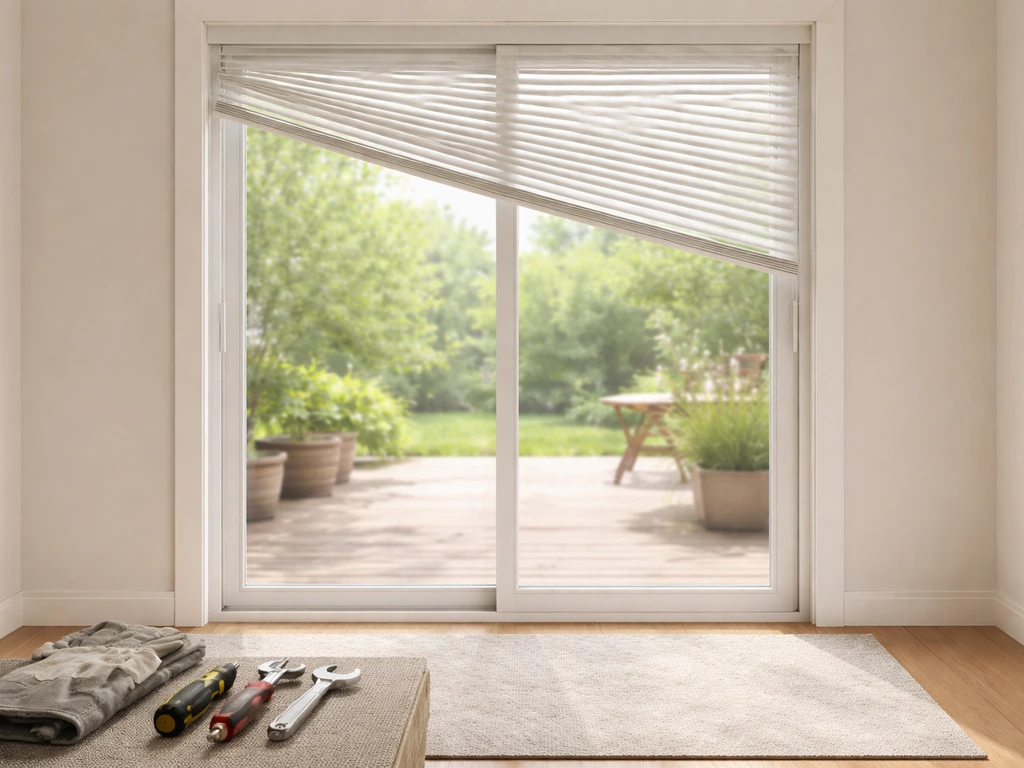
A patio door that's hard to open almost always comes down to one of three things: a dirty or damaged track, worn-out rollers, or the door being slightly out of alignment. The good news is that most cases are fixable in under an hour with basic tools and a can of silicone spray. The trick is figuring out which of the three you're dealing with before you start cranking on adjustment screws.
Why Is My Patio Door So Hard to Open? Fixes

Jamie Archer
24 Jun 2026
Quick diagnosis: what's actually happening when you try to open it?
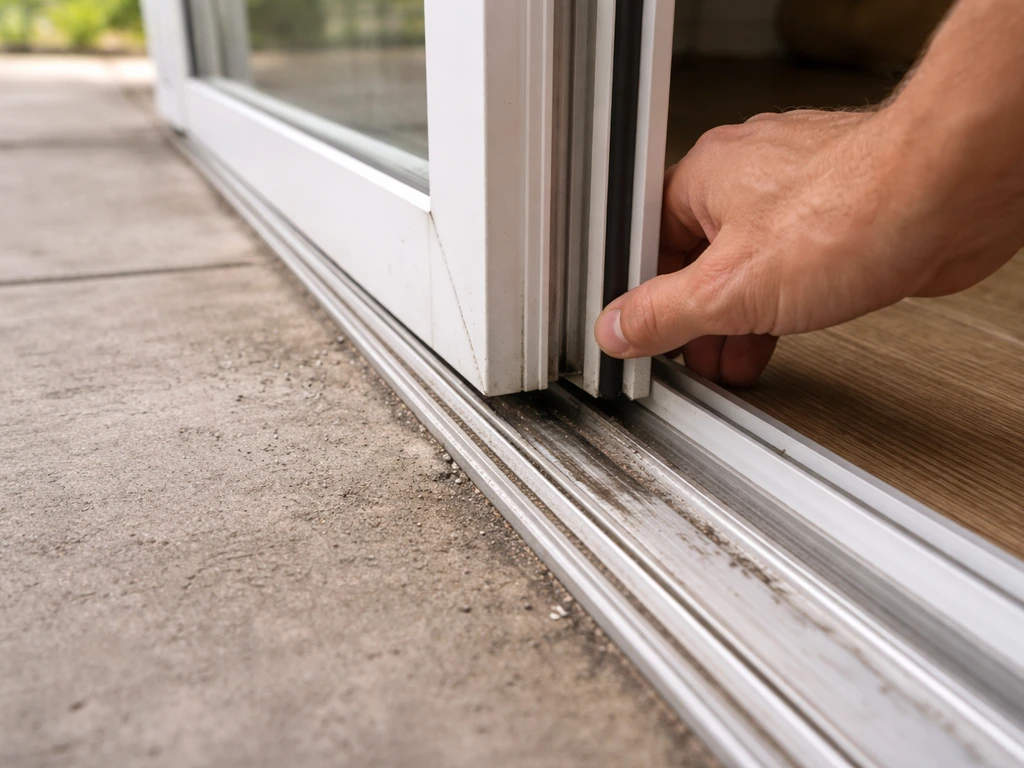
Before grabbing any tools, stand at the door and try to open it slowly. If the patio door blinds broken string is tangled or snagged, check that area first because it can prevent the door from operating smoothly. Pay attention to exactly what you feel and hear. Your symptoms will point you straight to the cause.
| Symptom | Most likely cause |
|---|---|
| Grinds or scrapes along the whole slide | Dirty or deformed track, or worn rollers |
| Drags or catches at one specific spot | Debris in track, dent/bend in track, or raised threshold |
| Hard to move but gets easier after the first push | Dried-out lubrication or debris in roller housing |
| Door is stiff at the start and end of travel only | Rollers are too low, causing door to bind against weatherstripping |
| Locks but won't slide — or slides but won't lock | Misalignment between latch and strike plate |
| Bottom edge visibly drags on the sill | Rollers are worn flat or roller height needs adjustment |
| Fine inside but only stiff in summer/winter | Frame expansion from moisture or temperature, or debris buildup |
| Screen door is the one that won't budge | Screen track debris, bent screen frame, or worn screen rollers |
Run through this list and pick the description that matches closest. If you have more than one symptom, start with the track and roller checks, those cover the majority of cases.
The most common reasons patio doors get hard to open
Sliding patio doors shouldn't require any real muscle to move. If you still need help figuring out how to fix blinds inside a patio door, focus on the same root causes that make the door hard to slide and then check the internal components patio doors shouldn't require any real muscle to move. When they do, something in the system has shifted or degraded. Here are the causes you'll run into most often.
- Dirt, grit, pet hair, and leaf debris packed into the track. This is the number-one cause and the easiest to fix.
- Dried-out or wrong lubricant. Oil-based products attract more dirt over time and eventually gum up the track and roller mechanism worse than no lube at all.
- Worn or flat-spotted rollers. The bottom rollers carry the full weight of a heavy glass panel and eventually wear down, causing the door to ride directly on the track frame.
- A bent or deformed track. Even a minor dent from vacuuming, furniture dragging, or heavy foot traffic can create a catch point the rollers can't roll over smoothly.
- Clogged weep holes. Vinyl sliding doors have small weep holes in the track to drain rainwater. When these block up, water pools in the track and accelerates corrosion and debris buildup.
- Door misalignment or sag. If the door panel has dropped even slightly off level, it rubs against the top or bottom of the frame — the rollers can usually fix this.
- A swollen wood frame. Wood frames absorb moisture and expand seasonally, which tightens the clearance the door slides through.
- Strike plate or latch misalignment. If the latch doesn't line up with the strike plate, the door feels locked even when the handle is up. This is a separate problem from the track but causes the same 'won't open' symptom.
- Screen door interference. Sometimes the main door is fine but the screen track or frame is bent, making the whole system feel stuck.
Troubleshoot by location
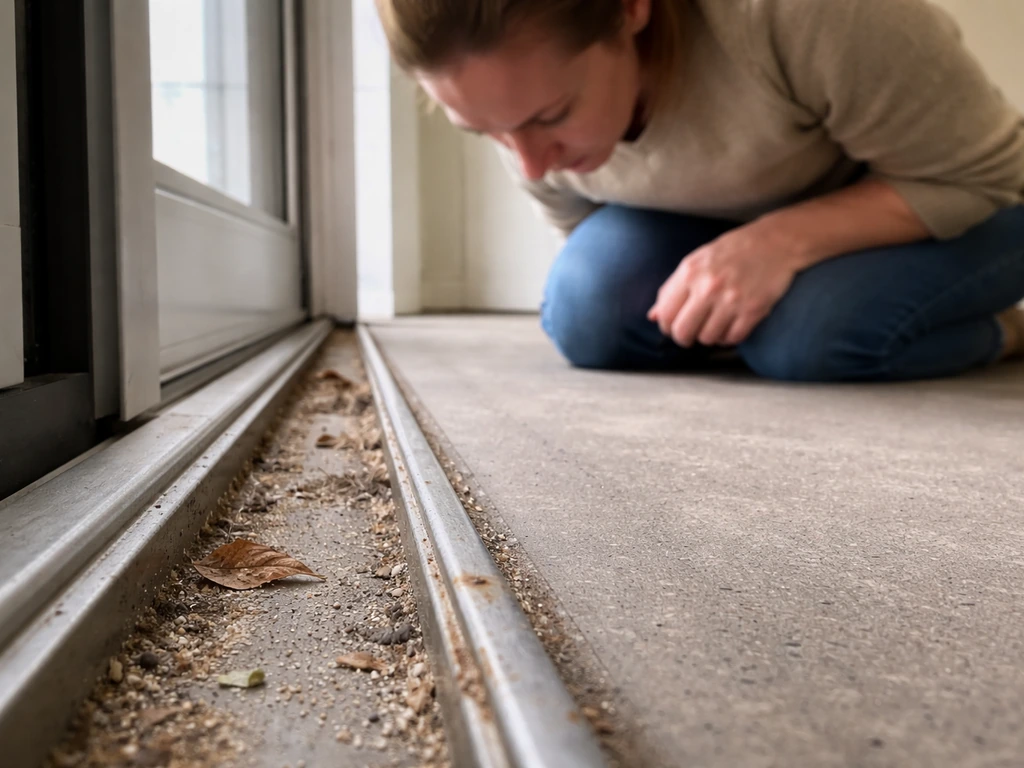
The track
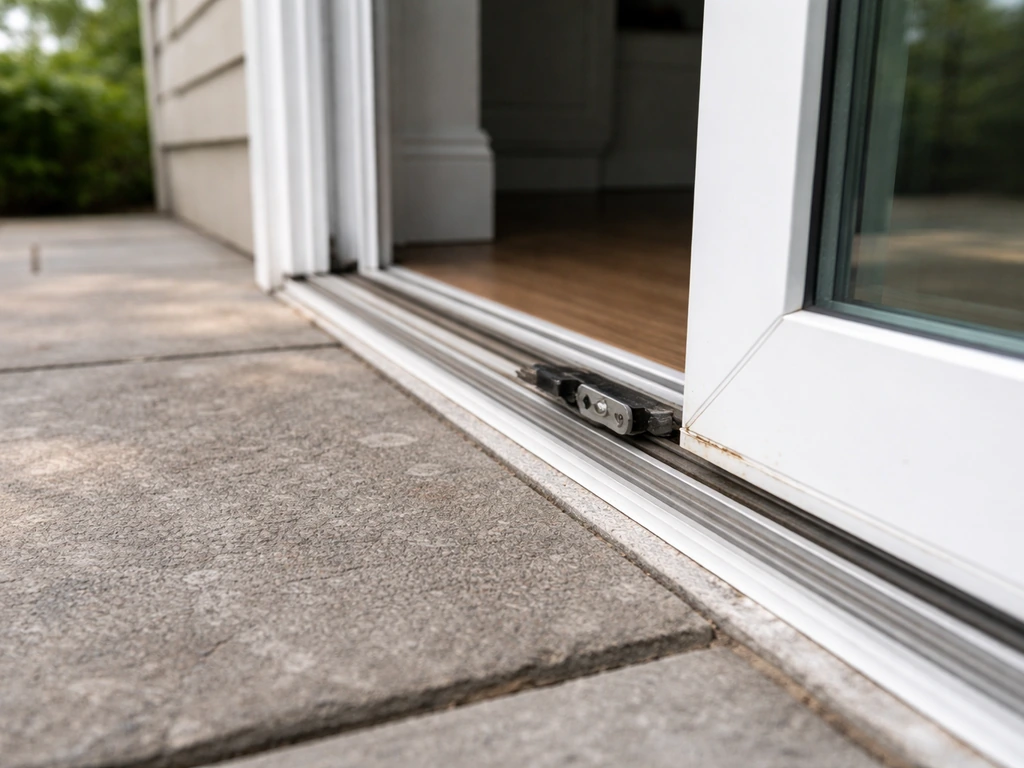
Crouch down and look along the bottom track from one end. You're checking for visible debris (sand, leaves, pet hair), standing water or rust stains, and any visible dents or bent sections. Run your finger along the track rail, it should feel smooth and uniform. A rough or bumpy feel means there's hardened debris or a deformation. Also check the weep holes (small slots or holes at the outer edge of the track frame) and make sure they aren't packed with dirt. If they're blocked, water will pool there every time it rains.
Rollers and wheels
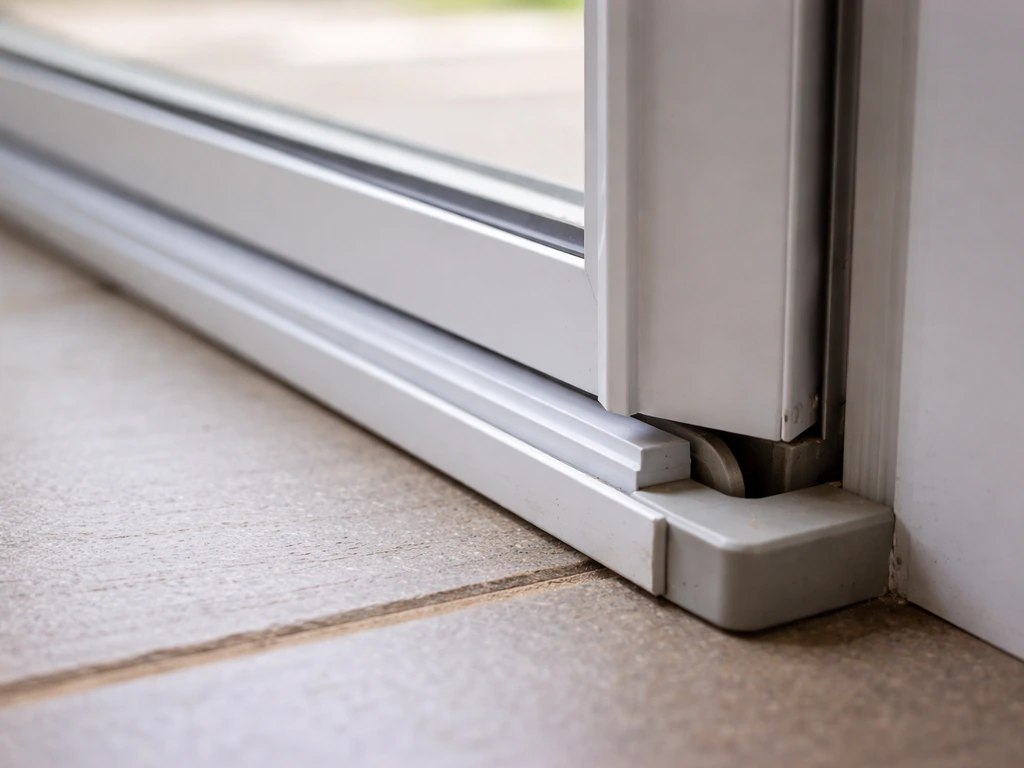
The rollers sit inside the bottom of the door panel, usually behind small plastic plugs or caps near each bottom corner. With the door closed, look at the gap between the bottom of the door and the track. If the door looks like it's sitting directly on the track surface with no visible gap, the rollers have worn down or dropped too low. You might also see the door tilted slightly so one side has a larger gap than the other, that means one roller is lower than the other. If your patio door blinds are stuck in a tilted position, the roller and alignment checks can help you get them working smoothly again door tilted slightly. Both are adjustable.
Alignment and frame
Step back and look at the reveal, the gap between the door panel and the door frame on all four sides. It should be roughly equal all the way around. If the gap is bigger at the top on one side and smaller at the bottom, the door has dropped on that side. This is a roller height issue. If the entire door leans into the frame on one side with almost no gap, the frame itself may have shifted, which is a more serious structural issue and worth having a pro look at.
Threshold and sill
The threshold is the strip at the very bottom of the door opening where your foot lands. Over time it can shift upward slightly, or debris can pack under it, creating a physical bump the door hits. Check whether the bottom edge of the door is catching on the threshold itself rather than on something in the track. If your home has a wood sill and you've had any moisture issues, check whether the wood feels soft or has swelled upward.
Hardware and lock
If the door slides fine but won't open from the locked position, or slides but won't fully latch when you close it, the problem is the lock and strike plate, not the track. Try opening the door with the handle fully lifted (or lowered, depending on your hardware). If it moves freely when you do that but not otherwise, the latch is dragging on the strike plate because the door has dropped slightly out of alignment. Adjusting the roller height on the latch side usually fixes this without touching the strike plate at all.
Step-by-step DIY fixes you can do today
What you'll need
- Flat-head screwdriver (for prying off plastic caps)
- Phillips screwdriver
- Stiff-bristle brush or old toothbrush
- Vacuum with a crevice attachment
- Clean rags
- Silicone-based lubricant spray (not WD-40 or any oil-based product)
- Rubbing alcohol or mild cleaner for degreasing the track before lubing
Step 1: Clean the track completely
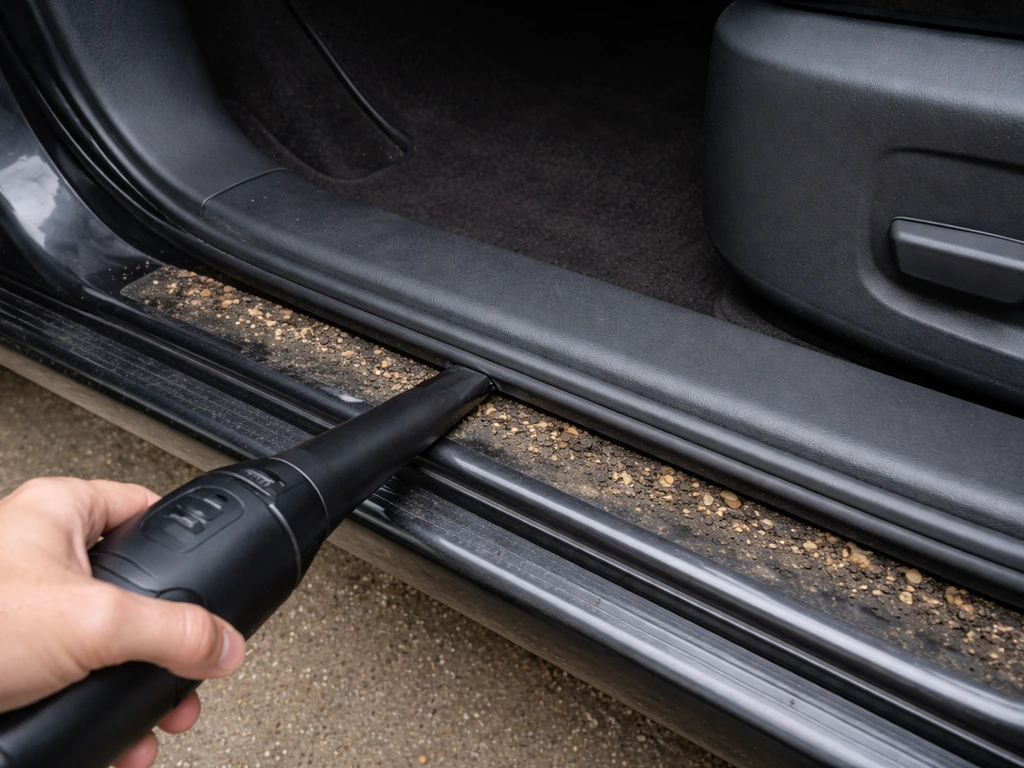
This is the step most people skip, and it's the most important one. Vacuum out the entire bottom track from end to end using a crevice tool. Then use a stiff brush to scrub the track channel, paying extra attention to the corners where debris packs hardest. Wipe the track down with a damp rag, then dry it. If you have a vinyl door, use a toothpick or small brush to clear out the weep holes at the outer track edge, this takes about five minutes and prevents water buildup that accelerates corrosion. Do not apply lubricant to a dirty track. You'll just seal the grit in and make things worse.
Step 2: Lubricate with the right product
Once the track is clean and dry, spray a thin coat of silicone-based lubricant along the track rail where the rollers contact it. Silicone is the right call here, it stays slick, doesn't attract dirt the way petroleum-based products do, and won't stain the track or degrade the roller material. Silicone-based lubricant is recommended for sliding door track maintenance because oil-based lubricants can attract more dirt and grime over time. Slide the door back and forth a few times to work the lubricant into the rollers. If the door already moves noticeably easier at this point, you may be done.
Step 3: Adjust the roller height
If cleaning and lubing didn't fully solve it, the rollers need adjustment. Find the plastic plugs or caps at the bottom corners of the door panel (they're usually about 1 to 1.5 inches from each corner). Pry them off with a flat-head screwdriver. Behind each plug you'll see an adjustment screw, typically Phillips head. blank" rel="noopener noreferrer">Turning it clockwise raises the door; counterclockwise lowers it. Raise the door slightly on the side that appears to be dragging, then check the reveal around the frame to see if it's become more even. Make small adjustments (a quarter turn at a time), slide the door after each one, and repeat until movement is smooth and the gap around the frame is consistent. If the door was rubbing the top track, lowering it slightly with the adjustment screw will clear it. The goal is a small, even gap all around. Once the door is sliding smoothly, you can hang your vertical blinds on the patio door frame using the same careful alignment and fasteners specified for your blind type how to hang vertical blinds on patio door.
Step 4: Check the lock and strike plate alignment
After adjusting the rollers, try locking the door. If the latch doesn't engage cleanly, check whether the latch hook lines up with the slot in the strike plate. Sometimes the roller adjustment alone fixes it by repositioning the door. If there's still a slight miss, you can loosen the strike plate screws and shift it up or down by a millimeter or two to find the sweet spot. Tighten, test, and repeat as needed.
Step 5: Check the screen door
If you have a screen door and the whole system feels stiff, close the main glass panel and test the screen door by itself. Screen doors run on their own separate track, and they're often the source of the resistance people blame on the main door. Clean the screen track the same way you cleaned the main track. Check the screen frame for any bends that would cause it to catch. Screen door rollers can also be adjusted (usually a small screw at the bottom corners of the screen frame) or replaced if they've cracked or worn flat. A properly adjusted screen door should glide with one finger, if it doesn't, it needs its own tune-up independent of the main panel.
When cleaning and adjusting isn't enough: damaged parts
If you've cleaned the track, lubricated it correctly, and adjusted the roller screws but the door still drags, grinds, or won't move smoothly, the parts themselves are likely worn past the point of adjustment. Here's what to look for and what to do.
Worn or broken rollers
Rollers that are worn flat, cracked, or have seized bearings can't be adjusted back to life, they need to be replaced. To access them, you'll need to tilt or lift the door panel out of the frame (the exact method varies by brand, but most doors tilt at the bottom and then lift up and out). Some manufacturers like Pella use a cartridge-style roller housing with a retainer screw that holds the door in the frame, so check your brand's documentation before pulling the panel. Once you have the old roller out, take it to a hardware store or look up the part number online. Replacement rollers for common brands like Andersen, Pella, and Milgard are widely available. After installing new rollers, set the adjustment screws to a middle position before re-hanging the door, then fine-tune the height from there.
Bent or damaged track
A minor dent in the track can sometimes be carefully tapped back into shape with a rubber mallet and a flat piece of wood used as a buffer, but go slowly and gently, because aluminum track bends easily in the wrong direction. If the track is significantly bent, corroded, or has a crack, replacement is the safer option. Track sections are sold by the foot at most hardware stores and online parts suppliers. This is more involved than a roller swap since you'll need to remove the door panel completely to get the track out, but it's a manageable DIY job on a weekend.
Door sweep and weatherstripping
If the bottom of the door is dragging on the threshold rather than rolling freely over it, and roller adjustment doesn't fully raise it clear, check the door sweep, the rubber or vinyl strip along the bottom edge of the door panel. Over time these sweeps compress, tear, or curl upward and can create drag. Replacement sweeps are inexpensive and typically press or screw into a channel on the door bottom. Replacing one takes about 15 minutes.
Lock and strike plate
If the latch mechanism itself is broken (handle spins freely, latch doesn't extend, or the lock cylinder is seized), the handle/lock assembly needs replacing. Most are held in with two or three screws accessible from the interior face of the door panel. Match the part by measuring the door thickness, the handle height from the floor, and the backset of the latch. Bring the old handle to the store if you can, it's the fastest way to get the right replacement.
After it's moving: security, drafts, and preventing the problem from coming back
Confirm the lock actually works
Before calling the job done, lock and unlock the door at least three or four times from both sides. The latch should engage with a clean click and no extra pressure on the handle. If you have a secondary security bar or auxiliary lock (highly recommended), make sure it still fits in the track correctly after the roller adjustment, sometimes raising the door height shifts the track bar slot position slightly.
Check for drafts
Hold your hand along the edge of the closed door on a breezy day, or use a lit candle held a few inches from the frame. Air movement means the door isn't sealing tightly against the weatherstripping. This usually means the roller height needs a small additional tweak, raise the door slightly so it pulls tighter into the weatherstripping on the latch side. If the draft is at the bottom, the door sweep may need replacing or the threshold adjustment may need a small turn (many thresholds have height-adjustment screws under plastic caps).
Keep the track clean going forward
The most effective way to prevent this problem from coming back is simply to vacuum the track every month or two and hit it with a fresh coat of silicone spray once or twice a year. It's a five-minute task that adds years to the life of the rollers. If you live somewhere with a lot of sand, pollen, or leaf debris, do it more often. Also check the weep holes each fall before rainy season, clear ones drain water out before it has a chance to rust the track or freeze in cold climates.
Seasonal considerations
If your patio door gets noticeably harder to slide every summer or every winter, that's likely the frame expanding and contracting with temperature and humidity changes. Wood frames are especially prone to this. There isn't much to do about it in the short term beyond making sure the roller height is set for the tightest season (usually summer for wood frames). If the movement is severe enough that the door is genuinely hard to use seasonally, it's worth having the frame checked for moisture intrusion or improper installation.
FAQ
Could my patio door be hard to open because of the blinds or screen, not the door itself?
Yes, sometimes the “hard to open” problem is actually a mis-cast blind string or tangled hardware in the head area. Before you adjust rollers, detach the blind cord where it enters the door and open the door slowly. If the door frees up with the cord moved, you’re dealing with an obstruction, not track wear.
How can I tell if the problem is the track versus the lock and strike plate?
If the door gets worse when the handle is down or only drags on one side, try opening it with the latch mechanism in the exact position that lets it slide freely. If it rolls freely but won’t latch or won’t lock, the strike plate or the latch alignment is the likely issue, and you may need a millimeter-level strike plate shift rather than raising the whole door.
Can I fix a hard patio door by adding more lubricant, even if the track looks dusty?
Do not lubricate a track that still has grit or dust in it. A better approach is vacuum first, then scrub with a dry stiff brush or damp rag only after vacuuming. If you already sprayed, wipe the track rail clean and let it dry, then apply silicone once it’s free of debris.
What happens if I adjust the rollers too far up or down?
If you raise the door too much, you can create rubbing at the top track or make the latch hard to engage because the hook and strike slot stop lining up. Make adjustments in small quarter turns, and after each change do a full open-close test plus a lock test.
What should I do if the adjustment screws turn but the door still drags?
When the door is difficult to move even after cleaning and silicone, check for a roller that’s missing, cracked, or seized, especially if one corner sits lower or the door looks visibly tilted. If the adjustment screw turns but the reveal never evens out, the roller may be worn past adjustment and replacement is usually the next step.
If the gap around the door frame is uneven, which side should I adjust first?
If the reveal is uneven, start by correcting the side that has the larger gap at the top or the smaller gap at the bottom, which usually indicates that corner dropped. Correcting roller height first is safer than immediately moving the strike plate, then revisit the latch alignment only after the door sits evenly.
My patio door gets harder to open in certain seasons, how do I troubleshoot that?
For out-of-season stiffness, check the weatherstripping seal and draft location. If air leaks mainly at the latch side, raise the door slightly so it compresses the weatherstrip, but if the draft is at the bottom, replace the door sweep and verify the threshold is not creating a physical bump.
I have a screen door too, how do I confirm which one is causing the stiffness?
If you have a screen door, test it separately by closing the main glass panel and then sliding only the screen. If the screen feels stiff with one finger, clean and adjust the screen track and rollers independently, since it can resist movement enough that you think the main door is the problem.
My handle turns but the door will not open, what’s the most likely cause?
If the handle seems to move normally but the door won’t open, the latch hook may not be retracting or may be binding on the strike plate due to misalignment. Try lifting the handle fully while opening. If it works only with the handle lifted, adjust roller height on the latch side first, then fine-tune the strike plate.
After adjusting rollers, why might my secondary security bar not fit correctly anymore?
If you replaced rollers or adjusted height and now the secondary security bar or auxiliary lock doesn’t engage cleanly, confirm the bar’s track position after the height change. Re-check the fit inside the track before relying on the lock, because even a small roller height shift can change where the bar lands.
Next Article
Patio Door Blinds Stuck in Tilted Position: DIY Fix Steps
Step-by-step DIY fix for patio door blinds stuck tilted, with safety checks, diagnosis by mechanism, releveling and test