A stuck patio door is almost always caused by one of four things: debris jammed in the track, rollers that have dropped out of adjustment, a door that has swollen or warped from moisture, or a latch that is engaged and simply needs to be released. In most cases you can free the door yourself in under an hour without special tools, but you need to pinpoint where it's binding first, because the fix is different depending on whether the door is stuck at the bottom, dragging at the top, seized in the frame, or just locked in place.
Patio Door Stuck: Step-by-Step Fix for Sticking Doors

Jamie Archer
18 May 2026
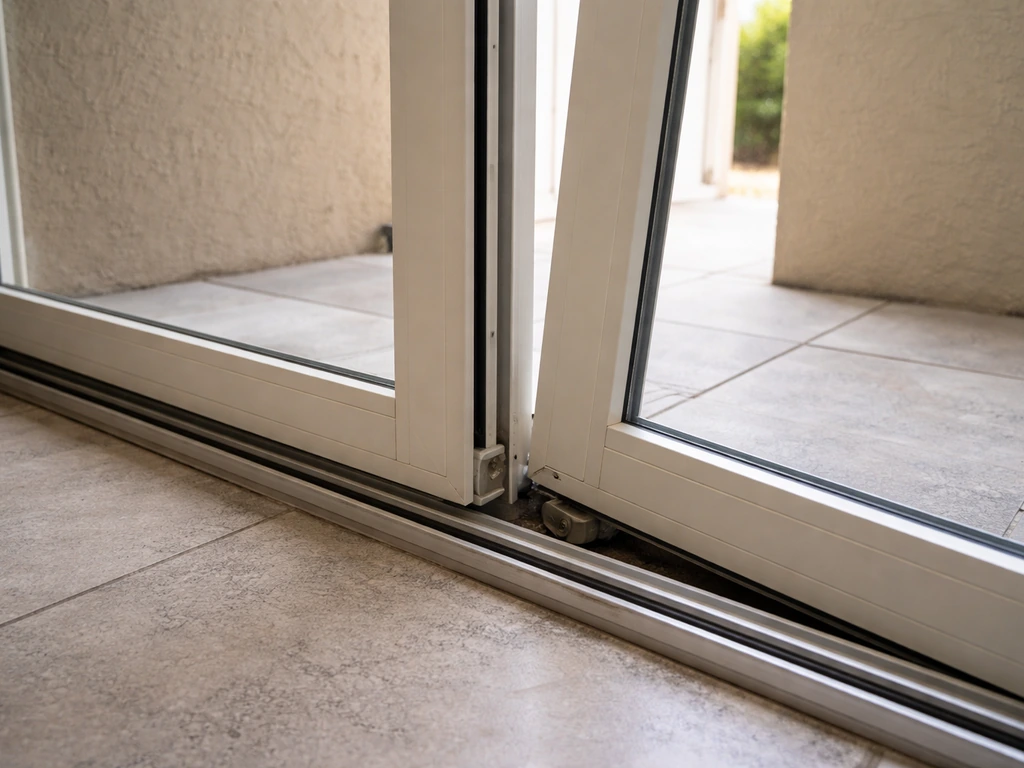
Figure out exactly where it's stuck first
Before you muscle the door or grab a screwdriver, spend two minutes doing a proper diagnosis. The location and type of resistance tells you almost everything you need to know.
| Where it's binding | What you'll notice | Most likely cause |
|---|---|---|
| Bottom of door / track | Door drags, grinds, or won't budge at the base | Track debris, dropped roller, warped bottom rail |
| Top of door | Door tilts into the upper frame or binds overhead | Roller raised too high, top guide dislodged, frame sag |
| Middle of the frame | Door moves a little then stops dead | Obstructions inside the track, bent track, damaged roller |
| Won't move at all from closed | No movement in either direction | Lock still engaged, keeper misaligned, door latched on both sides |
| Sticks only in certain weather | Fine in dry weather, binds in summer/winter | Wood frame swelling or vinyl expansion from temperature |
Check the lock handle first, every time. It sounds obvious, but a surprising number of "stuck" doors are just fully latched. Make sure the handle is fully lifted (or turned, depending on your hardware), the latch is retracted, and no auxiliary security bar or foot lock is still engaged at the bottom track. If the door moves even half an inch after confirming the lock is released, the problem is mechanical, not the latch.
Safety checks before you start forcing anything
Sliding patio doors are heavy, typically 50 to 100 pounds for a standard tempered glass panel, and a door that suddenly breaks free can swing hard and fast. A little preparation prevents an injury or a cracked panel.
- Confirm no one is standing in the door's path on the outside before you apply force.
- Do not lean into the glass itself. Always push or pull from the door frame or handle, never from the center of the glass.
- If you see a crack, chip, or broken seal (fogging between panes), stop. Forcing a compromised glass door can shatter it.
- Check that the door is actually unlocked before applying any pressure. Forcing a locked door damages the latch, the keeper, and sometimes the frame.
- Look at the track before touching anything. If you can see a visible obstruction (rock, bottle cap, bent screw, built-up dirt), remove it first with your hand or a flat tool before applying any lateral force.
- If you plan to lift the door off the track for any reason, have a second person with you. These panels are awkward and heavy.
How to free a stuck sliding patio door, step by step
Work through these techniques in order. Start gentle and escalate only if the previous step didn't work.
Step 1: Clear the track
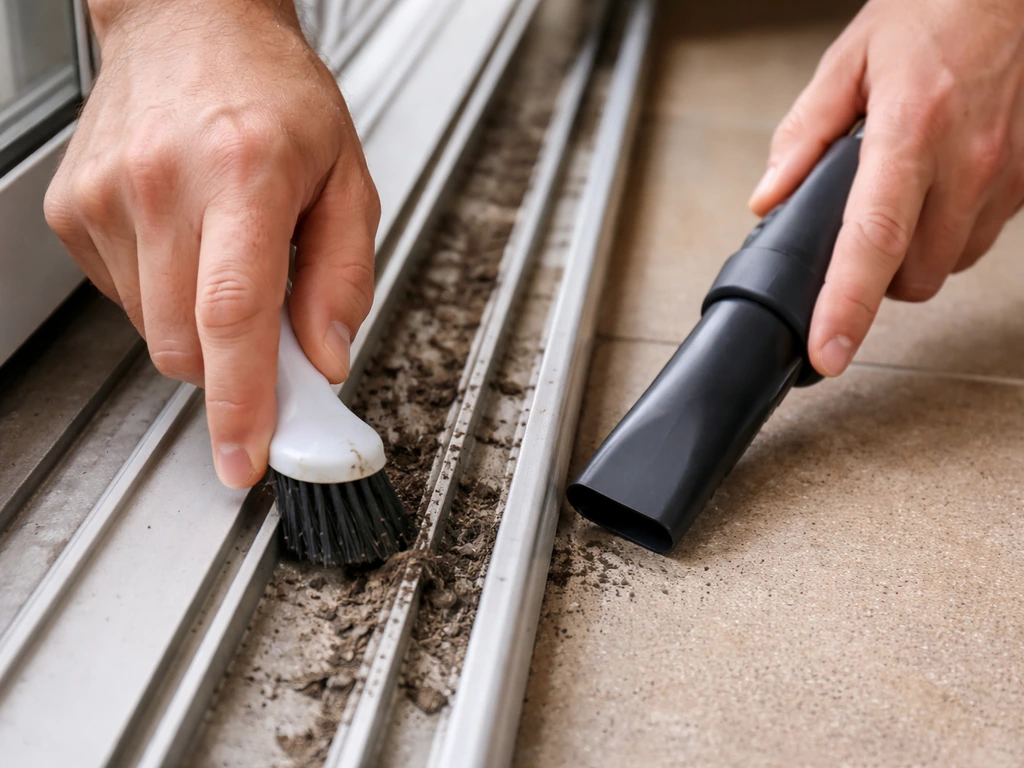
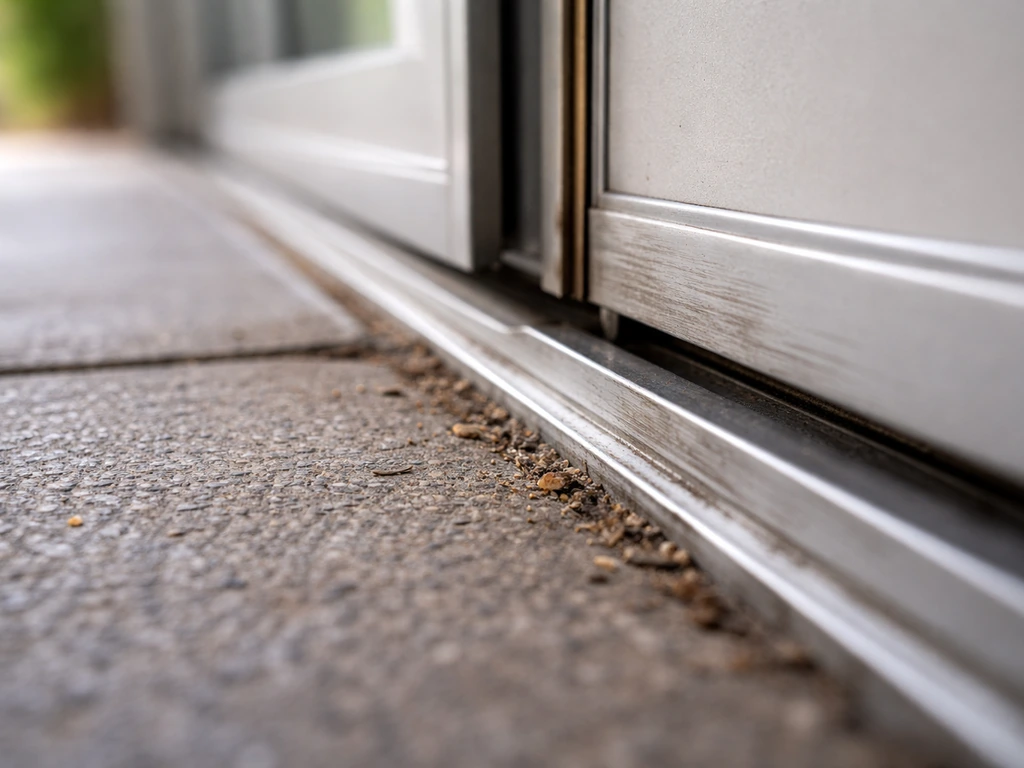
Run a nylon brush or an old toothbrush along the full length of the bottom track to dislodge visible debris. Follow up with a vacuum to pull out what the brush loosened. You want the groove the door's rollers ride in completely clean before you attempt to move the door. This alone frees a lot of doors that appear seriously stuck.
Step 2: Apply dry lubricant, then try again
Spray a silicone-based dry lubricant into the track channel and directly onto the rollers at the bottom of the door. Do not use WD-40, cooking spray, or any oil-based product. Oil attracts dirt and makes the binding worse within a few weeks. Give the lubricant 60 seconds to settle, then try sliding the door using steady, even pressure on the frame rather than a sharp jerk.
Step 3: Check and adjust the rollers
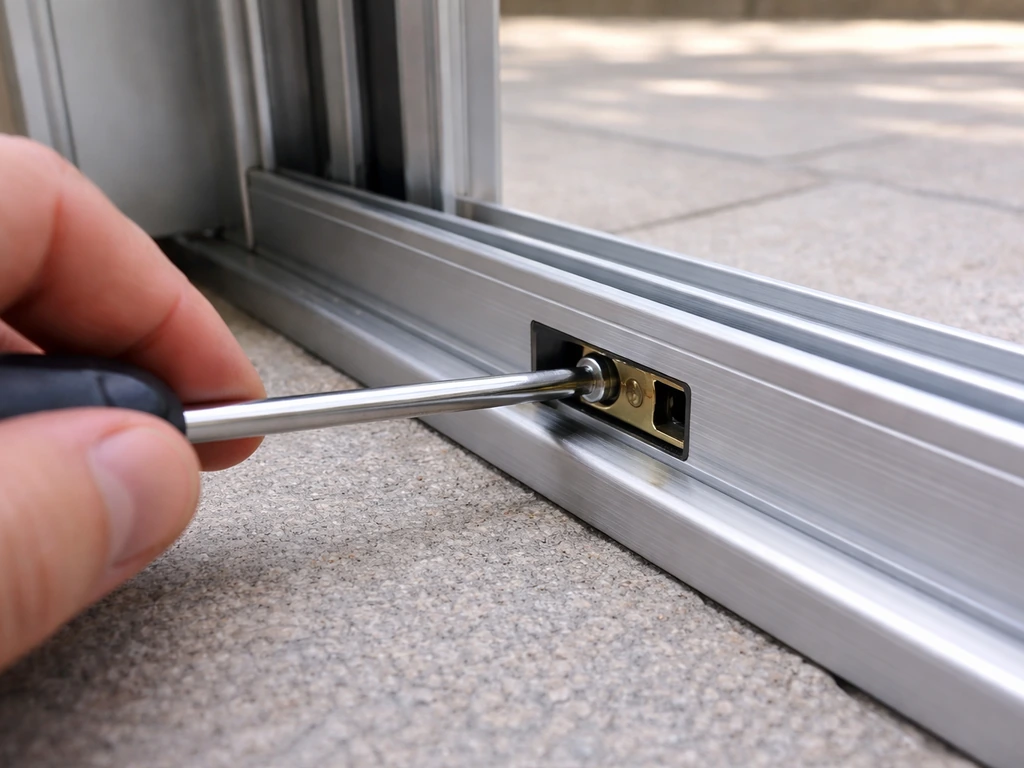
Most sliding patio doors have roller adjustment screws accessible through small holes or slots on the bottom rail of the door panel, usually near each end. Turning the screw clockwise raises the door, counterclockwise lowers it. If the door is dragging on the bottom of the track, raise it slightly. If it's catching on the top guide, lower it.
Make small turns, a quarter-turn at a time, and check movement after each adjustment. Critically: do not use a power drill or impact driver for these screws. Milgard specifically cautions against air or battery power tools when adjusting rollers because they strip the screw heads and threads easily. Use a manual screwdriver only, and if you can, have someone help hold the door panel slightly lifted while you turn the screw so the roller isn't under full load during adjustment.
Step 4: Address sticking at the top
If the door is binding at the top rather than the bottom, check the top guide channel (the narrow groove the top of the door slides in). Clear any debris from it with a brush. If the guide strip itself is cracked or dislodged, the door can tilt into the frame and bind. You can usually push a dislodged guide back into place with your fingers or a flat plastic tool. Then try lowering the door slightly using the roller adjustment screws so it has more clearance in the top channel.
Step 5: Try lifting the door slightly to free it
If the door is still stuck after lubrication and roller adjustment, you can sometimes free it by lifting the bottom of the panel slightly while simultaneously sliding it. With a second person holding the panel from tipping, grip the door frame at the bottom corner and lift a few millimeters while your helper pushes or pulls horizontally. This takes the roller out of whatever groove or debris it's wedged in and often breaks the door free immediately. This is exactly the technique Pella references when they instruct raising the door clear of the track during troubleshooting.
Step 6: If it still won't move, inspect the track for damage
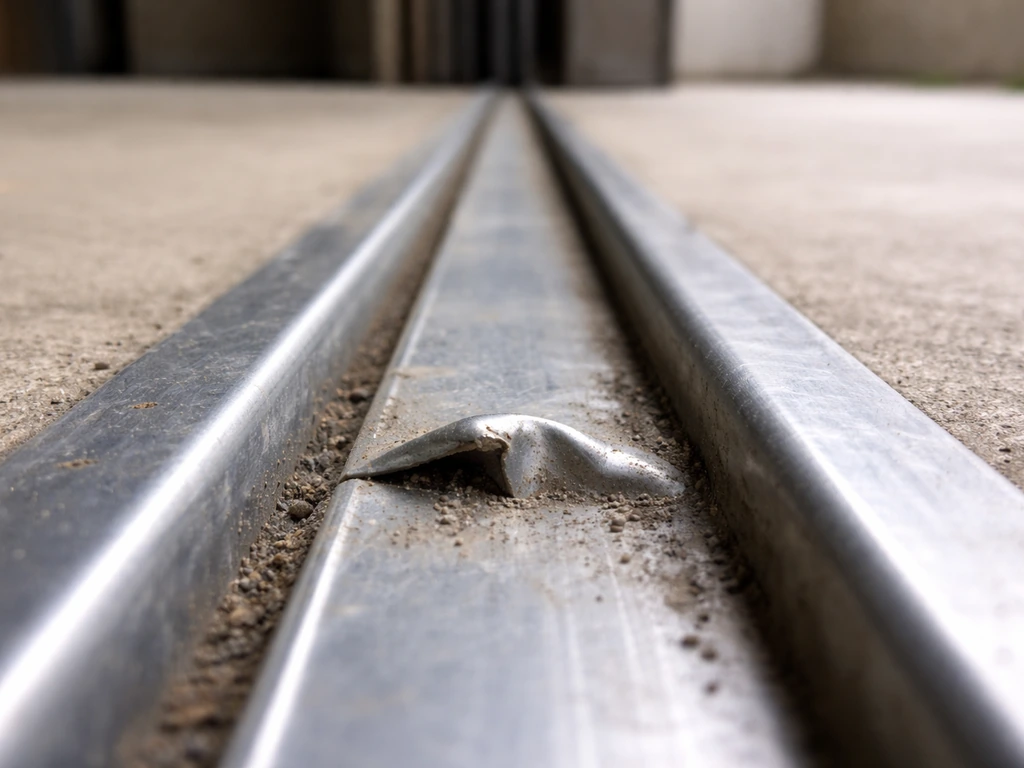
At this point, crouch down and look directly along the length of the bottom track. You're looking for a visible dent, bent section, or raised edge in the metal. If the track is visibly deformed, no amount of lubrication or roller adjustment will free the door fully. You'll need to address the track directly (see the fixes section below) or call a pro.
Why your door is stuck: causes matched to symptoms
Debris and dirt in the track
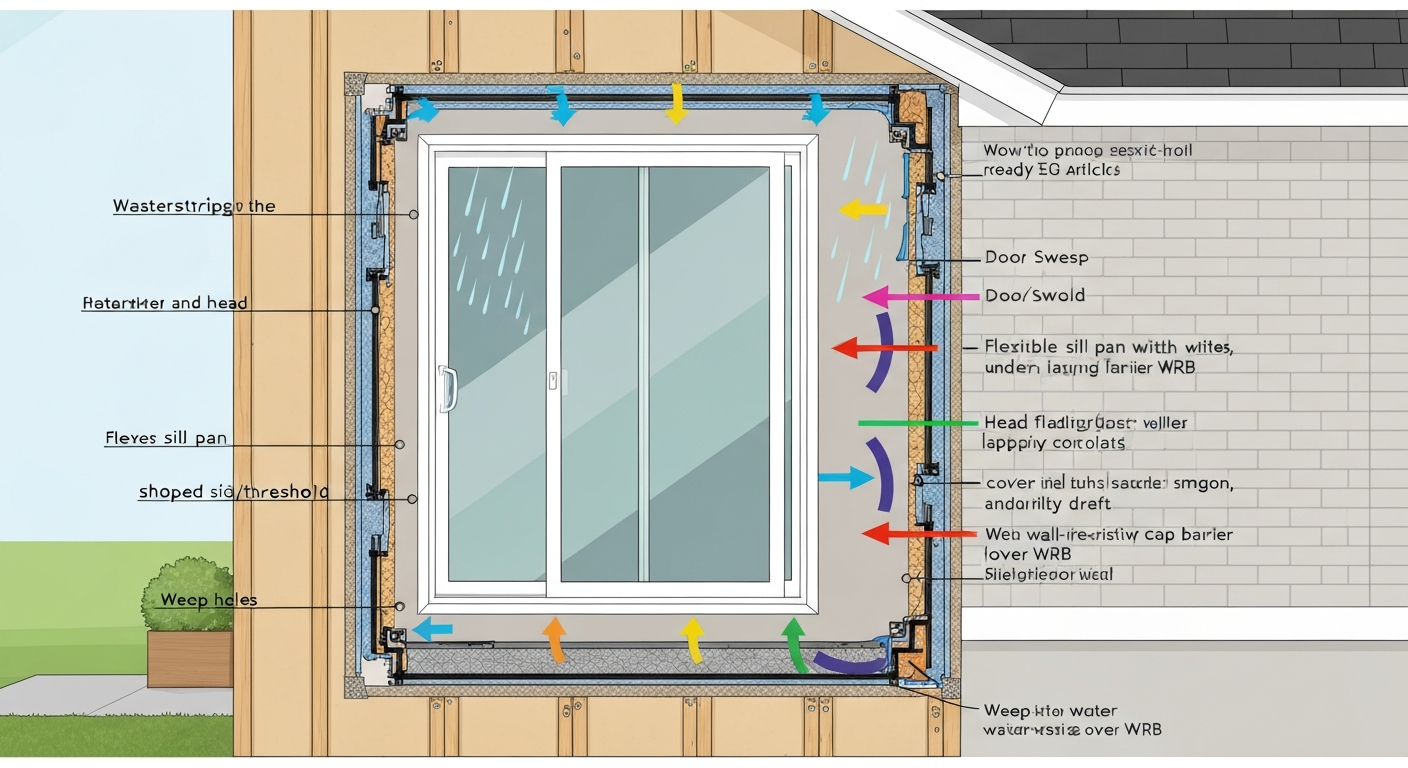
This is the number one cause of a patio door that was sliding fine and is now fighting you. Pebbles, leaves, pet hair, and compacted dirt all accumulate in the bottom track groove and eventually build up enough to block or lift the rollers out of their path. It's especially common after winter (grit tracked in from outside) and summer (dried plant debris). Milgard notes that water can also pool in the outside sill track, which then dries and leaves mineral deposits that act like sandpaper under the rollers.
Misaligned or worn rollers
Rollers get knocked out of adjustment over time, especially in homes where the door gets heavy use or where the subfloor has settled. A roller that is set too low drags on the track surface. A roller set too high allows the door to tip and bind in the top channel. Worn rollers, ones where the wheel itself is cracked, flat-spotted, or has seized up, will grind and eventually stop turning entirely. A seized roller drags the door instead of rolling it, which feels like the door is suddenly much heavier than it used to be.
Swollen or warped door from moisture
Wood-framed patio doors can swell significantly in humid weather, spring rain seasons, or after a leak along the threshold. If your door sticks only during certain times of year or after wet weather, swelling is the likely culprit. Vinyl and aluminum doors can also expand from heat but are generally less severe. A swollen door that is borderline on clearance will stick in summer and slide freely in winter, which is a reliable diagnostic clue.
Lock or latch problems
If the door is genuinely locked and won't release, the latch or keeper may be misaligned. The door panel may have shifted so the latch bolt no longer lines up with the keeper strike plate. You'll sometimes see this as a handle that lifts but feels like it's catching on something internal before the latch fully retracts. Pella's guidance on panel alignment notes that the movable panel should sit within about half an inch of the lock jamb with the keeper adjusted to match, so if your door has drifted beyond that range, the latch mechanism may be fighting the misalignment.
Bent or damaged track
Heavy foot traffic, dropped tools, or someone stepping directly into the track (rather than over it) can dent aluminum track sections. Even a small dent creates a hard stop for the roller. This is one of the causes you can't fully solve with cleaning and lubrication alone.
Fixes and adjustments once the door is moving again
Clean the track properly
Start with a vacuum, then scrub with a nylon brush and warm soapy water. For stubborn mineral deposits or rust staining, fine-grade steel wool (the finest grade available) can be used carefully, but avoid anything that will scratch or gouge the track surface. Wipe the track dry before lubricating. Milgard recommends vacuuming tracks regularly as a maintenance habit, not just a one-time fix, because debris accumulation is ongoing.
Adjust the rollers for proper door alignment
Once the door is moving, the goal is to set the rollers so the door has equal clearance at the top and bottom of the frame (what Pella calls an equal reveal top to bottom). Use the adjustment screws at the bottom of the door panel, turning them in small increments and checking after each one. The door should slide with consistent, light resistance along its full travel. It shouldn't tilt toward the top channel or drag at the bottom. When it's right, the latch should engage the keeper smoothly without having to push the door sideways to make it latch.
Lubricate correctly
Use a dry silicone spray on the track surface and on the rollers. Both Milgard and Andersen recommend silicone-based lubricants specifically and warn against oil-based products, which attract grime and shorten the time until the door sticks again. Andersen additionally warns against any lubricant containing acetone, which can damage door components. Spray, wipe off the excess, and slide the door back and forth several times to work the lubricant in. Repeat this every six months as basic maintenance.
Straighten a mildly bent track
If the track has a minor dent, you can sometimes carefully work it back to shape using a flat piece of wood as a buffer and a rubber mallet. The goal is to restore the channel width so the roller can pass, not to make it look perfect. If the track is bent in multiple places or severely deformed, replacement is a better outcome than repeated patch work.
Realign the door in the frame
After cleaning and lubricating, slide the door fully closed and check the gap between the door and the frame along the top and both sides. It should be even and consistent. If one corner is closer to the frame than the other, use the roller adjustment screws to raise or lower that corner until the gap evens out. Then test the latch. If the latch now engages without forcing it, you've got the alignment right.
Screen door vs. glass door: what's different
Most patio door setups include both a primary glass sliding door and a secondary screen door, and they can stick for overlapping but sometimes different reasons. It helps to know which one is actually stuck, or if both are.
If your screen door is stuck
Screen doors are much lighter than glass panels, so when they stick it's almost always debris in the track, a roller that's dropped too low and is dragging, or a roller that has simply come off the track. Screen door roller adjustment screws are typically located on the side of the screen frame (Stanek's documentation places them on the side rail, while Pella's manual points to screws on the top and bottom rails depending on the model).
The key risk with screen door roller adjustment is raising the rollers too high: if the bottom rollers are raised so far that the top of the screen panel lifts out of the top track groove, the screen falls out entirely. Adjust incrementally and check that the screen still sits in the top channel after each adjustment.
Andersen's retractable screen guidance also warns specifically against stepping on or rolling heavy objects over the lower screen track, which is a common way these tracks get bent.
If your glass door is stuck but the screen moves fine
This is the most common scenario and means the issue is isolated to the primary door's rollers, track section, or latch. Work through the steps above for the glass panel specifically. The screen door track is usually a separate channel, so cleaning one doesn't clean the other.
If both are stuck
When both the glass door and the screen are binding, the problem is usually a shared track obstruction at the threshold or significant debris that has built up across the whole sill area. Clean the entire threshold assembly, both track channels, before attempting any roller adjustments. Heartland’s patio screen installation manual similarly instructs homeowners to thoroughly clean the sill track and head frame channel where the screen will ride before installing or adjusting the screen Clean the entire threshold assembly, both track channels, before attempting any roller adjustments.. Also check whether the threshold itself has shifted or heaved, which can affect both doors simultaneously.
One note worth making: if your patio door has integrated blinds between the glass panes, a stuck blind is a separate problem from a stuck door panel. A stuck patio door with integrated blinds is a separate issue that needs its own troubleshooting steps for the blind mechanism integrated blinds between the glass panes. If you have vertical blinds on the patio door, hanging them is usually a separate job from freeing the door itself integrated blinds.
If you have integrated blinds between the glass panes, see our guide on how to fix blinds inside patio door so you can troubleshoot the blind mechanism separately from the door panel. A door can slide perfectly while the blinds inside are jammed in a tilted position, which is its own troubleshooting process.
When to stop and call a professional
Most stuck patio doors respond to cleaning, lubrication, and roller adjustment. But some situations genuinely need a pro, and pushing past those points tends to make the repair more expensive, not less.
- The rollers are visibly cracked, flat-spotted, or seized and won't turn at all. Roller replacement is doable as a DIY job if you're comfortable removing the door panel, but it involves fully removing a 50 to 100 pound glass panel and sourcing matching replacement rollers for your brand and model.
- The track is bent, kinked, or has multiple deformed sections. A badly damaged track usually needs replacement, which means removing the door and potentially disturbing the threshold or frame.
- The door frame itself is visibly racked, out of square, or the rough opening has settled. This is a structural issue, not a door adjustment issue.
- The latch or lock won't release no matter what you try. If the multipoint lock or handle hardware is internally broken, forcing it can make the door impossible to open at all. A locksmith or door hardware specialist is the right call here.
- You see visible cracks, chips, or fogging in the glass panel. The door should not be forced open or shut until the glass is evaluated.
- The door was fine, then a family member used heavy force on it, and now it's misaligned and won't close properly. Sudden misalignment from force often means a bent track, displaced roller carriage, or damaged frame hardware.
Security and weatherproofing after you free the door
Once the door is sliding again, take a minute to confirm it's actually secure before you call it done. Close the door fully and check that the latch engages positively, that the keeper is aligned so the latch bolt drops into it without side pressure on the door, and that any auxiliary locks (pin locks, foot locks, security bars) still work. A door that slides but doesn't latch firmly is a security problem.
If the door now closes with a visible gap at the top or side where it didn't have one before, check the weatherstripping for compression and replace any sections that are flattened or torn. A properly aligned and lubricated patio door should close, latch, and seal in one smooth motion. If it still needs a shove to latch, the roller alignment isn't quite right yet, and that's worth another adjustment pass before you put your tools away.
FAQ
How can I tell if my patio door stuck is caused by the roller adjustment versus track damage?
After you release the latch and lubricate, try sliding the door while watching where resistance spikes. If the door suddenly stops at the same spot each time, especially with grinding or a hard catch, that points to a dent, raised edge, or bent track section rather than a simple roller height issue. Cleaning and silicone can help, but they usually will not restore a damaged channel.
Is it safe to keep forcing a patio door stuck until it moves?
Generally no. Sliding patio doors can weigh 50 to 100 pounds and can swing hard when they finally release, which raises the risk of pinched fingers and glass damage. If it will not move after lock release, cleaning the track, and silicone lubrication, stop and check for a bent track, seized rollers, or frame misalignment before trying again.
What should I do if the door lifts slightly but then immediately drags again?
That pattern often means a roller is still catching on the top guide or a roller is out of balance. Make small roller adjustment changes (about a quarter-turn at a time) and aim for equal clearance at the top and bottom across the door’s travel. If the top guide channel has debris or a dislodged guide strip, clear that first because the roller may keep dropping into the same bind point.
Can I use a wet lubricant to free a patio door stuck faster?
Avoid oil-based products and anything that leaves a wet residue. They can attract grime quickly and make the binding return within weeks. Use a dry silicone lubricant intended for door tracks, and wipe any excess so it does not smear dirt into the groove.
My patio door stuck only after rain, what does that indicate?
If the door is fine in dry weather but sticks after wet seasons or leaks, swelling or warping from moisture is a likely cause. Wood framed doors are especially prone. In that case, you may need clearance adjustments and sometimes weatherproofing or leak correction, not just track cleaning.
What if the latch feels like it catches even though the handle moves?
That usually indicates misalignment between the moving panel and the keeper strike plate. Even when the handle lifts, the bolt can bind internally if the panel shifted beyond the normal gap. Check and fine-tune roller height to restore the proper alignment, then retest latch engagement without pushing the door sideways.
How do I prevent accidentally raising the rollers too high?
Adjust in very small increments and check after each one. Raising rollers too much can tip the panel and cause the top guide to bind or, for screen doors, can even lift the panel out of the top track. Always keep an eye on the gap changes at the top and both sides, not just whether the door slides a few inches.
If my screen door is stuck, do I clean and adjust it the same way as the glass patio door?
No. The screen door often has its own track and its own roller adjustment screws. Cleaning the bottom track of the glass door does not necessarily clear the screen’s channel. Also, screen doors are easier to dislodge, so confirm after each adjustment that the screen remains seated in the top track groove.
What are signs that a roller is seized and needs replacement?
If the door feels suddenly heavier or drags like it is grinding, and the resistance does not improve after track cleaning and silicone, the roller may be cracked, flat-spotted, or seized. A seized roller will not roll smoothly, and adjustment may only mask the problem briefly. That is when replacement is usually the practical next step.
How should I clean mineral deposits in the track without damaging it?
Vacuum first, then scrub with a nylon brush and warm soapy water. For stubborn deposits or rust staining, use the finest grade steel wool available carefully, and stop if you see scratching or gouging. Wipe the track dry before applying silicone, because moisture can interfere with adhesion and encourages new buildup.
After I get the patio door stuck fixed, how often should I do maintenance?
A simple interval works well. Vacuum and inspect the tracks regularly, then apply dry silicone about every six months as basic maintenance. This is especially important if you live where grit, plant debris, or winter sand is tracked in, or if water pools near the outside sill.
When should I call a pro instead of continuing adjustments?
Call for help if the bottom track is visibly dented or bent in multiple places, if the door still binds at the same spot after cleaning, lubrication, and small roller adjustments, or if latch alignment cannot be corrected without forcing the door. Persistent issues after alignment attempts often mean damaged hardware, severely deformed track sections, or roller assemblies that require replacement.
Is there a safe way to lift the patio door when it is wedged?
Yes, but do it deliberately. Lift only the bottom of the panel a few millimeters while a second person stabilizes the door to prevent tipping. Avoid jerking, because the door can release suddenly. If you cannot reproduce a controlled lift and slide without strain, stop and look for a bent track or seized roller instead.
Next Article
How to Protect Patio Door from Rain: DIY Fixes, Steps & Costs
How to protect patio door from rain: step-by-step DIY fixes, tests, tools, seasonal tips, and when to call a pro.