Lift the door slightly, angle the bottom out toward you, and guide the rollers back onto the track rail. That's the core of it. But if you just muscle it back without figuring out why it came off, it'll pop off again within days. The fix that actually sticks takes about 20–30 minutes and involves cleaning the track, re-seating the door, and turning two roller adjustment screws so the door rides at the right height.
How to Put a Patio Door Back on Track: DIY Steps

Jamie Archer
31 May 2026
Safety checks first: figure out what actually went wrong
Before you touch the door, do a quick visual inspection. You want to know whether the door came off because something blocked the track, because the rollers are worn out, or because the door was riding too low and finally caught an edge. These three causes look similar from the outside but have different fixes.
Safety first: a sliding patio door panel is heavy, typically 50–100 lbs or more depending on glass thickness. Don't try to lift and re-seat it alone if the door is full-sized double-pane glass. Get a second person. If the glass is cracked or the frame is bent, stop and call a pro rather than risking a panel collapse.
Now run through this quick diagnostic checklist before doing anything else:
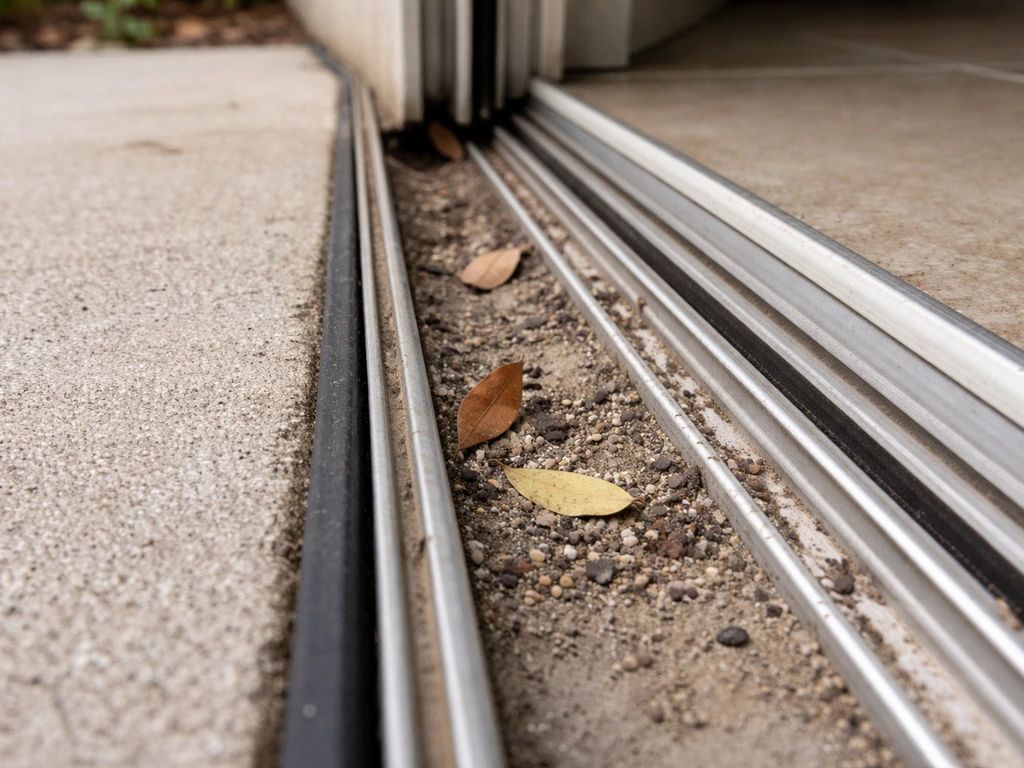
- Look down the bottom track for debris: dirt clumps, pet hair, lint, gravel, or a small toy. Built-up grit is the most common reason doors start riding off-track, and it's the easiest fix.
- Check the track itself for a bent or dented section. Run your finger along it. A deformation you can feel is a red flag that the track may need replacing, not just cleaning.
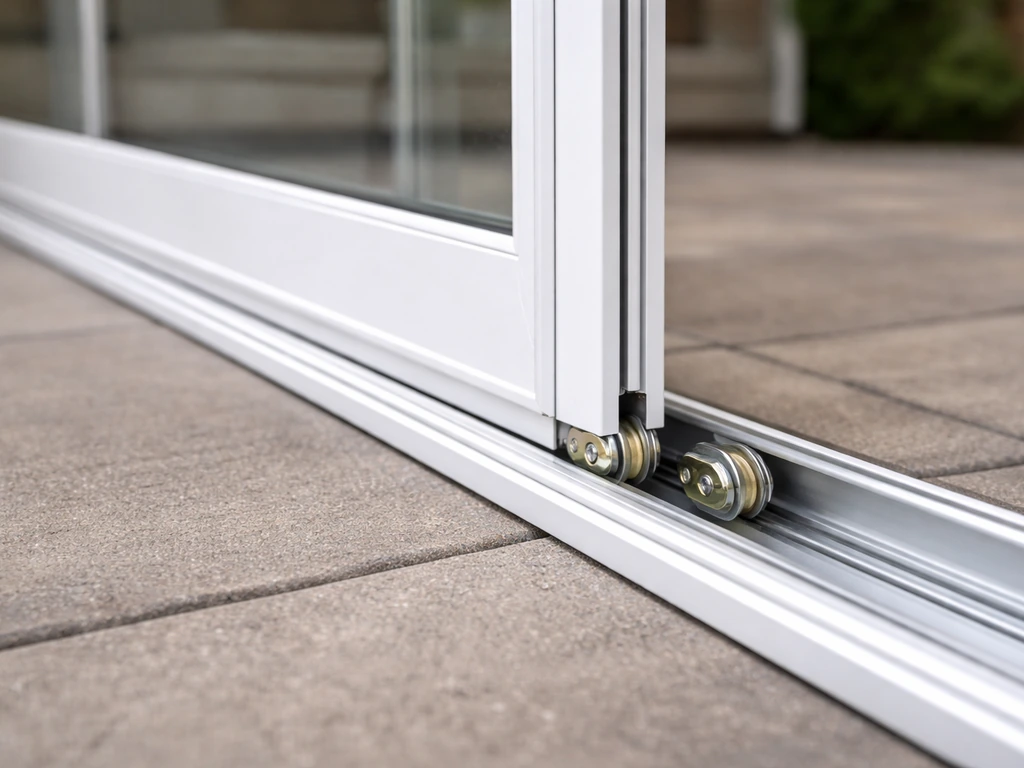
- Look at the bottom of the door panel where the rollers sit. Can you see the roller wheels? Are they visibly cracked, flat-spotted, or corroded? A clicking sound when you've tried to slide the door often points to a cracked or chipped roller wheel.
- Check whether the door is still square in the frame. If the top corner gaps are uneven (one side larger than the other), the door has probably been riding out of adjustment for a while.
- Look at the anti-lift pin or security bar if your door has one. Some doors have a screw-in pin at the top of the frame that prevents lifting; if it's engaged too far, it can actually prevent you from re-seating the door correctly.
If the track looks clear and the rollers look intact, you're likely dealing with a simple re-seating job plus a roller height adjustment. If the rollers look damaged or the track is visibly bent, note that now so you can gather the right parts before you start.
Tools and materials you'll need
Everything here is standard hardware-store stuff. Gather it before you start so you're not hunting around mid-job with the door half off its track.
- Phillips head screwdriver (for roller adjustment screws)
- Flathead screwdriver or putty knife (to pry off roller access caps on the door's bottom edge)
- Wet/dry vacuum with a narrow attachment
- Stiff nylon brush or old toothbrush (for scrubbing the track channel)
- Non-abrasive track cleaner or mild dish soap and warm water
- Clean rags or paper towels
- Dry silicone spray lubricant (not WD-40, which attracts dirt)
- A second person to help lift the door panel
- Work gloves
Step-by-step: lift the door and get it back on the track
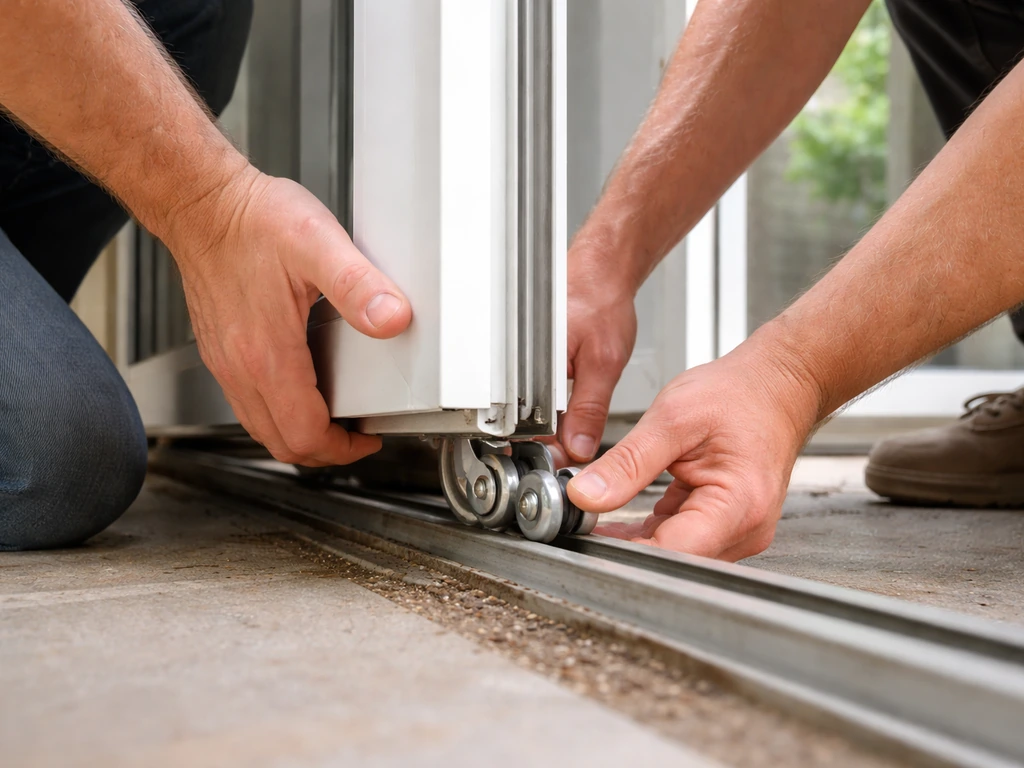
Work through these steps in order. Skipping the track cleaning step and jumping straight to lifting often means you're re-seating the door onto the same debris that knocked it off. Skipping the track cleaning step lets dust, dirt, and debris build up, which can cause sliding doors to jam or pop off again, so clearing the track matters.
- Clear the track first. Vacuum out the bottom channel with your wet/dry vac. Use the nylon brush to break up packed-in dirt, then vacuum again. Wipe the channel clean with a damp rag. Make sure you're not pushing debris into the weep holes (the small drainage slots in the track) since blocked weep holes cause water infiltration later.
- Raise the roller adjustment screws before re-seating the door. Find the roller access holes or caps at the bottom corners of the sliding panel. Pry off any plastic caps with your putty knife. Turn the roller adjustment screws clockwise to raise the rollers up into the door body. This gives you extra clearance to get the door seated without fighting the track.
- Check for and disengage the anti-lift pin. If your door has a security pin screwed into the top track or frame header, back it off a few turns so it doesn't block the lift.
- Position yourself and your helper. One person grips the door panel at the top corner, the other at the bottom. You're going to lift up and tilt the bottom of the door toward you (into the room), just a few inches.
- Engage the top track first. Slide the top edge of the door panel up into the upper track channel. Make sure it's fully seated in the top before you worry about the bottom.
- Lower the bottom rollers onto the lower track. While keeping upward pressure so the top stays seated, swing the bottom of the door toward the track and lower it gently so the roller wheels drop onto the track rail. If the panel feels like it's catching, lift up slightly and shift the bottom in or out until you feel the rollers drop cleanly onto the rail. Don't force it.
- Test the slide. Push the door gently along the track about a foot in each direction. It should move without catching. If it drags or feels like it's grinding on the track surface, the rollers need to come back down (see the next section).
Adjust rollers, wheels, and height so the door actually glides
Re-seating the door is only half the job. If the rollers are set at the wrong height, the door will either drag along the bottom track or ride too high and create a gap at the bottom where air and bugs get through. You want the door to glide freely with the bottom panel sitting just clear of the track surface.
With the door back on the track, go back to those roller adjustment screws at the bottom corners of the sliding panel. Turning the screw clockwise raises that corner of the door; counterclockwise lowers it. Work in small increments, about a quarter-turn at a time, then slide the door to feel the difference. The goal is even, smooth travel with no dragging and a consistent gap at the top of the door frame (typically around 1/4 inch) from side to side.
Adjust each corner independently. If the door drags on the left side, raise the left roller. If it's tilted so the top gap is larger on one side than the other, adjust both corners until the door hangs square. Slide it back and forth after each small adjustment to check. Once it moves smoothly, re-engage any anti-lift security pins you backed off earlier, and snap the roller access caps back in place. Remove the roller access caps to reach the roller adjustment screws, then use the correct screwdriver to turn the screws to change the door height and relieve rubbing re-engage any anti-lift security pins.
Finish with a light coat of dry silicone spray along the track rail and on the roller wheels. This keeps the rollers moving freely without attracting the grit that caused the problem in the first place. Avoid oil-based lubricants; they gum up and make things worse over time.
Fix common follow-on problems after re-tracking
Door still drags or sticks
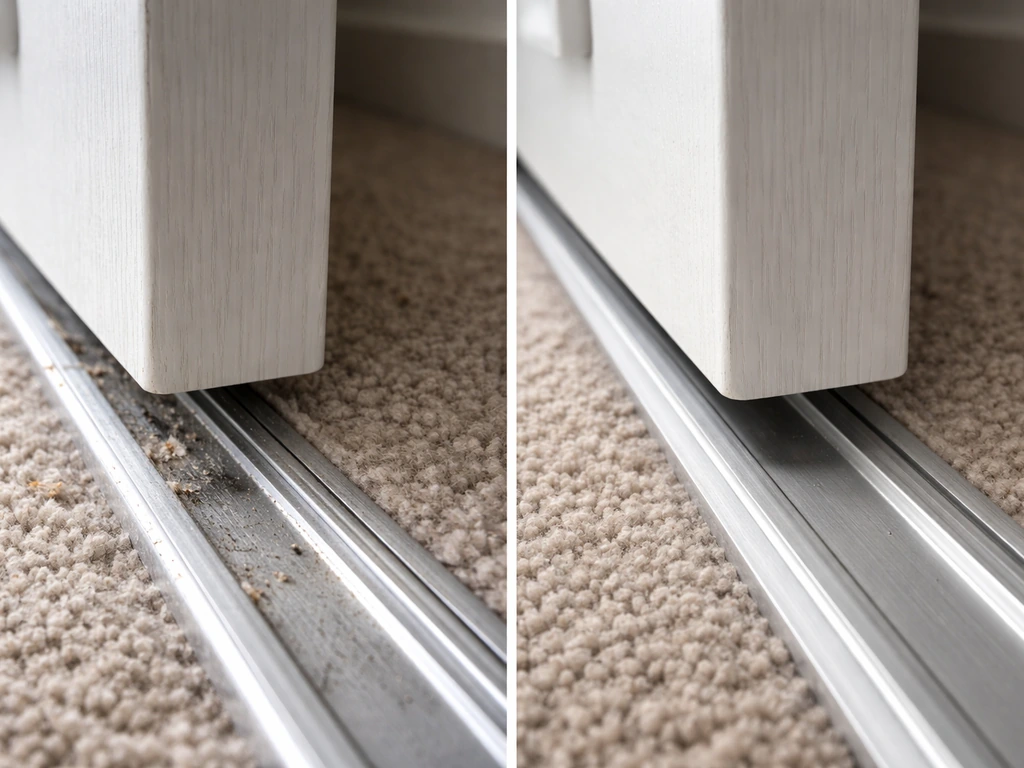
If you've adjusted the rollers and cleaned the track and the door still drags, check two more things. First, look at the track for any remaining debris or a slight dent you might have missed. Second, try sliding the door slowly and listening for a clicking or grinding sound at a specific point. If the drag is localized to one spot on the track, there may be a deformation in the track at that location. A bent section of aluminum track can sometimes be carefully tapped back with a rubber mallet, but if it's badly dented, the track section may need replacing.
Door won't close fully or sits unevenly
If the door closes most of the way but the leading edge doesn't sit flush with the frame, revisit the roller height. An uneven reveal at the top of the door (gap larger on one side than the other) almost always means one roller is set differently than the other. Adjust the lower corner until the top gap is consistent. The target is roughly 1/4 inch uniform gap at the top edge from the latch side to the hinge side.
Lock or latch won't engage
This is a really common after-effect of re-tracking. The door's lock hardware is designed to engage the strike plate or receiver at a specific height. If you had to adjust the rollers significantly to get the door sliding smoothly, the latch may now be hitting high or low on the strike plate. Most strike plates have a small adjustment screw that lets you shift the receiver up or down to meet the latch.
Adjust it until the lock engages cleanly with one smooth motion. If you have to lift the handle or shove the door to get it to lock, the alignment is still off. Don't ignore that: forcing the latch is one of the main ways doors end up back off the track.
Drafts or gaps around the closed door
If you're feeling air infiltration after getting the door back on track, first check whether the door is fully square and the weatherstripping is making contact around the full perimeter. A door that rode off-track for a while may have slightly compressed or displaced the weatherstrip along the bottom or side. Press the weatherstrip back into its channel if it's come loose. If it's visibly flattened and no longer makes a seal, weatherstrip replacement is a cheap fix (usually under $20 for a standard length). Also confirm the weep holes in the bottom track aren't plugged, since blocked drainage can push moisture back under the door seal.
When to stop DIYing and call for help
Most re-tracking jobs are genuinely DIY-friendly. But there are specific situations where pushing through will cost you more time and money than just getting a pro involved from the start.
| Symptom | Likely cause | Recommended action |
|---|---|---|
| Rollers visibly cracked, flat, or won't spin | Worn/broken roller wheels | Replace rollers before re-seating; DIY with correct replacement part |
| Track is visibly bent, dented, or has a raised section | Track deformation from impact or long-term off-track wear | Track section replacement; consider a pro if the frame is also involved |
| Door keeps popping off track after re-seating | Roller failure, frame out of square, or track too worn to hold | Roller replacement at minimum; frame inspection by a pro |
| Frame corner gaps are large and uneven, door won't square up | Frame settling or warping | Professional inspection; may indicate structural or sill issue |
| Glass panel is cracked or frame is visibly bent | Impact damage | Do not attempt to re-seat; call a pro or door replacement service |
| Lock cylinder or handle is damaged or won't engage at all | Hardware failure beyond alignment | Replace lock hardware or call a locksmith/door specialist |
Worn rollers are the most common reason a DIY re-track doesn't hold. If the roller wheels have flat spots, are corroded, or wobble when you spin them by hand, no amount of adjustment will give you a smooth, reliable door. Replacement rollers for most common brands (Pella, Andersen, Milgard) are available through specialty hardware suppliers for $15–$50 a set, and swapping them is a reasonable DIY project with the right part. But if you're not sure what you need, a door hardware specialist can identify the correct roller by the door model and year.
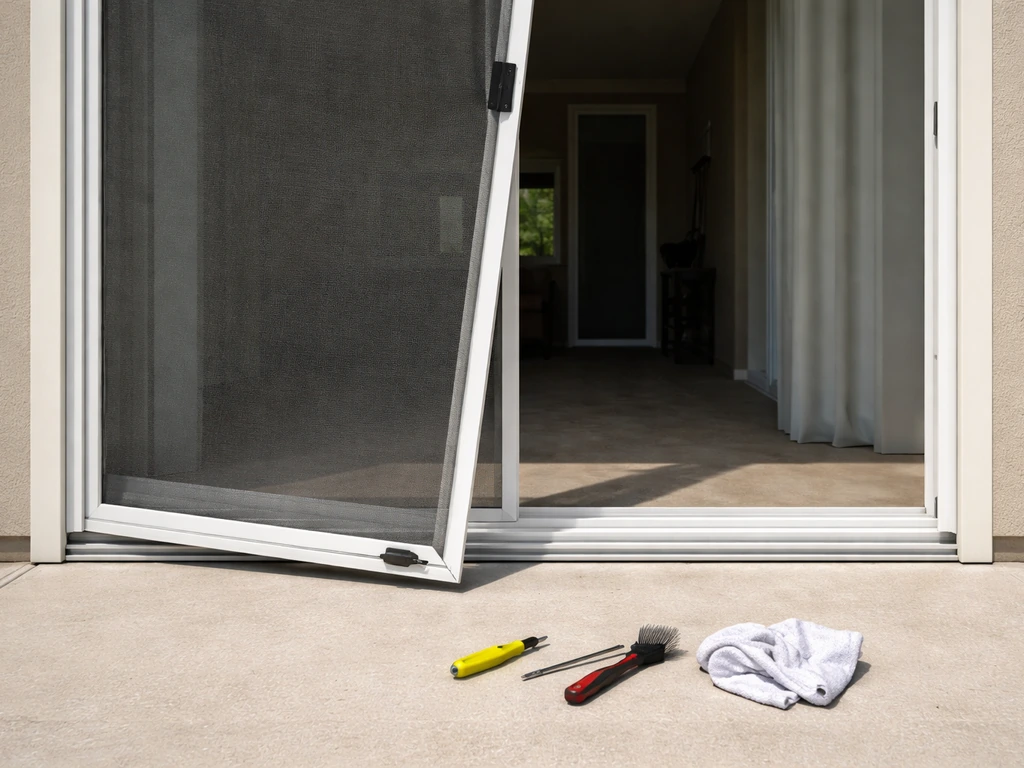
One more thing worth mentioning: if your sliding door has a matching screen door that also came off its track during this incident, that's a simpler and separate fix. If your patio screen door also came off, you can use the same re-seating idea to put it back on track correctly screen door back on track.
If your patio door screen is damaged or won’t slide properly, you can replace the screen frame using the same careful approach and the right spline and clips how to replace screen on patio door. If your patio screen door has a similar problem, the same track cleaning and roller-height checks can help you fix it how to fix patio screen door.
Screen doors are much lighter and easier to re-seat, and the process is slightly different since screen door tracks are shallower and the rollers are smaller. If you need help fixing a patio screen door that keeps coming off, the same basics apply: inspect the track, reseat the rollers, and adjust the height until it glides smoothly re-seat. If you're specifically asking how to remove a patio screen door, the safest approach is to reverse the re-seating steps and support the panel while you lift it out of the track fixing a patio screen door that keeps coming off.
Similarly, if you're dealing specifically with a screen panel rather than the main glass door, the re-tracking steps differ in a few key ways.
The bottom line: clean the track, raise the rollers, seat the door from the top down, then dial in the roller height until the door glides and the lock clicks shut without force. If you’re working on a patio screen door specifically, the same core steps apply, but you may need to match the correct rollers and keep an eye on the screen frame and tracks. Do that and the door should stay on track. If it doesn't, the rollers or the track itself need replacing, not more adjustment.
FAQ
Should I spray WD-40 or oil into the patio door track to make it slide easier?
Do not lubricate first. Dry silicone spray is fine after the track is clean and the door moves freely, because oils and grease attract grit and speed up future derailments. Also wipe out any old oily residue in the track before re-spraying.
My patio door keeps coming off the track, how do I stop it from happening again?
For a problem that repeatedly comes back within days, focus on the cause, not just the re-seating. Look for recurring debris, verify the bottom rail is straight (no dent at the drop-off point), and confirm the rollers are not flat-spotted or corroded. If you keep having to re-adjust the rollers, the track or roller assembly may be worn and will likely need replacement.
What should I do if the door drags after I put it back on the track?
If you hear scraping or notice the door rides unevenly, stop and recheck roller height before trying to fully seat the door again. Even a quarter-turn can shift a corner enough to create a new “catch point.” After each small adjustment, slide the door open and closed and inspect the top gap for consistency.
What if the rollers feel like they will not spin smoothly or they seem stuck?
If the rollers feel seized, you may have contamination in the track or a roller that has failed internally. Try sliding the door gently with the panel still accessible, inspect for grit buildup in the track bottom, and check whether roller wheels wobble or resist spinning by hand. If a roller does not rotate smoothly, adjustment will not fix it.
Can I fix a bent track without replacing the whole track section?
Yes, but only to correct a localized dent. A rubber mallet can be used carefully to coax a slightly deformed aluminum track back into alignment, then you should re-clean and re-adjust. If the track is badly dented, kinked, or the roller repeatedly drops at the same spot, replace that track section instead of continuing to reshape it.
How can I tell if the door is too low or too high after re-tracking?
If the bottom panel sits too low, it can catch edges and also make the gap at the bottom too large, leading to drafts and insects. Raise each roller in small increments until the door glides without dragging, and aim for a consistent small gap at the top edge (about the same on both sides) so the door hangs square.
Why is my patio door still leaking air after I reinstalled it on the track?
Air leaks are often a weatherstrip issue after the door rode off-track. Check that the weatherstripping is fully seated in its channel around the perimeter, especially along the bottom and both sides, and confirm the bottom track’s weep holes are not blocked. If the weatherstrip looks flattened or cracked, replacement is typically quicker than repeated adjustment attempts.
The door locks fine by pushing it, but it does not lock smoothly when it closes normally. Is that a sign of the wrong adjustment?
If the lock does not engage smoothly, adjust the strike plate or receiver, not the handle by force. If the door had to be significantly repositioned, the latch height can be off, which can also prevent the door from locking squarely and may contribute to future mis-tracking. Only adjust until the latch clicks in with one smooth motion, then re-check roller smooth travel.
How do I fix a top gap that is larger on one side?
If you can see a gap that changes from left to right at the top edge, the rollers are likely not set evenly. Adjust one corner at a time, then slide the door to feel the change. Aim for consistent top gap from latch side to hinge side rather than matching one spot and ignoring the other.
When should I not attempt to put a patio door back on track myself?
Get help if the glass is heavy, especially for full-sized double-pane panels. Also stop and call a pro if the frame appears bent, the glass is cracked, or you see signs the door was stressed during derailment. Those situations can make DIY reseating unsafe and can indicate deeper alignment damage.
If my patio screen door came off too, can I use the same roller adjustments as the main glass door?
If the screen door also fell off, use the same overall approach (clean track, reseat rollers, adjust height), but treat it as a separate light-weight panel with its own roller setup. Do not assume the screen and glass-door rollers or heights are interchangeable, because the screen tracks are typically shallower and the rollers are smaller.
Next Article
How to Put a Patio Screen Door Back on Track
Learn how to get a patio screen door back on track fast with alignment, roller fixes, cleaning, and troubleshooting.