Most patio screen door problems come down to four things: worn or seized rollers, a dirty or bent track, a misaligned door that's rubbing the frame, or a latch that won't catch. You can fix the vast majority of these yourself in an afternoon with basic tools. The key is diagnosing the right problem first, because the fix for a sticky latch is completely different from the fix for a sagging door.
Fix Patio Screen Door: DIY Troubleshooting and Repairs

Jamie Archer
29 Apr 2026
Quick diagnosis: what's actually wrong
Before you grab any tools, spend two minutes watching where the door misbehaves. Slide it slowly and notice exactly where it sticks, drags, or skips. That tells you almost everything.
- Drags or grinds at the bottom track the whole way: dirty track, worn rollers, or the rollers are set too low
- Rubs the top track or frame during travel: rollers are set too high, or the top of the door frame is bowed
- One side is visibly lower than the other (sagging): uneven roller height on left vs. right side
- Slides fine but won't latch at the end: strike plate is misaligned, or the latch mechanism is broken
- Screen material is torn or pulling out of the frame: spline has dried and shrunk, or the mesh itself is damaged
- Drafts around the edges even when closed: worn or compressed weatherstripping
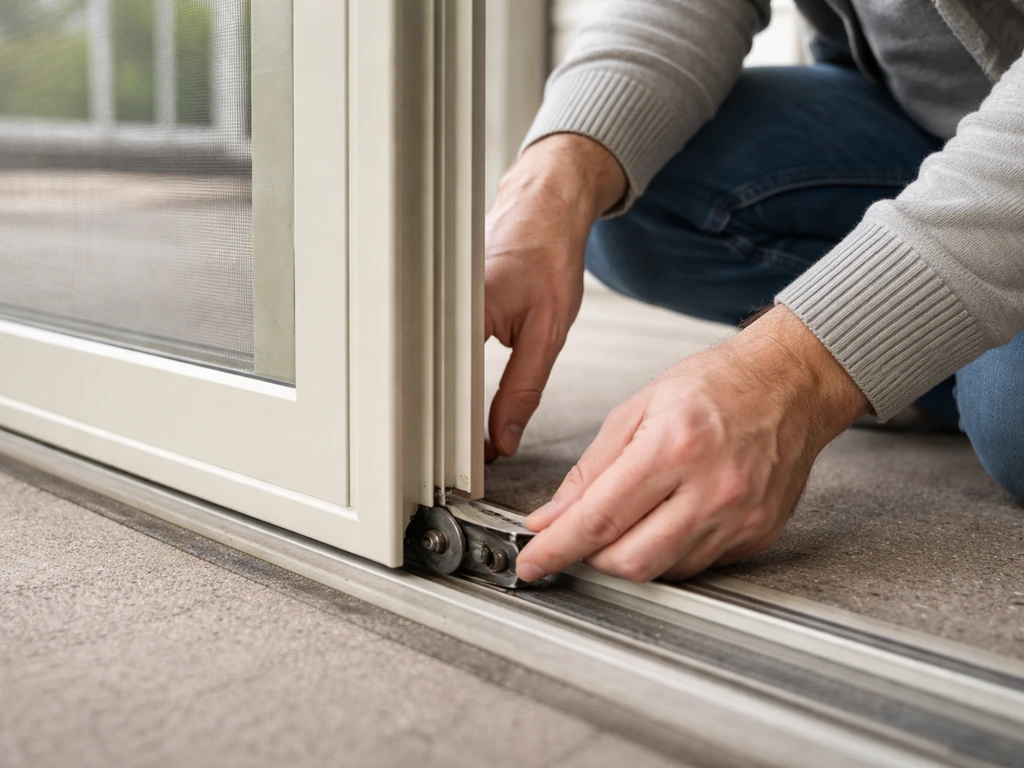
Here's a quick roller check you can do without removing the door. Look along the bottom corners of the door panel for small plastic plugs or caps. Pop those off with a flathead screwdriver. Behind each plug is a roller adjustment screw. Before you touch the screw, try spinning the roller by hand through the slot. If it spins freely, the roller itself is probably fine and your problem is height, alignment, or a dirty track. If it's seized or wobbles, plan on replacing the rollers.
Tools and safety, plus how to remove the door when you need to
Most repairs only need a Phillips screwdriver, a flat screwdriver, and some dry lubricant. If you're replacing rollers or screen material, add a few more items. Here's what to have on hand before you start.
- Phillips head and flathead screwdrivers
- Needle-nose pliers
- Utility knife
- Spline roller (also called a screen mouse) for any screen mesh work
- Replacement spline sized to your frame's groove channel
- Dry lubricant spray (silicone-based or graphite; avoid oil-based sprays that attract dirt)
- Stiff bristle brush or old toothbrush for track cleaning
- Replacement rollers if yours are seized (bring the old one to the hardware store or note the door brand)
- Safety glasses and work gloves, especially when cutting screen mesh or working overhead
Removing the door is necessary for roller replacement, deep track cleaning, or screen re-meshing. It's not as intimidating as it looks. First, look for a head stop at the top of the door opening, which is a small trim piece with screws that keeps the door from tipping inward. Back out those screws and set the head stop aside.
Then lift the door slightly to disengage the top rollers from the upper track, tilt the bottom of the door outward, and lift it clear. Do this slowly. Forcing the door can bend the frame, and a bent or cracked frame is a much bigger problem than what you started with. Set the door flat on a padded surface like a moving blanket or folded towels.
A safety note worth taking seriously: if the frame is already visibly bent or cracked before you start, handle the door carefully. A compromised frame can flex unexpectedly during removal and cause cuts or pinching. Gloves and glasses are worth the 30 seconds it takes to put them on.
Fixing sticking, sagging, and misalignment
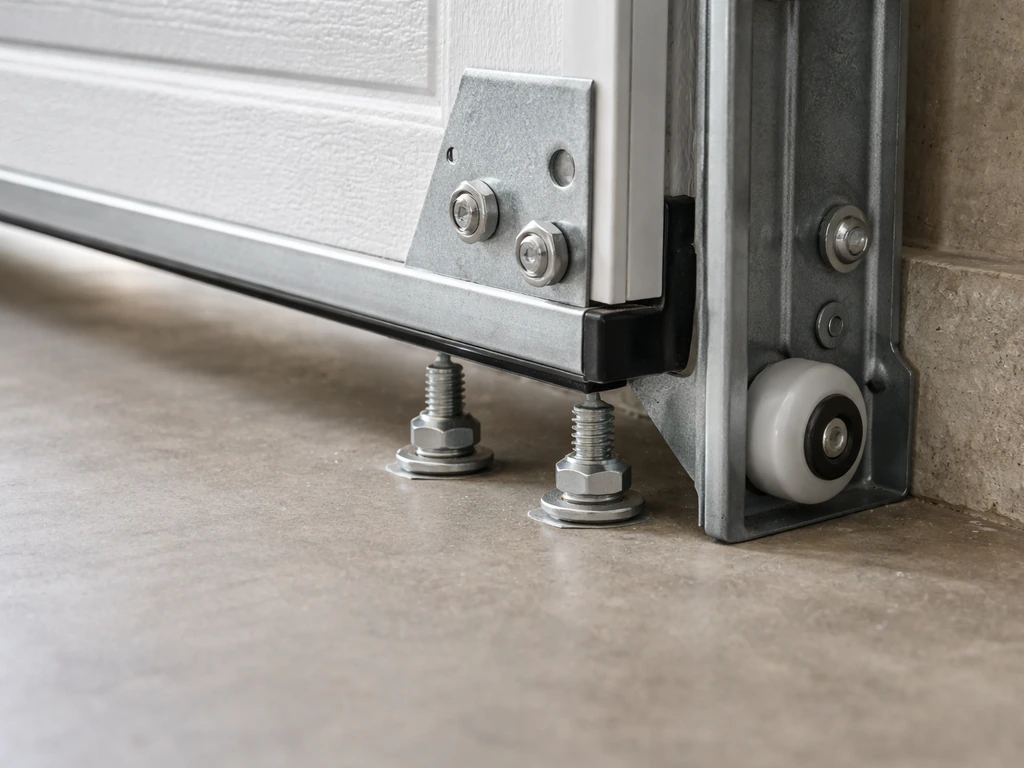
This is the most common repair and usually the easiest. The roller adjustment screws control how high or low each corner of the door sits in the track. The rule is simple: blank" rel="noopener noreferrer">turn the adjustment screw clockwise to raise that corner of the door, counter-clockwise to lower it. Lowe’s guidance says turning the roller adjustment screws clockwise and counter-clockwise changes the roller height to correct sticking, rubbing, and alignment issues blank" rel="noopener noreferrer">clockwise to raise. Use a Phillips screwdriver and make small adjustments, about a quarter turn at a time, then slide the door to test.
- Pop off the plastic caps covering the roller adjustment screws at the bottom corners of the door
- If the bottom of the door is dragging, turn both screws clockwise a quarter turn to raise the door slightly
- If the top of the door is rubbing the upper track, turn both screws counter-clockwise to lower the door
- If the door is sagging on one side, raise that side only by turning its adjustment screw clockwise
- After each adjustment, slide the door fully open and closed to check clearance
- Once the door travels smoothly, confirm it sits level by eyeballing the gap along the top and bottom of the panel
- Replace the plastic caps when you're satisfied with the adjustment
If you've run the screws to their limit in either direction and still have rubbing or sagging, the rollers themselves are worn down and no longer hold their position. That points you to the next section.
Rollers, track, and bottom guide repair and replacement
Cleaning and lubricating the track
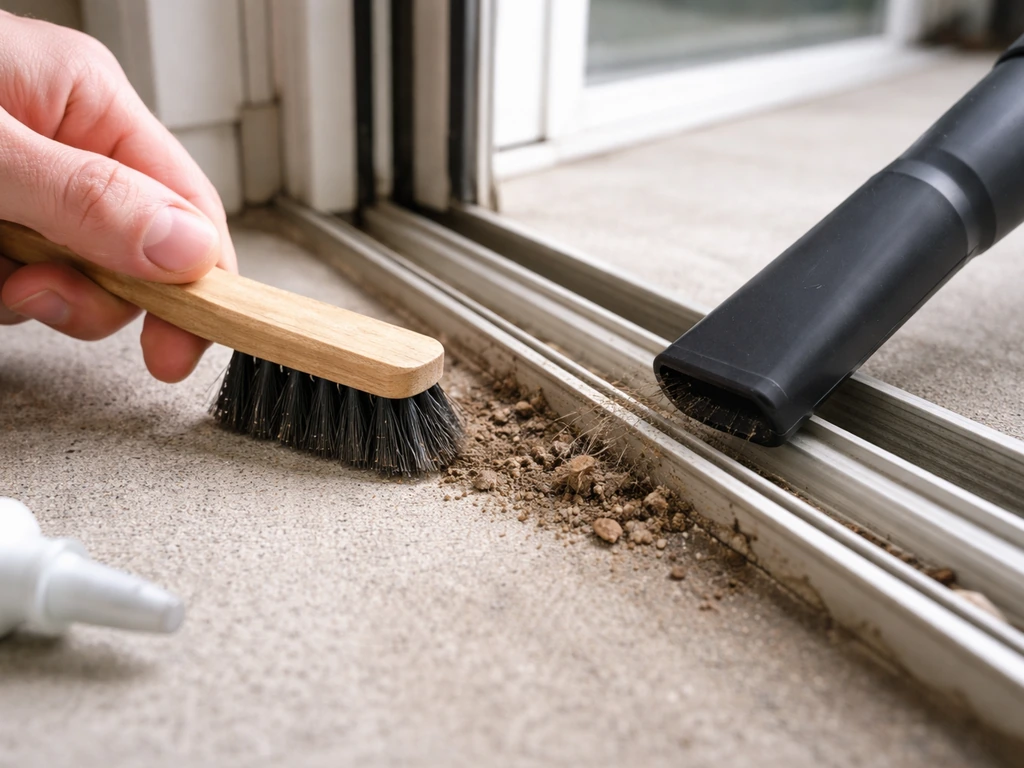
A surprising number of "broken" screen doors just need a clean track. Debris, dried dirt, and dead insects pack into the lower track channel and create real resistance. Remove the door or tilt it enough to access the full track. Scrub the channel with a stiff brush, vacuum out the debris, then wipe it down with a damp cloth. Once it's dry, apply a dry lubricant, not WD-40 or any oil-based product. Oil attracts more dirt and creates a worse problem over time. A dry silicone spray or graphite lubricant leaves a slick film without the sticky residue. Run the door a few times after applying to spread the lubricant evenly.
Replacing worn or seized rollers
If your rollers failed the spin test earlier or you've bottomed out the adjustment screws, it's time to replace them. Remove the door and lay it flat. The rollers are usually held in place by the same adjustment screw you've been working with, or by a separate retaining screw nearby. Remove the old roller assembly and take it to the hardware store to match it, or note the door manufacturer and model to order an exact replacement. Rollers are not universal, and using the wrong size will create new problems. Install the new rollers, set the height adjustment to the middle of its range, then rehang the door and adjust from there.
Bottom guide issues
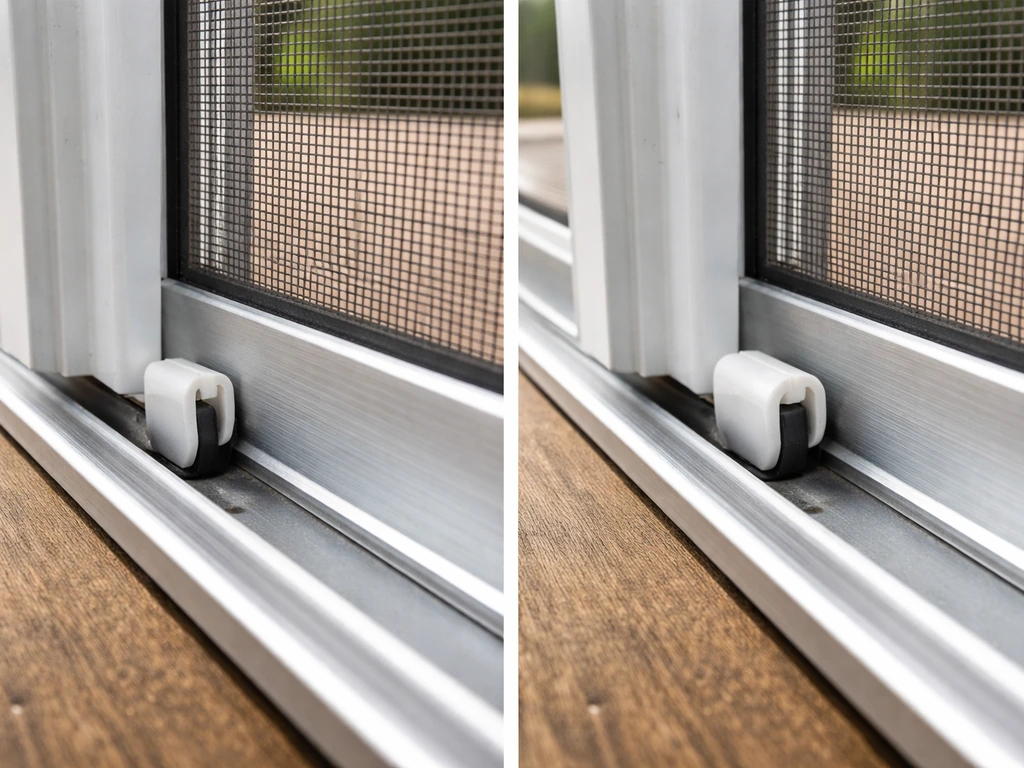
Many screen doors also have a small guide at the bottom center that rides in the track and keeps the door from swinging outward. If this guide is broken or missing, the door will wobble and may jump the track. Replacement guides are cheap (usually a few dollars) and snap or screw into place. Check that the guide isn't cracked or worn flat before assuming the rollers are the issue.
Latch, handle, and closing tension fixes
If the door slides fine but won't latch when you close it, the strike plate is almost always the culprit. The strike plate is the small metal piece mounted on the door frame that the latch clicks into. Over time, doors shift and the latch no longer lines up with the strike.
- Close the door slowly and watch where the latch hits the strike plate. Is it landing too high, too low, or missing entirely?
- Loosen the screws on the strike plate just enough to slide it, then reposition it so it lines up with where the latch actually wants to land
- Tighten the screws and test the latch. The door should catch firmly when you close it without having to force or lift it
- If the latch clicks in but releases too easily, check if there's a tension adjustment on the latch body itself. Many latches have a small set screw that controls spring tension
- If the handle is physically broken or the button/lever no longer actuates the latch, replace the handle assembly. Broken handles are a common reason doors suddenly seem hard to open or won't stay closed, and replacement handles are available for most door brands
On doors with a hook-style lock that engages by pressing a button, make sure the lock button moves freely and fully retracts before testing the latch. A stuck lock button can prevent proper latching and looks like a strike plate problem when it isn't.
Repairing the screen itself: frame, spline, and panel damage
Small tears and holes
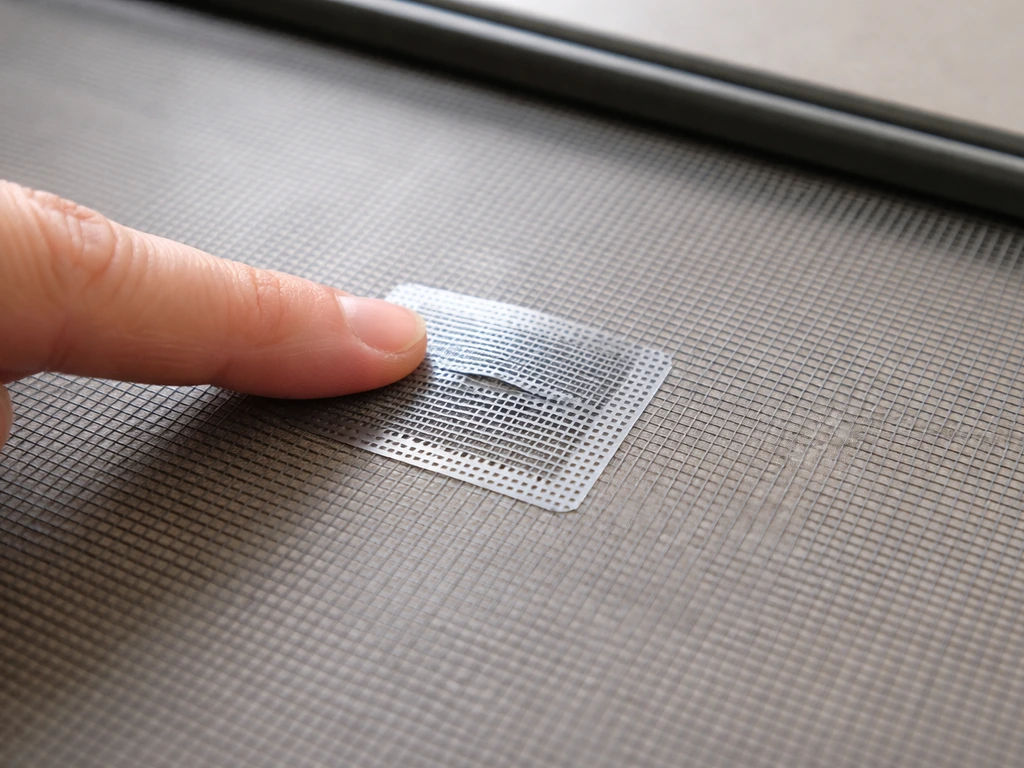
For a tear under about an inch, a patch kit from any hardware store handles it fine. Clean the area, apply the adhesive patch over the tear, and press firmly. These patches are invisible from a few feet away and hold up well through normal use.
Replacing the full screen mesh
If the screen is sagging, has multiple tears, or the mesh has pulled free from the frame, replace it entirely. After you fix the rollers or track, you can also replace the screen itself if the mesh is sagging, torn, or pulled free from the frame replace screen on patio door. This is one of those jobs that looks harder than it is. Remove the door and lay it flat. Use a flathead screwdriver or an old butter knife to pry out the spline, which is the rubber cord pressed into the grooved channel around the frame perimeter that holds the screen in place. Once the spline is out, the old mesh lifts right off.
Before buying replacement spline, measure the groove in your frame. Spline comes in different diameters and using the wrong size means the screen won't stay put. Measure the height and width of the spline channel and use a spline selection chart (Phifer publishes a widely referenced one) to confirm the right diameter. Buy replacement mesh a few inches larger than the frame on each side so you have material to work with.
- Lay the new mesh over the frame with several inches of overhang on all sides
- Start at one corner and use the concave (rounded) end of a spline roller to press the new spline into the groove, pushing the mesh into the channel as you go
- Work along one full side before moving to the adjacent side, keeping light tension on the mesh to avoid wrinkles
- At corners, fold the mesh neatly rather than cutting it. Trim the excess corner fold if needed
- Once all four sides are splined in, run the roller over the spline again for firm seating
- Trim the excess mesh with a utility knife, cutting flush against the outer edge of the spline channel
The spline roller (sometimes sold as a screen mouse) is not optional. Trying to push spline in with a screwdriver damages the spline and tears the mesh. The tool costs about five dollars and makes the job go smoothly.
Bent or damaged frame corners
Screen door frames connect at the corners with plastic or metal corner keys. If a corner has pulled apart or is bent, you can often press it back together and secure it with corner keys from a screen repair kit. If the frame rail itself is kinked or creased, that section needs to be replaced. Replacement frame rail stock is sold by the foot at most hardware stores and cuts with a hacksaw.
Final tune-up: clearance checks, smooth closing, and weathersealing
Before you call the job done, run through this final checklist. It takes five minutes and catches the things that turn into problems two weeks later.
- Slide the door fully open and fully closed three or four times. It should travel smoothly with no grinding, catching, or resistance
- Check the gap along the top and bottom of the door panel. You want a consistent, even gap with no side touching the frame
- Close the door and verify the latch catches without lifting or pushing the door. If you have to do anything other than just close it, adjust the strike plate again
- Check for drafts by running your hand slowly along all four edges of the closed door. Any airflow means the weatherstrip is compressed, missing, or seated poorly
- If weatherstrip needs replacing, apply it only when the surfaces are clean and dry and the temperature is above 50°F for proper adhesion. Frost King and similar brands make patio-specific products that work well here
- Recheck the roller adjustment screws one more time after the door has been used a few times, since new rollers and fresh adjustments sometimes settle slightly
When to call a pro instead
Most screen door repairs are genuinely DIY-friendly. But there are situations where calling a professional makes more sense than pushing through it yourself. If you’re not sure where to start, this guide on how to fix patio screen door will help you identify the likely cause fast and choose the right repair.
If the main door frame is visibly bent, racked, or warped beyond a minor bow, no amount of roller adjustment will fix it and the door needs replacement. Same goes for a badly bent or kinked aluminum frame rail where the damage runs most of the length of the rail.
If the track itself is bent or dented in a way that blocks roller travel, that's also worth a professional assessment since improperly forced tracks can damage the door frame it's mounted in. Finally, if you've replaced rollers and realigned the door and it still doesn't sit right, there may be a structural issue with the door opening itself (an out-of-square frame) that requires a different kind of fix.
If you do hire someone, the job should include roller inspection or replacement, track cleaning and lubrication, full height and alignment adjustment, latch alignment, and a weatherstrip check. If a pro quotes you only for a single component without checking the others, push back. These systems work together, and fixing just one piece without checking the rest usually means a callback in a few months.
For deeper dives into specific parts of this repair, the process for safely getting the door off the track, replacing the screen mesh panel, or getting a door that's jumped completely off track back into position are each worth their own walkthrough. After you clean, inspect, and realign the frame and rollers, you can put your patio door back on track and get smooth sliding again put a patio door back on track. If your patio screen door has completely jumped out of the track, follow the step-by-step instructions on how to put a patio screen door back on track. The repair steps above cover the most common failures, but those adjacent problems come up often enough that they're worth knowing before you start.
FAQ
Why does my fix not last, the patio screen door keeps rubbing after I adjust the rollers?
Start by confirming the door is the right height in each corner, then check the track straightness. If the rollers repeatedly bottom out or adjustment screws stop while the door still rubs, the track is likely warped or dented. In that case, cleaning alone will not solve it, and forced re-alignment can bend the frame.
What if I already used WD-40 or oil on the track and it feels worse now?
Yes. If you see oil-based residue, dried dust that turns into a sticky paste, or the track looks glossy, you likely used the wrong lubricant earlier. Clean again until the track is fully dry, then switch to a true dry silicone or graphite dry-film lubricant only.
Is there a correct way to rehang the door so the rollers seat properly the first time?
When reinstalling, make sure the top rollers seat in the upper track before lowering the bottom. If you start with the bottom engaged and then drop the door, you can misplace a roller in the track channel, causing immediate rubbing or a future jump.
Should I replace only the bad roller or all of them when a patio screen door is sticking?
Replace the rollers as a set when they are mismatched or one roller is seized. Different roller wear rates can make the door sit unevenly, so you may end up chasing height adjustments even though the underlying issue is unequal roller geometry.
My latch clicks, but the screen door still won’t fully close, what should I check first?
If the latch clicks but does not pull the door fully closed, compare the strike plate position and check for a bent latch hook. Try loosening and shifting only the strike plate first, then test the hook engagement after the lock button fully retracts.
How can I tell whether the bottom guide is broken versus the rollers or track?
That guide issue often shows up as a wobble or the bottom center trying to swing outward. Look for a cracked, missing, or flattened guide, then confirm it sits in the track channel. If it is present but still fails, the track groove may be packed with debris near that spot.
My screen patch started lifting after a few weeks, what mistake usually causes that?
Patch kits can fail if the tear edges are dirty, greasy, or frayed. Clean the area thoroughly and let it dry, then press from the center outward. If the tear is near a corner seam or multiple tears are close together, a full screen replacement is usually more durable.
What should I do if the new screen mesh looks loose or the spline won’t seat evenly?
If the mesh pulls free or the screen looks wavy after re-meshing, the spline is often the culprit. Ensure you used the correct spline diameter for the groove, and roll the spline in evenly. Stop if it fights, then reseat and continue, forcing it can tear the mesh.
How do I know my patio screen door problem is actually the door opening being out of square?
Many screen door frames are slightly out of square, but if the frame is visibly racked, roller adjustments will only hide the problem briefly. A quick test is to measure diagonal distances between opposite corners of the frame, if they differ noticeably, consider professional help or frame replacement rather than repeated roller tweaking.
When should I stop adjusting and switch to replacing parts?
If the adjustment screws are at the ends of their travel and the door still sags or drags, do not keep turning. That usually means worn rollers, a bent track, or a corner guide issue, and forcing adjustments can strip screw threads or further deform the frame.
Next Article
How to Protect Patio Door from Rain: DIY Fixes, Steps & Costs
How to protect patio door from rain: step-by-step DIY fixes, tests, tools, seasonal tips, and when to call a pro.