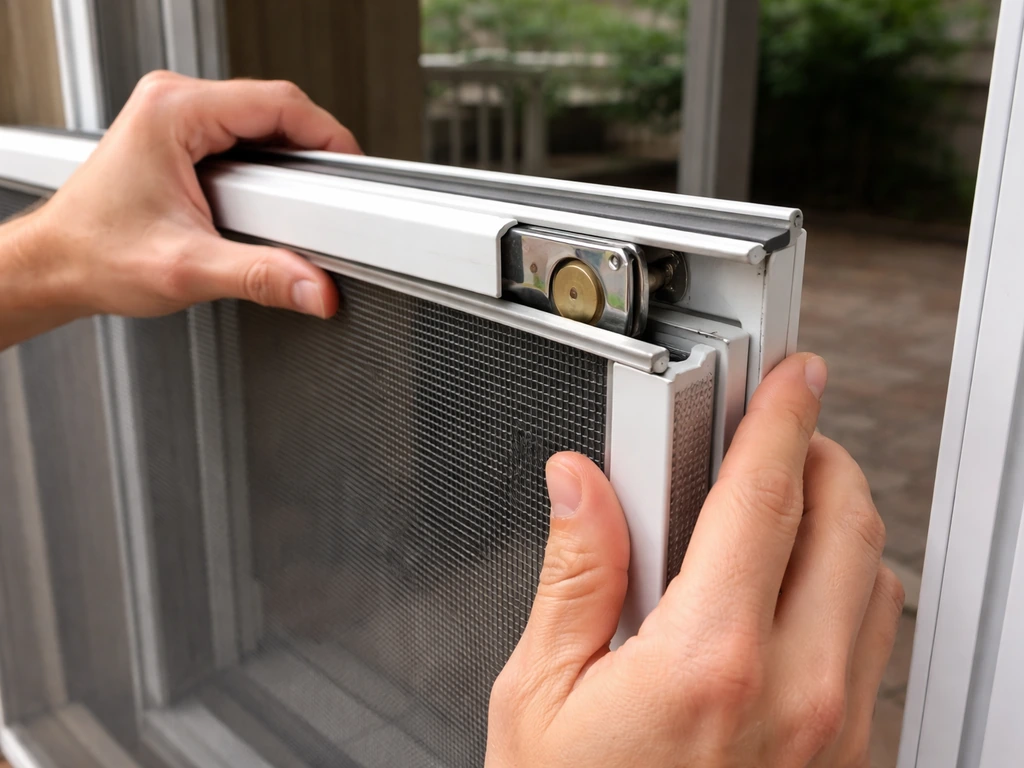
Most patio screen door problems come down to four things: dirty or damaged tracks, worn rollers, a bent frame, or a misaligned latch. The good news is that you can diagnose and fix almost all of them in under an hour with basic tools you probably already own. Start by figuring out exactly which symptom you have, because the fix depends on that. If you want to fix a patio screen door quickly, start by matching the symptom to the right repair step fix patio screen door.
How to Fix a Patio Screen Door: Sticking, Sliding Repair

Jamie Archer
12 May 2026
Quick diagnose: why your patio screen door sticks or won't slide
Before you grab any tools, slide the door slowly back and forth and pay attention to what it actually does. That symptom tells you where to focus your time.
| Symptom | Most likely cause | Where to start |
|---|---|---|
| Have to jiggle or muscle it to move | Worn or seized rollers | Roller inspection and adjustment |
| Drags or grinds the whole way | Dirty or damaged track | Track cleaning |
| Sticks in one spot only | Debris in track or bent frame at that point | Track cleaning, then frame check |
| Door won't close fully or latch | Roller height off, frame out of square, or latch misaligned | Roller height, then latch strike adjustment |
| Drafts around the door edges | Alignment gap or worn weatherstripping/brush seal | Roller height and weatherstrip check |
| Screen mesh torn or sagging | Damaged mesh or spline failure | Screen re-spline or mesh replacement |
If you have to jiggle or muscle the door to get it moving at all, rollers are almost certainly the culprit. If it drags the full length of the track, start with cleaning. If it only sticks in one spot, check that spot in the track first for built-up debris, a bent rail, or a small object lodged in the channel.
Tools, safety, and prep before you start
Gather everything before you pull the door. You do not want to be hunting for a screwdriver while balancing a screen panel on one foot.
- Safety glasses (required when working with rollers or screen spline)
- Flathead and Phillips screwdrivers
- Needle-nose pliers
- Wire brush or old toothbrush
- Vacuum with a narrow attachment
- Clean rags
- Silicone-based spray lubricant (not WD-40, not oil-based sprays)
- Utility knife
- Spline roller tool (only needed for mesh replacement)
- Replacement rollers, spline, or screen mesh if you already know what is damaged
Put on your safety glasses before you start adjusting rollers or pressing spline. The springs in some roller assemblies can snap, and spline rolling sends small debris flying. Clear the track area of kids and pets, and lay a towel or drop cloth on the patio where you will set the door down if you need to remove it. Removal is straightforward but the door is awkward, so having a helper for that step is worth asking for.
Fixes for sliding screen doors: rollers, tracks, and alignment
Step 1: Clean the track thoroughly first
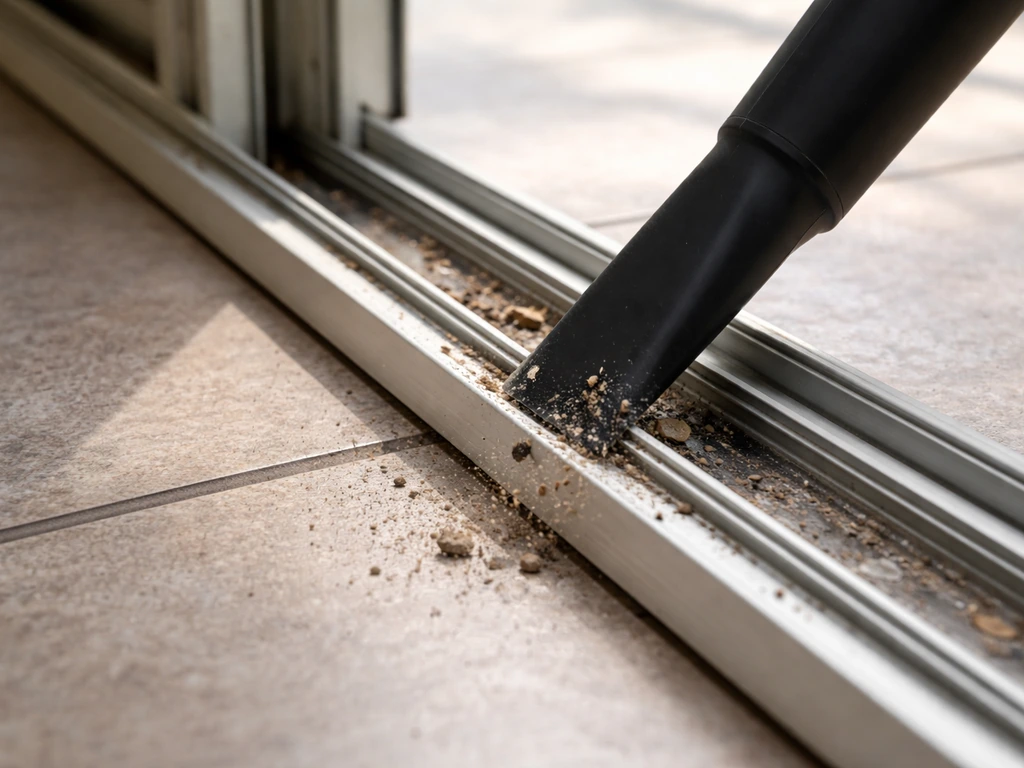
This is the step most people skip, and it causes them to chase roller or alignment problems that were actually just dirt. Vacuum the sill track and head channel (the channel at the top where the door rides) with a narrow attachment. Then scrub both channels with a wire brush or stiff toothbrush to break up compacted dust, pet hair, and grime. Wipe out the loosened debris with a damp rag.
Do not skip the head channel at the top; buildup there causes the door to bind just as much as a dirty bottom track. Once both are clean and dry, spray a thin coat of silicone-based lubricant along the tracks.
Avoid WD-40 and oil-based sprays because they attract dirt and make the problem worse over time.
Step 2: Check and adjust the rollers
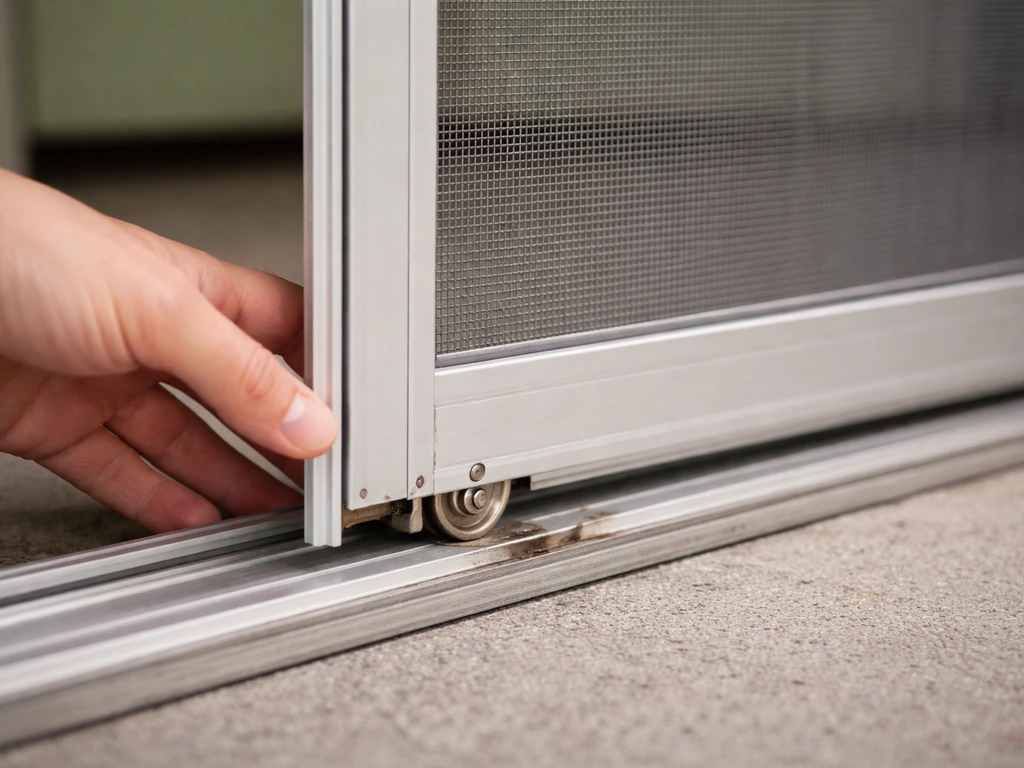
Screen door rollers sit inside the bottom of the door frame (and sometimes the top as well, depending on your door). Look for small plastic plugs on the inner or outer face of the bottom frame corners. Pop those plugs out with a flathead screwdriver to expose the roller adjustment screws underneath. Spin the rollers with your finger.
If a roller does not spin freely, is cracked, or wobbles, it needs to be replaced rather than adjusted. If the rollers still spin but the door rides too high or too low in the track, turn the adjustment screw clockwise to raise the door and increase roller tension, or counterclockwise to lower it.
The goal is to have the door riding level in the track with the bottom edge clearing the sill by about 1/8 inch, with no rocking side to side.
The exact screw location varies by manufacturer and door vintage. Andersen, Milgard, and Heartland all publish adjustment guides for their specific doors, and the adjustment screw may be at the bottom corners, the side of the frame, or hidden under a different plug depending on your model. If you cannot locate the adjustment screws, check your door's label for the brand and search for the manufacturer's PDF guide before you start prying.
Step 3: Remove and reseat the door if it is off track
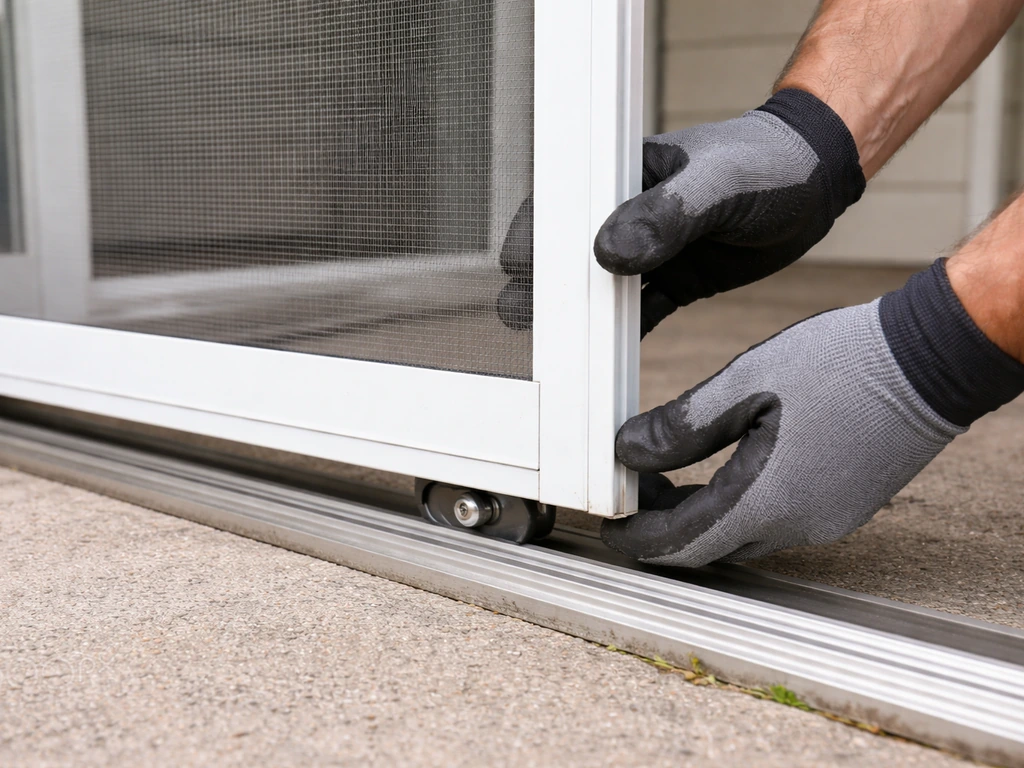
If the door has jumped the track entirely, you need to remove it, inspect the track for damage, and reseat it. If you need to remove your patio screen door completely for repairs, inspect the head channel and sill track before you rehang it remove it. Lift the door upward into the head channel (the top channel has extra clearance for this), then swing the bottom out toward you and lower it free of the track.
Before reseating, check the head channel and sill track for bent sections or embedded debris. To rehang the door, insert the top into the head channel first at a slight angle, then lower the bottom wheels onto the sill track and slide gently until it seats. If your patio door is back on track, double-check the fit and smooth operation so it stays aligned patio door back on track.
If there is a head stop trim piece (a small block or trim strip at the top of the track end), you may need to back out its screws before you can remove or rehang the door. Reinstall that piece after the door is back in place. Putting a screen door back on track is its own skill, and if the door keeps popping off after reseating, the bottom guide block may be worn or missing entirely.
This is a small, inexpensive replacement part available from hardware suppliers and worth swapping out before assuming the frame is the problem.
Repair options for damaged parts
Replacing worn or broken rollers
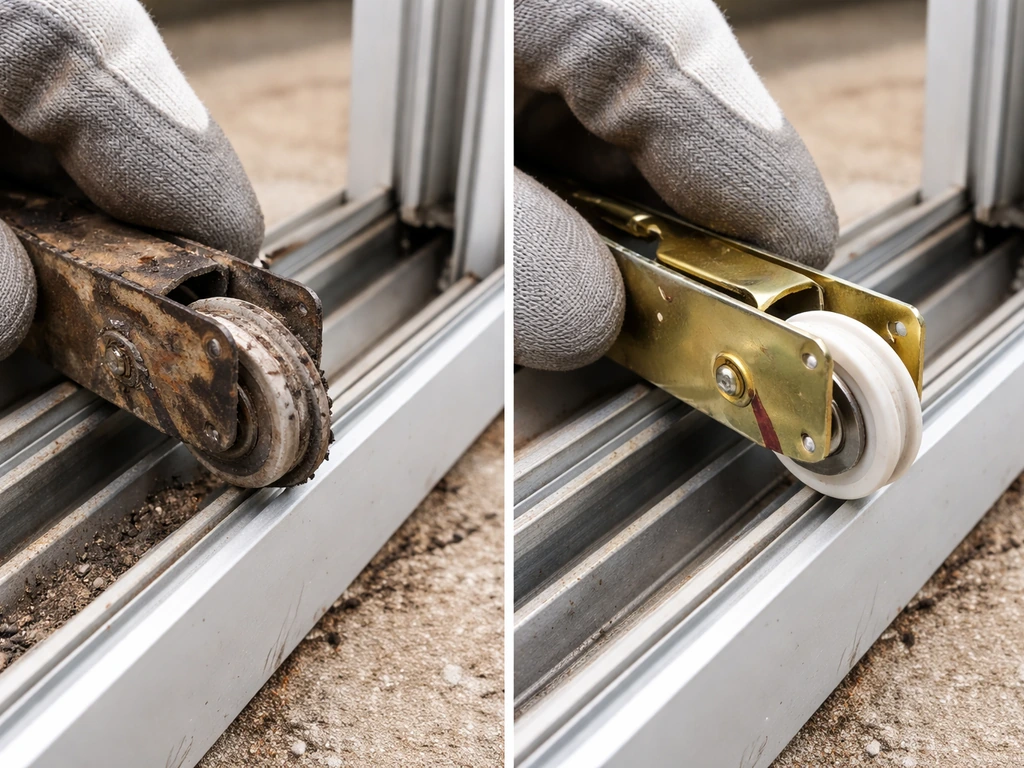
If a roller is cracked, frozen, or falls apart when you remove it, order a replacement before reassembling anything. Take the old roller to a hardware store or photograph the roller and the door brand label so you match the correct size and wheel profile. Most rollers pop into a slot in the frame corner and are retained by a single screw. Swap the new roller in, run the adjustment screw to set the correct height, and replace the plug cover. Andersen's guidance is clear: adjust first, and if that does not work, replace the roller. Do not skip straight to replacement without trying adjustment, but do not keep running a visibly damaged roller either.
Fixing a bent frame or damaged rail
A bent aluminum frame corner or warped rail causes a sticking spot that cleaning and roller adjustment will not solve. Minor bends in the outer frame can sometimes be carefully straightened with pliers and a wood block to protect the finish, but significant frame damage usually means replacing the door panel. This is one area where a pro call makes sense: a replacement screen door panel from the original manufacturer typically runs $100 to $300 depending on the brand and size, and a professional can measure and order the correct panel while confirming the track and jamb are still square.
Fixing the latch or lock
If the door slides fine but does not close securely or the latch does not catch, the problem is almost always roller height or latch strike alignment. First, re-check roller height. If the door rides too low, the latch hook misses the strike plate on the door jamb entirely. Raising the door slightly with the roller adjustment screw often solves this without touching the latch at all.
If the door is at the right height but the latch still does not engage, look at the strike (the receiver plate on the jamb). Most strikes have slotted mounting holes that let you shift the plate up, down, or sideways by a few millimeters. Loosen the screws, shift the strike until it aligns with the latch hook when the door is fully closed, and retighten.
Milgard’s DIY adjust strike plates sliding door guide explains how to move the strike plate for proper latch alignment and then tighten it once adjustment is correct strike until it aligns with the latch hook when the door is fully closed.
Milgard's screen and lock adjustment guide covers this strike adjustment concept and it applies to most sliding screen systems.
Replacing damaged screen mesh
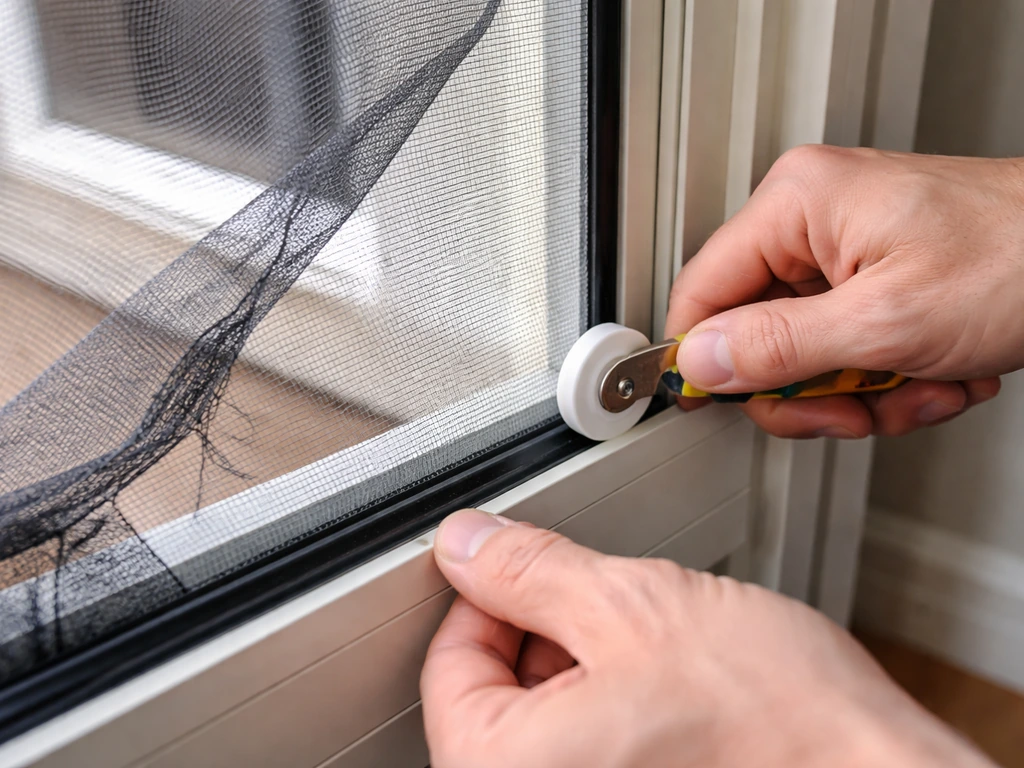
A torn or sagging screen is a spline job. If you need to replace the screen on a patio door, the spline-and-mesh method in this section is the usual approach how to replace screen on patio door. The mesh is held into the frame groove by a rubber or vinyl spline cord that you press in with a [spline roller tool](https://en. wikipedia.
org/wiki/Spline_roller). Lay the door flat on a table or sawhorses. Remove the old spline by prying up a corner with a flathead and pulling it out, then peel away the old mesh. Cut new mesh a couple of inches larger than the frame on all sides.
Starting at one corner, press the mesh into the groove with the concave wheel of the spline roller, then press the spline on top of it going around the frame. Work one side at a time and keep the mesh taut but do not stretch it so tight that it distorts. Trim the excess mesh flush with a utility knife after the spline is fully seated.
The key caution here: use the grooved (concave) wheel of the spline tool to press spline, not a flat screwdriver, because a screwdriver will cut the new mesh.
Test, fine-tune, and confirm smooth sliding
Once all repairs are done, rehang the door if you removed it, then run through this quick verification before calling it finished.
- Slide the door fully open and fully closed five times at normal walking speed. It should glide without any grinding, sticking, or wobbling.
- Close the door and press it gently sideways toward the jamb. The door should not flex or rattle. If it does, raise the rollers slightly with the adjustment screw to increase tension against the track.
- Latch the door and check that the latch catches cleanly without you having to press or lift the door. If the latch misses, adjust roller height or the strike plate as described above.
- Run your hand along the edges of the closed door. You should not feel a significant draft. A gap large enough to feel airflow means the door is still riding too low, or the weatherstripping brush seal along the door edge is worn and needs replacement.
- Check the corners of the screen mesh for any lifted spline or loose mesh. Press any raised areas back in with the spline tool.
- Apply one more light pass of silicone spray along the sill track and wipe away any excess.
If the door still sticks after cleaning, roller adjustment, and a track inspection, slide it open and close it slowly while watching the bottom roller through the plug opening. If the roller is skipping or dragging on a specific track section, that section of the sill may be bent or corroded. At that point you are looking at either a track replacement or a full door replacement, and a professional measurement visit is the right next move.
Prevention and maintenance to keep things running smoothly
The single best thing you can do is clean the tracks twice a year. Aim for once in early spring before heavy patio use starts, and once in fall before you weatherize for winter. A two-minute vacuum and wipe of the sill track and head channel prevents almost all the debris-related sticking that causes homeowners to think their rollers are failing when the rollers are actually fine.
- Vacuum and brush both the sill track and head channel every six months
- Apply silicone-based lubricant to the track after cleaning, not oil-based products
- Check roller adjustment screws once a year and re-adjust if the door starts riding unevenly
- Inspect the bottom guide block annually and replace it if it is cracked or worn flat
- Check the weatherstripping brush seal along the door edge each spring and replace it if bristles are flattened or missing
- Look at the screen mesh corners each season for lifted spline before a small separation becomes a full tear
- If you have a pet that presses against the screen, consider a pet-resistant mesh at your next re-spline
Taking care of these things on a schedule means you will almost never end up with a door that is completely seized or a roller that has ground itself to pieces. The repairs covered above are all genuinely DIY-friendly, but if you find a cracked sill track, a severely bent frame, or a door that keeps jumping the track after multiple attempts to fix it, that is a signal to bring in a professional for a proper assessment. A door that falls off the track repeatedly is usually telling you something about the underlying frame or sill that deserves a closer look.
FAQ
How do I tell if my patio screen door problem is dirt versus a bad roller?
If the door moves after a full cleaning of both the bottom track and the top head channel, it is usually debris or grime. If you can feel a rough spot while sliding, then after cleaning the door still hangs up at the same point, inspect for a bent or corroded track section and check the roller wheel for wobble or cracks.
Can I use WD-40 to quiet a sticking patio screen door?
It is not a good idea. WD-40 and oil-based sprays tend to attract dust and grit, which often makes the binding worse over time. Use a thin silicone-based lubricant on the tracks only after the channels are clean and fully dry.
My door binds only when it is partially open, what should I check first?
Watch the bottom roller as you open and close slowly, then focus on the specific track segment where it drags. That pattern often means a bent, dented, or corroded section of the sill rather than a general roller or latch issue.
What if I cannot find the roller adjustment screws or plugs on my door?
Look for the brand label on the door frame and then locate the manufacturer’s adjustment guide for your exact model. Some doors hide adjustments under different covers or locate screws on the frame sides rather than the bottom corners.
How high should I set the door so it closes and doesn’t rub the track?
Aim to ride level in the track, with the bottom edge clearing the sill by about 1/8 inch and no side-to-side rocking. If you raise it too much, the latch may miss, and if you lower it too much, the bottom will drag.
The latch won’t catch even after I set the roller height, what’s next?
Adjust the latch strike receiver on the jamb. Loosen the strike screws, shift the plate within its slotted holes until the latch hook lines up when the door is fully closed, then retighten and test with the door pressed in the normal closed position.
My screen door is off the track, but it seems to go back on and then pops off again. Why?
A common cause is a worn or missing bottom guide block (small guide piece at the sill area). Replace that inexpensive guide part before assuming the frame is bent, and confirm the door seats fully and slides smoothly after reinstallation.
When replacing rollers, do I need to replace both sides at once?
Not always, but replace rollers that are cracked, frozen, wobbling, or that do not spin freely. If one roller is failing due to age or wear, the matching roller is often close behind, so consider replacing both for more consistent height and operation.
What should I do if the frame is slightly bent but not obviously damaged?
Try gentle straightening only if it is minor and you can protect the finish with a wood block and controlled pressure. If the bend is significant, plan on replacing the door panel, because warped rails often create a repeating sticking spot that cleaning and adjustment cannot fix.
How can I prevent the door from getting stuck again after repairs?
Clean the tracks twice a year, once in early spring and once in fall. Use a narrow vacuum attachment to remove loose debris, then wipe the channels, and lubricate lightly only after everything is dry.
Next Article
How to Remove a Patio Screen Door Step by Step
Step-by-step guide to remove a patio screen door safely, including sliding doors, jammed tracks, and proper reinstallati