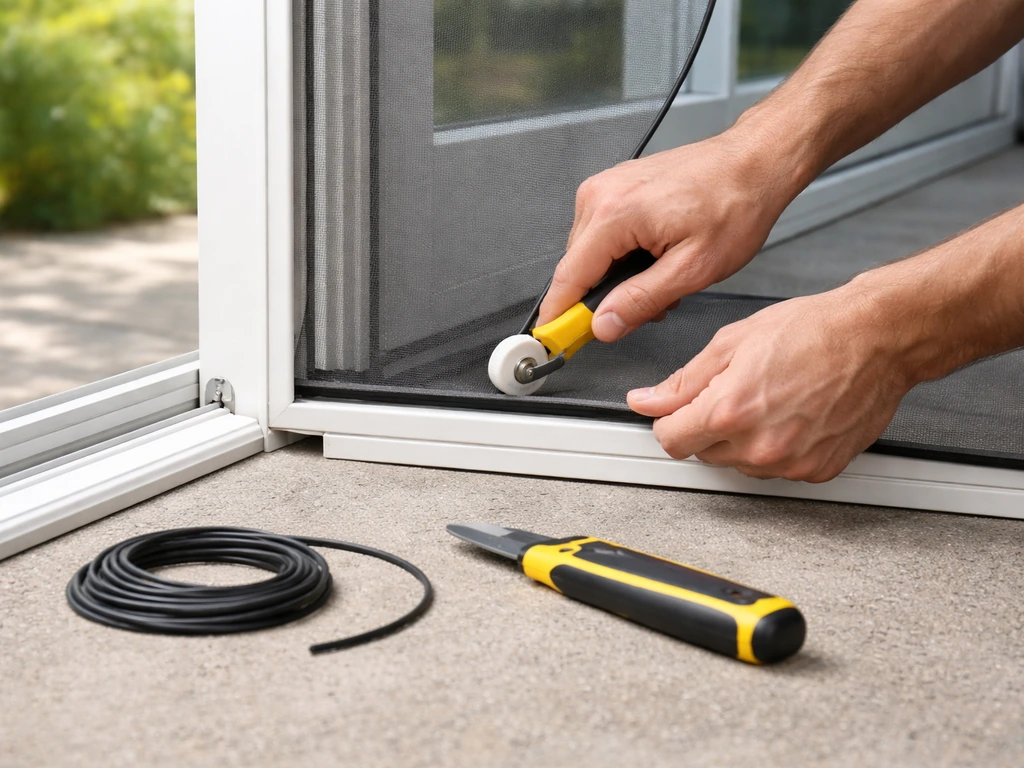
Lift the door slightly, angle the top edge into the upper channel first, then guide the bottom rollers onto the lower track runner. For some patio/screen door designs, you lift and angle the door so the top enters the top guide while the bottom rollers land on the track runner lift/angle the door so the top can enter the top guide while the bottom rollers are guided onto the track runner.
How to Put a Patio Screen Door Back on Track

Jamie Archer
17 May 2026
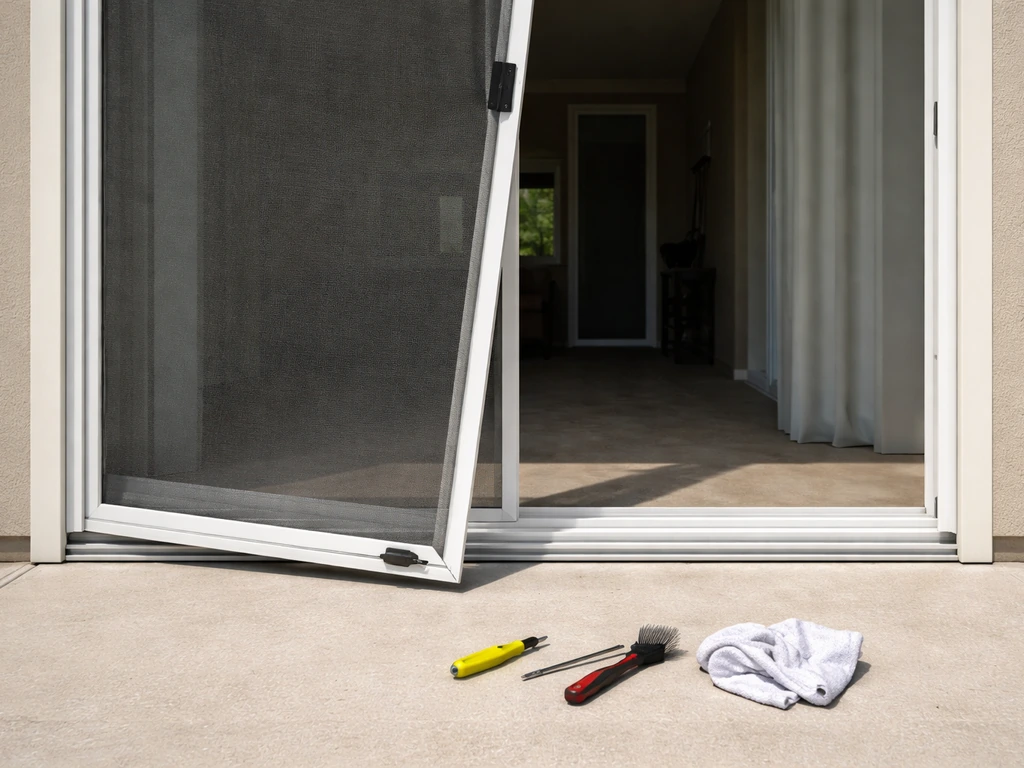
That's the core move. Most patio screen doors come off track because of debris buildup, a roller that's dropped too low, or a bent frame corner, and almost all of them go back on in under 10 minutes without special tools. Here's exactly how to do it and how to keep it from happening again.
Quick diagnosis: why your screen door jumped the track
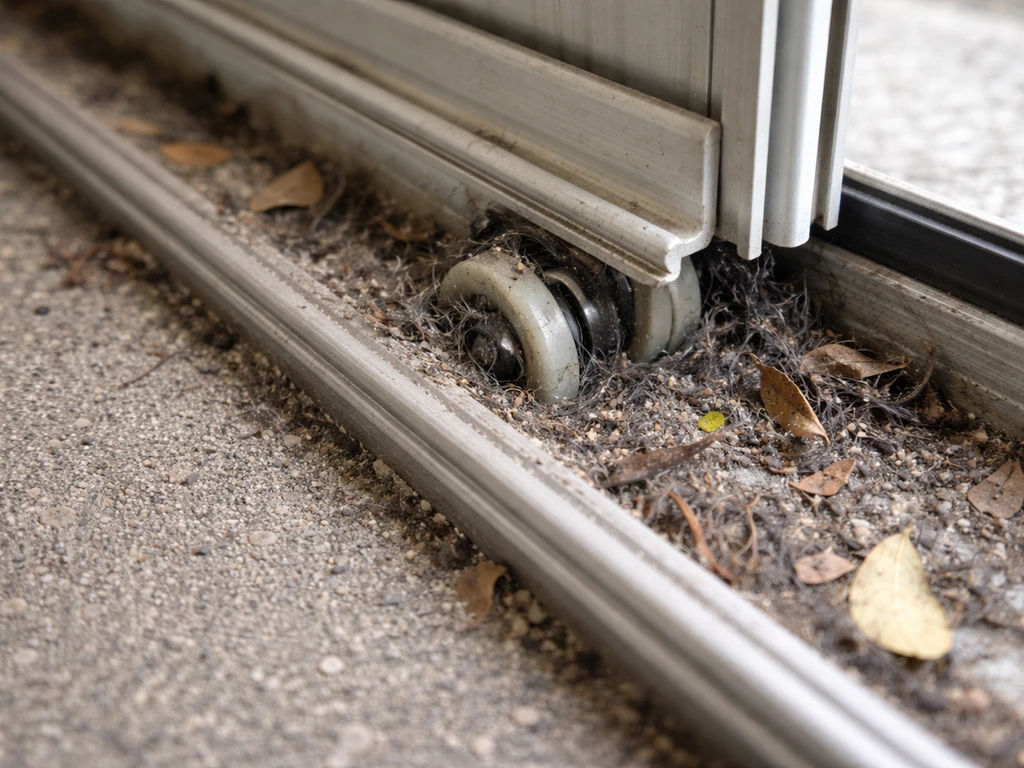
Before you muscle the door back into place, spend 60 seconds figuring out what caused it to pop off. That tells you whether a simple reinstall will hold or whether you have a bigger problem to solve first.
- Debris in the bottom track: Dirt, pet hair, grit, and leaves pack into the track groove over time and physically block the rollers from sitting in their proper position. This is the single most common cause and the easiest to fix.
- Rollers set too low: If the roller adjustment screws are turned so the wheels extend too far down, the door sits too low and can drag against the track edge until it pops off. Repeated off-track episodes are a classic sign of this.
- Worn or broken rollers: A roller wheel that has cracked, flattened on one side, or seized up can't follow the track properly. If the door wobbles or you can hear grinding, this is likely the culprit.
- Bent door frame: A corner of the aluminum frame that's been dented or bent will misalign the roller position. Look at the bottom corners of the door for any visible deformation.
- Damaged or warped track: A track that has been bent by a foot, lawn equipment, or years of use won't let rollers seat cleanly. Run your finger along the track and feel for high spots or pinch points.
Nine times out of ten it's either debris or roller height. If your track looks clean and the door frame looks square, you can go straight to reinstalling. If the track is packed with grit or you spot a broken roller, deal with that first or the door will just come off again.
Tools and safety before you start
This is a light job. You don't need anything fancy, but having the right items on hand before you start saves you mid-project trips across the yard.
- Phillips head screwdriver (for roller adjustment screws)
- Flat-head screwdriver or a putty knife (used as a lever to guide rollers onto the track)
- Shop vacuum or a stiff brush (to clear debris from the track groove)
- Silicone spray or dry PTFE lubricant (not WD-40, which attracts dirt)
- Work gloves (screen door frames have sharp aluminum edges, especially if there's any bending involved)
Safety is pretty simple here. Wear gloves because aluminum frames can have sharp edges, especially around corners. If the door is large, get a second person to hold it while you work the rollers into position. Screen doors are lightweight but awkward, and dropping one on a hard surface can bend the frame. If you're working on a second-story deck or balcony, make sure you have stable footing before lifting the door above the railing.
Step-by-step: lift, align, and put the screen door back on track
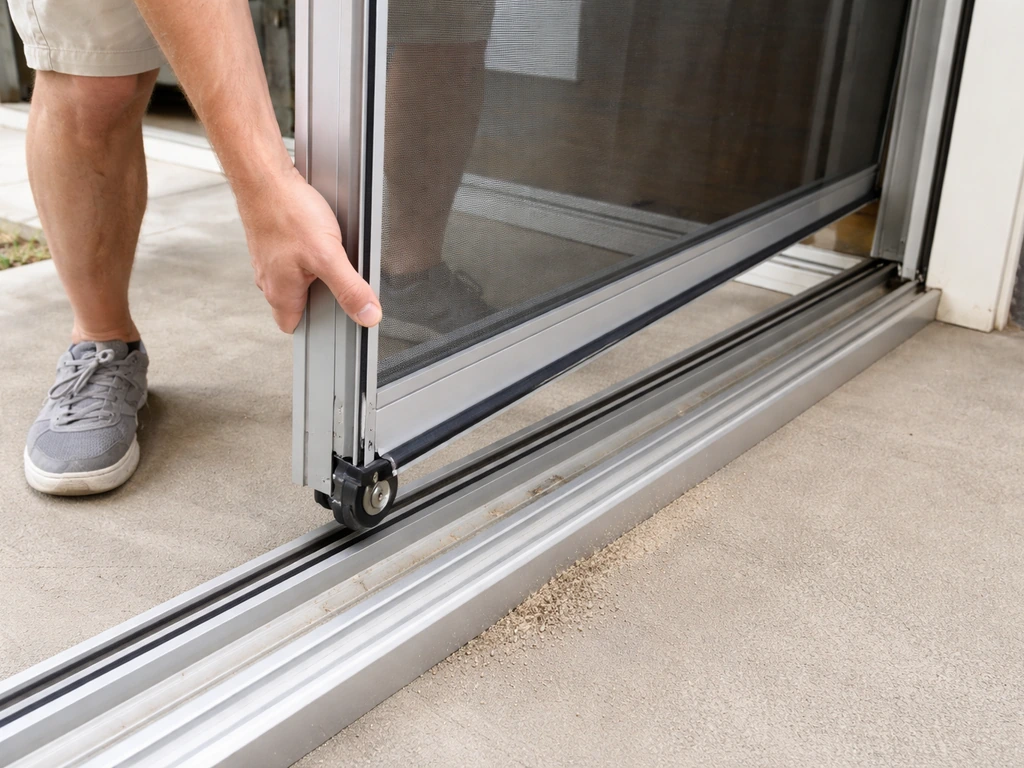
Clean the track before you reinstall the door. Once the track is clean, you can put the patio door back on track smoothly by lifting the door slightly and aligning the rollers with the channels. If reinstalling still does not keep it stable, you will need to fix patio screen door issues like roller height or a damaged track. This matters more than most guides admit. If you put the door back onto a gritty track, it'll just come off again. Use a shop vacuum to pull out the loose debris, then run a stiff brush along the groove to dislodge anything packed in. Wipe it dry and give it a light spray of silicone lubricant.
- Retract the rollers slightly. Before lifting the door into the frame, find the roller adjustment screws at the bottom corners of the door. Turn them clockwise a few turns to pull the roller wheels up into the frame. This gives you more clearance when seating the door and prevents the rollers from catching on the track edge while you're positioning things.
- Pick up the door and angle the top into the upper channel first. Tilt the top of the door toward the doorway and slide the top edge up into the upper guide channel. You should feel it seat into the channel. This is the same move you'd use to remove the door in reverse.
- Swing the bottom in toward the opening. Once the top is in the channel, bring the bottom of the door in toward the track. Hold the door at a slight angle so you have room to maneuver the rollers above the runner.
- Guide the bottom rollers onto the track runner. This is where the flat-head screwdriver or putty knife helps. Slide the thin tool under the bottom corner of the door frame and use it as a small lever to nudge the roller wheel up and over the lip of the track runner, then let it drop into the groove. Do the same on the other side. You should feel a small click or drop when each roller seats.
- Test the slide immediately. Push the door back and forth a foot or two. It should move with light resistance. If it grinds, catches, or pops back off, stop and check the roller adjustment before continuing.
- Expand the rollers back out. Turn the roller adjustment screws counterclockwise to extend the rollers down until the door glides smoothly without lifting off the track when you push it.
Adjusting rollers and alignment after it's back on the track
Getting the door on the track is step one. Getting the roller height right is what makes it actually work well. If the rollers are set too low, the door sits low in the frame and can bind or pop off at the ends of the track. If they're too high, the door sits too tight in the upper channel and drags.
Find the adjustment screws at the bottom corners of the door. Turning the screw clockwise lowers the roller, which raises the door. Turning it counterclockwise raises the roller, which lowers the door. Make small adjustments, roughly a quarter turn at a time, on each side. The goal is for the door to sit parallel in the frame with roughly equal gap at the top and bottom, and for it to slide the full length of the track without the rollers lifting out.
After each adjustment, slide the door the full length of the track at least twice. This settles the rollers and lets you feel for any binding, scraping, or high-centering. On some designs, like older Andersen gliding insect screens, there are also top roller adjustment screws. If your door has them, tighten those down to your desired tension once the bottom adjustment looks right. The door should move smoothly with one hand and stop without drifting.
A properly adjusted door won't wiggle side to side, won't scrape at either end of the track, and won't lift off the rollers when you push firmly. If you can't get all three of those things dialed in, something else is going on, which brings us to the next section.
Why it keeps coming off: wear, debris, and bent parts
If your screen door has come off track more than once in a season, the reinstall is just a temporary fix. Here are the real causes worth looking at.
Debris and dirty tracks
A track that fills up with pet hair, grit, and leaf debris every few months will keep throwing the door. Set a reminder to vacuum and brush the track every three to four months, and apply a fresh coat of silicone spray at the same time. Avoid oil-based lubricants because they trap more dirt and make the problem worse over time.
Worn or wrong-sized rollers
Rollers don't last forever. If the wheel has worn flat, cracked, or seized so it no longer spins freely, no amount of adjustment will make the door track properly. To check, remove the door and pop out one roller. If the wheel doesn't spin smoothly by hand, or looks visibly worn or deformed, replace both rollers at the same time. When shopping for replacements, bring the old roller with you or measure the wheel diameter and axle size precisely. SWISCO's guidance on this is right: getting the wrong size is a common mistake, and even a millimeter off can cause problems.
Bent frame corners
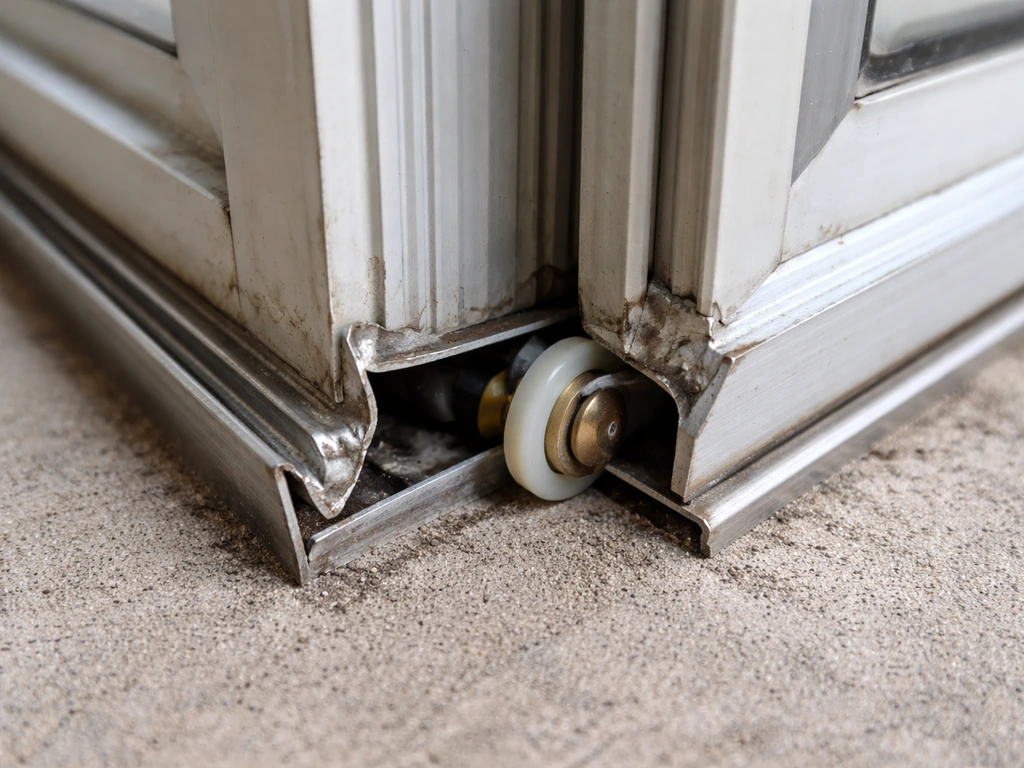
Look at the bottom two corners of the door frame. If either corner is bent inward or outward, the roller can't sit at the correct angle and will eventually work itself off the track. Minor bends can sometimes be straightened with a rubber mallet and a block of wood, but if the frame is significantly deformed, replacing the door is often cheaper and faster than trying to correct it.
Damaged or misaligned track
Run a straightedge along your bottom track. Any section that's bent up, pinched in, or has a lip sticking up will knock the rollers out every time the door passes over it. A slightly bent track can sometimes be tapped back with a rubber mallet and a flat piece of wood. A deeply damaged track needs to be replaced, which is a bigger job but not impossible for a determined DIYer.
When to stop DIYing and call a pro
Most patio screen door track problems are genuinely DIY-friendly. But there are a few situations where stopping and calling a professional saves time, money, and frustration.
| Situation | DIY or Pro? | Why |
|---|---|---|
| Door popped off, track is clean, rollers look fine | DIY | Standard reinstall, 10 minutes |
| Track is packed with debris | DIY | Clean and reinstall, 20-30 minutes |
| Rollers are worn or broken | DIY (parts replacement) | Order matching rollers, swap them out yourself |
| Door frame corner is bent | DIY (minor) / Pro (major) | Minor bends can be tapped; severe deformation needs new door |
| Bottom track is bent or warped | DIY (minor) / Pro (major) | Small high spots can be tapped down; full track replacement is a bigger job |
| Door is warped or out of square beyond the corner | Pro or replace | Full frame warping usually means replacement |
| Screen is also torn or damaged | DIY (screen replacement) | A separate job worth tackling at the same time |
If you've reinstalled the door, replaced the rollers, cleaned the track, and it's still popping off, call a door specialist. At that point there's likely a structural issue with the track, the door frame, or the door's fit in the rough opening that requires hands-on diagnosis. The same applies if the main sliding glass door (not just the screen) is also having track problems, which is a heavier and more complex repair.
If your screen door is more than 15 to 20 years old, has significant frame damage, or the rollers are no longer manufactured for that model, replacement is often the smarter call. A new screen door runs anywhere from $75 to $300 depending on size and material, and installation typically takes under an hour. That's often better value than chasing an aging door that keeps coming off track every few months.
One last thing: if you need to fully remove the screen door to inspect the rollers or the track more closely, that process has its own small tricks worth knowing, particularly around how to lower the rollers far enough to clear the top channel.
SWISCO also notes that when installing or replacing gliding patio door rollers, you may need to retract the roller wheels into the frame by turning the adjustment screws clockwise before reinserting the door, and re-adjustment afterward may be necessary How to replace a sliding glass door roller.
To fully remove a patio screen door for closer inspection, you will often need to lower the rollers enough to clear the top channel, then lift the door out carefully fully remove the screen door. And if the screen mesh itself got damaged when the door came off, that's a straightforward separate repair you can tackle at the same time you address the track.
If you also need to replace the screen mesh, follow a step-by-step guide for how to replace screen on patio door before you reinstall the door.
FAQ
What should I do if I can get the patio screen door on the track, but it won’t slide smoothly afterward?
Stop and re-check roller height on both bottom corners. Even if the door is seated, rollers that are slightly too low can let the wheel climb out at the ends, while rollers that are too high can cause steady drag in the upper channel. After each quarter-turn change, slide the door the full length and test both directions before making the next adjustment.
The door seems square when I look at it, but one side keeps popping off first. How do I isolate the problem?
Mark the door frame corner nearest the failure, then compare roller exposure on both sides. If one roller sits lower than the other even after adjustments, that side likely has a roller that is worn or not seated correctly, or the bottom track groove is damaged locally. Remove the door and inspect that specific roller and the small section of track where the failure happens.
Is it safe to use WD-40 or other general lubricants on a patio screen track?
Prefer silicone spray over oil-based lubricants. Oil-based products tend to attract and hold grit and pet hair, which turns the track into an abrasive paste. If you already used an oil, clean the track again thoroughly (vacuum and brush), wipe dry, and then apply silicone so the rollers move without grinding.
My track looks clean, but there is still debris. What’s the best way to clear it without damaging anything?
Use a shop vacuum first to remove loose particles, then use a stiff brush to dislodge packed material from the groove. Wipe the track dry before lubricating. Avoid metal tools like screwdrivers in the track, because it’s easy to create a lip that knocks rollers out.
How much should I adjust the roller screws at a time?
Make small changes, about a quarter turn per side, then test. Large turns can overshoot and leave the door too tight in the upper channel, which can cause scraping or drifting. If you overshoot, back off in small steps rather than forcing the door while it’s binding.
What if my door has top roller adjustment screws, but turning them makes the door too tight?
Treat the top adjustments as fine-tuning after the bottom roller height is correct. If the bottom settings are right, the door should be parallel in the frame with similar gaps. Then use the top screws only to achieve smooth travel and proper stopping without drifting, not to fix a problem caused by a dirty track or bottom roller mismatch.
How can I tell whether the issue is the roller height versus a bent track section?
After adjusting and cleaning, slide the door and watch where it binds or lifts. If the problem repeats at the exact same spot each time, it usually points to a bent or pinched section of track. If the door becomes stable when you tune roller height, the track is likely fine and the original problem was incorrect roller positioning or a worn roller.
Can I replace just one roller, or should I replace both?
Replace both if one wheel is worn flat, cracked, or seized. Matching roller pairs helps keep the door balanced, so it sits parallel and the rollers share load evenly. Also match size and axle details carefully, because even small differences can change how the wheel rides in the groove.
What if the door frame corner is slightly bent, can I fix it without replacing the door?
Minor bends can sometimes be corrected gently with a rubber mallet and a block of wood to spread force. Avoid striking directly on aluminum near the roller mounting points, since it can worsen the twist. If the frame is significantly deformed or the door still cannot hold roller engagement after adjustment, replacement is often more reliable.
When should I stop troubleshooting and call a professional?
If the door still pops off after you have cleaned the track, confirmed the track groove is straight, adjusted both bottom roller screws correctly, and confirmed roller wheels spin freely, it may indicate a structural misfit or a damaged track that needs replacement. Also call if the main sliding glass door track is having problems too, since that repair is typically more complex.
Do I need to remove the screen mesh to fix a track-off issue?
Usually no. You can reinstall and adjust the rollers with the mesh intact. Remove or replace the screen only if the mesh tore during the off-track event or if it obstructs access to roller components. If you do remove the screen door for inspection, handle it carefully to avoid bending the frame while lowering rollers to clear the top channel.
Next Article
How to Replace a Screen on a Patio Door: DIY Steps
Step-by-step DIY guide to replace or install a patio door screen, measure right, fit spline, and fix sliding or hinged a