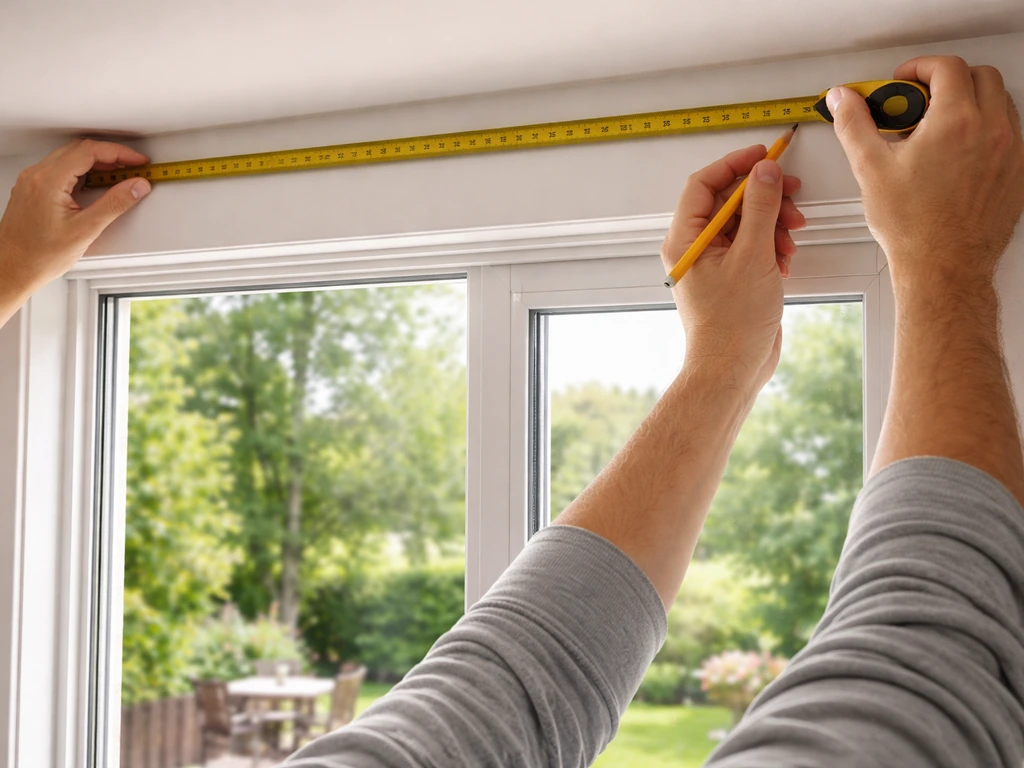
To measure a sliding patio door for vertical blinds, you need two numbers: the width of the opening (or the area you want to cover) and the height from where the headrail will sit down to the floor. Measure width at three points and use the smallest reading. Measure height at three points and use the smallest reading. Round width down to the nearest 1/8" and round height up to the nearest 1/8". Whether you're going inside-mount or outside-mount changes exactly where you place the tape, and for a patio door, that decision matters more than it does for a regular window.
How to Measure for Vertical Blinds on a Patio Door

Jamie Archer
4 Jun 2026
Start by identifying your door type and blind track style
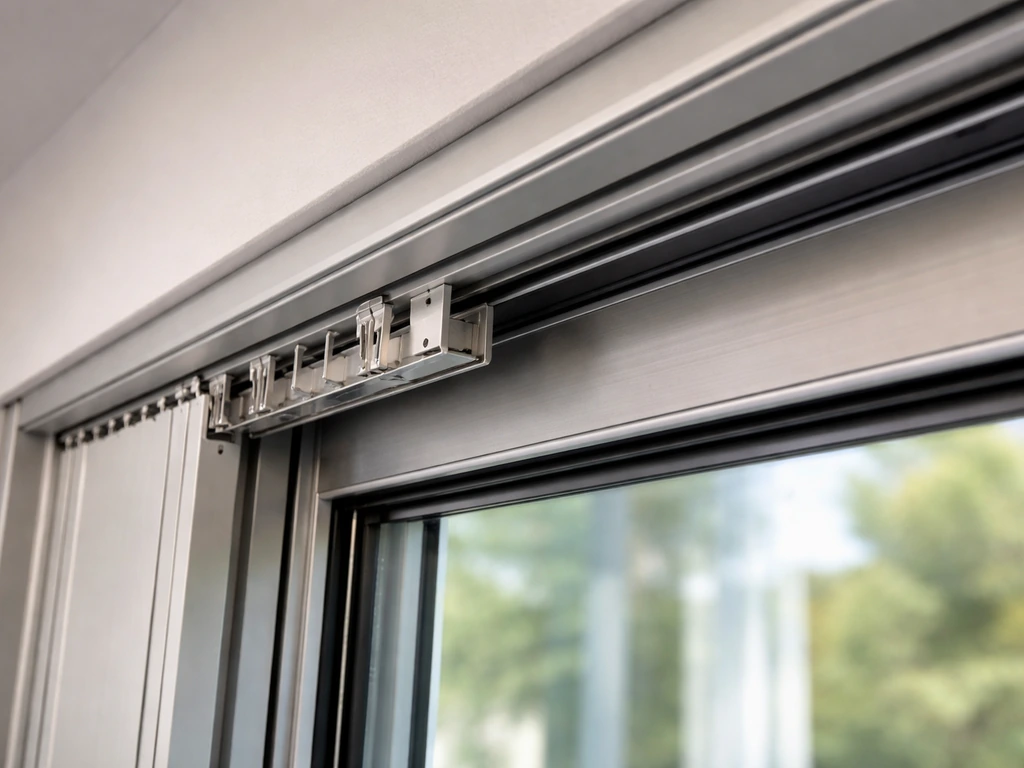
Most patio doors are sliding glass doors with a fixed panel and a sliding panel set in a frame. That frame, especially the top recess, is where your vertical blind headrail will live. Some doors have a built-in screen door track alongside the main glass track, and that screen track can eat into the recess depth you have available for an inside-mount headrail. Before you measure anything, take a close look at what you're working with.
- Sliding glass patio door with a door frame recess: the most common setup, usually suitable for inside or outside mount
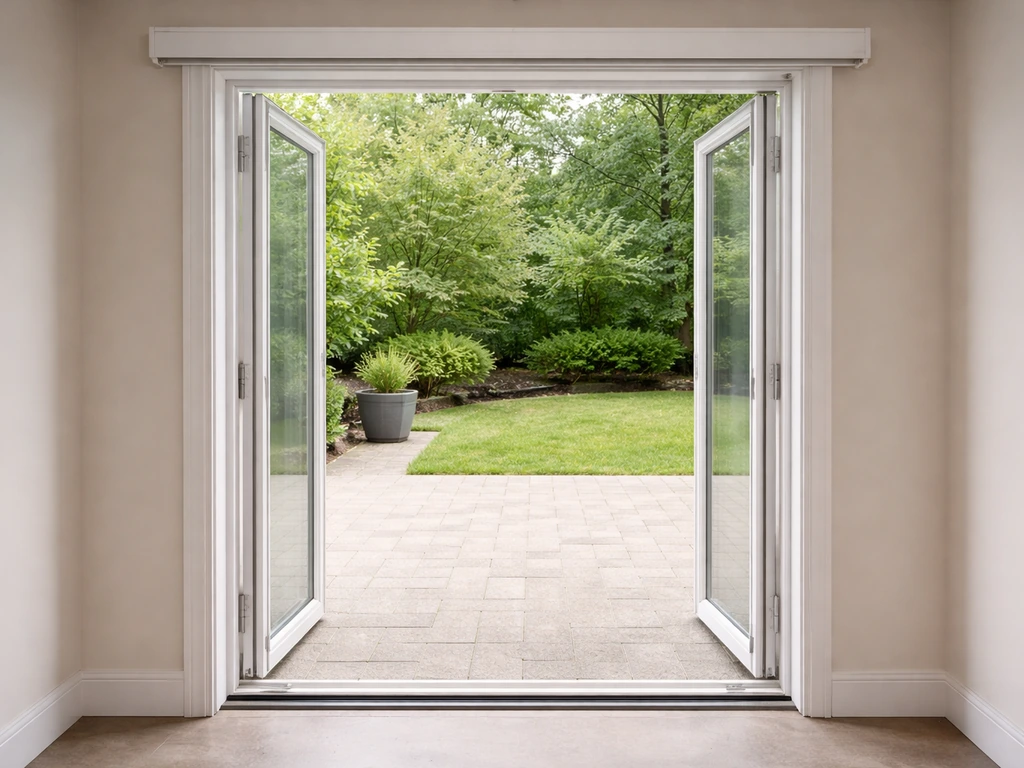
- French-style patio doors that swing open: vertical blinds are typically outside-mounted above the frame since there's no shared recess
- Doors with a screen door track built into the frame: the screen track reduces your available recess depth, which may push you toward outside mount
- Doors with existing vertical blind hardware already installed: you may be replacing just the vanes, or the entire headrail system — know which before measuring
The track style matters too. Standard vertical blinds use a headrail (the horizontal track at the top) from which fabric or PVC vanes hang down. The headrail length you order is the same as the width measurement you submit to the manufacturer. Some replacement jobs involve only swapping vanes, in which case you measure the existing headrail rather than the door opening itself.
Inside-mount vs outside-mount: which one is right for your door
This is the single decision that shapes every other measurement. This is the single decision that shapes every other measurement, and it also determines how to install patio door curtain rod hardware above the opening. Inside-mount means the headrail sits inside the door frame recess and the vanes hang within that opening. Outside-mount means the headrail is installed on the wall or trim above the opening and the blinds cover a larger area than just the glass itself.
Inside-mount requirements
For inside mount to work on a patio door, the frame recess needs to be deep enough to accommodate the headrail brackets without the door or screen track blocking them. Most vertical blind headrails need at least 2.5" to 3" of flat mounting depth. Measure the depth of your recess right now with a tape measure before you commit to inside mount. If the screen door track cuts that space down below 2.5", you'll have clearance problems.
When you go inside-mount, manufacturers automatically deduct a small amount from your ordered dimensions so the blind actually fits inside the frame. A common deduction is around 1/4" from width and 1/2" from height. This means you submit the actual inside measurement, you don't subtract anything yourself. The factory handles it.
Outside-mount requirements
Outside mount is generally the better option for patio doors because it gives you better light control, more privacy overlap, and avoids the recess-depth problem entirely. It also makes it easier to cover the full glass panel including any trim or framing that lets in light around the edges. The trade-off is that you need flat wall or trim surface above the opening to mount the brackets, typically at least 1.5" of flat surface on each side.
| Factor | Inside Mount | Outside Mount |
|---|---|---|
| Recess depth needed | Minimum ~2.5" flat depth | Not required |
| Light control | Some gaps at edges | Better — overlaps frame |
| Privacy | Limited at frame edges | Better with side overlap |
| Appearance | Clean, built-in look | Larger, more dramatic |
| Screen door conflicts | Can be a problem | Not an issue |
| Best for patio doors | When recess is deep enough | Recommended in most cases |
How to measure the width (headrail/track length)
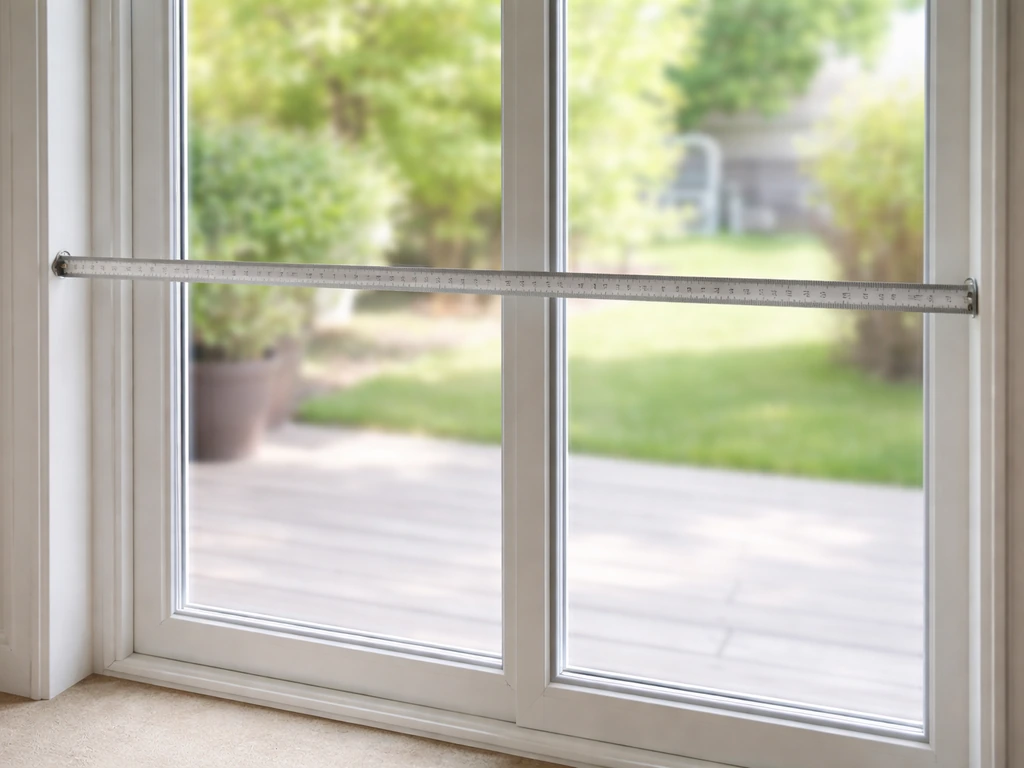
Use a steel measuring tape, not a fabric one, and measure to the nearest 1/8". Steel tapes don't stretch and give you reliable readings on a large opening like a patio door.
Inside-mount width
Measure the inside width of the door frame recess at three points: near the top, across the middle, and near the bottom. Wall framing and trim are rarely perfectly straight, so these three numbers will often differ slightly. Use the smallest of the three measurements as your order width. This ensures the headrail will fit at its tightest point. Don't round up here, round down to the nearest 1/8".
Outside-mount width
For outside mount, you're measuring the area you want the blinds to cover, not just the glass opening. Start with the actual glass opening width, then add overlap on each side for light control and privacy. Most manufacturers recommend 3" of overlap on each side, which means adding 6" total to the opening width. So if your glass opening measures 72", you'd order blinds at 78". Some guides suggest as little as 1.5" per side, 3" per side is the better choice for a patio door where light gaps at the edges are noticeable.
How to measure the drop (height) for proper coverage and clearance
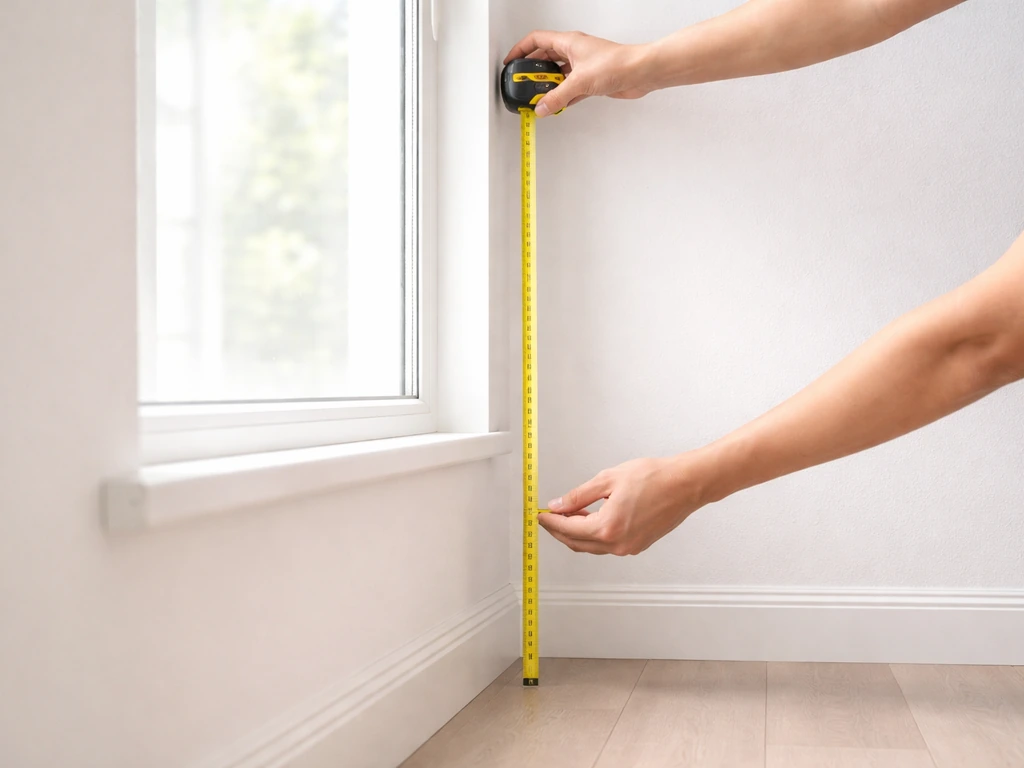
Height for vertical blinds is measured from where the top of the headrail will sit down to the floor. For more details that tie width and height measurements together, see how to measure for a sliding patio door. Like the width measurement, take three readings: left side, center, and right side of the opening. Floors are not always perfectly level. Use the smallest measurement so the vanes don't drag on the floor at the shortest point.
For inside mount, measure from the inside top of the recess down to the floor or sill. For outside mount, measure from the point where you plan to install the headrail (above the frame or trim) down to the floor. If you're mounting to the wall above the trim, decide that mounting point before you measure so you know where to start the tape.
A few clearance points to keep in mind for patio doors specifically: if you have carpet, the vanes need to clear the carpet pile, add about 1/2" of clearance to avoid the vanes dragging when the door slides. If the blinds need to stack to one side when the door is open (which is typical for sliding patio doors), make sure the stacked vanes don't block the door handle or sit in the path of the sliding panel.
Round your height measurement up to the nearest 1/8" when ordering. This is the opposite of width, for height you round up, not down, so you don't end up with vanes that are slightly too short and leave a gap at the bottom.
Check for side overlap, recess depth, and obstructions before you finalize
This step is where a lot of people lose money on blinds that technically fit but don't actually work. Walk through each of these before you place an order.
Door handle and lock location
Patio door handles are typically mounted mid-height on the sliding panel. When the blinds are closed, the vanes will hang in front of the handle, that's fine. The problem comes when the blinds are stacked open and the headrail or stacked vanes end up directly in front of the handle, making it awkward to grip. Note where your handle sits and plan the stacking direction so vanes stack toward the fixed panel, not the sliding one.
Screen door track and frame
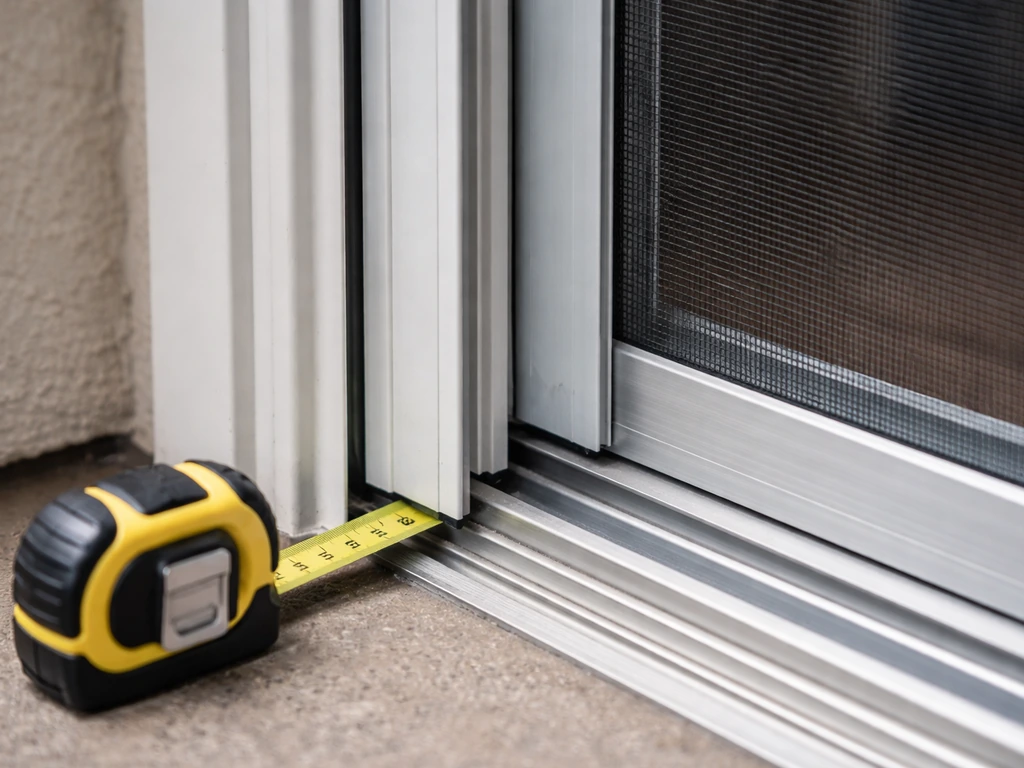
If your patio door has a screen door, check whether the screen track sits inside the main door recess or outside of it. An interior screen track can block inside-mount bracket placement entirely. Even for outside-mount, make sure the headrail position doesn't conflict with how the screen door opens and closes.
Trim and recess depth
Measure the actual depth of the recess from the front edge of the frame to the glass. If that depth is under 2.5", inside mount isn't practical. If it's close to 2.5", contact your blind manufacturer and ask for their specific minimum before ordering. For outside mount, check that the trim or wall surface above the opening is flat and wide enough to support brackets, you need at least 1.5" of flat surface where each bracket will sit.
Side overlap for light and privacy
Outside-mount blinds should extend past the frame on both sides. Three inches per side is the standard recommendation for patio doors. If one side of your door is against a wall, you may only be able to overlap 1" to 1.5" on that side, account for that in your width measurement rather than ordering blinds that will extend into the wall.
Turning your measurements into an actual order
Here's how to translate what you measured into the numbers you submit to the manufacturer.
- Width (inside mount): submit the smallest of your three inside-frame measurements, rounded down to the nearest 1/8". The manufacturer deducts for fit automatically.
- Width (outside mount): submit the total width you want the blinds to cover — opening width plus your chosen side overlap on each side — rounded down to the nearest 1/8".
- Height (both mount types): submit the smallest of your three height measurements, rounded up to the nearest 1/8".
- If you hit a measurement that falls on a 1/16" or 1/32" increment, round width down and height up to the nearest 1/8".
- If replacing an existing vertical blind headrail, measure the headrail itself (not the opening) for width, and measure from the top of the existing headrail to the floor for height.
- Double-check whether the manufacturer asks for "width then height" or "height then width" — the order varies by retailer and entering them backward is a common and expensive mistake.
Most vertical blind manufacturers cut the headrail to the exact width you provide for outside-mount orders, so what you submit is what you get. There's no automatic adjustment on outside-mount orders like there is for inside-mount. Submit carefully.
Final checklist and common mistakes to avoid
Run through this before you hit the order button. Most misfits come down to one of these errors.
Pre-order checklist
- Measured width at three points and used the smallest reading
- Measured height at three points and used the smallest reading
- Confirmed recess depth is sufficient if going inside mount (minimum ~2.5")
- Added 3" per side overlap for outside mount
- Checked that the screen door track doesn't conflict with bracket placement
- Confirmed the door handle stacking direction won't be blocked by the headrail
- Accounted for carpet pile if blinds hang to a carpeted floor (at least 1/2" clearance)
- Rounded width down and height up to the nearest 1/8"
- Checked whether the manufacturer wants width or height entered first in the order form
- Verified the manufacturer's inside-mount deduction so you're not double-adjusting
Mistakes that cause misfits
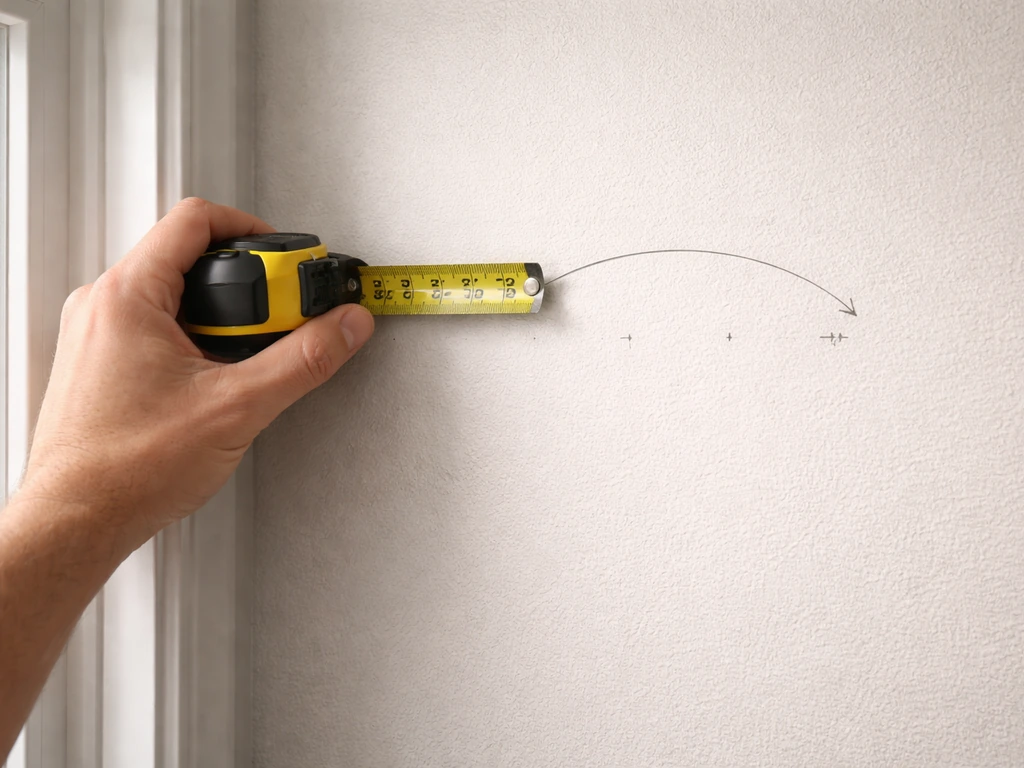
- Measuring only once at one point instead of three — walls and floors aren't always parallel
- Using the largest measurement instead of the smallest for inside mount — the blind won't fit into the frame
- Forgetting to add side overlap for outside mount — the result is a blind that technically spans the opening but lets light pour in at both edges
- Not checking recess depth before choosing inside mount — finding out brackets don't fit after ordering is an expensive lesson
- Ordering height too short because of carpet — vanes that are 1" too short leave a visible gap and look cheap
- Mixing up which number is width and which is height when entering the order
- Measuring with a fabric tape measure instead of a steel one — fabric stretches slightly and your numbers will be off
- Forgetting that the screen door track exists and conflicts with the planned bracket location
Getting these numbers right the first time saves you the hassle of returns and reorders. Vertical blinds for patio doors are one of the more forgiving window covering projects once you understand the inside-vs-outside mount decision, the actual measuring process is straightforward with a steel tape and three measurement points. If you're also thinking about curtains or other soft treatments alongside or instead of blinds, the measuring approach differs enough that it's worth looking at how curtain rod and curtain measurements work for patio doors separately, since rod placement, curtain stack, and required coverage overlap all follow different rules. If you prefer curtains instead of vertical blinds, measure for your rod placement and curtain coverage so the fabric clears the sliding door while still giving you the overlap you want.
FAQ
Should I measure the patio door by the glass, the frame, or the outer trim?
Measure the track and glass only, not the trim’s outer edge. For outside-mount you order based on the coverage you want (glass opening plus overlap), but for inside-mount you must order based on the frame recess dimensions so the manufacturer’s inside deduction still lands correctly. If you confuse trim edge width with recess depth, the headrail brackets can land in the wrong spot.
What if my measurements show the frame is slightly crooked or out of square?
Use a rigid straightedge to confirm where the vanes could touch before you order. A small bow in trim can reduce clearance at one side, which is why using the smallest of your three width and height readings matters. If the measured smallest width point looks “almost” like it will fit, treat it as the controlling dimension.
Do I need to re-measure if I’m adding new carpet or replacing flooring?
Yes, but you still need the same controlled points and rounding rules. For height, stacking can effectively change the lowest operating point if your carpet or sill changes under the vane path, so verify carpet pile clearance and then round height up to the nearest 1/8 in the final number you submit.
How do I measure height correctly if there is a raised threshold or floor transition?
If you have a thick floor transition (like tile plus a raised threshold), measure to the actual floor surface the vanes will reach at the shortest point. Do not measure to the vinyl base or to an imaginary level line, because vertical blind vanes will follow the real floor height at the lowest edge.
What should I check about vane stacking and the door handle?
For patio doors, confirm that the stack height is not just a vane position issue, it can also interfere with the door handle path and sometimes the sliding panel track trim. Dry-fit in your mind by marking where the headrail would sit, then check whether stacked vanes land toward the fixed panel (not the sliding panel) and whether they block the handle when closed.
What if the inside-mount recess depth is just under the minimum?
If you can’t achieve the inside-mount recess depth requirement, switch to outside-mount. Recess depth is the limiting factor because brackets need flat mounting depth, even if your width and height measurements are perfect.
My patio door is tight to one wall, how much overlap should I include?
Don’t assume the same overlap works on both sides. If one side abuts a wall, you may need a smaller overlap on that side and a different total width than the “3 inches per side” guideline. Measure the maximum space you can safely cover on the wall side and use that in your total order width.
Can vertical blinds interfere with the patio door handle even if they clear the floor?
It can, especially if the handle sits higher or lower than typical. Instead of relying on general handle height, locate the handle centerline on the sliding panel and decide which direction the vanes stack when the door is open, so the handle has a clear grip gap.
How precise do my measurements need to be, and how do I round with a tape that has smaller marks?
A steel tape is best, and the critical detail is “measure to the nearest 1/8 inch” after you select which points control. If your tape has markings smaller than that, read carefully at the 1/8 increment, then apply the rounding rules, width down and height up, before you enter numbers.
For outside-mount, what exactly is my starting point for the height measurement?
Use your planned headrail mounting point as the start, then measure straight down to the finished floor surface. If you mount above trim, the “inside top” for inside-mount is not your reference, you must reference the actual exterior mounting location so the ordered vane length lands correctly.
Next Article
How to Measure Curtains for a Patio Door: Step-by-Step
Step-by-step guide to measure patio door curtains for inside or outside mounts, with overlap, drop, and panel math.