To measure a sliding patio door correctly, you need three numbers: the rough opening width and height (the framed hole in the wall), the existing frame's outside-to-outside dimensions, and the individual panel width including overlap. For a replacement, measure the outside of the existing frame from left to right and top to bottom, that frame size is what you order. For new construction, measure the rough opening and subtract about 3/4 inch from the width and 1/2 inch from the height to get your door size. Write everything down in triplicate (three spots across and three spots down), use the smallest number, and you'll order correctly.
How to Measure for a Sliding Patio Door: Size Guide

Jamie Archer
4 May 2026
First: Know What You're Measuring For
Before you grab your tape measure, decide what you're actually replacing or installing. The measuring process differs depending on whether you have a standard two-panel glass sliding door, a multi-slide door system, or a sliding screen door. It also differs significantly between a full-frame replacement (where you remove the old frame entirely) and a retrofit or insert replacement (where the new door slides into the existing frame). Getting this wrong is how people end up with a door that's an inch too wide and a return shipping nightmare.
The two most common scenarios are: (1) replacing an existing sliding glass patio door where you'll remove the old frame and install a complete new unit, and (2) replacing just the screen door that runs in a separate track on the exterior side of the door system. Screen doors are measured completely differently from the glass door unit, so if that's your situation, jump ahead to the screen door section. If you're dealing with a brand-new opening, framing a rough opening from scratch, that's a third scenario covered in its own section below.
Also figure out your panel configuration now. Most residential sliding patio doors are two-panel: one fixed panel and one that slides. The operating panel can be on the left or right side, this is called the hand of the door. A right-hand door means the operating panel slides from right to left when you're facing it from inside. This matters when you order because manufacturers need to know the configuration, and it affects where handles and locks are positioned.
Tools and Prep Before You Measure
You don't need anything fancy, but you do need the right gear before you start. Using a flimsy tape measure on a 6-foot opening introduces real error. Here's what to have on hand:
- A 25-foot steel tape measure (at least 1-inch blade width so it holds rigid across long spans)
- A pencil and notepad, or your phone's notes app — you'll record at least 9 measurements
- A 4-foot level to check if the sill and head are level and plumb
- A framing square or speed square to check corner angles
- A helper is optional but useful for wide openings over 6 feet
Before measuring, remove any blinds, curtains, or trim pieces that might interfere with getting the tape flat against the frame. When you install the patio door curtain rod afterward, use the same measured locations so the rod brackets clear the track and slide smoothly blinds, curtains, or trim pieces. If you're measuring for new curtains or vertical blinds along with a new door, those measurements are handled separately, the door dimensions come first.
Once you have your door measurements, choose a curtain style that matches the track and how the door operates how to make patio door curtains. When you’re adding vertical blinds to a patio door, measure the blind width and drop based on the door track and the space you want them to cover vertical blinds for patio door. Clean the track area so you can see clearly where the frame ends and the floor begins.
Good lighting helps, especially for the threshold and sill details.
Measure the Rough Opening and Existing Frame
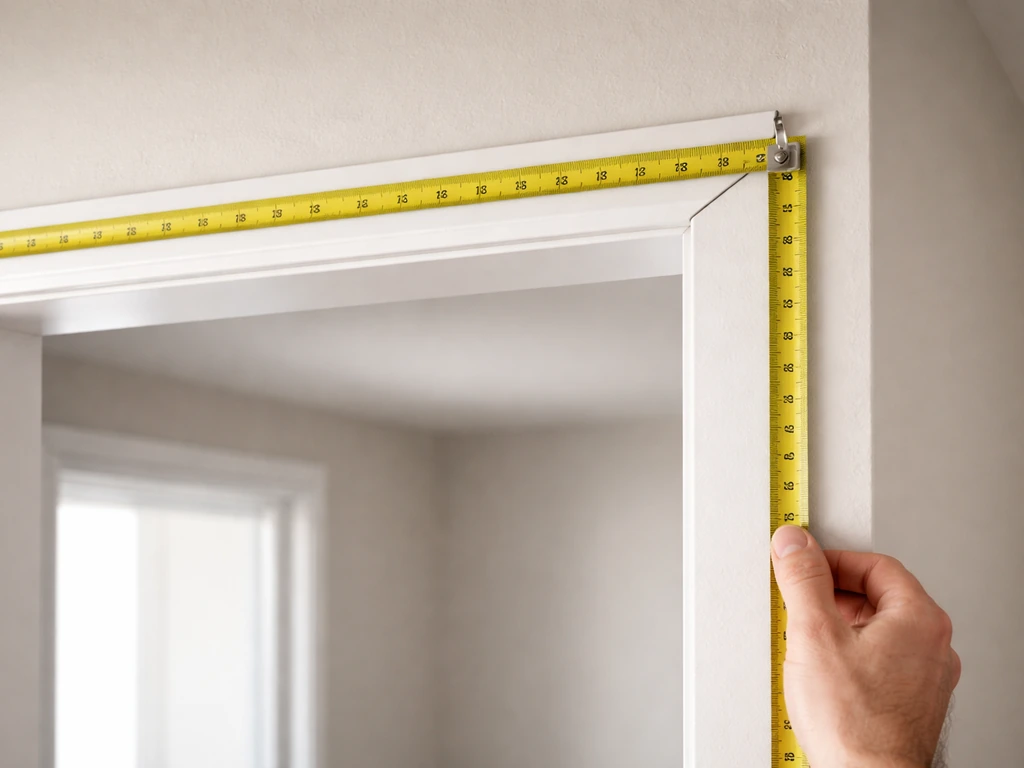
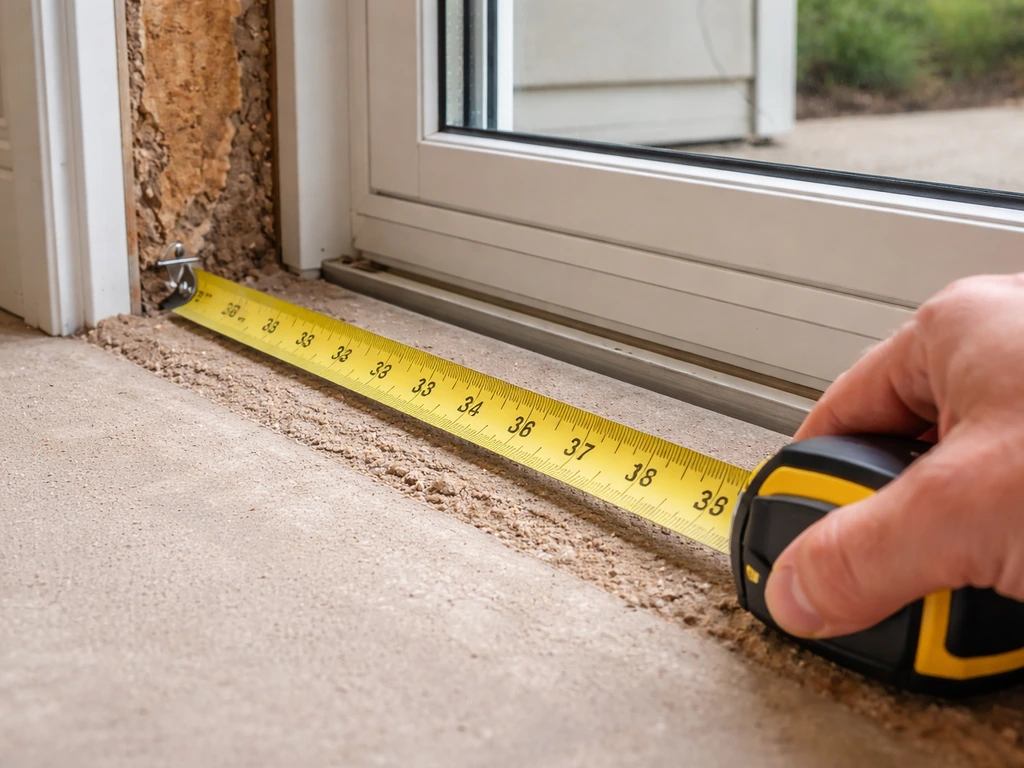
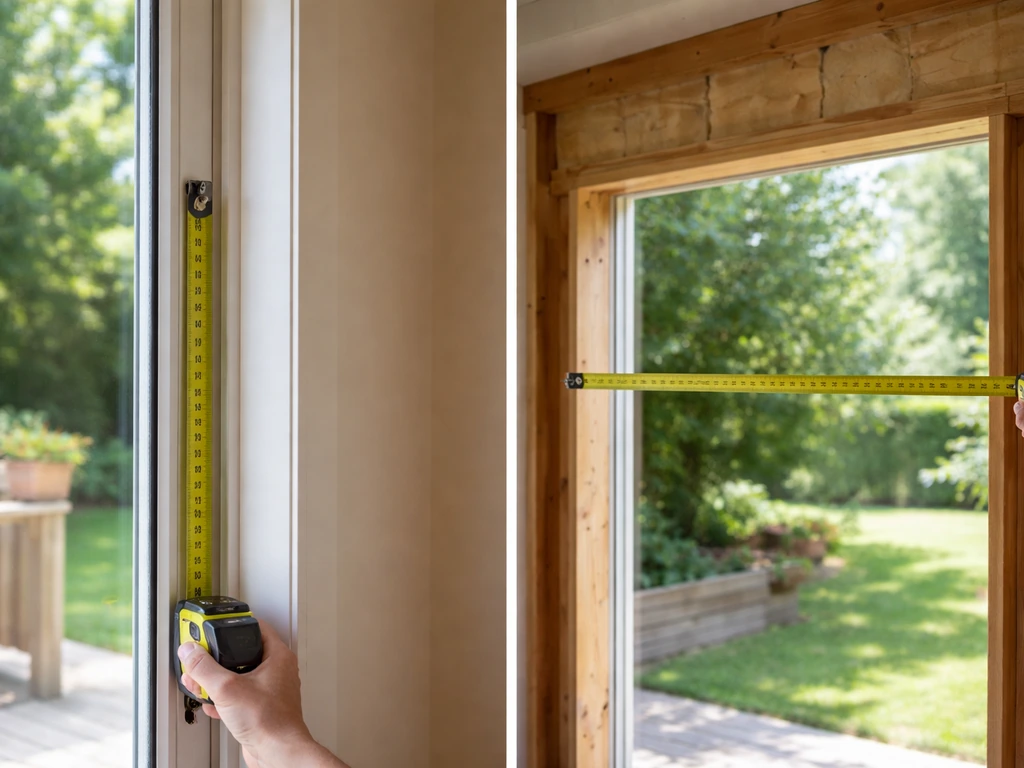
For a replacement installation, start by measuring the outside dimensions of your existing door frame, not the glass, not the interior trim, but the actual outer edge of the frame on all four sides. Pella's guidance is to measure from the outside of the frame, which gives you the frame size. Take the width measurement in three places: across the top of the frame, across the middle, and across the bottom. Then take height measurements in three places: down the left side, the center, and the right side. Record all nine numbers and use the smallest in each direction as your working dimension.
For new construction where you're framing a rough opening, the relationship works in reverse: the rough opening needs to be larger than the door unit to leave room for shimming and leveling. As a general rule, the rough opening should be 3/4 inch wider and 1/2 inch taller than the ordered door size. So if you're framing for a 72-inch wide door, your rough opening should be approximately 72-3/4 inches wide. Manufacturers like Andersen publish minimum rough opening dimensions in their sizing guides, always cross-reference the specific door model before framing.
Once you have your measurements, check whether the opening is square. Measure diagonally from the top-left corner to the bottom-right corner, then from the top-right to the bottom-left. If those two diagonal measurements match within 1/4 inch, the opening is square enough to proceed without special shimming. If they're off by more than 1/4 inch, the opening is out of square and you'll need to account for that during installation, either by shimming aggressively or by correcting the framing before the door goes in. An out-of-square opening causes misalignment that prevents the door from locking and sealing correctly. Andersen’s help-center also advises installers to verify the unit for proper installation by checking that it is plumb, level, and square.
Measuring the Sliding Panels
The frame size and the panel size are not the same number, and mixing them up is the most common measuring mistake. Here's how to break down the panel-level measurements correctly.
Track Length
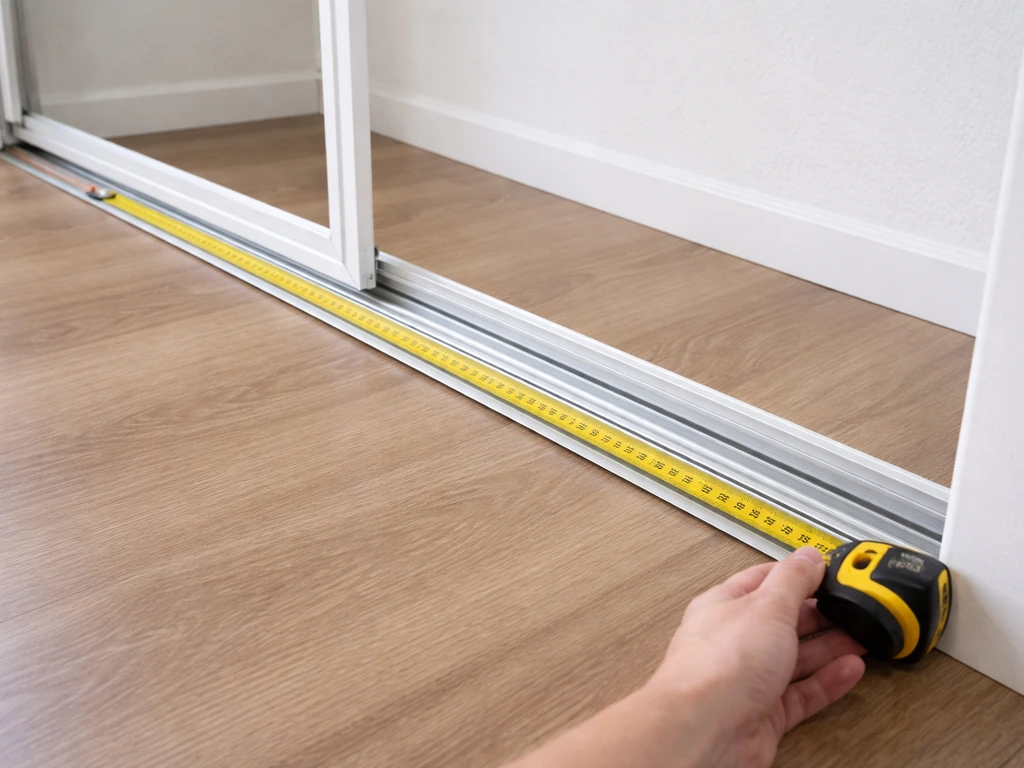
Measure the full interior track length from end cap to end cap along both the top and bottom tracks. This gives you the usable sliding span and confirms the frame's interior width. In a standard two-panel door, the track spans the full interior width of the frame. In multi-slide or bypass configurations, the track arrangement changes, some panels stack behind others, so the track length and the clear opening are different numbers.
Panel Width and Overlap
In a two-panel sliding door, the two panels overlap in the center when the door is closed, typically by 1 to 2 inches. This overlap is part of the weatherseal design. The individual panel width is roughly half the frame's interior width, plus that overlap amount. You don't need to calculate this for ordering purposes in most cases: when you order a replacement door by frame size, the manufacturer determines the panel width and overlap for that configuration. But you do need to understand overlap if you're replacing individual panels or trying to determine the clear opening (how wide the door actually opens). Clear opening equals one panel width minus the overlap, approximately.
Height and Reveal
Measure door height from the top of the threshold (or sill) to the underside of the head jamb. For vertical blinds, you will also need the door opening height and the clearance above the threshold so the head rail and slats sit correctly vertical blinds for patio door. This is the interior frame height. The panels themselves sit in the track and have a reveal, a small gap, at the top and bottom that allows them to lift in and out for installation and removal. That reveal is typically 1/4 to 3/8 inch at the top. If you're replacing panels only, measure the existing panel height directly (not the frame height) to get the exact panel dimension needed.
Hardware, Handles, Locks, and the Threshold
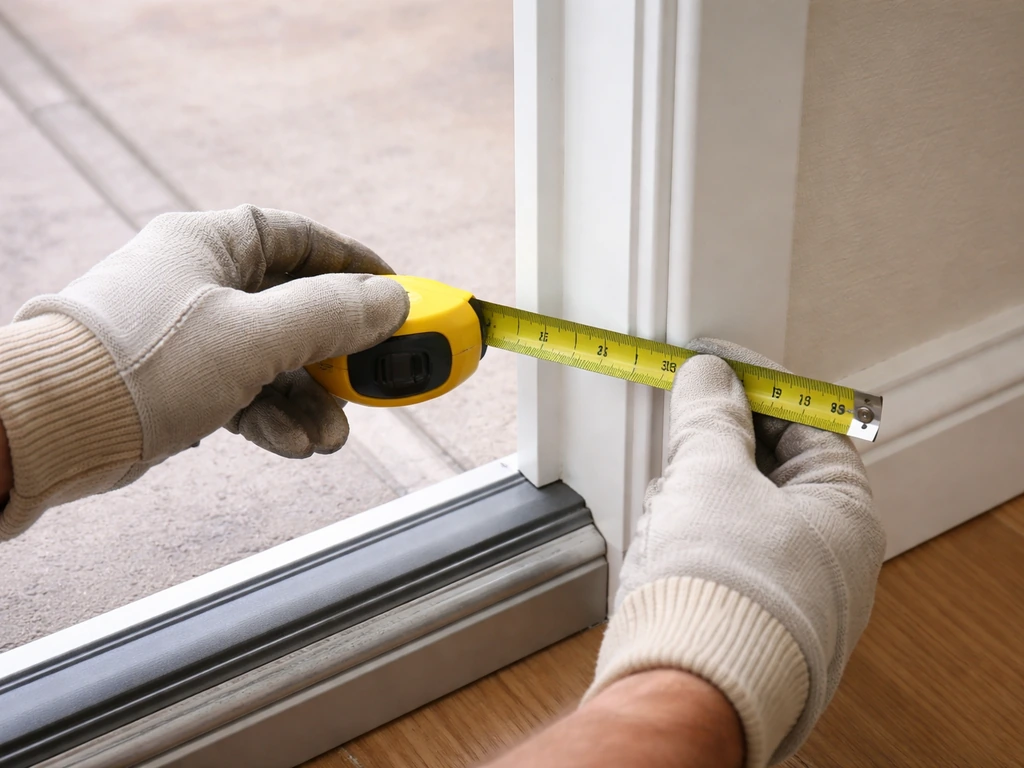
If you're replacing just the hardware, handles, locks, or rollers, measure the existing hardware carefully before ordering. For handles and locks, the critical measurement is the backset: the distance from the edge of the door panel to the center of the handle hole. Most sliding door handles use a standard backset, but it varies by manufacturer. Also measure the hole spacing if your handle has two mounting screws, as this center-to-center distance must match the replacement exactly.
Lock compatibility is tied to the latch strike location on the fixed panel or frame. When you replace the lock hardware, confirm the new latch lines up with the existing strike plate, or plan to relocate the strike. This is especially important if you're switching to a multi-point locking system.
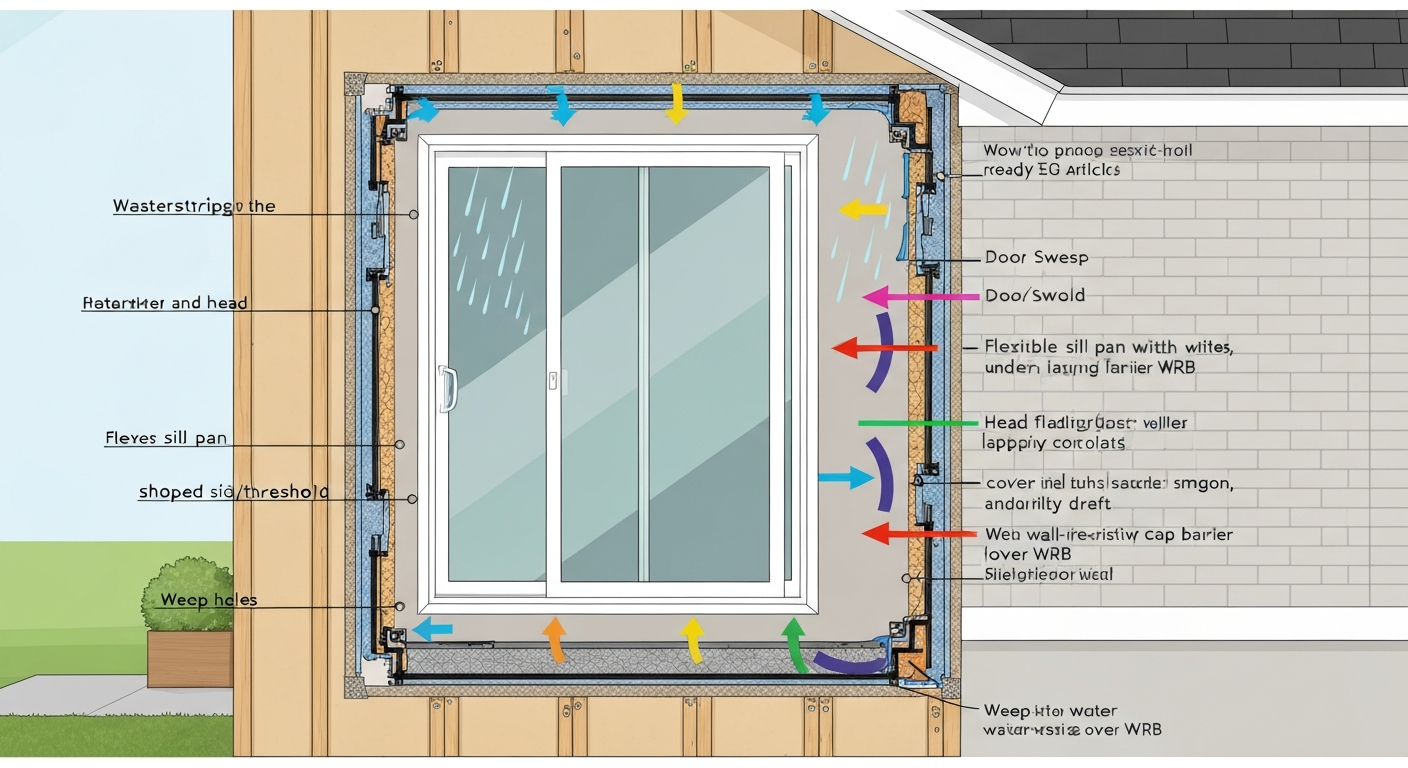
The threshold and sill deserve their own attention. Measure the sill height above the floor on both the interior and exterior sides, this affects how the door seals against air and water infiltration. If the threshold is worn, damaged, or rotted, plan to replace it along with the door unit. A new door set on a compromised threshold won't weatherproof correctly no matter how well it's installed. Note the sill width and slope as well, since some replacement units come with adjustable or site-built sill pans.
New Door vs. Replacement Door: How the Measuring Differs
This is where a lot of people get confused, so here's the clearest way to think about it. There are two fundamentally different ordering scenarios.
| Scenario | What You Measure | What You Order | Key Adjustment |
|---|---|---|---|
| Full-frame replacement | Outside of existing frame (width x height) | Frame size = measured frame size | None — the new unit replaces the old at same dimensions |
| New construction (framed RO) | Rough opening width x height | Door size = RO minus 3/4" width, 1/2" height | Frame the RO first, then order to fit |
| Insert/retrofit replacement | Inside of existing frame (jamb-to-jamb) | Frame size = inside frame dimensions | Confirm sill and head track are reusable |
| Panel-only replacement | Existing panel width x height | Panel size = direct panel measurement | Account for overlap and reveal |
For a full-frame replacement, which is the most common residential scenario, you're removing everything including the old frame and installing a complete new door unit. Measure the outside of the existing frame and order that size. The new unit drops into the rough opening the same way the old one did. Pella, Andersen, and other major manufacturers size their replacement units to match standard frame sizes, so this is usually straightforward as long as your opening is one of the common sizes (60x80, 72x80, 96x80 are the most typical).
For new construction, you're working from a framed rough opening. Get the rough opening dimensions from your framer or measure the framed opening yourself. Then subtract the manufacturer's specified clearance (3/4 inch in width, 1/2 inch in height as a general rule, but always check the specific model's installation manual) to arrive at the door size to order. Manufacturers like Andersen publish minimum rough opening tables in their sizing guides that show exactly what RO is needed for each door size and configuration.
If your measurements don't match a standard size, you have a few options: custom-order the door (more expensive, longer lead time), adjust the rough opening framing to fit a standard size, or use a retrofit/insert unit that can adapt to non-standard openings. Before ordering anything non-standard, re-measure twice and verify your corners are square, off measurements are often caused by measuring technique rather than a genuinely unusual opening.
Measuring a Sliding Screen Door
Screen doors are measured differently from the main glass door unit, and this trips people up constantly. The screen doesn't sit in the same track geometry as the glass panels, so you can't just use the frame dimensions.
Width
Measure the screen door width by measuring the interior width of the screen track channel from one side stop to the other. This is the channel the screen door slides within, not the full door frame width. In most standard doors, the screen track sits on the exterior side of the door frame and runs about 1 to 2 inches narrower than the full frame width.
Height
For screen door height, measure from the top of the bottom roller track to the top of the upper U-channel (the groove the screen door slides into at the top). Do not measure from the floor or the exterior sill surface. The roller track sits raised above the sill, and the U-channel at the top is recessed, so the screen door height is shorter than the glass panel height. This track-to-channel measurement is what determines whether replacement rollers will engage correctly and whether the door will stay in the track without lifting out.
Roller and Track Compatibility
When replacing a screen door, also measure or note the roller type. Screen door rollers are at the bottom corners and sit in the track groove. The roller wheel diameter and the track groove width must match for the door to slide smoothly and stay aligned. Pella replacement screens, for example, include specific roller components that correspond to the track geometry in their door systems. If you're buying an aftermarket screen, confirm the roller diameter, the track width, and whether the door has top guide pins or a full U-channel top. Getting a screen that's dimensionally correct but with incompatible roller hardware will still result in a door that binds, lifts out, or won't close flush.
Quick Screen Measurement Checklist
- Measure screen track width: inside face of left channel to inside face of right channel
- Measure screen height: top of bottom roller track to top of upper U-channel
- Note roller type and wheel diameter from the existing rollers if possible
- Check whether the top of the screen uses a U-channel or guide pins
- Measure the track groove width to confirm roller compatibility
Before You Order: Verify and Cross-Check
Once you have all your measurements, do a quick sanity check before placing an order. Confirm that your width and height measurements make sense relative to each other and to your room dimensions. Re-measure anything that seems off. If your three width measurements vary by more than 1/4 inch from top to bottom, your frame may be racked or the floor may have settled, flag that for the installer. If your diagonal measurements are off by more than 1/4 inch, plan for shimming or corrective framing work.
Also confirm the door hand (left-operating or right-operating) before ordering, and specify it explicitly. Write down the full measurement set: frame width (smallest of three), frame height (smallest of three), rough opening width and height if known, panel configuration (2-panel, 4-panel, etc.), operating panel side, and hardware details. Many manufacturers have online configurators or sizing guides that show exactly how a given set of measurements translates to a call size, use those tools to double-check your math before you commit to an order.
If you're also planning to update your window treatments after the new door is in, measure for curtains or vertical blinds after the door is installed and the trim is back in place, not before. For tips on choosing and installing curtain rods, brackets, and fabric that fit a sliding patio door, see how to hang patio door curtains Measure for curtains. The door's installed frame position can shift slightly from the old door's position, and treatment measurements taken against bare framing are often off once the trim goes back up.
FAQ
Should I measure the glass or the frame when I am ordering a replacement sliding patio door?
For a full-frame replacement, measure the outside edges of the existing door frame (outer-to-outer), not the glass and not interior trim. Measuring the glass can lead to the wrong unit size because glass dimensions do not account for jamb, sill, and weatherseal clearances.
What if my width and height measurements are slightly inconsistent across the three readings, but still within 1/4 inch?
Use the smallest number in each direction like the article recommends, but also note where the larger dimension occurs (usually one side). That pattern helps the installer plan for shimming at the correct corner, reducing the risk of a door that drags or does not latch smoothly.
How do I measure the door hand correctly if I stand outside instead of inside?
Door hand is defined facing the door from inside. If you accidentally face from the opposite side, you can order a door with the operating panel swapped. To avoid mistakes, do a quick check by simulating the slide direction with your hands, while standing inside the room.
Do I need to measure for the “clear opening” (how wide it opens), or is the ordered door size enough?
Ordered size is usually enough for standard replacements, but clear opening matters if you are trying to fit a specific requirement, like moving furniture through. Use the relationship between panel width and overlap described in the article to estimate clear opening, and remember overlap changes with configuration (and sometimes with different panel stacking styles).
If my opening is out of square by more than 1/4 inch, can I still order a standard-size door?
You may be able to, but you should expect more extensive shimming and possibly adjustment of framing or sill preparation. If the opening is significantly out of square, a standard unit can bind during operation or prevent proper latching and sealing even if the ordered size is correct.
How should I measure threshold or sill height if the threshold is uneven or worn?
Measure sill height at both interior and exterior sides at the actual highest and lowest points you see, then record those values. Uneven or damaged thresholds can change effective clearances, so plan either threshold replacement or leveling and sill pan work so the door seals consistently across the full length.
Can I replace just the panels without replacing the whole frame, and what do I need to measure then?
Yes in some systems, but you must measure panel-specific dimensions rather than relying on frame dimensions. Measure the existing panel height directly, and if available, use the manufacturer’s panel model number to match reveal and top lift clearance so the panel can install and sit correctly in the track.
What do I do if my tape measure starts to bow or I cannot keep it perfectly straight across the frame?
Use a sturdier approach, measure along the face where you can keep the tape flat, and repeat the measurement at least once. Bowing or slanted measuring often causes top-to-bottom variations; if your width readings drift more than about 1/4 inch, treat it as a measuring technique issue and re-check before ordering.
How do I measure a sliding screen door if the screen track is different from the glass door frame?
Measure the screen width by the interior width of the screen track channel from side stop to side, not the full door frame width. For height, measure from the top of the bottom roller track to the top of the upper U-channel, because the roller track sits above the sill and the top guide recess makes the screen shorter than the glass panel.
Why does a screen replacement sometimes bind even when the measurements seem correct?
Common cause is roller and track mismatch. Confirm the roller wheel diameter and the track groove width, and note whether the top uses a full U-channel or guide pins. A dimensionally correct screen can still lift out, bind, or not close flush if the roller hardware does not engage the track geometry.
Do I measure curtain rods or blinds before or after the door is installed?
Measure window treatments after the door is installed and the trim is back in place, not before. The door set can shift slightly from the old position once the sill, jambs, and casing are fitted, so measuring against bare framing can produce brackets that interfere with the track.
Next Article
How to Protect Patio Door from Rain: DIY Fixes, Steps & Costs
How to protect patio door from rain: step-by-step DIY fixes, tests, tools, seasonal tips, and when to call a pro.