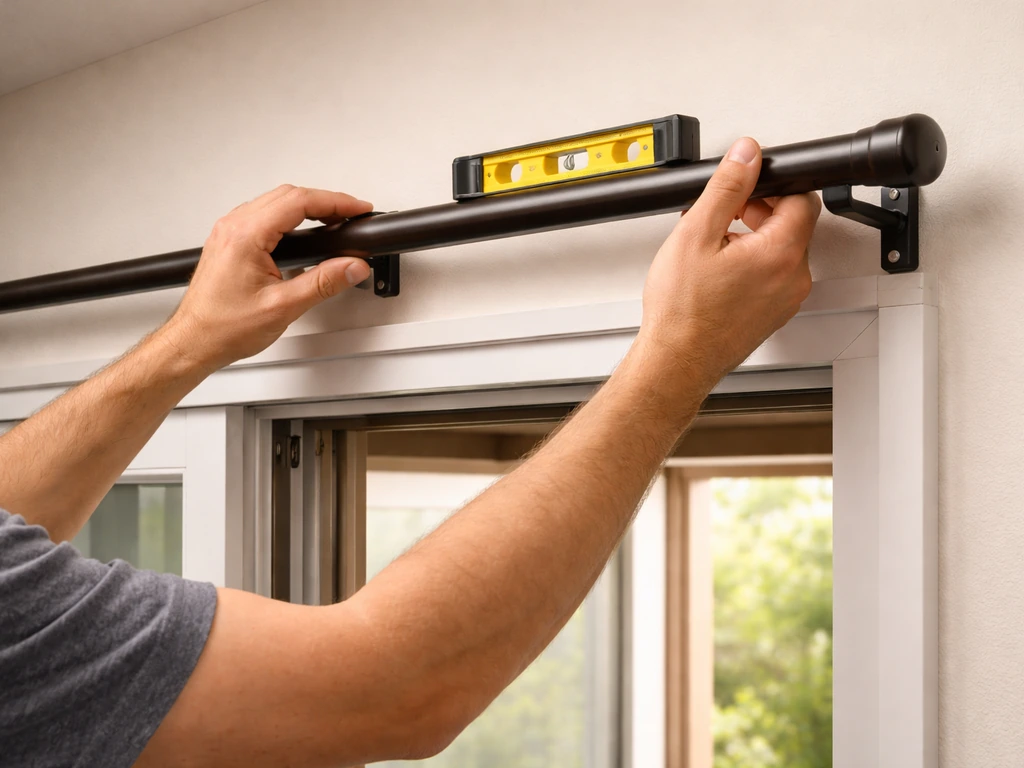
To measure curtains for a patio door, you need three numbers: the width of the area you want the curtains to cover, the height from your rod down to the floor (or wherever you want them to end), and the rod length. If you want a step-by-step guide for making them yourself, use this overview on how to make patio door curtains. For an outside mount on a standard sliding glass door, that usually means measuring the full door frame width, adding 6 to 10 inches on each side for stack-back clearance, then measuring from your rod position (typically 4 to 6 inches above the frame) down to about half an inch off the floor. From those numbers you can figure out how many panels to buy and what rod length you need. The sections below walk through every step.
How to Measure Curtains for a Patio Door: Step-by-Step
Choose the curtain style and where it mounts
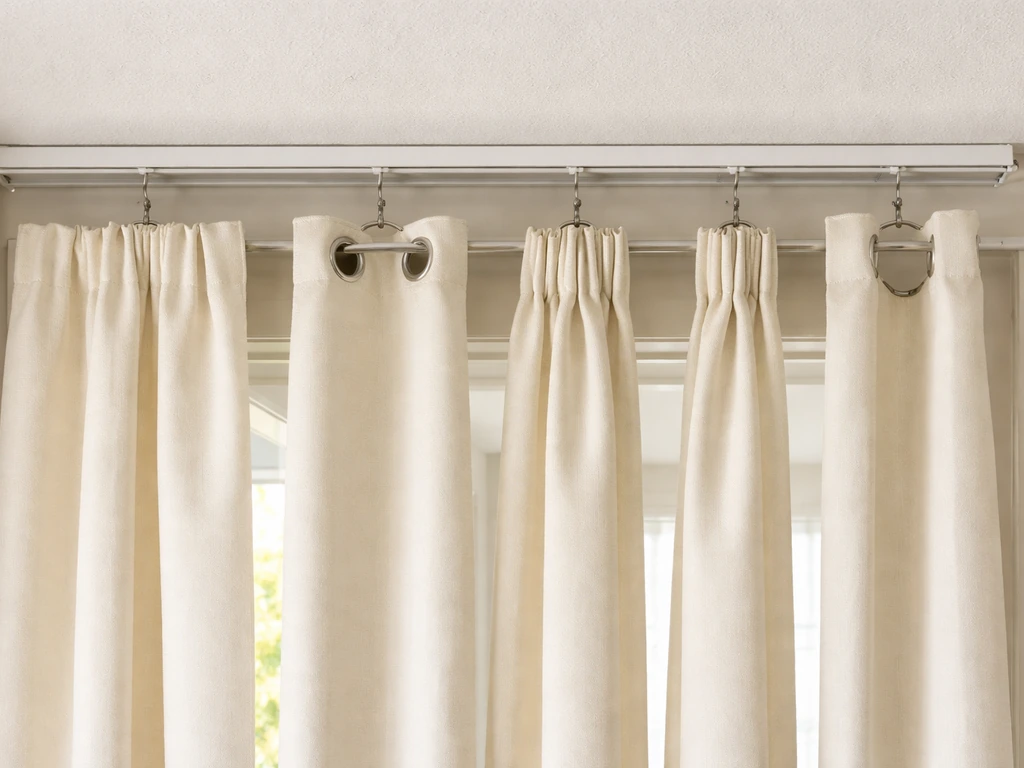
Before you pull out a tape measure, decide two things: the curtain style (rod pocket, grommet, pinch pleat, tab top) and where the rod or track will live (wall above the door, ceiling, or inside the door recess). These choices change what you measure and where you measure it from, so skipping this step leads to ordering the wrong size.
Outside mount (rod or track on the wall or ceiling above the frame) is the most common choice for patio doors. It gives you better light and draft control because the fabric can overlap the frame edges, and it makes the door look taller and wider. Inside mount (rod inside the door recess) works only if your recess is deep enough to mount hardware without the curtain catching on the door itself, which is rare on most sliding glass doors. For almost every sliding glass door situation, outside mount is the right call.
Your curtain style also affects where your height measurement starts. Grommet panels hang from the top of the rod, so you measure from the rod down. Rod-pocket panels sit on the rod and hang slightly lower, so the fabric top sits at rod level but the hang point is the same. Pinch-pleat panels on rings hang from the bottom of the ring, meaning they sit a bit lower than the rod. Know your header style before you finalize the height number.
Measure the patio door width
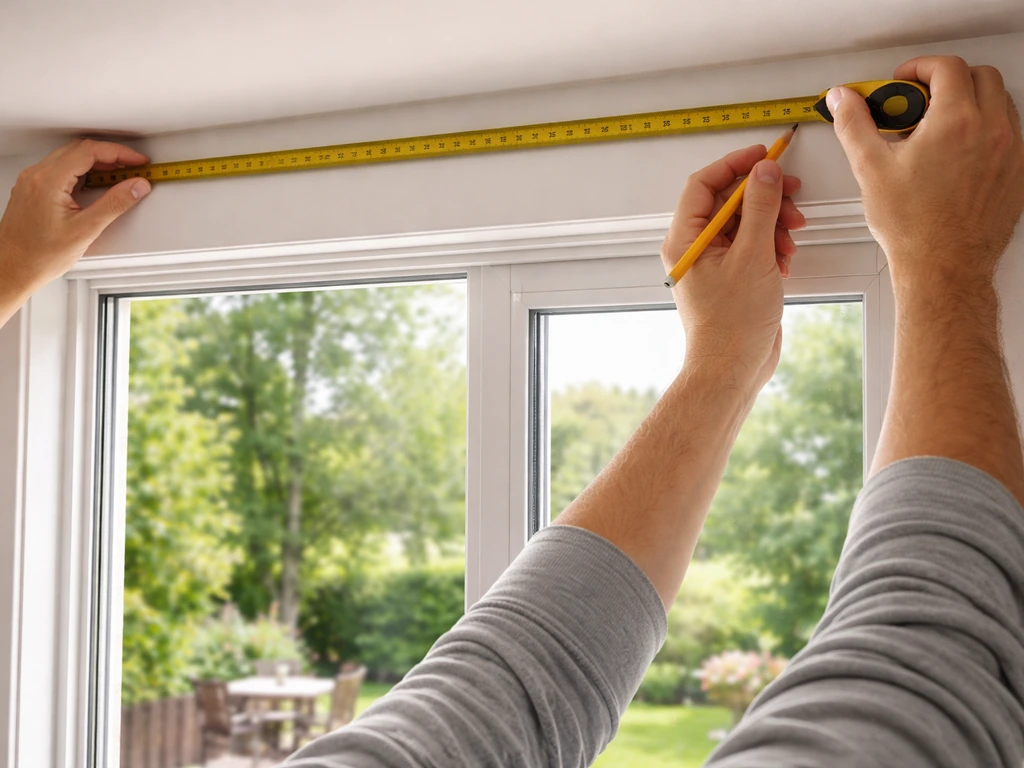
For an outside mount, you're not measuring the glass or the door panel itself. You're measuring the full frame or trim width, then deciding how far past that you want the rod to extend. Measure the outside edge of the left trim to the outside edge of the right trim. That's your frame width baseline.
From there, add clearance on each side. For a sliding glass door, you want the rod to extend 6 to 10 inches beyond the frame on each side. This does two things: it lets the curtain stack off to the side when the door is open without blocking the glass, and it gives you visual breathing room so the curtains don't look squeezed against the wall. A standard 6-foot (72-inch) sliding door with 8 inches of clearance on each side needs a rod that's at least 88 inches wide. Don't forget to subtract the finial length from each end when shopping for rods, since finials don't hold fabric.
For an inside mount, measure the inside width of the door recess at three points: top, middle, and bottom. Use the smallest of those three measurements. Most hardware manufacturers will deduct about a quarter to half an inch from your inside measurement to ensure the rod or track fits without forcing it.
If you have a track-mounted system (a ceiling-mounted or wall-mounted traverse rod rather than a decorative rod), measure the track's usable length, not including any fixed end stops. That's the number you'll use for your fabric math.
Measure the patio door height
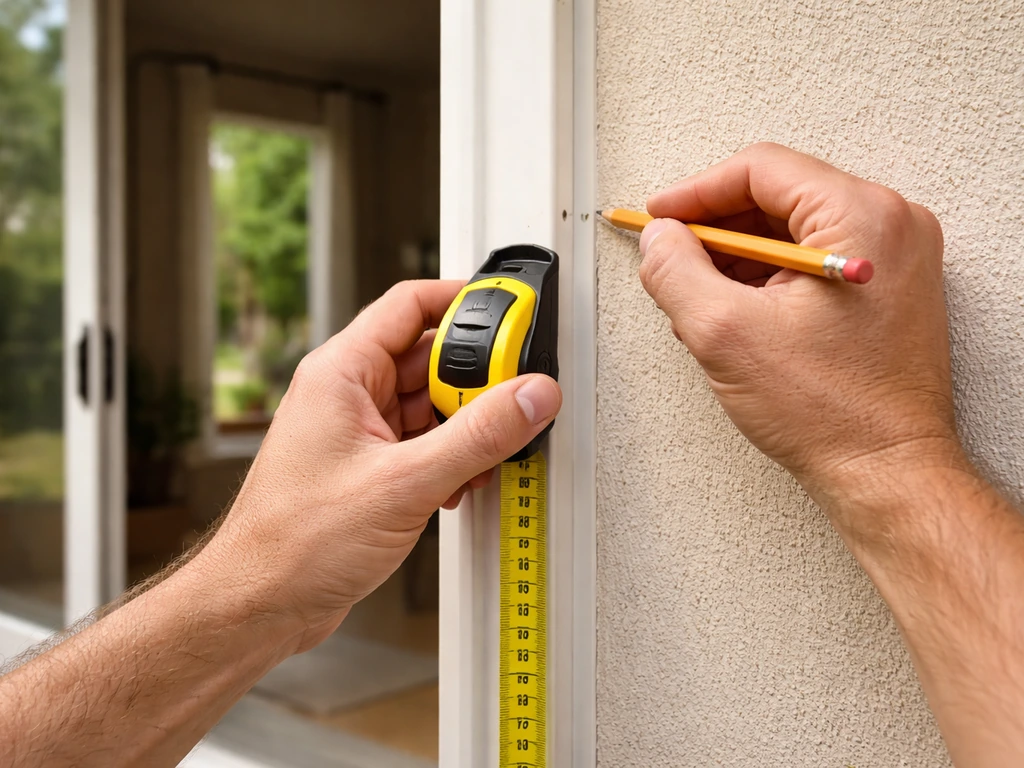
Height measurement has two parts: where the rod goes, and where the curtain bottom ends. Decide the rod position first. For an outside wall mount, place the rod 4 to 6 inches above the top of the door frame or trim. If you're going all the way to the ceiling for a dramatic look, mount the rod 1 to 2 inches below the ceiling. Mark that point on the wall with a pencil.
Now measure from that pencil mark straight down to your desired endpoint. There are three common finishes:
- Half an inch off the floor: the cleanest, most practical look for a patio door that gets regular use. Fabric won't catch underfoot or snag on the door.
- Brushing the floor (about a quarter inch of contact): a slightly relaxed look that still reads as intentional.
- Puddle (3 to 6 inches of extra fabric on the floor): a formal, dramatic look that works better on fixed panels than on ones you'll open and close frequently.
For most patio door setups where people are walking in and out, the half-inch-off-the-floor finish is the most practical. Write that measurement down as your finished panel length.
One more thing: adjust for your header style. Grommet panels hang with the top of the grommet on the rod, so the top of the fabric is essentially at rod level. Rod-pocket panels sit on the rod and may drop the fabric top slightly. If you're using rings with clips or pinch-pleat hooks, add the ring drop (usually 1 to 1.5 inches) to your panel length, because the fabric hangs below the rod by that amount. This is a small but important detail that causes a lot of returns.
Account for coverage details
Width coverage is where a lot of people underestimate and end up with curtains that let light leak around the edges. The rod extending 6 to 10 inches past each side of the frame isn't just for looks: when the curtains are closed, the panels need to fully cover the glass and overlap each other in the middle by at least 3 inches so there's no light gap at the center seam. In a Redddit discussion about measuring curtains, a common overlap guideline for pairs is around 3 inches so light does not peek through in the meeting area blank" rel="noopener noreferrer">overlap each other in the middle by at least 3 inches.
On the sides, the fabric panel should reach to (or slightly past) the wall or trim edge of the door. If your rod extends 8 inches past each side of the frame, the curtain panel on that side should cover those 8 inches when closed. If you're stacking curtains open to one side (a common choice for sliding doors where you always open the same panel), plan for more clearance on the stack side so the door glass is fully exposed when open.
Also think about rod projection, which is how far the rod brackets stick out from the wall. You want at least 3 to 5 inches of projection so the curtain fabric clears the door handle and doesn't catch on it every time someone opens the door. If you're putting curtains over a door with a protruding handle or lock, measure the handle depth from the wall and add an inch. Standard brackets usually project about 3 inches, but double-check before buying.
Measure for inside mount vs outside mount
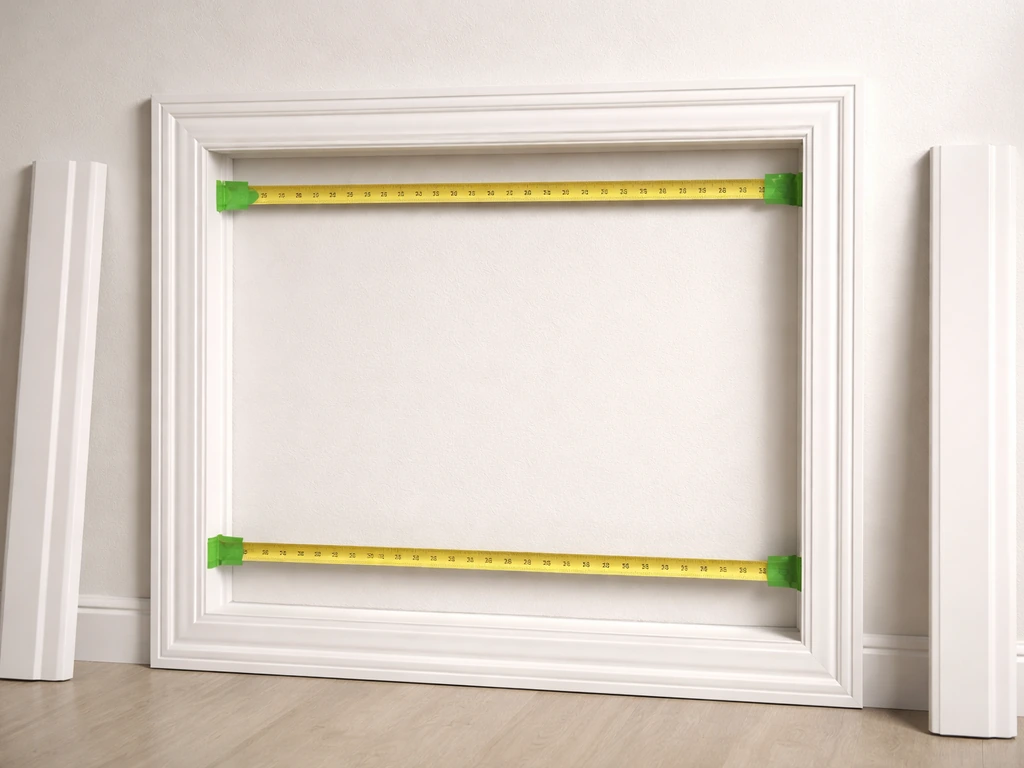
Here's a side-by-side summary of what changes between the two approaches: Home Depot’s curtain-hanging guide recommends inside-mount hardware when the window sill is deep or extended, and for outside mounts you should mark 3 inches on each side and 4 inches above the window or trim area inside-mount is ideal when sills are deep/extended, and outside-mount measuring includes marking 3 inches on each side and 4 inches above the window/trim area.
| Measurement point | Inside mount | Outside mount (wall or ceiling) |
|---|---|---|
| Width reference | Inside recess width (use smallest of 3 measurements) | Outer frame/trim edge to edge, plus 6–10 inches per side |
| Height reference (top) | Top of recess or top of inside rod position | Rod mark: 4–6 inches above frame, or near ceiling |
| Height reference (bottom) | Bottom of recess or desired endpoint inside frame | Floor minus ½ inch (or preferred finish) |
| Rod/track length | Inside opening width minus ¼–½ inch deduction | Full span including side extensions, minus finials |
| Light control | Gaps likely at sides unless custom fit | Better coverage; fabric overlaps frame edges |
| Best for patio doors? | Rarely practical due to shallow recess | Yes, recommended for most sliding glass doors |
If you do go inside mount, measure the recess depth too. You need at least 2 to 3 inches of depth for most rod brackets. Most sliding door frames don't have that, which is why inside mount rarely works here. If yours does, make sure the curtain fabric won't drag on the door panel as it slides.
Convert measurements into what to buy
Once you have your rod length and finished panel length, you can figure out exactly what to order. Here's how the math works.
Rod or track length
Your rod length equals the full span you measured (frame width plus side extensions). If your door frame is 72 inches wide and you're adding 8 inches per side, you need a rod that spans at least 88 inches. Round up to the next available size and use adjustable brackets to fine-tune the position.
Total fabric width (fullness)
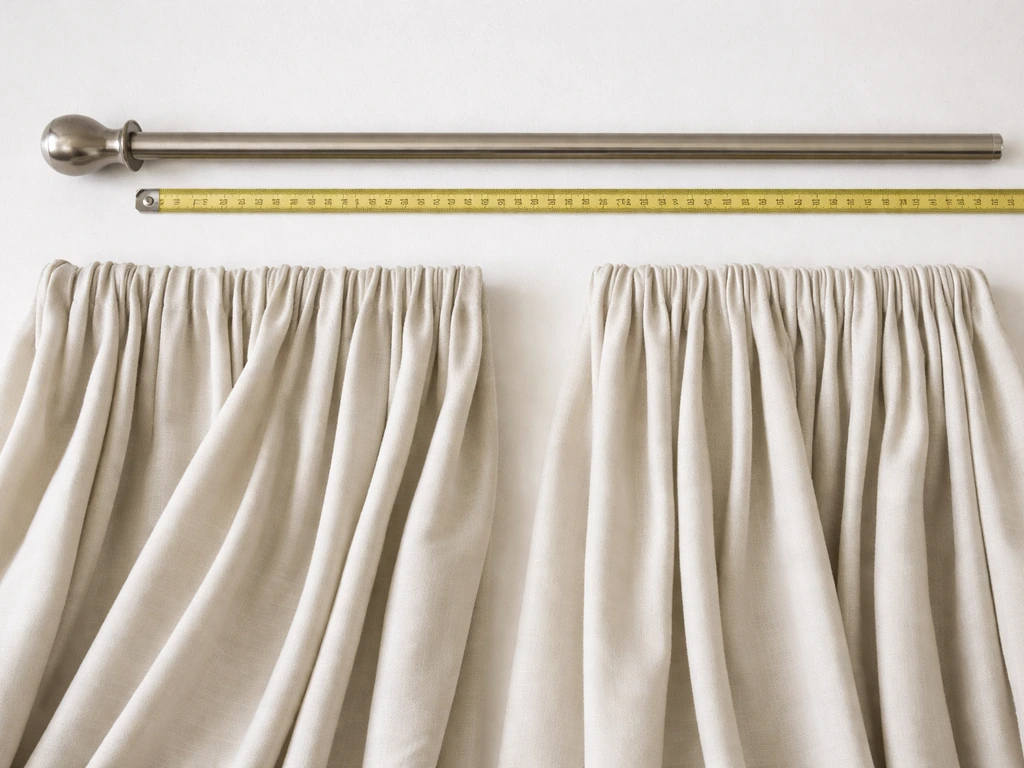
Curtains need more fabric than the rod length to look full rather than flat. The standard rule is 2 to 2.5 times the rod length for a gathered or pleated look. For a sleeker, more modern look with grommet panels, you can go as low as 1.5 times. Multiply your rod length by your fullness factor to get your total fabric width.
Example: 88-inch rod at 2× fullness = 176 inches of total fabric width needed. If you're buying two panels, each panel needs to be 88 inches wide. Most store-bought panels come in widths of 50 to 54 inches, so for an 88-inch rod at 2× fullness you'd actually want three panels (or look for wider panels labeled 84–96 inches wide). Always check the panel's listed width, not just the length.
Number of panels
Divide your total fabric width by the width of the panels you're considering. Round up to the nearest whole number. For a patio door, two panels is the most common configuration (one stacks to each side when open), but a wide door with high fullness may need three or four panels. If you're doing a single-stack setup where all curtains pull to one side, that side needs enough clearance for the full stack, which is typically about 40 percent of your rod length.
Panel length
Use the finished length you measured (rod to floor minus half an inch, for example). Store-bought panels come in standard lengths: 63, 84, 95, 96, 108, and 120 inches are the most common. Pick the next size up from your measurement, not the nearest one down. You can always have panels hemmed shorter; you can't add fabric back.
Quick reference: measurement-to-panel conversion
| Rod length | Fullness factor | Total fabric width needed | Panels at 52-inch width |
|---|---|---|---|
| 72 inches (6 ft door) | 2× | 144 inches | 3 panels |
| 88 inches (6 ft door + 8 in/side) | 2× | 176 inches | 4 panels (or 2 wide panels) |
| 96 inches (8 ft door) | 2× | 192 inches | 4 panels |
| 88 inches | 1.5× (grommet, minimal gather) | 132 inches | 3 panels |
Record your measurements properly
Write everything down in a simple format before you start shopping. You'll thank yourself later, especially if you're comparing options online. Here's what your notes should include:
- Frame width (outside trim edge to outside trim edge): _ inches
- Side extension per side: _ inches (typically 6–10 inches)
- Rod length needed: frame width + (2 × side extension) = _ inches
- Rod mount height above frame: _ inches above trim
- Floor-to-rod measurement: _ inches
- Desired finish (off floor, brushing, puddle): _
- Finished panel length needed: floor-to-rod minus finish adjustment = _ inches
- Standard panel length to buy (next size up): _ inches
- Total fabric width needed: rod length × fullness factor = _ inches
- Number of panels needed: total fabric width ÷ panel width (rounded up) = _
- Rod projection from wall needed: _ inches (at least 3–5 inches for patio door handle clearance)
Common mistakes and a quick re-check
The most common errors are measuring the glass instead of the frame, forgetting to account for fullness (so the curtains look flat and thin), and choosing a panel length that's an inch or two short so the curtain floats awkwardly above the floor. If you want to avoid that common sizing mistake, follow these steps for how to measure for a sliding patio door before you order anything measure the glass instead of the frame. Here are the ones I see come up again and again with patio door curtains specifically:
- Measuring only the door panel width, not the full frame. Your rod needs to clear the entire frame plus stack-back space.
- Forgetting the center overlap. Two panels on an 88-inch rod need to overlap by at least 3 inches in the middle, so factor that into your fabric math.
- Not accounting for ring or hook drop. If your rings add 1.5 inches of drop below the rod, your panels need to be 1.5 inches shorter than your floor-to-rod measurement, or they'll puddle unintentionally.
- Buying panels that are too narrow and skipping the fullness calculation. A 52-inch panel on an 88-inch rod covers the rod but looks flat and sad. Do the 2× math.
- Ignoring rod projection. If the bracket only sticks out 1.5 inches from the wall, the curtain will drag on the door handle every time someone uses it.
- Not measuring three times for inside mount. Recess walls are rarely perfectly parallel, so always take top, middle, and bottom width measurements and use the smallest.
Re-check before ordering
Run through this quick checklist before you click buy:
- Did you measure from the rod position, not the top of the door frame?
- Is your rod length based on the full coverage area (frame + side extensions), not just the door width?
- Did you calculate total fabric width using a 2× to 2.5× fullness factor?
- Does the number of panels give you enough fabric to hit that fullness number?
- Is your chosen panel length the next standard size up from your measured drop?
- Have you confirmed the rod projection is deep enough to clear the door handle?
- If using rings or hooks, did you account for the drop distance in your panel length?
Once you've got these numbers locked in, you're in good shape to shop. If you're working through the rest of the project, you may also want to look at guidance on how to hang patio door curtains once they arrive and how to install the curtain rod correctly, since mounting hardware on a patio door frame has its own quirks. Getting the measurements right is the hard part; the rest is straightforward. Once you have the measurements nailed down, installing the patio door curtain rod is the next step install patio door curtain rod.
FAQ
What if my patio door isn’t perfectly centered on the wall, and I want curtains to line up with other windows or trim?
Still start with the frame width for the baseline, but use the rod extension to visually balance the layout. Measure from the outside trim edges for width, then choose an extension length that makes the rod ends land in line with adjacent window hardware or architectural features.
How do I measure for curtains if I have window blinds or a shade already installed in front of the door?
Confirm how much fabric clearance you need when the door slides and when curtains stack. Measure the protruding depth of the blinds or shade from the wall, then add at least 1 to 2 inches to your rod projection requirement so the curtain doesn’t snag or press into the hardware.
Should I measure the floor to decide the finished length if I have carpet, tile, or a threshold?
Measure to the finished stopping point you want, not to an assumed “hard floor.” If you have a raised threshold or a carpet that bulges, plan for the half-inch clearance off the surface you’ll actually see, and keep the bottom from dragging or pooling fabric.
What if my curtain panel length doesn’t match a standard store size like 84 or 95 inches?
Pick the next longer standard length, then hem down. Avoid choosing a shorter panel length because you cannot add fabric back, and altered hems can also change how the header style hangs (especially with rings and clip systems).
How many panels should I buy if I want maximum fullness, but my patio door is fairly narrow?
Use the fullness factor, then check panel count against the panel widths you can actually buy. For a narrow rod, it is often better to select a slightly lower fullness or use wider panels to avoid ending up with many narrow sections that don’t overlap enough at the center.
How can I prevent light gaps at the center seam when my curtains meet in the middle?
Make sure the panels overlap when closed, and confirm the meeting configuration (two panels meeting at center versus three or four panels). If the center seam still leaks, increase fabric fullness and/or ensure the combined overlap is at least a few inches at the closure point.
Do I need to adjust measurements for a door handle or lock that sticks out farther than usual?
Yes. Measure handle depth from the wall to the most protruding point, then increase rod projection so the curtain fabric clears it by about an inch. If the handle is unusually deep, do not rely on “standard bracket” assumptions.
How do I measure if I’m using a ceiling-mounted track instead of a decorative rod?
Measure the track’s usable length excluding any fixed end stops, then base your width math on that usable span. For height, measure from the track mounting point down to your desired finished endpoint, and include the header drop if your panel header hangs below the track.
What’s the best way to measure height if the rod will be mounted on an uneven wall?
Use a level or measure from the highest intended mounting point, then re-check the finished hem level by measuring to the same endpoint on both ends. Uneven mounting can cause one side to skim the floor and the other to float.
Can I measure only once and assume symmetry for both sides, or should I check both curtain ends?
Check both sides. Small differences in trim depth, wall corners, or rod bracket placement can change how much fabric covers each edge when closed, especially if you’re aiming for full glass coverage with minimal light leakage.
What measurement do I use if I’m doing a single-stack setup where the curtains all pull to one side?
Use the frame width plus your extension for coverage, but also account for stack clearance on the side where fabric gathers. Plan for roughly the larger stack-side clearance so the door can open fully without the stacked panels blocking the moving glass area.
How to Hang Patio Door Curtains Step by Step DIY
Step-by-step DIY for hanging patio door curtains, choosing no-drill or mounted rods, measuring, aligning, and avoiding d