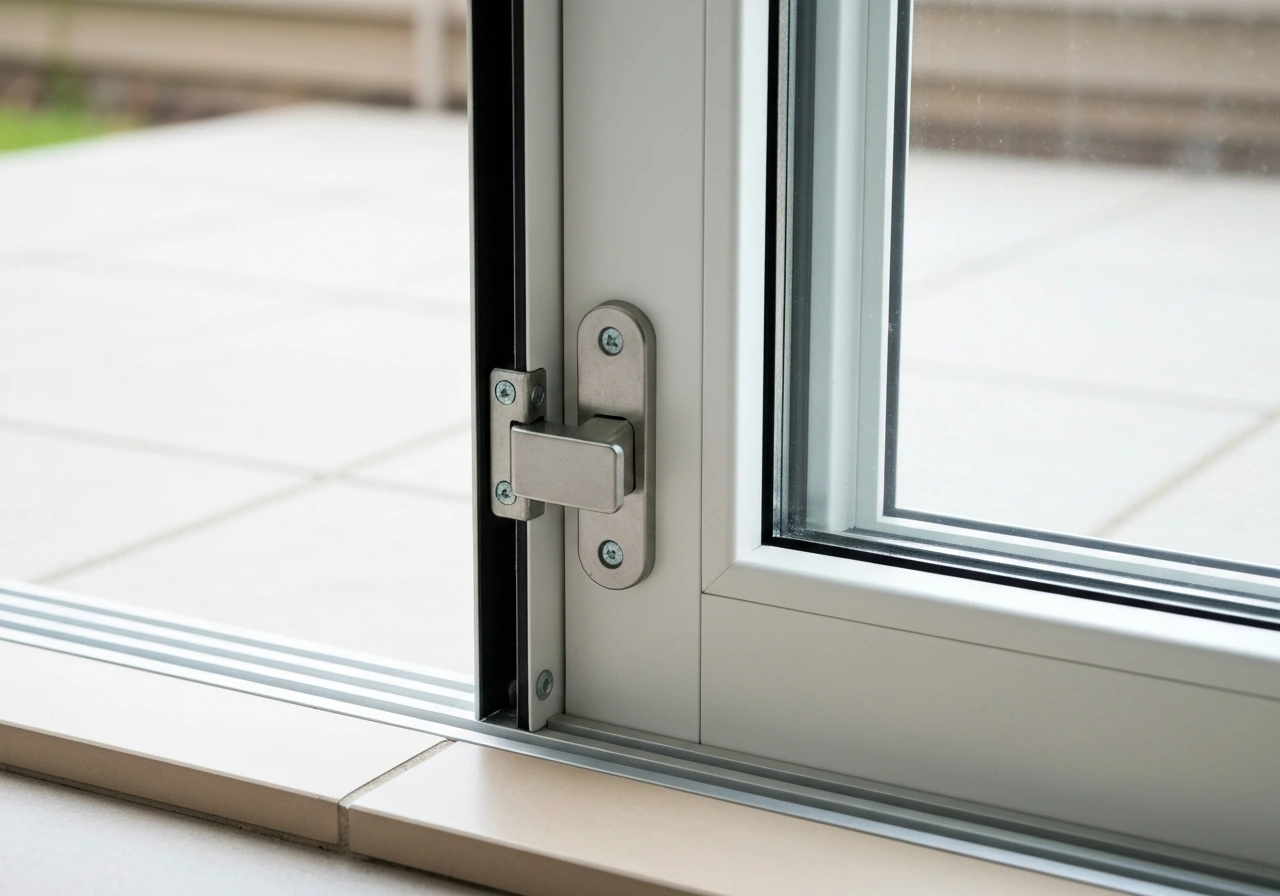
To lock a standard sliding patio door from inside, lift the interior handle or thumb-turn latch until it clicks into the strike plate (keeper) on the door frame. If the latch won't catch, the door is almost always misaligned with the keeper, the track is dirty, or the rollers have dropped, pulling the panel out of position. Fix the alignment first and the lock will work. For French-style patio doors, engage the handle-operated multipoint or throw the deadbolt if one is installed. For screen doors, the flip-latch at the top or side handle is your primary lock, though it offers minimal security on its own.
How to Lock a Patio Door Inside and Outside DIY Guide

Jamie Archer
26 May 2026
Quick safety check and figuring out what type of patio door you have
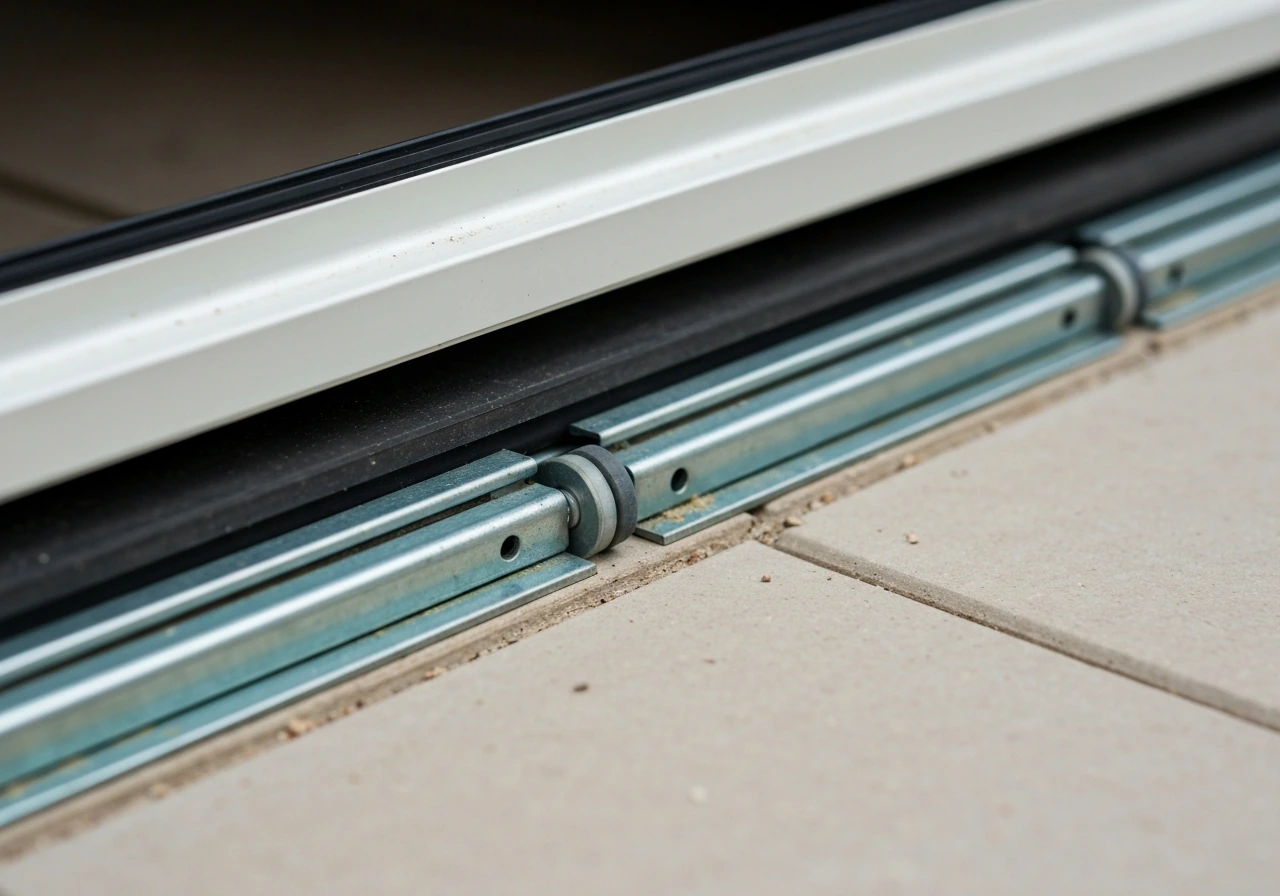
Before you touch the lock, do a 30-second safety check: make sure the door panel is fully seated in the track and hasn't lifted off the bottom roller. A panel that's rocked slightly off track will feel like a lock problem but is actually a door-position problem. Push the panel firmly into the frame and try the latch again.
The next step is knowing what you're working with. Patio doors fall into a few common categories, and the locking method is different for each one.
| Door Type | Lock Style | What 'Locked' Looks Like |
|---|---|---|
| Sliding glass door (single panel) | Hook latch or cam latch, single point | Handle turned down or thumb-turn engaged, latch hook seated in keeper/strike on frame |
| Sliding glass door (with multipoint lock) | 2, 4, or 6-point locking via handle lift | Handle lifted up to engage all lock points simultaneously |
| French/hinged patio doors | Handle-operated multipoint or separate deadbolt | Handle lifted to throw all points, or deadbolt turned separately |
| Screen/mesh patio door | Flip latch, hook-and-eye, or inline handle latch | Flip latch rotated closed or handle latch clicked into strike |
| Sliding screen door only | Top flip latch or small handle latch | Latch hooked into frame receiver |
If you're unsure whether your sliding glass door has a single-point or multipoint lock, look at the handle area. A single-point lock has one latch hook and one keeper on the frame. A multipoint system will have the main handle but you'll also see additional hardware at the top and bottom of the panel, or you'll notice that lifting the handle feels like it's driving rods up and down inside the door. Multipoint systems are more common on newer doors from brands like Milgard, Andersen, and Pella, and they provide significantly better forced-entry resistance than a single latch.
Locking from the inside, step by step
Sliding glass door (single-point latch)
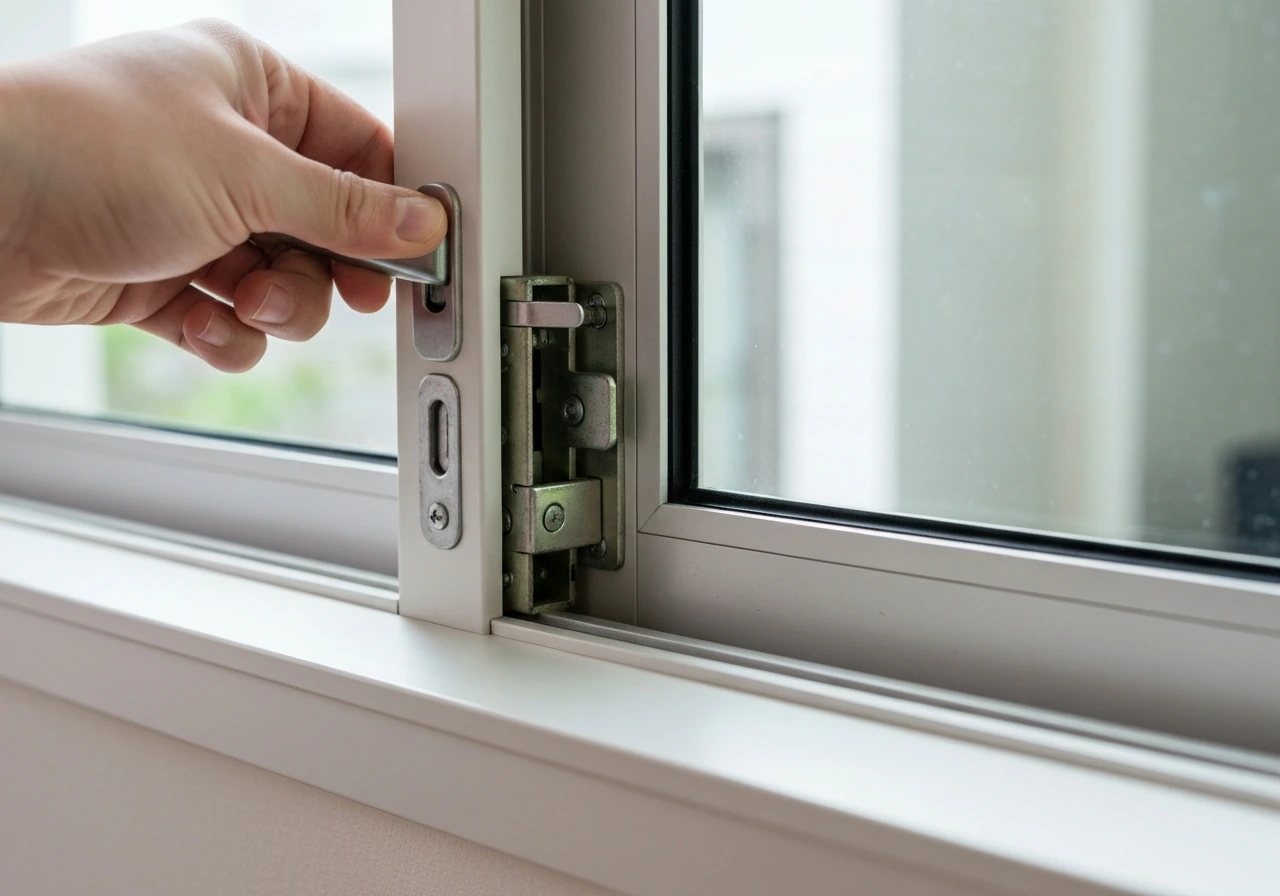
- Slide the panel fully closed until it meets the stationary panel or door stop. Don't assume it's fully closed just because it looks close.
- Lift or turn the interior handle in the direction the lock mechanism requires. Most residential hooks latch by turning the thumb-turn downward or pulling the lever handle toward the door frame.
- Listen for an audible click as the latch hook seats into the keeper on the frame.
- Give the door a firm push to confirm it isn't just resting against the frame without actually latching.
- If you have a thumb-turn deadbolt above the main latch (common on older doors), rotate it 90 degrees to drive the bolt into the frame.
Sliding glass door (multipoint lock)
- Slide the panel fully closed.
- Lift the interior handle upward firmly. You'll feel resistance as the lock rods engage points at the top of the frame, the bottom track, and the main latch.
- On some multipoint designs (like Milgard's SmartTouch or similar lever-actuated systems), you don't lift, you just close the handle fully in one motion — the mechanism engages automatically. If your handle presses flush to the door without a separate lift, that's what you have.
- Verify by trying to slide the door. It should have zero play in any direction.
French-style hinged patio doors
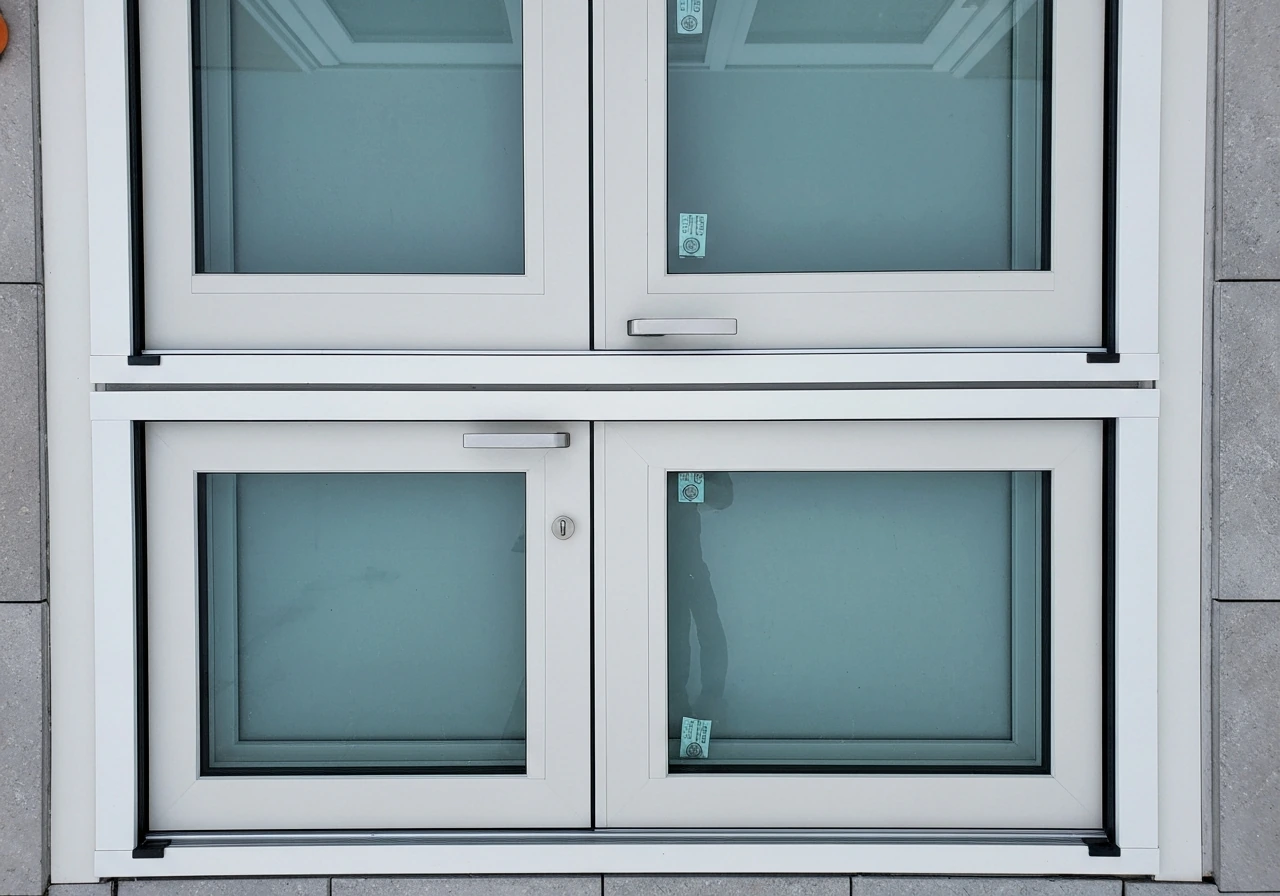
- Close the active leaf (the one with the handle) fully. Make sure the passive leaf is already latched at top and bottom with its flush bolts.
- Turn the handle downward to throw any multipoint rods, then engage the thumb-turn or key cylinder to lock it in position.
- If a separate deadbolt is installed, turn it to the locked position after the handle lock is engaged.
- Check that both the top rod and the bottom rod on the passive leaf are fully seated before you consider the door locked.
Screen patio doors
Screen door latches are straightforward: close the screen panel fully and flip the latch or click the inline handle latch into the receiver on the frame. Some screen doors have a small hook-and-eye at the top as a secondary catch. Use it. Be honest with yourself about what a screen door latch does, though: it keeps the door closed and deters casual entry, but it won't resist any real force. Your glass door behind it is where real security lives.
Locking from the outside
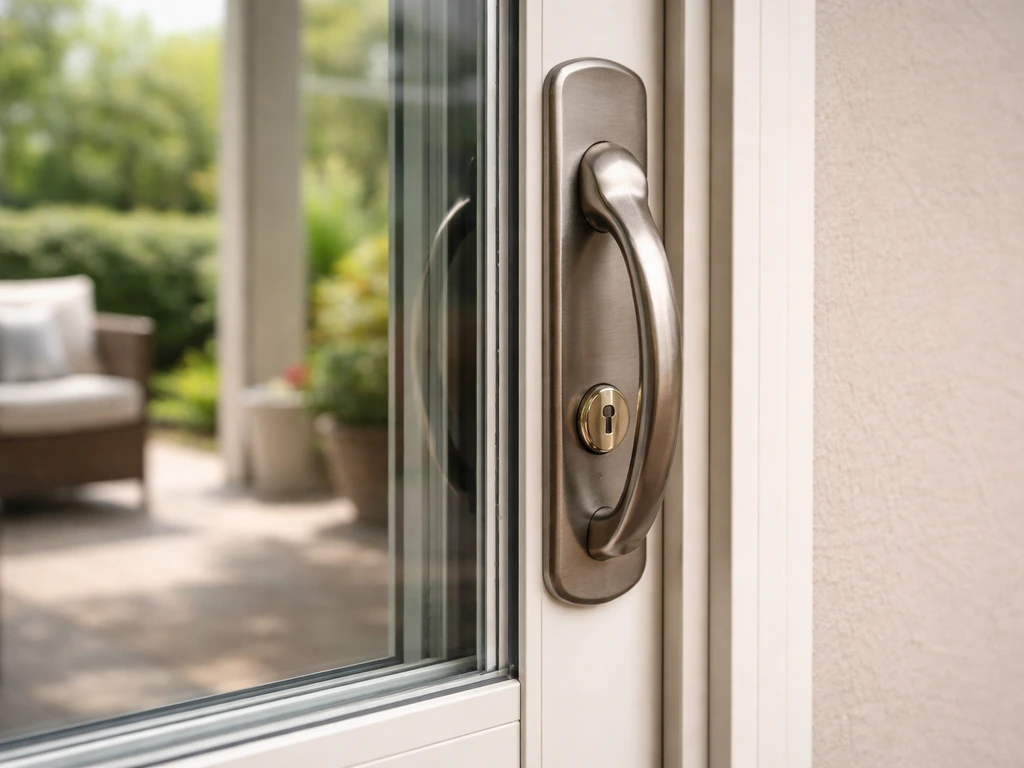
This is where most people run into a real constraint. Most residential sliding patio doors are designed to be locked from the inside. The exterior handle on a sliding glass door typically just pulls the door open or closed, it doesn't actuate the lock. That means if you walk out, slide the door closed behind you, and pull the exterior handle, the door is not locked, it's just closed.
Here's what you can actually do from the outside, depending on your hardware:
- Keyed exterior cylinder: Some sliding door handles include a keyed lock cylinder on the outside face. If yours has one, insert the key and turn it to throw the interior latch. This is the cleanest solution and worth retrofitting if you regularly exit through the patio door.
- Keyed patio door deadbolt: A separate keyed deadbolt mounted through the door stile lets you lock and unlock from both sides. These are widely available at hardware stores and are a worthwhile upgrade for any door that's a regular exit point.
- Smart lock with exterior keypad: Several brands now offer sliding door smart locks with an exterior keypad so you can lock or unlock with a code.
- Accept the limitation and use a secondary security bar from the inside: If you always exit through another door, just drop a security bar in the track before you leave. It won't let someone open the panel from outside, even without a formal lock.
One important note: don't rely on a broomstick or wooden dowel in the track alone as your exterior-exit security plan. While it prevents the door from sliding, it doesn't stop someone from lifting the panel off the track entirely, which is a real vulnerability on older doors without anti-lift pins. More on anti-lift hardware below.
Why your patio door won't lock, and what to do right now
A patio door that won't lock is almost always one of five problems. If you are wondering how to break into patio doors, the same weaknesses that stop the lock from working can also make forced entry easier A patio door that won't lock. Work through these in order before you decide to replace anything.
The latch and keeper are out of alignment
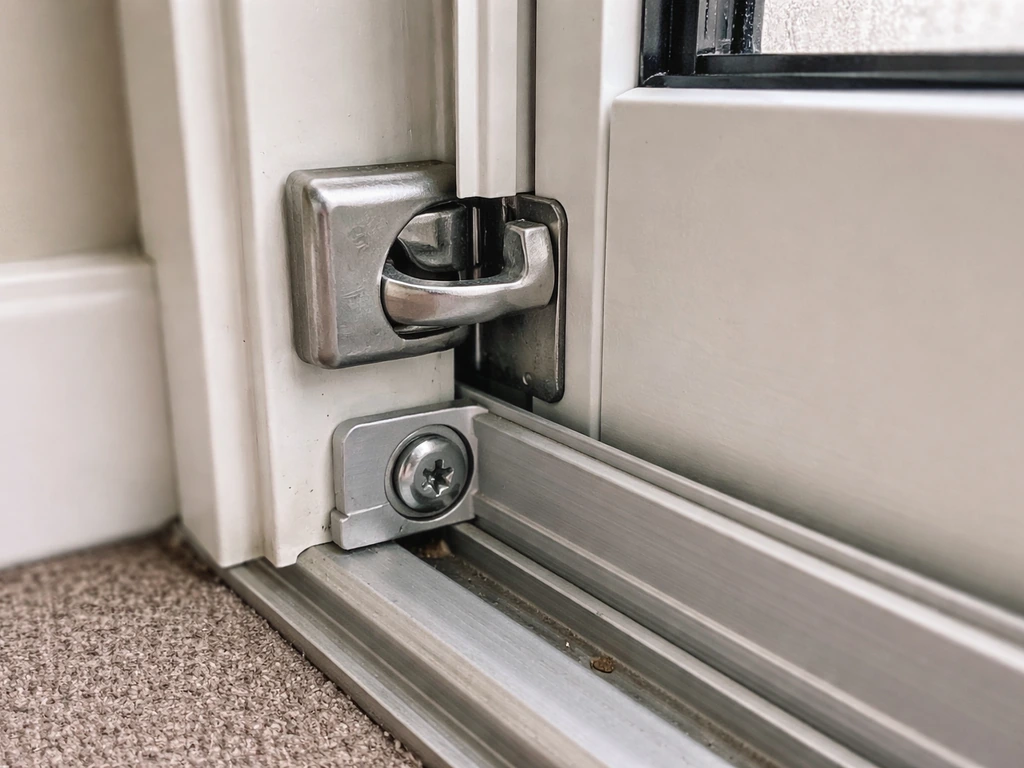
This is the most common cause. The door panel has shifted slightly and the latch hook no longer lines up with the keeper on the frame. Pella, Milgard, and most other manufacturers make the keeper (strike plate) adjustable for exactly this reason. Loosen the keeper's screws slightly, slide it up or down until it aligns with where the latch hook actually lands, and retighten. Then close the door and test the lock. This fix takes about five minutes.
The rollers have dropped and the panel is too low
If the keeper adjustment doesn't fix it, the door panel itself has probably dropped because the bottom rollers are worn or need adjusting. Most sliding doors have a roller adjustment screw accessible through a small hole at the bottom corner of the panel. Insert a Phillips screwdriver, turn clockwise to raise the panel, counterclockwise to lower it. Raise the panel slightly and test whether the latch now meets the keeper. Milgard and Pella both use this access-hole method. You may need to relieve some of the door's weight during adjustment by having a second person tilt the panel slightly.
Dirty or obstructed track
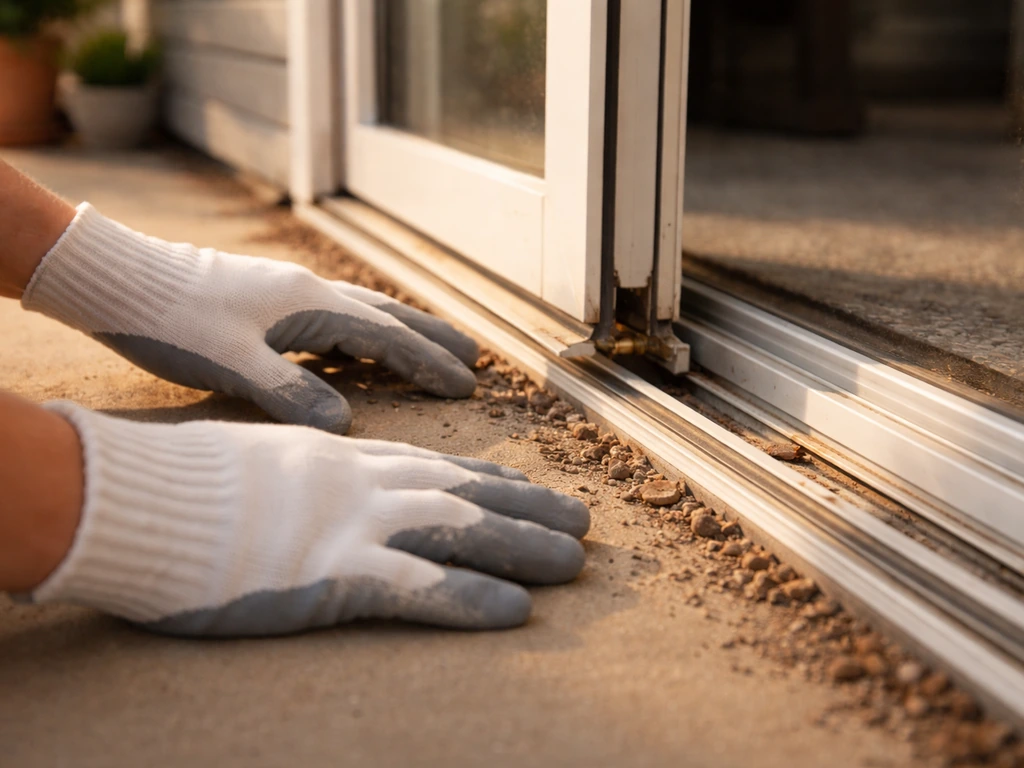
Debris, hardened grease, and dirt buildup in the bottom track can stop the panel from fully closing, which means the latch never reaches the keeper. Vacuum out the track, scrub it with a stiff brush and mild soap, rinse, and dry. Milgard specifically recommends keeping tracks clean to prevent damage to door hardware and rollers. While you're at it, check the weep holes at the bottom of the track frame: blocked weep holes cause water to pool and accelerate corrosion on the latch hardware.
Worn or broken latch mechanism
If the latch handle turns but nothing engages, or if the hook is visibly bent or broken, the latch assembly itself needs replacing. Most residential sliding door latches are available as replacement parts directly from the door manufacturer or from specialty hardware suppliers. You don't need to replace the entire handle set, just the latch/hook cartridge in most cases. Match the part number from the door's label (usually on the frame edge) or bring the old latch to a hardware store.
Warped door frame or panel
Seasonal expansion and temperature changes can warp frames enough that a door that locked fine all summer suddenly doesn't in winter. If the door appears to bow or the gap between panel and frame is uneven, you're dealing with a frame issue. Minor warping can sometimes be compensated by adjusting rollers and keeper position together. Significant warping may need a pro to evaluate whether the frame can be adjusted or needs replacement.
Adding real security beyond the basic latch
NIST has pointed out that sliding glass patio doors are particularly vulnerable entry points, and a single-point latch is the minimum, not a complete solution. Forced-entry techniques can vary, but adding the right security hardware is one of the best ways to reduce risk. These add-ons are all available at hardware stores for under $50 each and take under an hour to install.
Track security bar (the right kind)
A proper sliding-door security bar, like the type SecurityMan makes, differs from a bare broomstick in one important way: it has an anti-lift saddle mount that locks the bar itself down so it can't be shaken loose or lifted through the glass panel gap. Drop it in the bottom track when the door is closed. It's fast to remove from inside in an emergency.
Anti-lift pins
Older sliding doors can be lifted right off their bottom track. Prevent this by drilling a downward-angled hole through the top channel of the door frame (into but not through the panel's top rail) and inserting a removable steel pin or a sheet-metal screw. With the pin in place, the panel can't be lifted out even if someone defeats the latch.
Secondary slide bolt or pin lock
A Charlie bar (vertical security bar) or a surface-mounted slide bolt through the sliding panel into the frame gives you a backup point that's independent of the main latch. Products like the BurglaBar from Addalock are hinge-style secondary locks designed specifically for sliding doors and take only minutes to install.
Upgraded strike plate
The keeper (strike plate) that ships with most residential patio doors is thin and secured with short screws. Replacing it with a reinforced steel keeper and using 3-inch screws that reach the structural frame (not just the door frame casing) makes it dramatically harder to kick the latch free.
Multipoint lock upgrade
If your door currently has a single-point latch, consider upgrading to a multipoint lock system. Options from manufacturers like ASSA ABLOY, AmesburyTruth, and Roto provide 4 to 6 locking points that engage simultaneously and are tested to resist hundreds or thousands of pounds of forced-entry load. These are the same systems that better patio doors come factory-equipped with. A pro can fit a compatible aftermarket multipoint system to most standard door stile widths.
Portable door jammer for temporary security
If you're renting, traveling, or just need a no-drill temporary solution, a portable door jammer wedged under the interior handle engages the floor and prevents the door from being forced inward. These are interior-only devices, but they're useful as a last resort when you can't install permanent hardware.
Keeping the lock working through every season
Patio door locks fail gradually. A lock that works fine in spring will often start sticking or missing the keeper by fall because summer heat expands the frame, winter cold contracts it, and rain washes debris into the track all year. A simple maintenance routine prevents most of this.
- Clean the track every 3 months: vacuum out debris, scrub with mild soap and water, rinse, and dry. This is the single highest-value maintenance task for lock reliability.
- Clear weep holes twice a year (spring and fall): use a thin wire or compressed air to open any weep holes at the bottom of the track frame so water drains out instead of pooling and corroding the latch hardware.
- Lubricate the latch mechanism annually: use a dry lubricant spray (silicone or PTFE-based, not WD-40 or oil, which attract dirt). Andersen specifically recommends dry lubricant spray for patio door hardware. Spray into the latch body and cycle the handle several times.
- Check roller height every spring: after winter, test whether the door slides smoothly and the latch engages cleanly. If it feels stiff or misses the keeper slightly, adjust the roller screws as described above before the issue worsens.
- Inspect the keeper alignment twice a year: tighten any loose keeper screws and confirm the latch hook drops cleanly into the keeper slot. A loose keeper is a common cause of a latch that 'locks' but pops open with a sharp push.
- Wipe down the latch and handle hardware with mild soap and water once a year to remove salt, oxidation, and grime, especially in coastal climates.
- After any significant temperature swing or storm, do a quick lock test: close the door, engage the lock, and push and pull firmly. If there's movement or the latch doesn't click solidly, troubleshoot before leaving the house.
Still can't get the door to lock? Try this
If you've worked through the basics and the door still won't lock, follow this diagnostic flow before calling anyone.
- Close the door and watch where the latch hook lands relative to the keeper: is it hitting above, below, or to the side? This tells you whether you need to adjust the keeper (up/down) or the roller height (raise or lower the panel).
- Adjust the keeper first, since it's the faster fix. Loosen the screws, shift it to meet the latch, retighten, and test.
- If the latch still misses after moving the keeper as far as it goes, adjust the roller height using the access screw at the bottom corner of the panel until the latch and keeper line up.
- If the handle turns but nothing moves mechanically (no hook movement, no click), the latch cartridge is broken. Order a replacement part using the door's model number.
- If the latch engages but the door still pushes open, the keeper is worn, stripped, or the latch hook is too short to hold under pressure. Replace the keeper with a reinforced version and use longer screws.
- If none of the above applies and the door physically can't close fully, look for a track obstruction, a lifted or cracked track, or a frame that has shifted. At that point, a door technician is worth the call.
Securing a patio door well goes beyond just getting the latch to click. Securing a patio door with no deck usually means focusing on what you can control from inside and from the ground level, like anti-lift hardware and a reinforced strike plate hardening the door against forced entry. For the safest results, follow the steps in this guide on securing patio doors, not just fixing the latch secure patio doors.
If you’re trying to improve overall security, follow the steps in our guide on how to secure a sliding glass patio door. If you want to explore the full picture of patio door security, including how to harden the door against forced entry and what makes certain configurations more vulnerable than others, the related guides on securing sliding glass patio doors and securing French patio doors cover those angles in more depth.
FAQ
What’s the quickest way to tell if my patio door is misaligned versus the lock being broken?
Close the door and watch the latch hook line up with the keeper. If the hook consistently misses even when you push the panel firmly into place, it’s usually alignment, keeper position, or roller height. If alignment looks correct but the handle turns with no engagement, suspect the latch/hook cartridge or internal linkage.
Can I lock the patio door from the outside if I don’t have an exterior key lock?
For most standard sliding glass patio doors, the exterior handle typically only moves the door panel and does not actuate the lock. You generally need either an exterior locking cylinder or a security device that physically blocks the door (for example, a security bar in the track, anti-lift pin, or a secondary slide bolt).
Why does my lock click but still feel loose or easy to move?
A click can happen even if the latch is barely catching. Check whether the keeper screws are loose or the keeper is worn or bent, then test by applying light inward pressure on the door after locking. If you feel movement at the handle side, reinforce the strike plate and consider a multipoint lock upgrade or longer structural screws.
What should I do if the latch feels stiff or won’t fully turn at certain temperatures?
Temperature changes can tighten tolerances and also thicken residue in the track. Clean the bottom track and weep holes first, then confirm the rollers are set so the panel seats fully. If it still binds, lubricate only the manufacturer-recommended points (avoid soaking the track area), and stop if the latch sounds like it is grinding.
Is it safe to adjust the rollers if the door is heavy or off track?
Yes, but use a second person and adjust in small increments. Raise the panel just enough for the latch to meet the keeper, then test. If the door is visibly skewed or the panel is riding high, stop and re-seat it first so you don’t force the rollers into a damaged track position.
How can I tell if my sliding door has anti-lift protection already installed?
Look along the top channel and the underside of the frame for pins, stops, or hardware that prevents the panel from being lifted out of the bottom track. If you cannot see any anti-lift hardware, don’t assume it exists, and consider adding removable anti-lift pins or a professional evaluation for older doors.
Will a screen door latch really secure my patio door at night?
A screen door latch mainly keeps the screen closed and offers deterrence against casual entry, but it should not be treated as security for the sliding glass panel. If you lock only the screen latch, a person can still target the glass door behind it.
What’s the right way to clean the track so the lock works reliably?
Vacuum the bottom track, remove grit at the edges, then scrub with a stiff brush using mild soap. Rinse lightly, dry completely, and verify the door sits fully on the bottom rollers after cleaning. Also inspect and clear the weep holes because blocked drains can accelerate corrosion that weakens latch hardware.
Can I replace just the keeper or do I need to replace the latch assembly?
Start with the keeper if the hook is missing due to alignment. If the hook is visibly bent or the handle turns but never engages, replace the latch/hook cartridge rather than the entire handle set. If you’re unsure, compare how the hook aligns with the keeper before buying parts.
If my door locks in summer but not in winter, what’s usually wrong and what’s the best first fix?
Frame movement and debris buildup are the common causes. Clean the track and confirm the door seats fully, then recheck keeper position and roller height. Only after those steps fail should you consider latch replacement or security upgrades.
Next Article
How to Break Into Patio Doors: Safe, Legal Access Fixes
Legal ways to regain access to stuck patio doors: diagnose tracks, rollers, locks, align sashes, and know when to call p