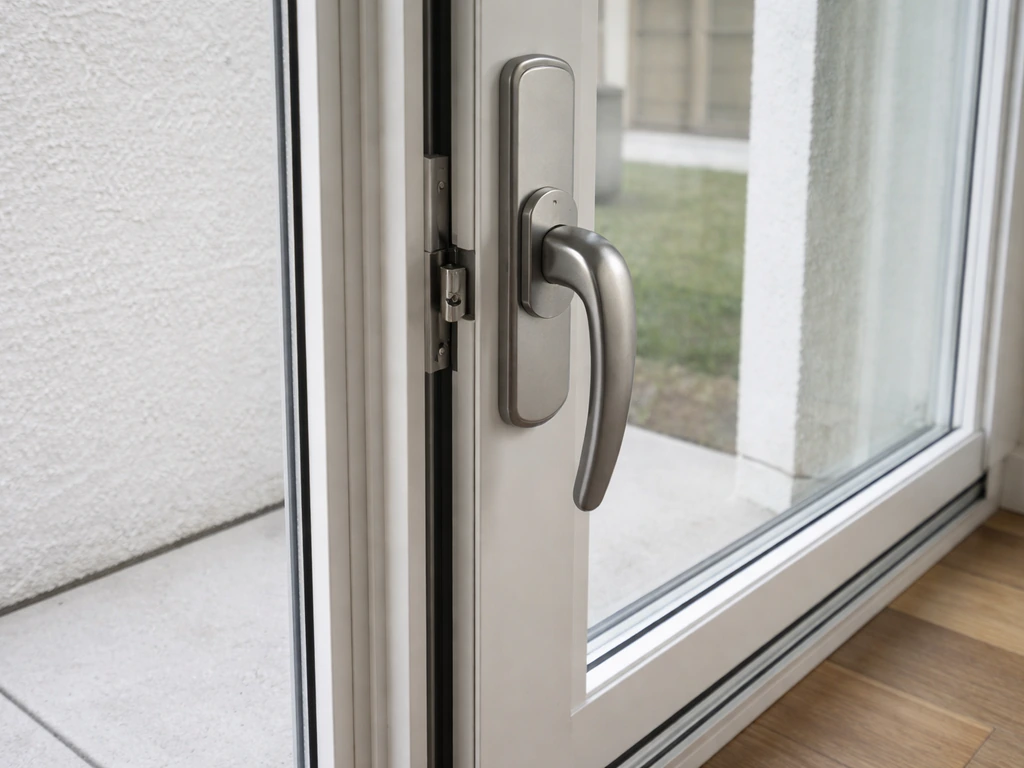
Most patio doors have at least one fixable security weakness you can address today without buying anything. The typical problems are a latch that doesn't fully engage, a door that lifts off its track, a gap at the frame that a crowbar can exploit, or glass that offers zero resistance once the lock is bypassed. Work through those in order and you'll close the gaps that burglars actually use.
How to Secure Patio Doors: DIY Locks, Alignment, Upgrades

Jamie Archer
7 May 2026
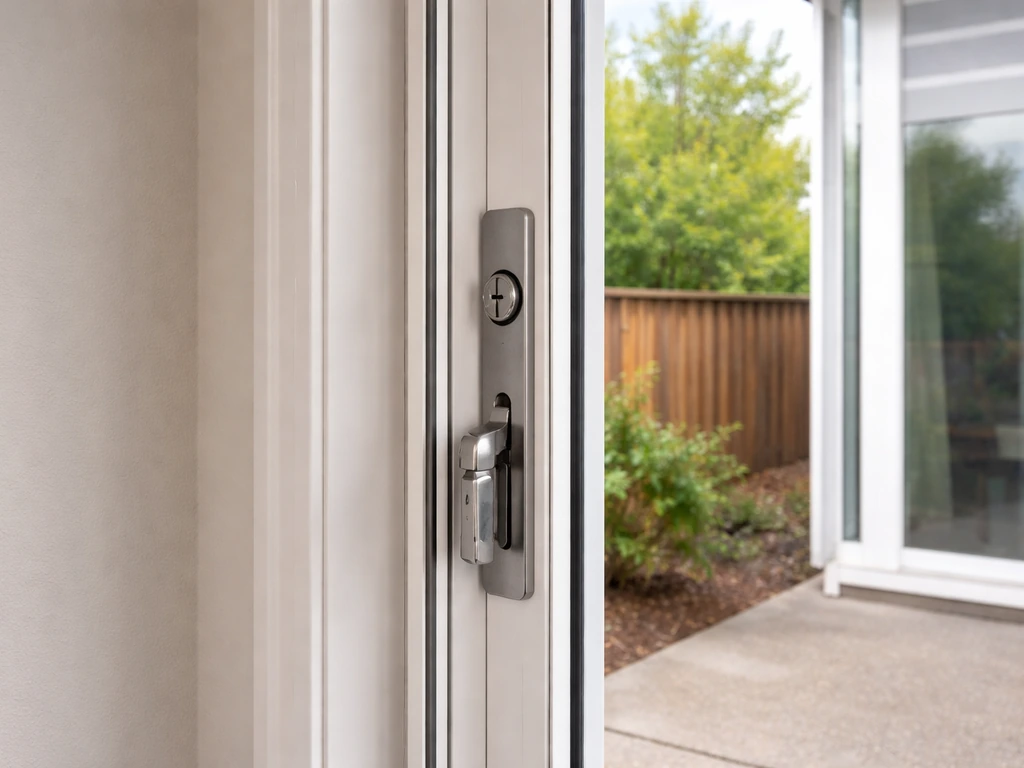
Quick security check: where patio doors actually fail
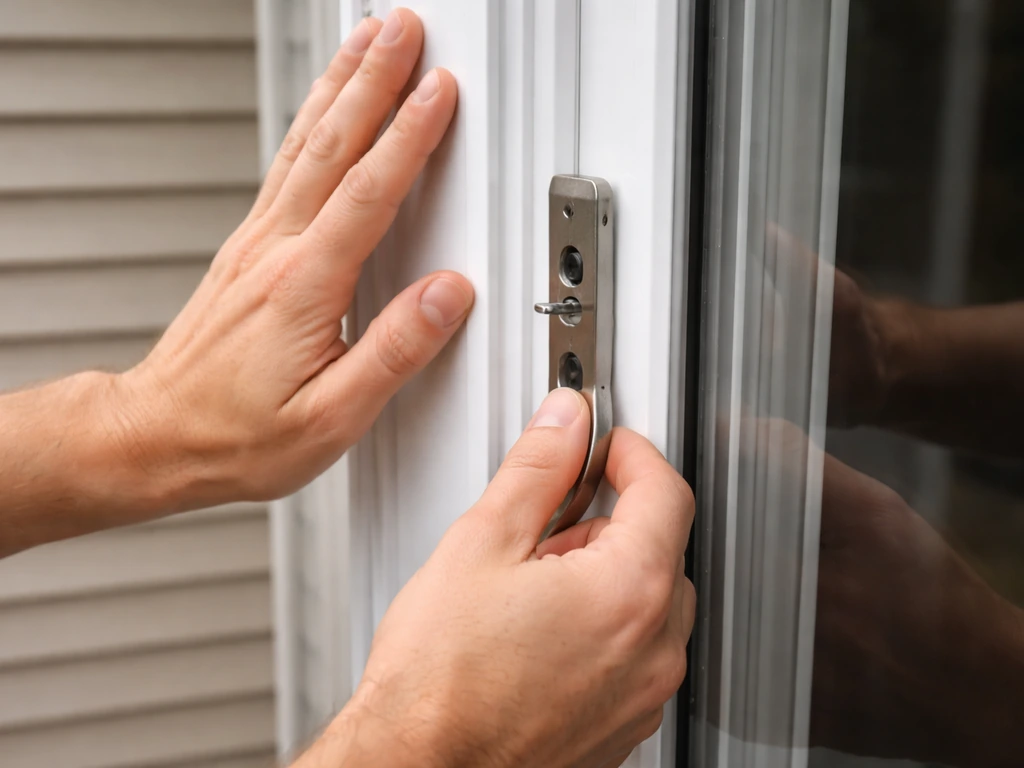
Before spending money on upgrades, spend five minutes testing what you already have. Most patio door break-ins exploit one of a handful of known weak points, and you need to know which ones apply to your door. Most patio door break-ins exploit one of a handful of known weak points, and you need to know which ones apply to your door, as covered in how to secure a sliding glass patio door.
- Lock engagement: Close the door and try to jiggle it open without turning the handle. If it moves even slightly, the latch isn't fully seating in the strike plate.
- Lift test: Grab the sliding panel and try to lift it straight up. If it rises more than a quarter inch, anti-lift blocks are missing or worn.
- Gap check: Look at all four edges of the door frame with a flashlight at night (or hold a candle near the perimeter). Visible light or a draft means a gap a pry bar can widen.
- Glass condition: Single-pane glass offers almost no resistance to a strike. Laminated or tempered glass is meaningfully harder to breach.
- Track and roller health: A door that drags, skips, or sits unevenly in the track is harder to lock properly and easier to force.
- Screen door false security: Screen doors latch but don't lock. They are not a security layer—they're a privacy layer.
- Strike plate quality: Cheap factory strike plates use short screws (often half an inch) that pull out of the frame in a single kick.
If your door fails two or more of these checks, you're dealing with a genuinely vulnerable entry point. The good news is that most of these are fixable in an afternoon.
Fix door alignment, latches, and gaps first
Security hardware only works if the door itself is properly aligned and the latch has something solid to seat against. This is the DIY step that most guides skip, and it's the one that matters most.
Realigning a sliding door
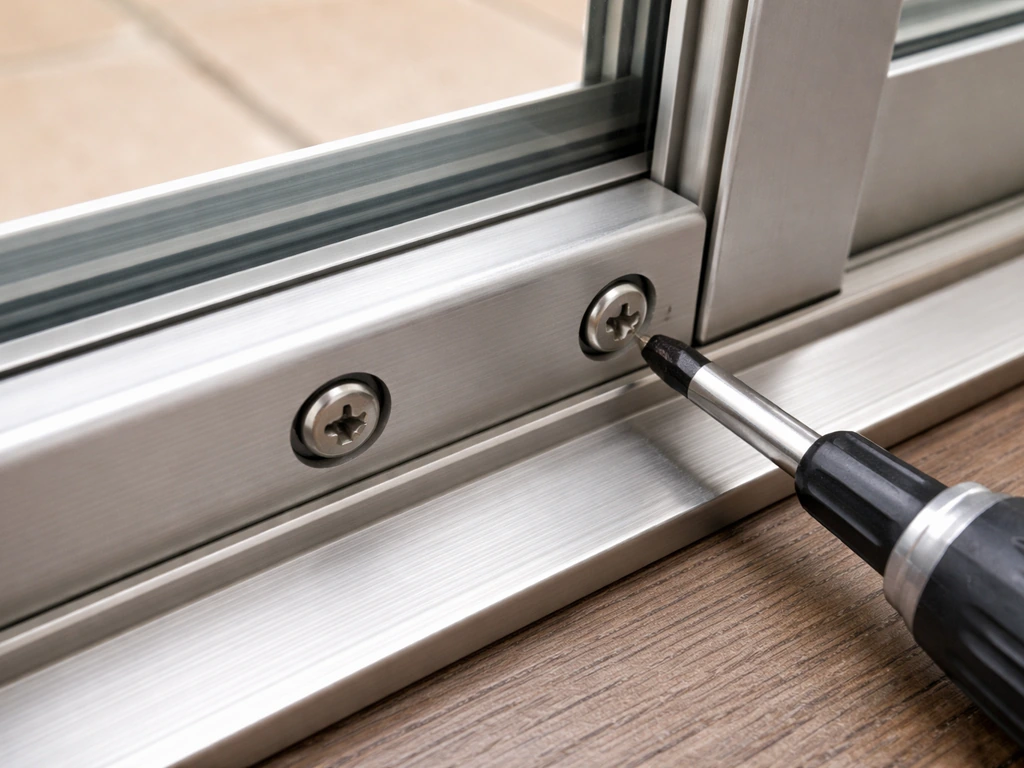
Sliding glass doors have adjustment screws at the bottom of the door panel, usually accessible through holes in the bottom rail or by removing a small cover plate. Turning these screws raises or lowers the rollers, which changes how the door sits in the frame. If your door drags on one side or has a gap at the top corner, this is your fix. Raise the low side in small quarter-turn increments and test the latch after each adjustment. The door should glide smoothly and sit flush against the frame seal all the way around when closed.
Getting the latch to engage properly
A latch that doesn't fully click usually means the strike plate hole is slightly misaligned with the latch bolt. Close the door slowly and watch where the latch bolt hits. If it's catching on the edge of the strike plate rather than dropping in cleanly, you have two options: file the strike plate opening slightly larger (takes about ten minutes with a metal file), or loosen the strike plate screws and shift the plate a few millimeters in the direction you need. Re-tighten, test, and make sure the latch seats with a positive click every time.
Sealing gaps at the frame
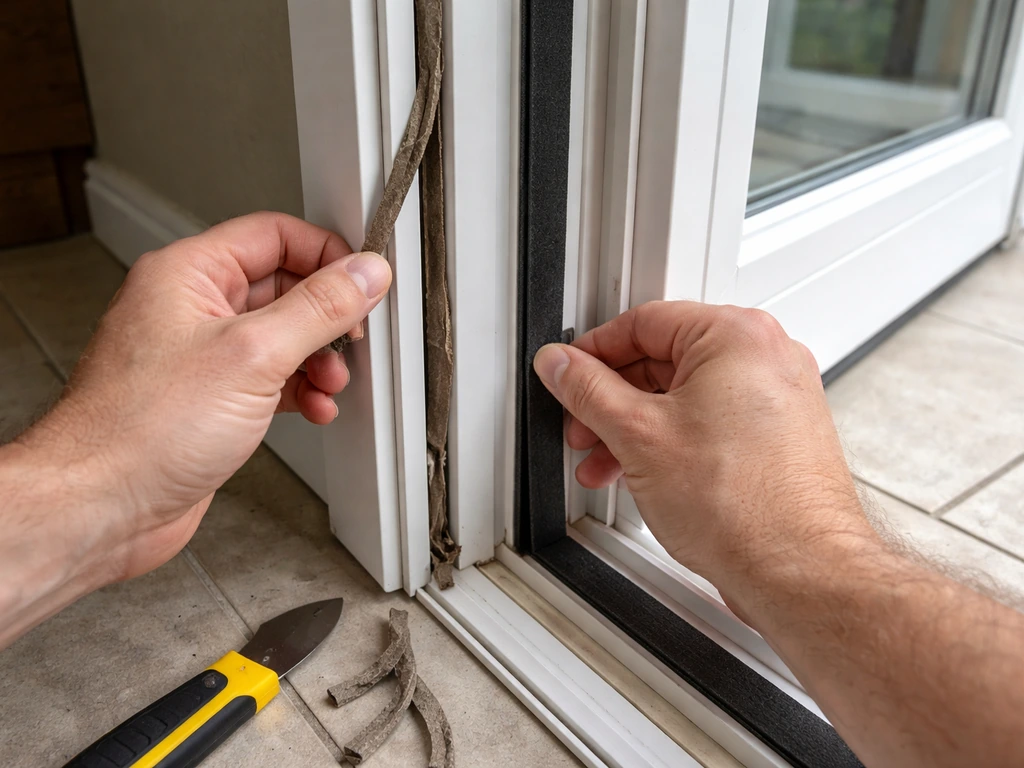
Gaps at the sides and top of the frame are both a draft problem and a security problem. Worn or compressed weatherstripping is the usual cause. Replace it with a self-adhesive foam or vinyl weatherstrip from any hardware store (under $15 for a full door kit). For the bottom, a door sweep handles both drafts and the gap a pry bar needs to get purchase on the frame. While you're at it, inspect the door frame itself for wood rot or soft spots near the strike plate. Soft wood around a strike plate means the whole frame can fail before the lock does.
Locks and strike plates: upgrade and verify proper engagement
The factory latch on most sliding patio doors is a hook latch or a simple spring latch, and neither is particularly strong. Older doors in particular rely on locking mechanisms that were designed more for convenience than for resisting forced entry. You don't necessarily need to replace the whole lock assembly, but you should verify what you have and upgrade where it's weak.
Upgrading the lock itself
For sliding doors, a keyed cylinder lock added to the door stile is a meaningful upgrade. These replace or supplement the handle lock and require a key to open from either side, which means a burglar who breaks a small section of glass near the handle still can't reach in and turn a thumb latch. Mortise-style keyed locks for sliding doors run about $30 to $80 and are a direct retrofit for most standard door thicknesses. For French patio doors, the weak point is usually the multipoint lock mechanism or the single deadbolt that doesn't extend deep enough into the frame. Upgrade to a deadbolt with a one-inch throw and verify it actually extends fully when locked.
Strike plate replacement is non-negotiable
This is the single highest-value upgrade for any door, patio or otherwise. The factory strike plate is typically held in with screws that are half an inch to three-quarters of an inch long, going into the door jamb but not the structural framing behind it. Replace it with a heavy-gauge steel strike plate (sometimes called a door reinforcement strike or security strike plate) and use 3-inch screws that reach the actual wall stud or door frame header. This one change can increase kick-in resistance dramatically because the screws are now anchored in solid framing rather than just the trim. The hardware costs $10 to $25 and the job takes about fifteen minutes.
Sliding door-specific defenses: rollers, tracks, and anti-lift
Sliding doors have a vulnerability that hinged doors don't: they can be lifted out of the track entirely if the anti-lift stops are missing or inadequate. This is a well-known forced-entry technique, and it bypasses the lock completely. The National Crime Prevention Council specifically identifies putting a metal bar in the track as a simple countermeasure, and they're right that it's effective, but track bars work best as part of a layered approach rather than a standalone solution.
Anti-lift blocks and pins
Check whether your door has anti-lift blocks: small metal or plastic stops in the upper track that limit how far up the door can travel. Many older doors don't have them, or they've been removed during a repair and never replaced. You can add aftermarket anti-lift blocks for under $10 at any hardware store, and installation is just screwing them into the upper track channel so the door can't be raised more than a quarter inch. An alternative is drilling a downward-angled hole through the interior door frame and into the outer frame at each top corner and dropping a pin or bolt through it. This physically prevents the door from being lifted regardless of the track condition.
Track bar or security bar
A cut-to-length piece of metal conduit or a purpose-made security bar (like the classic Charlie Bar style) laid in the lower track when the door is closed prevents horizontal sliding even if the lock is defeated. This costs almost nothing if you use a piece of pipe or dowel cut to fit. Commercial sliding door security bars with non-slip feet run $15 to $40 and are slightly more convenient to remove and replace. Either way, the bar should fit snugly with no more than an inch of wiggle room.
Roller maintenance
Worn or damaged rollers cause misalignment, which prevents the lock from seating properly, which creates the gap problem described earlier. If your door drags or sticks, clean the track first (debris is a common culprit) and lubricate the rollers with a silicone spray, not WD-40, which attracts dirt. If the door still doesn't roll smoothly after cleaning, the rollers themselves may need replacement. This is a moderate DIY job: the door panel has to come out of the frame, the old rollers unscrew from the bottom rail, and new ones go back in. Expect to spend an hour and $20 to $50 on parts.
Reinforcing the door and glass
Locks slow people down. Glass stops almost nobody. If a burglar decides your patio door is the entry point and the lock is holding, the glass is the next thing they'll try. Reinforcing it doesn't have to mean replacing the whole door.
Security film for glass panels
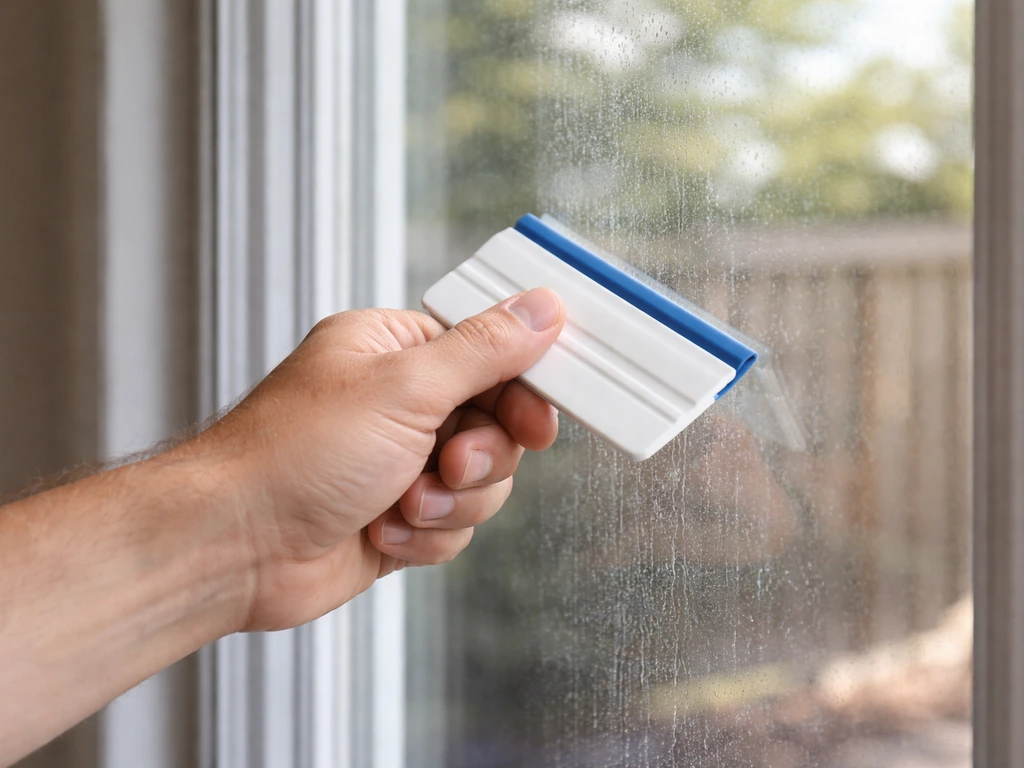
Window security film is a polyester film applied directly to the interior glass surface. It doesn't stop glass from breaking, but it holds the broken pieces together and significantly slows penetration. A burglar who smashes a filmed panel has to keep hitting it to get through, which creates noise and takes time. Residential security film typically runs 4 to 8 mil thick. Thicker is better for patio door panels. A DIY kit for a standard 6-foot sliding door panel costs $30 to $80, and installation is similar to applying large window tint: clean the glass, wet the surface, apply the film, and squeegee out bubbles. It's not a fast job, but it's manageable.
Door frame and stile reinforcement
For French patio doors, the gap between the two door panels (the astragal) is a common pry point. A door edge guard or steel astragal reinforcement plate covers this gap and makes it much harder to spread the doors apart. For sliding doors, the door stile (the vertical edge where the lock sits) can be reinforced with a steel door edge guard that wraps the stile and distributes kick or pry force across a larger area. These parts are available at most home improvement stores for $20 to $50.
When to consider glass replacement
If your door is single-pane glass, security film is a good short-term measure, but laminated safety glass is the real upgrade. Laminated glass has a plastic interlayer that holds the pane together when broken, similar to a car windshield. The NIJ's Standard-0318.00 classifies sliding glass door units by forced-entry resistance, and higher-rated units use laminated or impact-resistant glazing as part of the construction. Full glass replacement or door replacement is a bigger investment ($200 to $800 or more depending on size), but it's worth considering if the door is old and you're already seeing other failures.
Deterrence and safe-use habits (including screen doors)
Hardware is most of the battle, but a few habits and deterrence tools close the remaining gaps. Burglars make quick decisions based on perceived risk, and most will move to an easier target if the visual cues suggest your door is properly secured.
Door and window sensors
A magnetic contact sensor on your patio door is one of the cheapest security additions you can make. It costs $10 to $20 for a standalone sensor that sounds an alarm when the door opens, or integrates with a full home security system. ADT and other security providers specifically recommend pairing physical barriers with sensors because layering methods together raises the perceived and actual risk for anyone attempting entry. Even a simple battery-powered door alarm is a deterrent because it creates noise at the moment of entry.
Lighting and visibility
Most sliding and French patio doors open onto a patio or yard that's darker than the front of the house. Motion-activated exterior lighting covers this gap for about $25 to $60 per fixture and takes about an hour to install. Position lights so they cover the full door and the surrounding approach area.
Screen doors: honest expectations
A screen door is not a security door. The latches on screen doors are designed to keep the door closed in the wind, not to resist forced entry. If you leave the main patio door open with only the screen door closed, you are effectively leaving your home unsecured. That said, a locked screen door does slow casual attempted entry and signals that someone is home and paying attention. Use it as a deterrence layer, not a security layer. If you want more guidance specifically on screen door security, that's a separate consideration from the main door.
Preventing lockouts and accidental latches
One safety habit worth building: always check that the door is fully latched before engaging secondary locks like a security bar or pin. Keyed cylinder locks on sliding doors mean you need the key to re-enter, so keep a key accessible from inside in a known spot. If you have small children, ensure that security bars and pins are stored out of reach when the door is open, and that the door itself can't be slid open by a child who could reach the track bar.
Choosing next steps: a priority checklist by risk level
Not every home needs every upgrade. Here's how to prioritize based on your actual situation. Start at the top and work down until you've addressed everything in your risk tier.
| Priority | Task | Cost | Time |
|---|---|---|---|
| 1 (Do today) | Test latch engagement and adjust alignment if needed | $0 | 30 min |
| 1 (Do today) | Add a track bar or security rod to sliding door | $0–$15 | 10 min |
| 1 (Do today) | Install anti-lift pins or blocks in upper track | $5–$10 | 15 min |
| 2 (This week) | Replace strike plate with heavy-gauge steel, 3-inch screws | $10–$25 | 15 min |
| 2 (This week) | Replace weatherstripping and seal frame gaps | $10–$20 | 45 min |
| 2 (This week) | Add a door/window contact sensor or alarm | $10–$30 | 20 min |
| 3 (Next month) | Install a keyed cylinder lock or secondary deadbolt | $30–$80 | 1–2 hrs |
| 3 (Next month) | Apply security film to glass panels | $30–$80 | 2–3 hrs |
| 3 (Next month) | Add motion-activated exterior lighting | $25–$60 | 1 hr |
| 4 (When budget allows) | Install door stile or astragal reinforcement plate | $20–$50 | 1 hr |
| 4 (When budget allows) | Replace rollers if door doesn't align after adjustment | $20–$50 | 1–2 hrs |
| 4 (When budget allows) | Upgrade to laminated glass or replace aging door unit | $200+ | Pro job |
If you rent or have a limited budget, Priority 1 tasks cost almost nothing and address the most commonly exploited vulnerabilities. The track bar and anti-lift pins alone close the two weaknesses that make sliding doors so easy to defeat. If you own your home and want thorough protection, working through Priorities 1 through 3 puts you well ahead of the vast majority of households. Priority 4 is for older doors that are already showing wear or for homeowners who want to meet higher forced-entry resistance standards like those defined in the NIJ's sliding glass door classification guidelines.
French patio doors and sliding glass doors have different specific vulnerabilities, and if your setup is a French door, the astragal reinforcement and longer deadbolt throw matter more than the anti-lift and track bar steps. Similarly, if your patio door has no deck and opens directly to grade, the risk profile shifts slightly. The fundamentals here apply across all patio door types, and working through them systematically is far more effective than buying one expensive lock and calling it done. Layering multiple barriers, as security professionals consistently recommend, is what actually deters forced entry.
FAQ
If I buy a stronger lock, do I still need to adjust the door alignment?
Yes, but only if it helps the primary locking parts seat solidly. A properly aligned door that fully engages the latch will resist pry and kick better than a door with a stronger lock that still leaves a gap. After installing new hardware, re-check smooth operation and confirm the latch produces a positive click at the strike every time, not just when you close the door gently.
Can I use WD-40 to fix a sticking sliding patio door?
No. WD-40 can leave an oily residue that attracts dirt and can make rollers and tracks gunk up again. Use a silicone spray or a dry lubricant made for door hardware, then wipe away visible debris from the track before lubricating.
How do I know weatherstripping replacement actually fixed my patio door security gaps?
Replace the weatherstrip and sweep, but also test for “soft gaps” after a week. Foam and vinyl strips can compress differently at different temperatures, so check again after the first cold or hot spell and make sure you do not have a top or side corner that still admits a pry tool.
What should I look for after adjusting the strike plate to fix incomplete latch engagement?
A strike plate adjustment can be enough, but do not rely on filing or shifting unless the latch bolt is landing fully on the strike. After you move the strike plate, close the door multiple times and tug on the door. If it moves before the bolt engages, your strike work did not resolve the seating problem.
Will aftermarket anti-lift blocks work on any sliding patio door?
For anti-lift blocks, confirm they are mounted in the upper track channel that limits lift travel, and verify there is minimal clearance when the door is fully closed. If your door still lifts more than about a quarter inch, the blocks may be missing, installed in the wrong spot, or not the right height for your door model.
How tight should a DIY conduit or security bar fit in the track?
For track bars, avoid letting the bar rattle. If the fit is loose enough to wiggle more than about an inch, a determined attacker may be able to reposition it or leverage around it. Cut-to-length conduit should fit snugly against the track so it stays put when the door is bumped.
Does window security film reduce break-ins, or is it mostly cosmetic?
Not always, and you should test before and after. Some security film reduces glare but can also change how light enters the room, and very cheap film can develop bubbles or peel over time. Use the thickness your door panel needs, and after curing, check for peeling edges and re-squeegee if any bubbles form.
If my screen door is locked, does that mean I’m secure when the patio door is closed but not locked?
Detached or damaged screens should be treated as a convenience issue, not a defense. A locked screen can slow opportunistic attempts, but if the main door is unlocked, the screen does not stop forced entry through the glass. Only count screen doors as a deterrence layer, never as the security layer.
If I upgrade to a keyed lock, will that always stop a kick-in attempt?
Not necessarily. Some one-piece locks can still fail if the latch bolt does not extend deeply or the strike is held only by trim. If you upgrade, confirm two things: the bolt throw extends fully when locked, and the strike plate is reinforced into solid framing using longer screws.
What should I do first if multiple security weaknesses show up in my quick test?
Layering is best, but prioritize based on your actual failure points. If the door fails alignment or weatherstripping checks, fix those first because they create the gaps burglars exploit immediately. Then add the high-impact hardware like a reinforced strike and anti-lift or track bar, especially if you have older rollers or a door that lifts slightly.
Do magnetic contact sensors actually help against forced-entry methods like lifting the door out of the track?
A door alarm is useful, but only if it covers the opening action you’re worried about. Place the sensor so it triggers when the door begins to move, not just when fully opened, and test the battery regularly. Sensors do not replace physical barriers, especially against lift-out and pry scenarios.
Next Article
How to Secure a Sliding Glass Patio Door: Locks
Step-by-step lock and security upgrades for sliding glass patio doors, fixing weak track, gaps, and alignment.