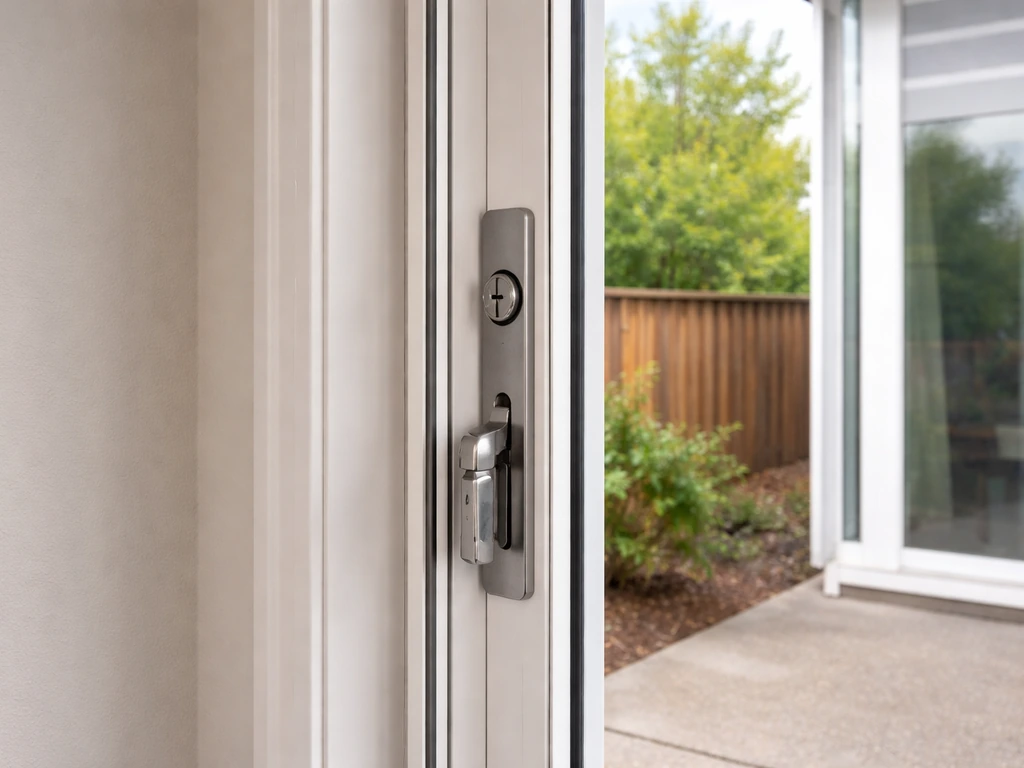
If you're locked out of your patio door or it's stuck and won't open, the fix is almost never to force it. Forcing entry is also sometimes attempted using techniques like using a wedge and applying pressure to the patio door frame. In most cases, a stuck or unresponsive patio door has a straightforward mechanical cause: debris in the track, a misaligned roller, a latch that's slightly out of alignment with the strike plate, or a frame that's shifted with seasonal temperature changes. All of these can be resolved without breaking anything. This guide walks you through how to diagnose the real problem, get back inside safely and legally, and make sure it doesn't happen again.
How to Break Into Patio Doors: Safe, Legal Access Fixes

Jamie Archer
23 May 2026
Why forced entry is a bad idea (even on your own home)
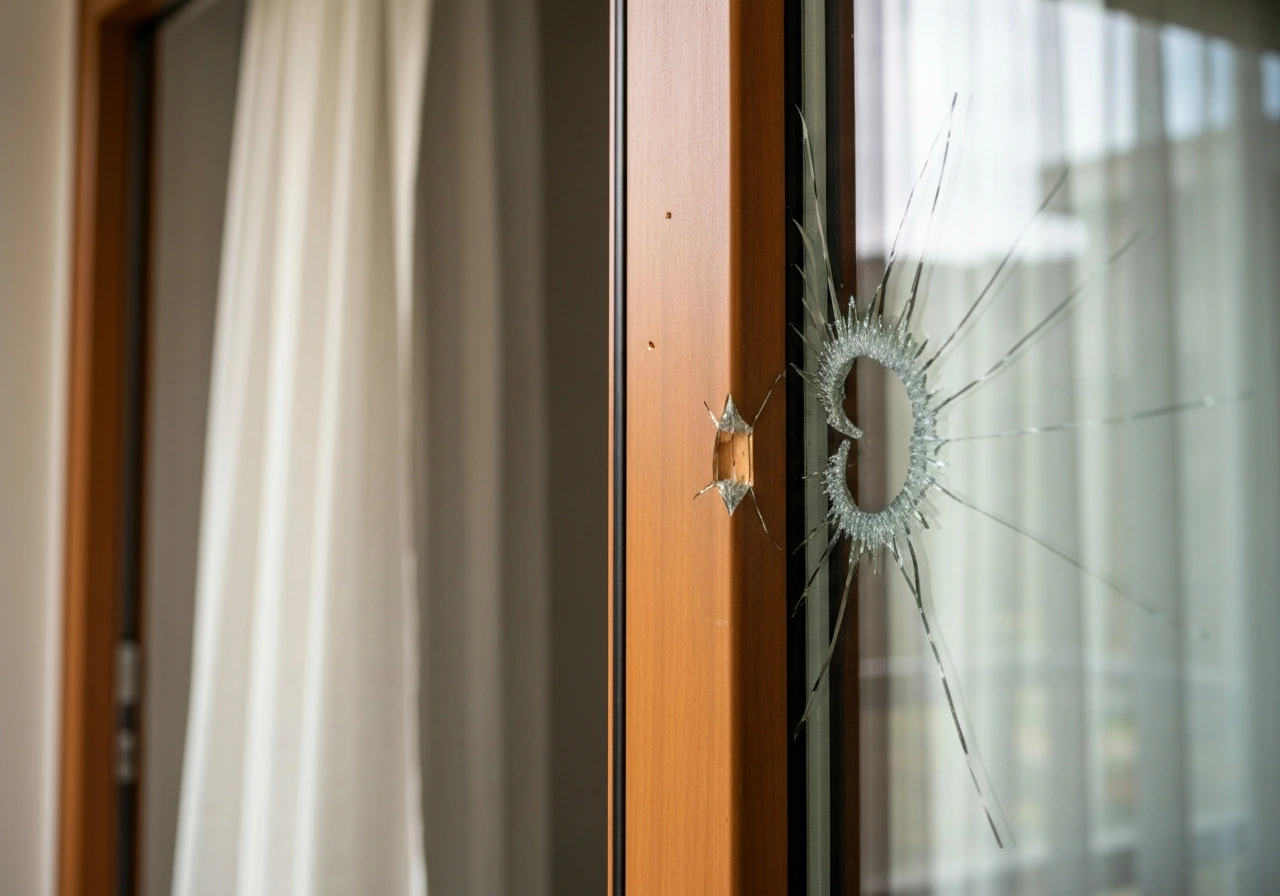
It might feel like your door, your rules. But attempting to force a patio door open can create real legal and financial problems even when you own the property. If you damage a lock, frame, or glass panel in the process, you can face criminal mischief or vandalism charges depending on your jurisdiction. Legal guidance from LegalClarity makes this point clearly: damaging property to gain entry, even your own, puts you in legally murky territory. A locksmith or a quick call to local law enforcement is almost always the safer path.
There's also a structural risk worth knowing about. The American Red Cross cautions against forcing jammed doors precisely because a door that won't move may be under load or stress, and forcing it can cause further damage to the frame, threshold, or surrounding wall. With patio doors specifically, a forced sliding door panel can shatter tempered glass, crack the frame, or destroy the roller assembly, turning a $50 fix into a $1,500 replacement. And if you have homeowners insurance, a self-inflicted forced entry may complicate any claim you'd otherwise have for a legitimate mechanical failure.
Your real options when you're locked out
Before touching anything, run through these legitimate alternatives. Most lockouts resolve faster than you'd think, and none of them involve broken glass.
- Check every other entry point first: front door, back door, garage entry, any unlocked window you can safely reach. This takes two minutes and often solves the problem.
- Call a licensed locksmith. Locksmiths handle patio door lockouts regularly and can open the door without damage in most situations. Expect them to ask for photo ID and proof of residency, which is standard practice under ALOA's Positive ID Policy and is there to protect both you and them from fraud.
- Contact your property manager or a trusted neighbor with a spare key if you've previously given one out.
- Call local non-emergency police. In some jurisdictions, officers can assist or at minimum document the situation if you end up needing to do something more drastic.
- Call the door manufacturer's support line. Pella, Andersen, Milgard, and Marvin all have support resources and can often walk you through a quick fix over the phone if it's a mechanical issue.
Diagnosing why your patio door won't open
Patio doors fail in predictable ways. Knowing what you're actually dealing with determines whether this is a five-minute fix or a call to a pro. The symptoms differ a bit between sliding doors and hinged French-style doors, so I've broken them out below.
Sliding patio doors
| Symptom | Most Likely Cause |
|---|---|
| Door won't slide at all | Debris blocking the track, or a roller that's dropped and is dragging on the track |
| Door slides but grinds or catches | Worn or misaligned rollers, or a dirty/damaged track |
| Door slides but lock won't engage | Latch and strike plate are misaligned, often after the door has settled or rollers were adjusted |
| Door lifts slightly but then sticks | No anti-lift pin, or roller adjustment is at maximum and door still sits too low |
| Door is suddenly stiff in summer or winter | Frame expansion or contraction due to temperature change, or weatherstripping compression |
Hinged patio doors (French doors, inswing/outswing)
| Symptom | Most Likely Cause |
|---|---|
| Door won't latch or lock | Strike plate misalignment, or adjustable tabs need repositioning |
| Door sticks at top or bottom | Hinge sag or frame warping from moisture or temperature |
| Lock handle turns but door doesn't release | Broken latch mechanism or snap-failed internal hardware |
| Door opens fine but lock won't secure | Bolt or latch not lining up with the strike plate opening |
DIY troubleshooting to get back inside without breaking anything
Grab a flashlight, a flathead screwdriver, and a Phillips screwdriver before you start. That covers 90% of what you'll need. For the roller adjustment steps, you'll also want a socket wrench or a hex key depending on your door brand.
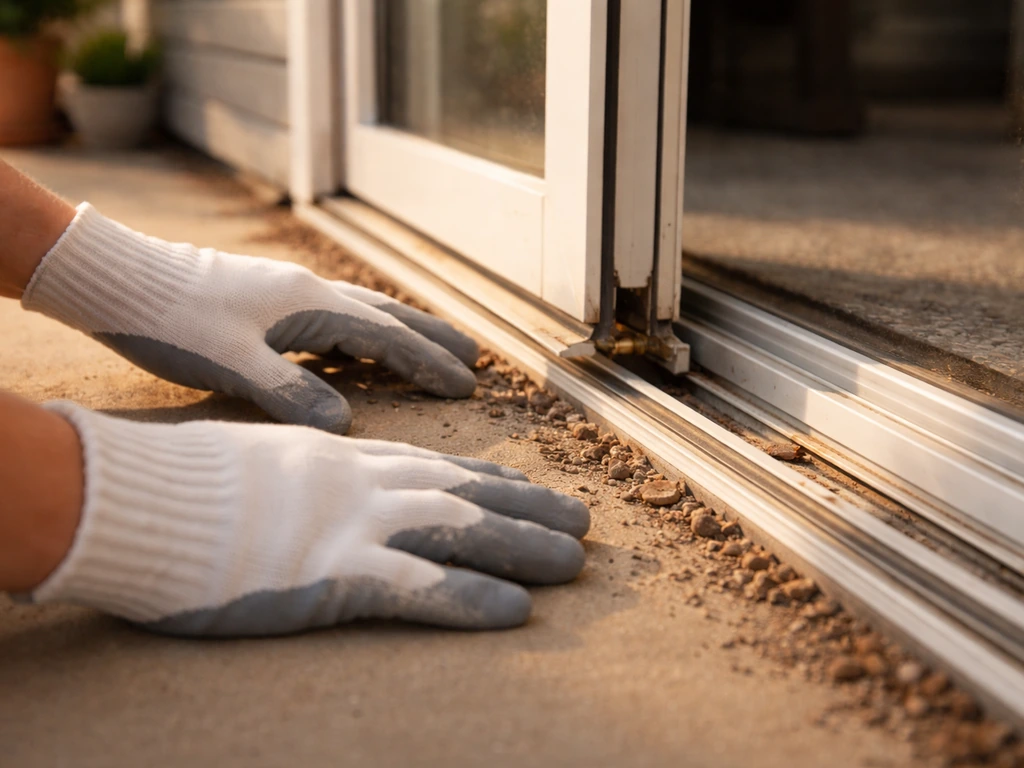
Step 1: Clear the track
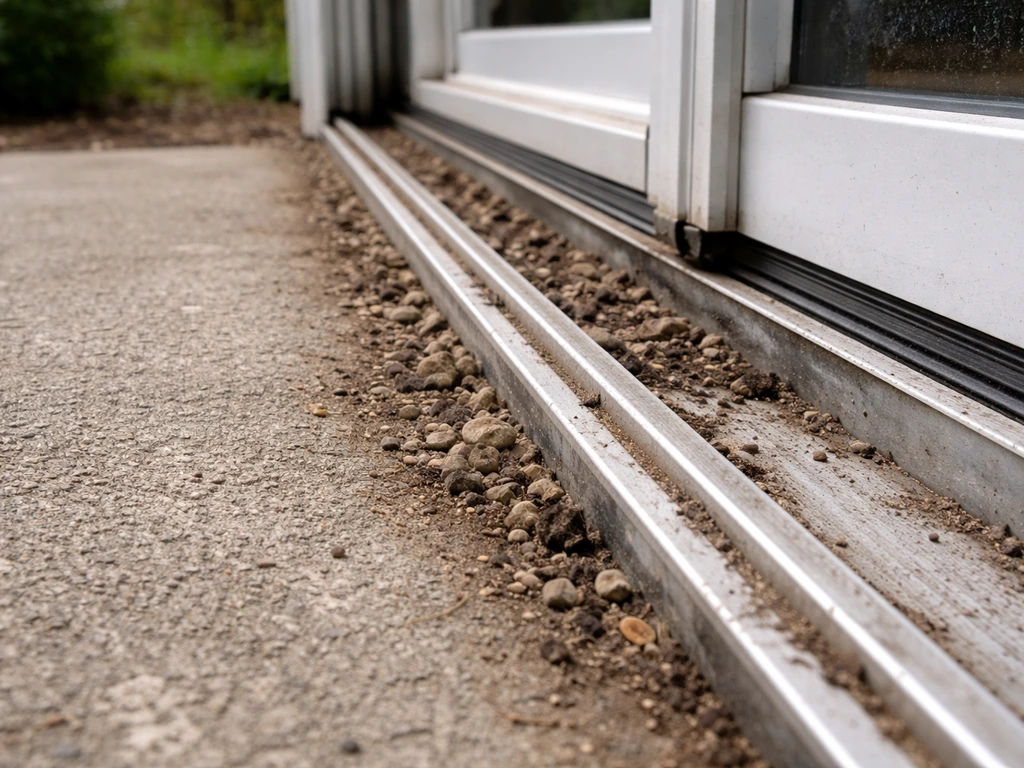
This is the most common cause of a sliding door that suddenly stops moving smoothly. Get down and look at the bottom track with a flashlight. You're looking for rocks, hardened dirt, dead insects, pet toys, or anything else that doesn't belong there. Pella's own troubleshooting documentation specifically lists debris in the track as a primary cause of snagging or poor sliding performance. Use a stiff brush or a vacuum to clear it out. If there's compacted grime, a damp rag and a little dish soap work fine. Don't use oil-based cleaners directly on the track.
Step 2: Try lifting the panel slightly while sliding
If the track is clear but the door still won't budge, try gripping the door firmly on both sides and lifting up slightly while attempting to slide it. If the rollers have dropped, the door panel may be dragging on the track instead of rolling along it. A small upward lift takes the weight off and can get it moving again. This isn't a permanent fix, but it confirms a roller problem and gets you inside.
Step 3: Adjust the rollers
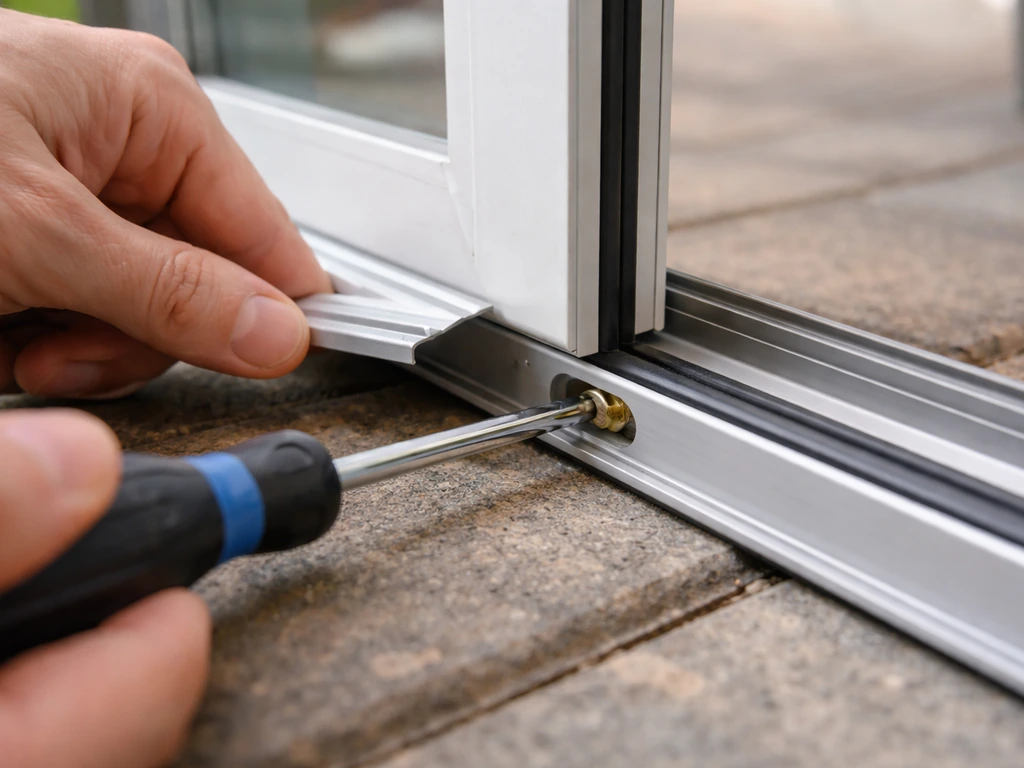
Roller adjustment screws are usually accessible through small holes or removable caps at the bottom edge of the sliding panel, near each corner. Use a Phillips or flathead screwdriver (check your door brand's manual) and turn clockwise to raise that corner of the door, counterclockwise to lower it. Swisco's guide on Pella roller systems confirms this: clockwise raises, counterclockwise lowers. Make small adjustments, maybe a quarter turn at a time, then try sliding the door. The goal is to get the door riding level on its rollers with clearance from the track. Don't force the adjustment if there's resistance; the roller itself may be damaged.
Step 4: Check latch-to-strike alignment
If the door slides fine but the lock won't engage, the latch and strike plate are probably misaligned.
If you’re trying to lock it but the latch still won’t catch, the exact fix depends on the patio door and latch alignment, so check out how to lock a patio door. This often happens after you've adjusted the rollers, because raising or lowering the door also shifts where the latch hits the frame. Pella's manual is explicit about this: after adjusting the door, you may need to adjust the lock strike up or down.
Look at the strike plate on the door frame and see if the latch bolt is hitting high, low, or to the side of the opening. Loosen the strike plate screws, reposition it so the bolt enters cleanly, and retighten. Yale's Assure Lock install guide also covers this: if the bolt won't enter the strike, check for misalignment between the bolt and the strike plate opening.
Step 5: Adjust tabs on hinged patio doors
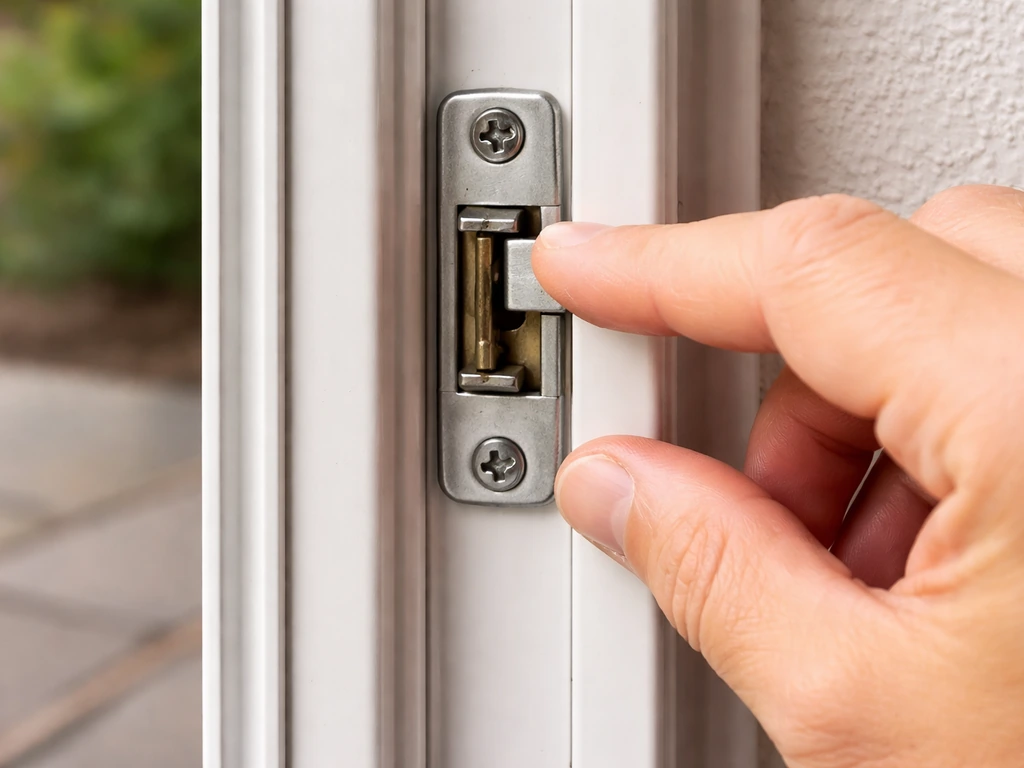
If you have a hinged inswing or outswing patio door and the lock won't engage properly, the issue may be the adjustable tabs in the receiver hardware. Andersen explains this well: when the lock mechanism engages, it butts against tabs in the receiver, which draws the door toward or away from the frame for proper seal compression. If those tabs are set wrong, the lock either can't reach the engaged position or the door won't pull tight enough to latch. You can usually adjust these with a flathead screwdriver without removing any hardware. Check your door brand's manual for the exact tab location.
Step 6: Address swelling and seasonal sticking
Wood and composite frames expand in heat and humidity. If your hinged patio door suddenly sticks every summer, the frame may have swollen enough to bind against the door panel. Don't force it. Try opening early in the morning when temperatures are cooler and the wood has contracted slightly. If that works, you have a confirmed seasonal swelling issue that needs to be addressed with weatherstripping adjustment or, in severe cases, a door frame inspection. Repeatedly forcing a swollen door causes hinge damage and frame deformation over time.
When DIY won't cut it: time to call a professional
There are situations where no amount of screwdriver work is going to get you back inside safely. Here's when to stop and call someone with the right tools and training.
- The latch or handle mechanism has snapped internally and the door won't release even with the lock disengaged. A locksmith or door hardware technician needs to disassemble the handle assembly.
- The lock cylinder itself is seized or has been tampered with. This is also a security concern and should be addressed by a licensed locksmith who can assess whether the lock was picked or forced.
- The glass panel is cracked or has already shattered. Do not attempt to remove or maneuver a broken glass patio door panel yourself. Call a glass replacement professional.
- The roller assembly is fully broken, not just dropped or misaligned. If the door has dropped so far that the roller bracket is bent or fractured, the panel needs to come out for roller replacement, which typically requires a second person and specific tools.
- There's any sign of an intrusion attempt or forced entry that isn't yours. Secure the property and contact law enforcement before touching anything.
- A fire, flood, or other emergency situation has compromised the door or surrounding structure. Follow American Red Cross guidance and contact public safety services rather than attempting your own entry into a potentially compromised structure.
A licensed locksmith can handle most patio door lockouts, including sliding door hardware failures and hinged door latch problems. They'll ask for ID and possibly proof of address, which is normal and legitimate. For full hardware replacement or frame damage, a door installation company or the door manufacturer's service network is the right call. Optimal Windows and similar door specialists make the point that if regular troubleshooting doesn't solve a door problem, a door specialist is worth consulting before you create a bigger problem.
Preventing lockouts and improving your patio door security
The best time to deal with a sticky or failing patio door is before it traps you outside. A basic maintenance routine and a few hardware upgrades eliminate most of the conditions that lead to lockouts in the first place, and they also make your door significantly harder to defeat from the outside.
Track and roller maintenance
Clean the bottom track every three to six months with a stiff brush and a damp cloth. After cleaning, apply a silicone-based lubricant to the track. Milgard specifically recommends silicone-based lubricants and warns against oil-based products because they attract dirt and grime over time, which compounds the problem you just fixed. Andersen and Renewal by Andersen recommend a multi-purpose dry lubricant spray for the rollers and track components. While you're at it, check the weep holes at the bottom of the door frame, those small drainage slots. Renewal by Andersen's maintenance documentation specifically calls out cleaning weep holes as part of routine care. A clogged weep hole leads to water pooling in the track, which accelerates debris buildup and corrosion.
Roller and alignment checks
Once a year, check that your sliding door rolls level and smoothly along the full length of the track. If you notice any grinding, catching, or the door starting to drag, adjust the rollers before the problem worsens. blank" rel="noopener noreferrer">Renewal by Andersen makes this warning clearly: repeatedly forcing a sticky sliding door causes more damage to the rollers and track over time. A five-minute roller adjustment in spring can prevent a costly roller replacement in summer.
Weatherstripping inspection
Marvin's annual maintenance checklist includes inspecting weatherstripping effectiveness as a core item. Weatherstripping that's compressed, torn, or separated doesn't just cause drafts; it also affects how the door seals against the frame, which can influence latch engagement on hinged doors. Replace any sections that are visibly cracked or flattened. One caution from Marvin: avoid using solvents on weatherstripping, as they degrade the material. Use mild soap and water only.
Lock and security upgrades
The factory lock on most sliding patio doors is a hook latch, which is functional but not highly resistant to lifting or prying. A few simple additions make a significant difference. A security bar (sometimes called a patio door bar or Charlie bar) laid in the bottom track prevents the door from sliding even if the latch is defeated.
A patio door can also be secured with hardware upgrades that don't require a deck, like a security bar or an anti-lift pin. Products specifically designed for this purpose, like patio door security bars with integrated anti-lift locks, address both horizontal sliding and vertical lifting in one piece of hardware.
Adding an anti-lift pin or block at the top of the door panel is another low-cost upgrade that prevents the panel from being lifted out of the track from outside. For hinged patio doors, a multi-point locking system is a substantial upgrade over a single-point latch, as it engages the frame at multiple locations simultaneously.
If you want to build out that protection further, the same principles in how to secure a French patio door can help you choose the right locking setup for hinged doors multi-point locking system. Securing patio doors properly is a related topic worth digging into if you want a full security audit of your setup. These security upgrades are also part of how to secure a sliding glass patio door against forced entry.
Keep a spare key somewhere useful
It sounds obvious, but a lot of patio door lockouts are solved by a spare key kept with a trusted neighbor, a combination lockbox on the property, or a keypad entry on another door. If your patio door uses a keyed lock rather than just an interior latch, make duplicates and store them strategically. If you want to go further, a keypad deadbolt on your main entry eliminates the need to carry keys at all and makes lockouts a non-issue for that door.
FAQ
My patio door is locked and won’t slide, but the lock turns, what should I check first?
Use the door lock type as your decision point. If it’s a sliding patio door with a hook-style latch, the “bolt not catching” problem usually ties to latch and strike alignment, often after roller adjustments. If it’s a hinged door with adjustable receiver tabs, the tab position can prevent the lock from fully engaging. Knowing whether the door slides but won’t latch, or won’t move at all, keeps you from chasing the wrong adjustment.
When should I try lifting the sliding door, and how do I tell if it’s rollers or frame swelling?
Confirm whether the door is actually coming off its rollers or just binding in the frame. If the panel lifts slightly and then slides, the roller height is likely wrong. If it lifts but still scrapes the jamb, you may be dealing with frame swelling or a bent track. A quick “lift-and-slide test” helps distinguish roller adjustment from weather-related binding.
Is it safe to push harder if the sliding door feels stuck even after a small lift?
Yes, but do it in a controlled way. If you apply upward force to relieve weight and the door suddenly moves, stop and inspect the track and rollers. Do not keep forcing it if you feel hard resistance, grinding, or jerking, because that can damage rollers or crack the frame. The goal is to test for a roller-drag condition, not to power through a mechanical failure.
How much should I adjust the roller screws before I stop and call a pro?
A quarter turn is a good starting adjustment, then re-test. If you adjust repeatedly and the door still binds, stop and look for the real cause, like debris in the track, a damaged roller, or a strike plate mismatch. Also, raising one corner too much can cause uneven rubbing and faster wear, so bring the door back to level rather than maximizing roller clearance.
After adjusting sliding-door rollers, my lock won’t catch. What’s the next step?
Yes, because tuning for clearance can break latch alignment. After any roller height change on a sliding door, re-check that the latch bolt hits the strike plate cleanly, not high, low, or to the side. If you changed roller height and the lock now won’t catch, the strike plate repositioning is usually the missing step.
What should I use to clean the bottom track, and what if I accidentally used the wrong product?
Avoid oil-based cleaners on the track because they can attract grit and make the problem worse over time. If you already cleaned with something oily, rinse with a damp cloth to remove residue, then re-clean with mild soap and water. After the track is fully dry, use the recommended silicone-based lubricant approach rather than repeating heavy liquids.
How do weep holes relate to patio doors that become sticky or hard to slide?
Weep holes are drainage openings at the bottom of the frame, and they can clog with dirt. If they’re blocked, water can pool in the track area, speeding up corrosion and making debris stickier. If the door has started to feel “gummy” after rain or during seasons with lots of moisture, clearing weep holes can be as important as track cleaning.
My patio door sticks mainly in summer, does that mean I should only lubricate it?
If the door is visibly swollen, it may bind more as temperatures drop or rise, and repeated force can warp hinges and deform the frame. A temperature check matters, try in the cooler part of the day and see if movement improves. If it still won’t operate smoothly without force, plan on weatherstripping adjustments or a frame inspection rather than more mechanical tweaking.
What signs mean my patio door problem is more than a simple adjustment?
If you see cracked or missing hardware, a sagging panel, broken rollers, or signs that the door frame has shifted, don’t keep adjusting screws expecting a fix. Those conditions often require part replacement or service. A specialist will also be able to verify that the door sits square so the latch alignment remains reliable.
When should I stop troubleshooting and call a locksmith or a door installer?
If you cannot regain entry quickly with safe mechanical steps, and especially if locks or frame components appear damaged, contact a licensed locksmith. Be ready to provide ID and address verification. If the issue involves frame damage or you suspect a broader installation problem, a door installation or manufacturer service network can be the better route.
What’s the best way to prevent getting locked out of the patio door again?
Yes, a simple “alternate entry” plan prevents repeat lockouts. Keep a spare key in a trusted lockbox, with a neighbor, or via a keypad-controlled entry point on another door (if you have one). If your situation includes pets or caregiving schedules, make sure the alternative entry plan is workable for anyone who might need access.
I’m worried someone tried to force my patio door, what should I inspect besides the lock?
If you suspect the door has been forced before, check the track area for bent components and inspect the rollers for wobble or binding. Also verify that the lock engages fully, and consider adding upgrades like anti-lift protection (pin or block) and security bars that sit in the track. After suspicious activity, treat it as a security repair, not just a maintenance job.
Next Article
How to Secure Patio Doors: DIY Locks, Alignment, Upgrades
Step-by-step DIY plan to secure patio doors with lock fixes, alignment checks, gap sealing, and smart hardware upgrades.