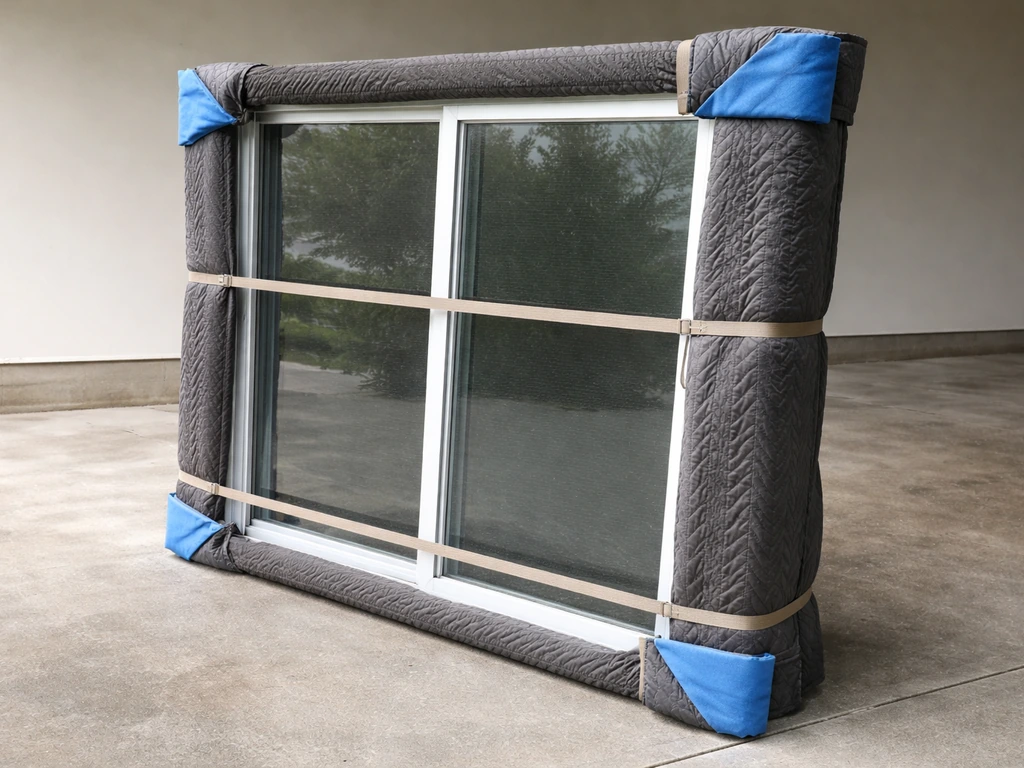
Transport a patio door upright, on its long edge, with the glass panel protected by moving blankets and the frame corners padded. Never lay it flat unless you have no other option, and never let it travel unsecured. Do it right and a sliding glass patio door arrives in one piece and ready to install. Do it wrong and you're looking at cracked glass, bent frames, or rollers that won't roll straight ever again.
How to Transport a Patio Door Safely Step by Step

Jamie Archer
1 Jun 2026
First, know exactly what you're moving
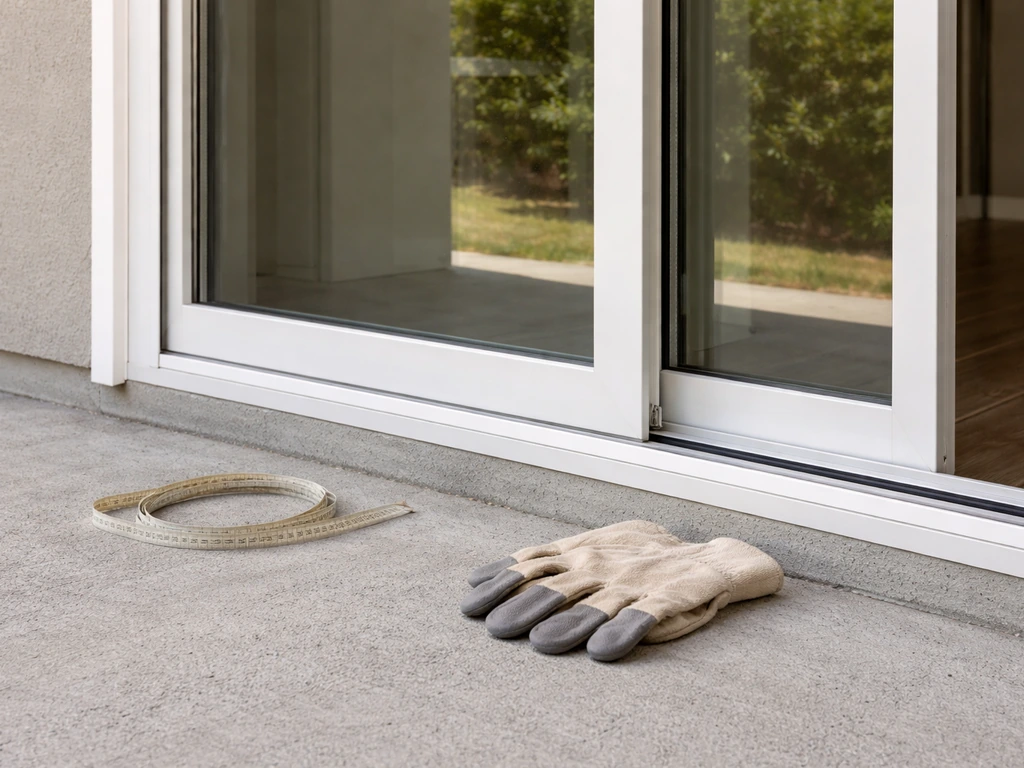
Before you touch anything, figure out what type of patio door you're dealing with. This determines how many people you need, what vehicle makes sense, and where the real risks are.
A standard sliding glass patio door panel typically runs 6 to 8 feet tall and 3 to 4 feet wide, weighing anywhere from 50 to over 150 pounds depending on whether it's single-pane, double-pane, or triple-pane glass. Full framed units with the frame assembly can push 200 to 400 pounds. A French-style hinged patio door is a different beast but shares the same basic transport rules: glass first, frame second, always upright.
The sliding panel (the one with rollers on the bottom) is your highest-risk piece. Andersen’s service guide cautions that suction cups used while moving can fail if applied incorrectly, such as on seams, which creates a slip or drop risk The sliding panel (the one with rollers on the bottom) is your highest-risk piece.. The roller assembly and the bottom track are the most vulnerable zones during a move. LUX Windows' installation documentation specifically calls out the bottom rail and roller area as a key impact zone during panel removal and handling. One hard bump on the bottom corner can damage the rollers or bend the frame channel, and you won't always know it until the door won't slide properly after installation.
- Single sliding panel (with rollers): heaviest risk to roller assembly and bottom track
- Full door unit (frame + panel): heavier, requires two people minimum, watch the frame corners
- French/hinged patio door: similar weight range, glass still needs full protection
- Multiple panels: stack them with padding between each one, never glass-to-glass contact
What you need before you start
Get everything staged before the door comes off its track or out of its opening. Stopping mid-move to hunt for a blanket while holding 100 pounds of glass is how accidents happen.
Tools and materials
- At least two moving blankets (thick furniture blankets, not thin packing paper)
- Foam corner protectors or cut pipe insulation for the four frame corners
- 2-inch or 3-inch ratchet straps (at least two, ideally four)
- Moving straps or shoulder dollies if you're doing this with two people and no extra help
- Painter's tape or stretch wrap to hold blankets in place during carry
- Shims or a scrap 2x4 cut to size to keep the door off a hard truck bed floor
- Suction cup handles (optional, but use with caution — more on this below)
- Flat-head screwdriver and Phillips head for removing screen door hardware
- Safety glasses and work gloves for everyone handling the door
How many people do you actually need?
Two strong adults can handle a single sliding panel in most situations. For a full framed unit or a door over 80 pounds, three people makes loading into a truck or trailer significantly safer. One person cannot safely carry a glass patio door alone without serious risk of dropping it or twisting the frame. If you're moving multiple panels, treat each one as a separate lift and keep a dedicated spotter when loading.
Prep the door before it moves an inch
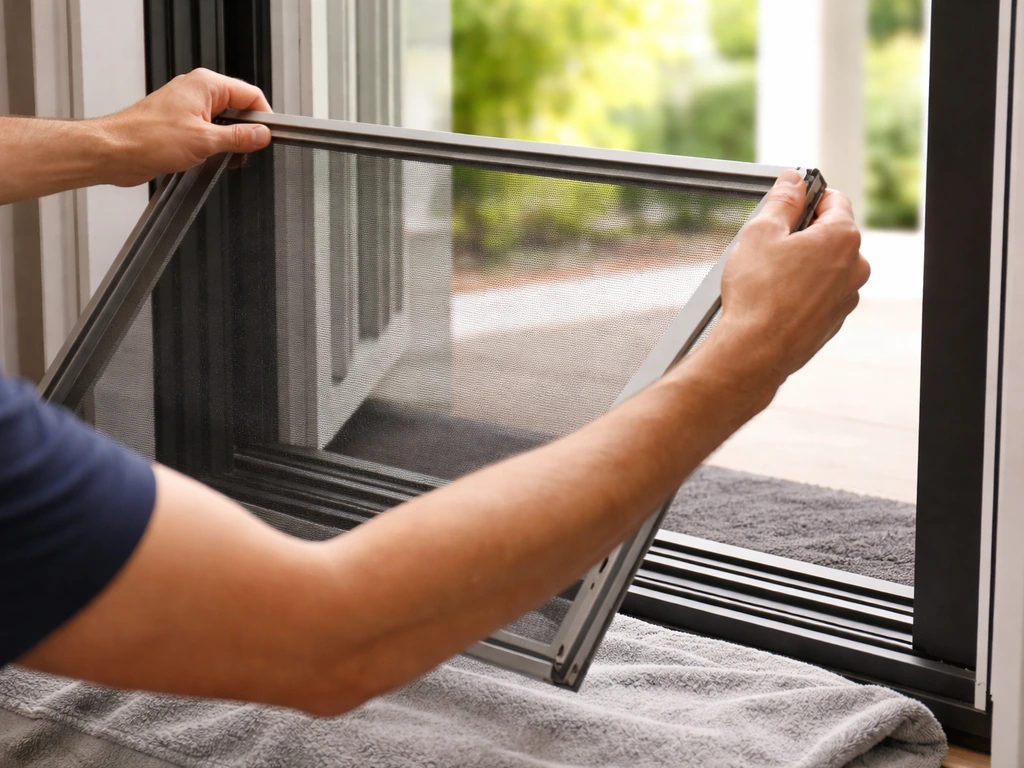
Skipping prep is the most common reason doors get damaged in transport. Take 15 minutes now and save yourself a very expensive mistake.
- Remove the screen door first. Screen panels are lightweight but awkward, and they get damaged easily. Lift up on the screen panel, tilt the bottom toward you, and pull it free from the track. Wrap it separately in a moving blanket.
- Unlock all locks and latches. A locked door handle or security bar can catch on things during the move and damage the lock mechanism or frame. Leave locks in the open position.
- Remove or tape down any loose hardware. Handles, lock bars, and decorative pulls should either come off (if they unscrew easily) or be taped snug against the frame so they don't swing and chip the glass or gouge the frame finish.
- Protect the glass. Lay two moving blankets flat on the floor, set the door flat on them temporarily to wrap it, then fold and tape the blankets around the glass face on both sides. The goal is a cushioned envelope so the glass face never contacts anything hard during carry.
- Pad all four corners of the frame. This is where most frame damage happens. Cut sections of foam pipe insulation or use store-bought corner protectors and secure them with tape.
- Do NOT use suction cups as your primary carry method. Suction cups are useful for repositioning glass panels over short distances on clean flat surfaces, but they're not a substitute for a proper grip. Andersen's service guides specifically flag the risk of suction cup adhesion failure, especially near seams. Haworth's glass handling guidelines state cups must be clean, dry, and dust-free or they become unreliable. Use them only as a supplement, not the main hold.
- If the sliding panel is still on the track, lift it off before moving day. To remove it: locate the roller adjustment screws at the bottom of the panel (usually behind small caps at each end), back them out slightly to lower the rollers, lift the panel up into the top track, then tilt the bottom toward you to clear the bottom track.
How to lift and carry it without causing damage
The cardinal rule: always carry a patio door panel on its edge (vertically), with the long dimension running up and down. Using these same vertical handling basics is the key to learning how to lift a patio door without damaging the frame or glass. Carrying it horizontally with the glass face up or down puts flex stress on the frame and can cause the insulated glass unit to separate at the seal, which you won't see until you notice condensation trapped inside the glass weeks later.
Position one person on each long side of the door. Both people grip the frame, not the glass. If the frame is thin or slippery, use work gloves with grip. Each person should have one hand near the bottom corner and one hand mid-frame. Call out every move verbally before making it: 'stepping left,' 'going through the door,' 'setting down.' Communication is what prevents fumbles.
Watch the bottom rail and roller area constantly. As Milgard's roller installation documentation notes, the bottom of the sliding panel is sensitive to impact and weight stress. When you're angling the door to get it through a doorway or around a corner, the bottom is usually what catches on the door frame or floor. Go slow through tight turns, tip the top slightly away from the opening, and have your spotter watch the bottom clearance.
Never twist or torque the frame to fit through a gap. If the door doesn't fit through an opening at its current angle, stop and problem-solve before forcing it. Twisting a framed glass unit can crack the glass or permanently rack the frame, meaning it won't sit square in the opening when you get to the other end.
Loading into a vehicle or trailer
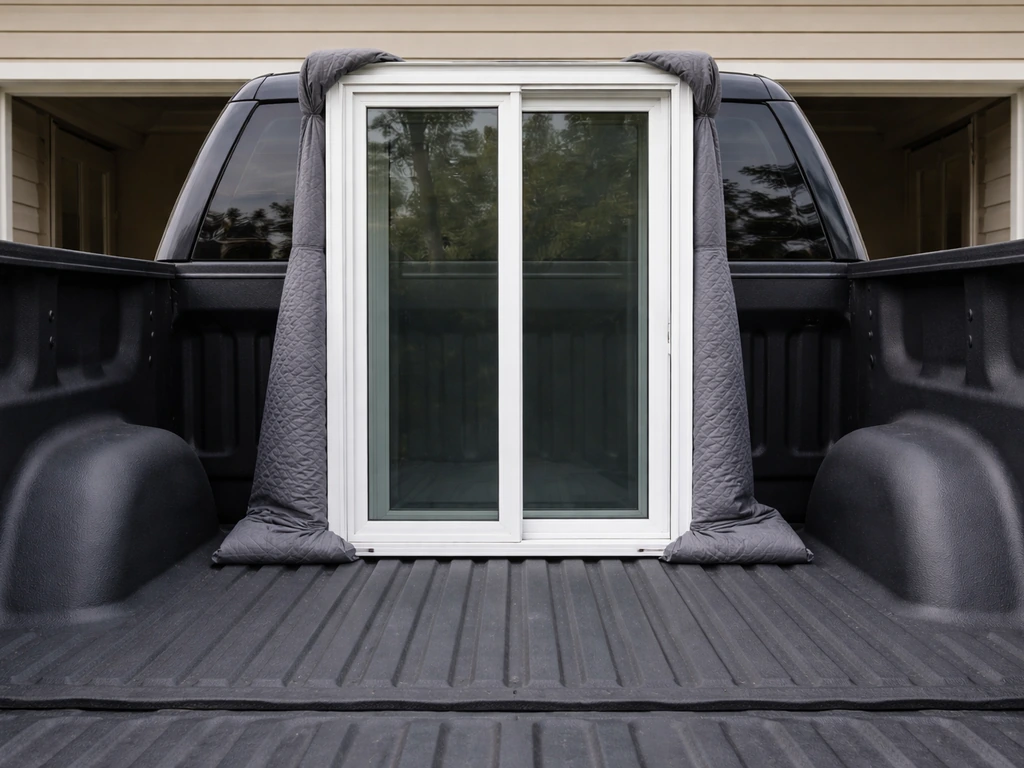
How you load a patio door depends on what you're driving. A full-size pickup truck, a cargo van, an enclosed trailer, and an open flatbed all have different considerations. The one constant: the door travels upright on its edge whenever the vehicle dimensions allow it.
| Vehicle type | Best orientation | Key tip |
|---|---|---|
| Full-size pickup (long bed) | Upright against cab or leaning on side rail with support | Use a 2x4 cradle on the bed floor; strap to the bed rails in two points |
| Full-size pickup (short bed) | Upright with tailgate down, extend past the bed with a flag | Check local flag laws; door must be secured front and rear, not just middle |
| Cargo van | Upright on the long wall, braced with foam at top and bottom | Blanket between door and van wall; strap to D-rings if available |
| Open trailer | Upright, ratchet-strapped to the side rail | Pad between door and rail; protect glass from road debris with extra blanket wrap |
| Enclosed trailer | Upright against a wall or in a purpose-built A-frame rack | A-frame rack is the professional choice for multiple panels; prevents tip-over |
If the vehicle absolutely cannot accommodate the door upright (rare, but it happens with shorter vans or smaller trailers), laying the door flat is acceptable only if both the top and bottom surfaces are fully padded, nothing is stacked on top of it, and the glass isn't resting on any hard frame protrusions. If you are considering moving it on its back, make sure it is fully padded and never left unsecured during transport l aying the door flat. Laying it flat is a last resort, not a preference. For detailed guidance on moving a patio door specifically in a pickup truck, including bed dimensions and overhang rules, that scenario gets into specifics worth covering on its own. For pickup trucks, pay close attention to bed dimensions and how much the door can overhang safely before you secure it.
Securing the load
Two ratchet straps minimum, three is better. Run straps over the frame, not over bare glass. Tighten until snug but not crushing, you should not be able to rock the door, but the straps shouldn't be deforming the frame either. Place a blanket or foam pad anywhere a strap contacts the frame or glass to prevent strap marks and pressure damage. Check the straps again after driving the first quarter mile; vibration loosens things faster than you'd expect.
Unloading and getting it ready for installation
Unloading is actually where a lot of damage happens, because people relax at the end. Use the same two-person carry process you used to load it. Don't rush.
- Loosen and remove all straps before trying to move the door — trying to slide a strapped door out of a truck bed is a good way to scratch the frame finish.
- Slide the door to the edge of the truck bed or trailer with a helper supporting the far end before you try to lift it clear.
- Lower it onto a padded surface (a moving blanket on the driveway works fine) before carrying it to the install location.
- Inspect the frame, glass, and roller assembly before you carry it inside. Look for cracked glass, bent corner joints, and any damage to the bottom rail where the rollers sit. Better to find it now than after you've reinstalled it.
- If the door will wait a day before installation, store it upright against a wall — not laying flat on the floor. Lean it at a slight angle (5 to 10 degrees off vertical) with padded floor contact and a padded wall contact point. Secure it so it cannot fall.
- Reinstall the screen door last, after the main panel is seated in the frame and confirmed level.
Once it's inside, resist the urge to immediately muscle it into the rough opening. Take a breath, check the opening is clear, and get a helper positioned before the final lift and placement. This is also a good moment to check whether the rollers need adjustment before the door goes in, if the rollers were compressed or damaged in transit, you'll want to know before you set the door in the track. The door should seat cleanly into the top channel first, then the bottom rollers should drop onto the track with minimal force. MILGARD’s patio sliding-door installation instructions also advise lifting the door while rotating the roller screws, since removing weight from the rollers during adjustment helps prevent damage or injury The door should seat cleanly into the top channel first, then the bottom rollers should drop onto the track with minimal force..
Quick checklist and mistakes to avoid
Run through this before and after the move: After you load and secure it, focus on raising the patio door correctly so it seats and operates smoothly.
- Screen door removed and wrapped separately
- All locks and hardware secured or removed
- Glass faces padded on both sides with moving blankets
- All four frame corners protected with foam or corner guards
- Two people (minimum) positioned and briefed before first lift
- Door oriented vertically for transport
- 2x4 or shim cradle between door and hard vehicle floor
- At least two ratchet straps with padding under them
- Load checked after first quarter mile of driving
- Full inspection of glass and rollers on arrival before installation
Mistakes that cause the most damage
- Carrying the door horizontally (flat) when vertical was possible — causes frame flex and seal stress
- Relying entirely on suction cups without a secondary grip — suction fails without warning on dusty or uneven surfaces
- Leaving the screen in the frame during transport — it gets bent and takes the main panel with it
- Strapping directly over glass without padding — strap vibration leaves permanent marks
- Skipping the corner protectors — frame corners are where bent aluminum and cracked vinyl show up first
- One person trying to manage a full sliding panel alone — even a 'short' move across a driveway
- Dropping the door bottom-first — the roller assembly is the hardest part to fix post-damage
- Not re-checking strap tension mid-trip — doors shift more than boxes do
Transport is honestly one of the easier parts of the patio door lifecycle once you've done it once. The physics are straightforward: keep it vertical, keep it padded, keep it strapped, and don't rush the carries. Get it to the installation site in good shape and the rest of the project, leveling, adjusting the rollers, weatherstripping, getting the lock aligned, goes a lot smoother. If you want it to seal and glide correctly, focus next on how to level patio doors after the move.
FAQ
Can I transport a patio door by myself if I drive slowly and use padding?
In most cases, no. A sliding panel over about 80 pounds, or any door with a full frame assembly, needs at least two strong adults. One person increases the odds of dropping the glass edge or twisting the frame while guiding it through a doorway or onto the vehicle. If you must solo, consider renting a moving dolly or hiring help for the carry and loading portion.
What should I do if the door is already removed from the track and the bottom rollers look compressed?
Before moving, protect the bottom rail and keep the door oriented vertically on its edge. When you arrive, inspect the rollers and the bottom track for dents or binding before final placement. If rollers appear distorted, do not force the door into the top channel, seat it only after you can confirm the rollers can engage the track without excessive force.
Is it safe to strap the door over the glass if I’m careful with blanket padding?
Strapping should go over the frame, not across bare glass. If a strap must contact the glass area due to your setup, pad heavily with foam or thick blankets at the contact points, and avoid tightening to the point that you can see bowing in the frame. Better yet, reposition the straps so they load the frame assembly where it is designed to take pressure.
How do I prevent strap loosening during the drive?
After you secure the straps, recheck tightness after the first quarter mile. Vibration and minor frame settle are common causes of strap slack. Also confirm the straps are not sitting on corners where they can slide, and use at least two straps (three is safer) so the door cannot rotate.
What’s the best way to protect the glass if I only have thin moving blankets?
Use thicker protection at the highest-impact zones, especially the bottom rail and corners. If your blankets are thin, double them up and add foam padding or additional wrap at corners so there are no hard frame-to-blanket contact points. The goal is to prevent any metal or rigid edges from pressing directly against the glass.
Can I transport a patio door upright in a short trailer if the door will extend beyond the trailer bed?
Only if you can keep it fully supported upright with no part of the door resting on hard protrusions, and it is securely strapped so it cannot shift or sway. Overhang limits depend on vehicle rules and your exact trailer configuration, so verify local transport regulations and make sure the straps and padding keep the door from rotating during braking.
What’s the risk if I carry the door horizontally, glass face up, to make loading easier?
Horizontal carrying can place flex stress on the frame and the insulated glass unit. That stress can compromise the seal, sometimes without immediate visible damage, leading to problems like condensation trapped inside the glass later. If upright transport is impossible, treat horizontal as a last resort with full padding on both top and bottom surfaces and no stacking on it.
How should I handle a French-style hinged patio door versus a sliding one?
Follow the same core rules, handle it on its edge upright, protect the glass with padding, and prevent the door from becoming unsecured during transport. The hinge and frame areas are also vulnerable to bumps, so pad corners and plan your load so impact targets are minimized. Use the door type to determine people count, since hinged units may be awkward to angle through tight openings.
What’s the correct order of placement when installing after transport?
Set the door into the top channel first, then guide the bottom rollers into the track with minimal force. If you have to push hard, stop and reassess alignment or roller condition, since forcing can rack the frame or damage rollers. This sequence helps the rollers engage smoothly rather than taking the entire load at once.
Do I need to adjust rollers immediately after transport, even if the door looks fine?
It’s a good idea to check. Transport vibration can compress rollers or slightly shift alignment, and you may not notice until the first test slide. Before doing final placement, inspect the roller area and then confirm the door glides with consistent spacing at the tracks.
Next Article
How to Protect Patio Door from Rain: DIY Fixes, Steps & Costs
How to protect patio door from rain: step-by-step DIY fixes, tests, tools, seasonal tips, and when to call a pro.