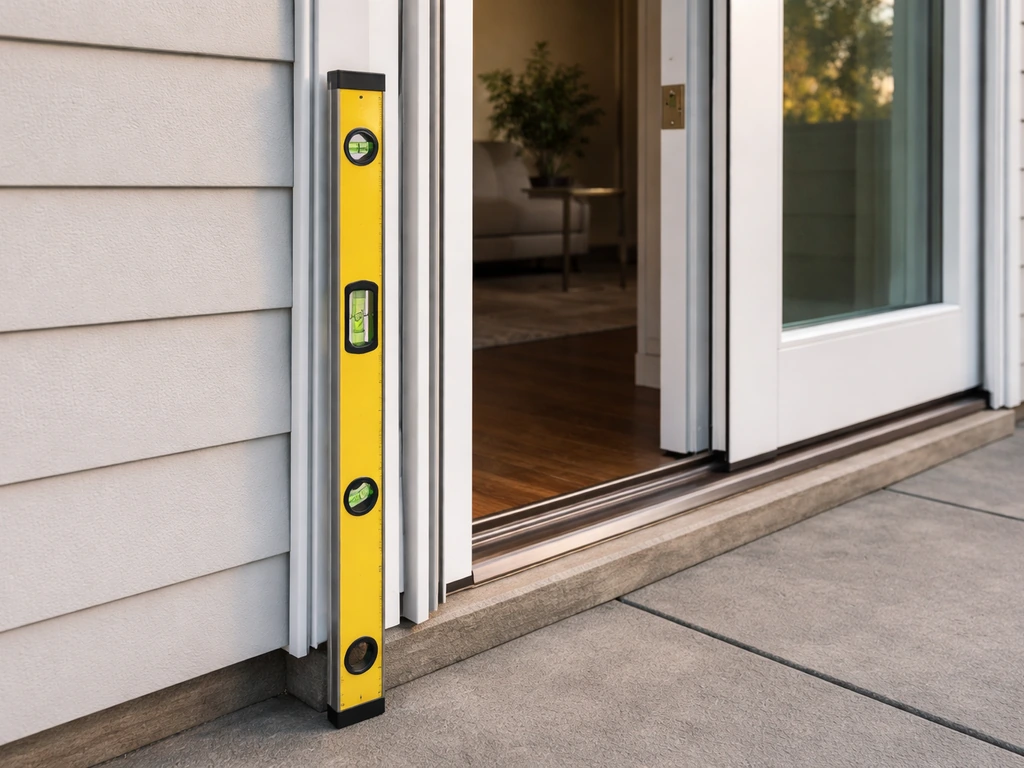
To move a large patio sliding door safely, you need to do one of two things: free it up in place (cleaning the track, adjusting rollers, clearing obstructions) or lift it completely off the track for service or repositioning. Most stuck or hard-to-move doors just need a track cleaning and a quick roller adjustment. Full removal is only necessary when rollers are shot, the door needs repositioning, or you're doing a deep repair. Either way, the job is DIY-friendly with the right prep and a helper for the heavy lift.
How to Move Large Patio Doors Safely and Adjust Track Issues

Jamie Archer
10 Jul 2026
Before you touch the door: safety, tools, and what type of door you have
A large sliding patio door can weigh anywhere from 50 to over 200 pounds depending on glass thickness, frame material, and door width. A standard single-panel sliding door typically runs 80 to 120 pounds. Double or wide-format panels can exceed 150 pounds. Before you do anything, get a helper. Trying to wrestle a large glass panel solo is how frames get cracked and backs get thrown out.
Also take a moment to identify what you're working with. The most common residential patio door is an aluminum or vinyl-framed sliding glass door that rides on bottom rollers inside a metal or composite track. Some doors also have top guide channels. Screen doors are a separate (and much lighter) panel that slides in its own track. French-style sliding doors and double-panel bypass doors have their own quirks, but the core mechanics are the same: rollers, track, and alignment.
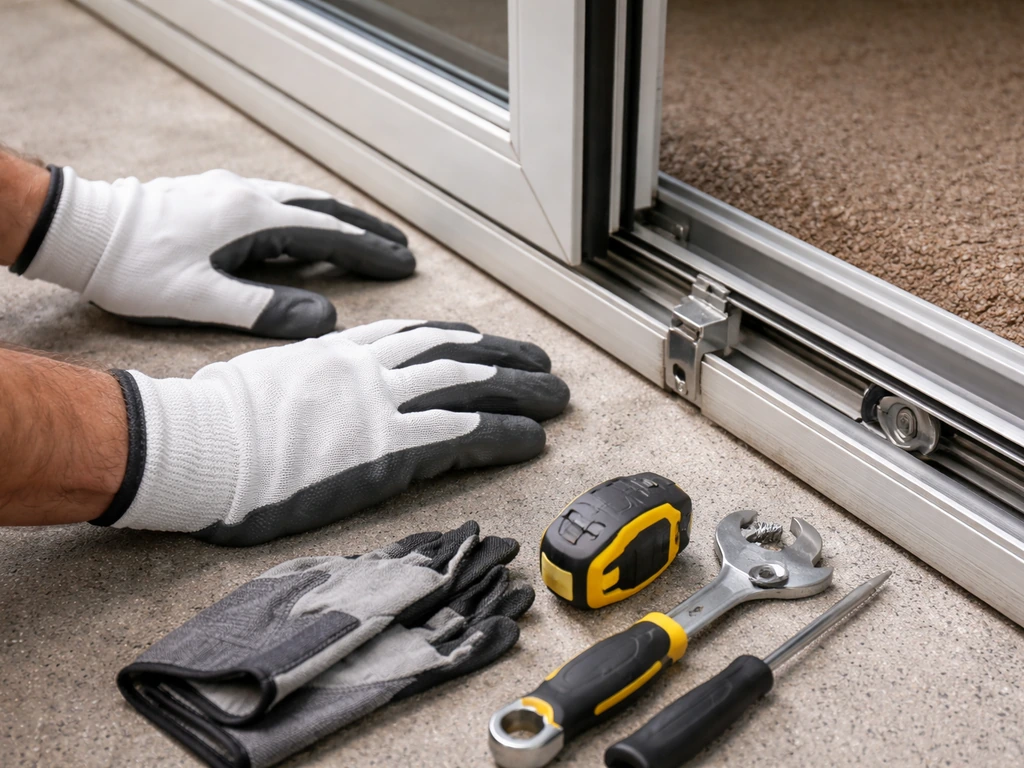
Gather everything before you start. Mid-project tool hunts are annoying and dangerous when you're holding a glass panel.
- Flathead and Phillips screwdrivers (multiple sizes)
- Pry bar or putty knife (for head stop removal)
- Vacuum or wet-dry vac
- Track cleaner or isopropyl alcohol and rags
- Steel wool (light gauge) for stubborn track grime
- Silicone-based lubricant spray (not WD-40 or oil-based)
- Roller adjustment tool or drill with appropriate bit
- Tape measure and level
- Work gloves (glass edges are unforgiving)
- A helper
Quick diagnostics: why your large patio door won't move
Before you start removing anything, spend five minutes diagnosing the actual problem. Forcing a stuck door is the fastest way to crack a roller housing or warp a frame. Here are the four most common causes, in order of likelihood.
Dirty or clogged track
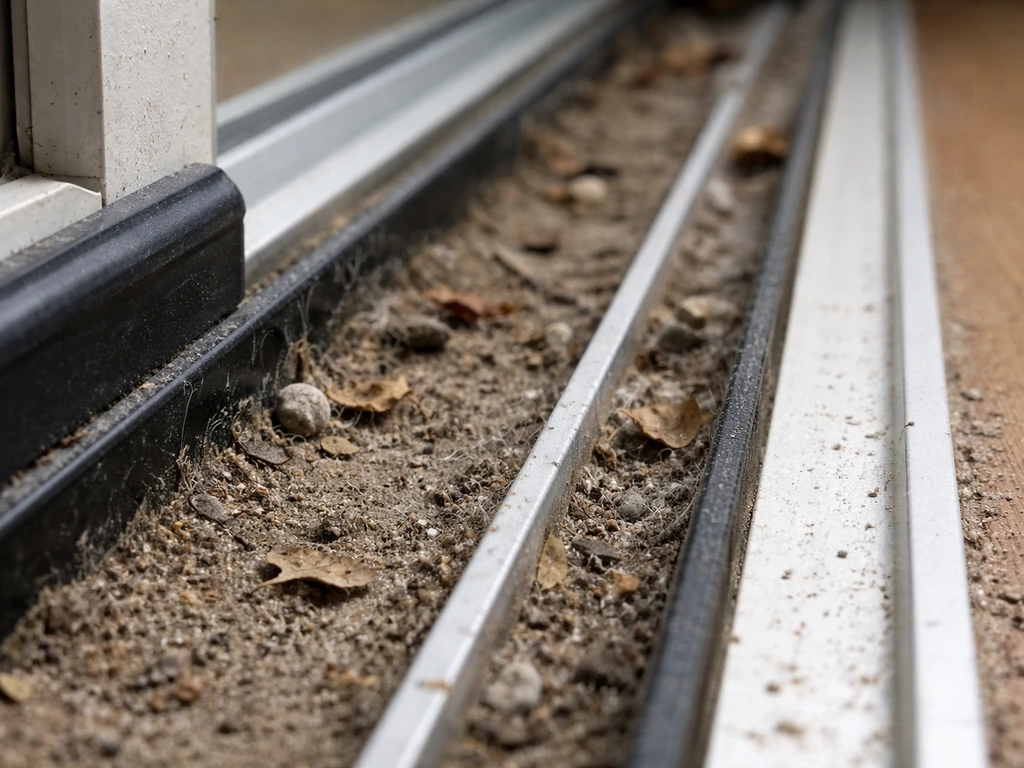
This is the culprit more than 60 percent of the time. Dirt, pet hair, sand, leaves, and even small stones accumulate in the bottom track channel. The door's rollers grind over this debris and the door gets progressively harder to move. Look down at the track while the door is partially open. If you see visible buildup, start with a cleaning before anything else.
Worn or broken rollers
Rollers are the small wheels mounted in the bottom of the door frame that let it glide. They wear out over time, and a cracked or flat-spotted roller will drag, skip, or bind completely. If the track looks clean but the door still grinds or catches, lift one corner of the door slightly while someone watches the roller on that side. A broken roller will wobble or won't spin at all.
Misalignment
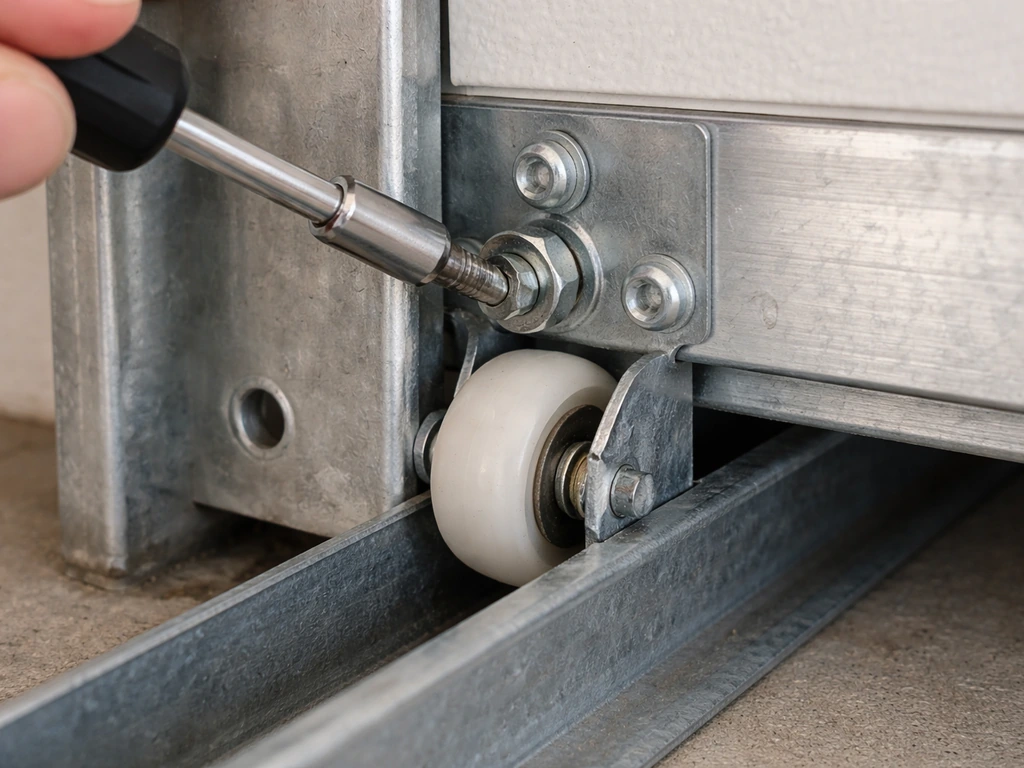
Rollers have adjustment screws that raise or lower the door within the frame. If one side has settled more than the other, the door rides crooked in the track and can bind at the top guide channel or drag on one side. You'll notice this when the door is harder to move in one direction than the other, or when there's a visible gap at the top or bottom of the door that's uneven from one end to the other.
Lock engagement or anti-lift guard blocking movement
This one sounds obvious but gets missed. A partially engaged latch or a lock bolt that didn't fully retract will prevent the door from moving at all. Check that the handle is fully turned and the latch is retracted before assuming it's a mechanical issue. Also, some doors have anti-lift guards or security bars in the track that physically block the door from sliding. These are usually easy to spot once you know to look for them.
Prepare the area and clear the track and screen hardware
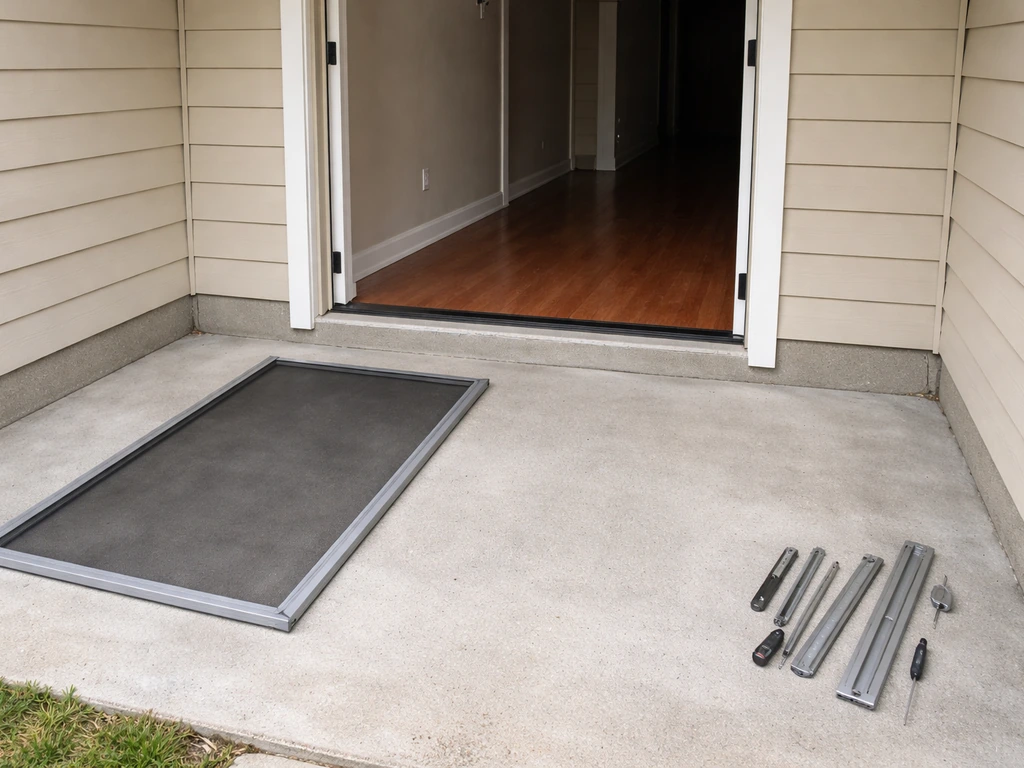
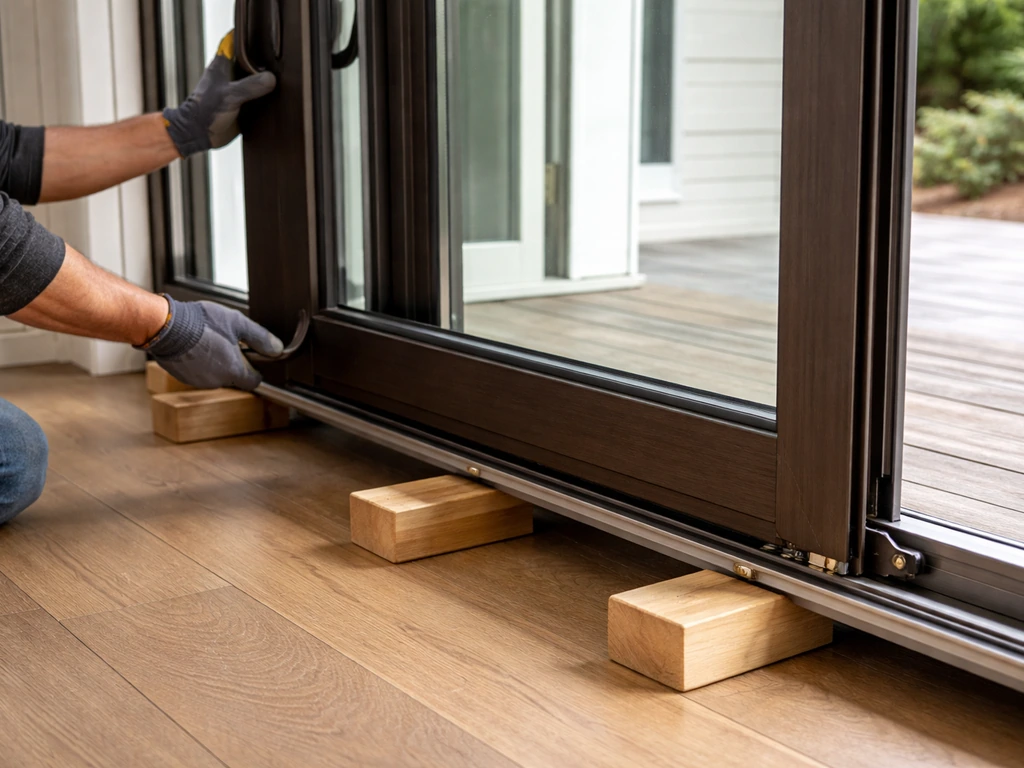
Clear a working zone on both sides of the door. You need at least four feet of clear space inside and outside, and a flat area where you can lay the door panel down if removal becomes necessary. Once you’ve cleared space, you can transport the patio door laying down safely if removal becomes necessary lay the door panel down. Put down a moving blanket or cardboard on the floor inside as a landing pad.
If there's a screen door, remove it first. Screen doors are light (usually 15 to 25 pounds) and simply lift up and tilt out of the bottom track. Grab both sides of the frame, push it upward firmly into the top channel to create clearance, then swing the bottom out. Set it aside where it won't get stepped on or fall over.
Now clean the track. Vacuum out loose debris with a shop vac or the crevice tool of a regular vacuum. Then wipe down the track channel with isopropyl alcohol and a rag, using steel wool for any caked-on grime or oxidation. Let it dry completely before lubricating. Once dry, apply a thin coat of silicone-based lubricant along the full length of the track. Do not use WD-40, grease, or oil-based products. They attract dirt and will make the problem worse within weeks.
While you're at it, check the drainage ports in the outer track channel. These are small slots or holes that let water escape. If they're plugged with debris, water backs up and creates drag, corrosion, and eventually seal failure. Clear them with a toothpick or a small pick.
How to move the door in place: sliding adjustments and free-up steps
After cleaning, try sliding the door again before going further. If you are trying to raise the door, the key step is adjusting the rollers after the track is clean so the door lifts into the proper alignment raise a patio door. You might be done. If the door still resists, move on to roller adjustment.
Roller adjustment screws are located on the bottom edge of the door, typically at each end, sometimes behind small plastic plugs. Pop out the plugs with a flathead screwdriver. You'll see a slot or Phillips screw that raises or lowers the roller carriage. Turning it clockwise typically raises that corner of the door; counter-clockwise lowers it. The goal is to raise the door just enough that it rides level in the track without rubbing the top channel. After you’ve adjusted the rollers so the door rides level, you’re essentially following the same leveling approach covered in this guide on how to level patio doors.
Adjust one side at a time, a quarter turn at a time. Have your helper slide the door a foot or two after each adjustment to feel for improvement. You want the door to glide smoothly with even resistance from one end to the other. If the reveal (the gap between the door edge and the door frame) is noticeably uneven top to bottom, keep adjusting until it's roughly equal on both sides.
If roller screw adjustments produce no improvement, or if the door drops when you try to raise it with the screw, the rollers themselves are worn out and need replacement. At that point, you're looking at a full removal.
How to remove and reposition a sliding patio door
Removing a large sliding door is a two-person job, full stop. If you need a step-by-step walkthrough for lifting a patio door off its track, follow the guidance in this guide how to lift a patio door. The process is straightforward but the weight is the hazard.
- Remove the head stop: The head stop is a strip along the top interior of the door frame that keeps the door from being lifted out. Back out its screws (usually Phillips) and pull it free. Set the screws somewhere you won't lose them.
- Check for anti-lift guards: Look along the top track or inside the top channel for small plastic or metal blocks screwed in place. These are anti-lift security guards and they physically prevent the door from being lifted. Remove them by backing out their screws before proceeding.
- Adjust rollers down: Turn both roller adjustment screws counter-clockwise to lower the door as much as possible. This gives you the maximum vertical clearance to lift the panel up into the top channel and clear the bottom track.
- Lift the door: With one person on each side of the panel, grip the frame firmly (not the glass). Lift the door straight up until the bottom clears the bottom track, then tilt the bottom of the door toward you (into the room) and lower it out of the top channel. Move slowly and communicate with your helper.
- Set the door down safely: Lay it on your prepared padded surface, or stand it upright against a wall with padding between the glass and wall. Never lean a glass door on a corner or hard edge.
If the door won't lift out even after removing the head stop and anti-lift guards, check whether there's a threshold cover or bracket blocking the bottom. Some doors have fixed threshold components that need to come off before the panel can be extracted. These are usually secured with screws visible from the top of the threshold strip.
Once the door is out, you have full access to the roller hardware. This is also the point at which you'd reposition the door to a new opening, transport it for service, or swap in a replacement panel. Transporting a patio door usually means planning how you will move it safely off its track and securing it for service or a new location transport a patio door. Those jobs have their own considerations around handling and vehicle transport that go beyond the scope of this guide.
Cleaning, roller and track fixes, and reinstallation
With the door out, you can fully inspect and service the rollers. Rollers are accessed from the bottom edge of the door frame, usually held in place by a single screw per roller housing. Remove the screw, pull out the old roller assembly, and take it to a hardware store to match the replacement. Note the wheel diameter, axle width, and housing shape. Bring the old roller if you can, because roller sizing varies significantly by manufacturer and door age.
Install the new rollers and adjust them to their highest position (screws turned fully clockwise) before reinstalling the door. This gives the door maximum clearance to drop into the bottom track during reinstallation, then you adjust down to the correct height afterward.
Note that sealed ball-bearing rollers don't need lubrication. The bearing is factory-sealed and adding lubricant just attracts grit. Clean the roller housing and the axle area, but leave the bearing itself alone.
Clean the bottom track one more time while the door is out. You'll be amazed what's been hiding under the panel. Use alcohol and rags, hit the corners, clear the drainage ports, and dry completely before applying fresh silicone lubricant.
To reinstall: reverse the removal steps. If you need to move the patio door off-site, follow proper how to transport a patio door in a pickup truck steps to avoid cracking the glass or damaging the frame. Tilt the top of the door into the top channel first, then lower the bottom onto the track. It helps to have the rollers set high so the door drops easily onto the track without forcing. Once it's seated, replace the anti-lift guards and head stop. Then adjust the rollers to raise the door to the correct operating height.
Test operation and weatherproofing: gaps, latching, and draft checks
Before you call it done, run through a full function check. Slide the door back and forth its full travel several times. It should move with light, even resistance and no grinding or catching. If it still feels stiff, revisit the roller adjustment.
Check the latch. Close the door fully and engage the handle. The latch should engage smoothly and pull the door snugly against the side jamb with no rattle or gap. If the latch is catching on the strike plate or not engaging cleanly, the latch receiver (the catch plate on the frame) may need adjustment. Most latch receivers have a single adjustment screw; turning it clockwise moves the receiver toward the door panel to improve engagement.
Now check the gaps. With the door closed and latched, run your hand around the perimeter. You should feel no significant airflow. Pay particular attention to the bottom corner nearest the lock (where doors typically pull away from the seal slightly over time) and the top channel. Visible light along the edge when you stand back in a darkened room is a sign of weatherstripping compression failure or misalignment.
If you feel a draft, check whether the door simply needs to be raised slightly with the roller adjustments to compress the weatherstripping better. A quarter turn of the roller screw can make a surprising difference. If the weatherstripping itself is flattened, cracked, or torn, replace it. It's sold by the foot at most hardware stores and installs by pressing into a channel groove or stapling, depending on type.
Finally, check the outer track drainage ports one more time and confirm water flows freely away from the door sill. Standing water in the outer channel is a slow killer for frames, seals, and subfloor material. A well-maintained track drains on its own; a clogged one pools and causes problems that take much longer to fix than the original sticky door ever did.
| Problem | Most Likely Cause | Fix |
|---|---|---|
| Door won't move at all | Latch not fully retracted or anti-lift guard in place | Confirm latch is open; remove anti-lift guard or security bar |
| Door drags or grinds | Dirty track or worn rollers | Clean track; inspect/replace rollers |
| Door hard to move in one direction | Misalignment (uneven roller height) | Adjust roller screws until door rides level |
| Door jumps off track | Rollers set too low or top guide damaged | Raise rollers; inspect top guide channel |
| Drafts after service | Rollers not raised enough to compress weatherstripping, or worn weatherstripping | Raise door slightly via roller adjustment; replace weatherstripping if worn |
| Latch won't engage cleanly | Latch receiver out of position | Adjust receiver screw clockwise toward the door panel |
FAQ
Can I move a large patio door if I don’t have a helper?
It’s not recommended. Even if the door seems “light,” the risk is frame twist and cracked glass. If you must proceed, use a second person for the lift and keep the panel supported across its width (never by one edge), and consider renting a door handling tool or hiring a pro for the removal or repositioning step.
How can I tell whether the door is binding at the bottom rollers or at the top track guide?
Do a slow test with the door partially open and watch the top edge. If the top edge rubs or won’t align until you lift slightly, the issue is often top channel contact from uneven roller height. If the drag happens immediately at the first inches of movement, it’s more likely bottom track debris or a worn roller housing.
What should I do if the door lifts easily but won’t slide once set in place?
That pattern usually means the rollers are at the right height but the track surface is still contaminated or the door is out of lateral alignment. Re-clean the track, confirm drainage ports are open, then recheck that both sides are raised to the same level (small quarter turns at a time).
Is silicone lubricant safe for all patio door tracks and finishes?
In most cases it’s the correct choice for track glide, but avoid overspraying onto weatherstripping, glass, or painted surfaces. A thin coat matters, and the track should be fully dry before lubricating to prevent trapping grit.
Why does WD-40 make the door worse later?
WD-40 and oil-based products attract dirt and grit, turning the track into an abrasive paste. You may get short-term movement, but within weeks the same particles rebind to the lubricant and increase binding again.
What’s the safe way to clean the track without damaging it?
Vacuum first to remove loose grit, then wipe with isopropyl alcohol. If you use steel wool, use light pressure only on caked grime and then remove all residue with a rag. The goal is clean metal contact surfaces, not scratching channels or grooves.
How do I know when roller adjustment is “too much”?
Stop if you can see the door riding high enough to rub the top guide channel, or if the door feels tight in the last portion of travel. Adjust in quarter turns, test after each change, and aim for level operation with no scraping sounds.
What should I check if the roller screw turns but the door height doesn’t change?
That often means the roller housing is stripped, seized, or the screw isn’t engaging the carriage threads. Try gentle testing in small increments, and if there’s no effect, plan for roller replacement rather than forcing the screw.
Do I need to remove the anti-lift guards every time I service the door?
Only when you need the door fully off the track. For cleaning, inspection, and roller height tuning, you typically can keep the door on the frame. If you remove guards, reinstall them fully and run the function check before leaving the door in service.
Can I replace rollers without removing the whole door?
Usually not for most bottom-roller designs, because access is constrained and you generally need the door lifted enough to extract the roller assemblies. If your door has a specific service panel or removable roller access feature, follow that configuration, otherwise plan on lifting the door off the track.
How do I pick the right replacement roller if I can’t read the part number?
Bring the old roller to the store when possible, and match at minimum wheel diameter, axle width, and housing shape. Roller sizing varies by manufacturer and door age, and installing the wrong profile can cause uneven travel even if the screw adjustment “works.”
What are signs the weatherstripping issue is actually alignment, not seal wear?
If gaps or drafts mainly change with door height or roller adjustments, it’s alignment or leveling. If the weatherstripping is visibly flattened, torn, or cracked along the contact line, replacement is the better fix. A quarter turn in height can compress a seal, but it shouldn’t permanently hide major misalignment.
If the door is uneven top to bottom, should I always blame the rollers?
Not always. Uneven gaps can come from roller height differences, bent hardware, or a shifted frame. Start with track cleaning and roller leveling, but if the door still sits crooked after roller changes, inspect for bent guide components or a loose frame at mounting points.
What should I do after reinstalling to confirm it’s truly safe?
Run the door through full travel several times, listen for grinding, then close and latch to check smooth engagement. Finally, confirm water can drain by verifying the outer track drainage ports are unobstructed, because trapped water can slowly worsen alignment and seal performance.
Next Article
How to Level Patio Doors: Step-by-Step Fixes
Step-by-step guide to level patio doors, fix sagging or misaligned frames, adjust rollers and hinges, stop drafts.