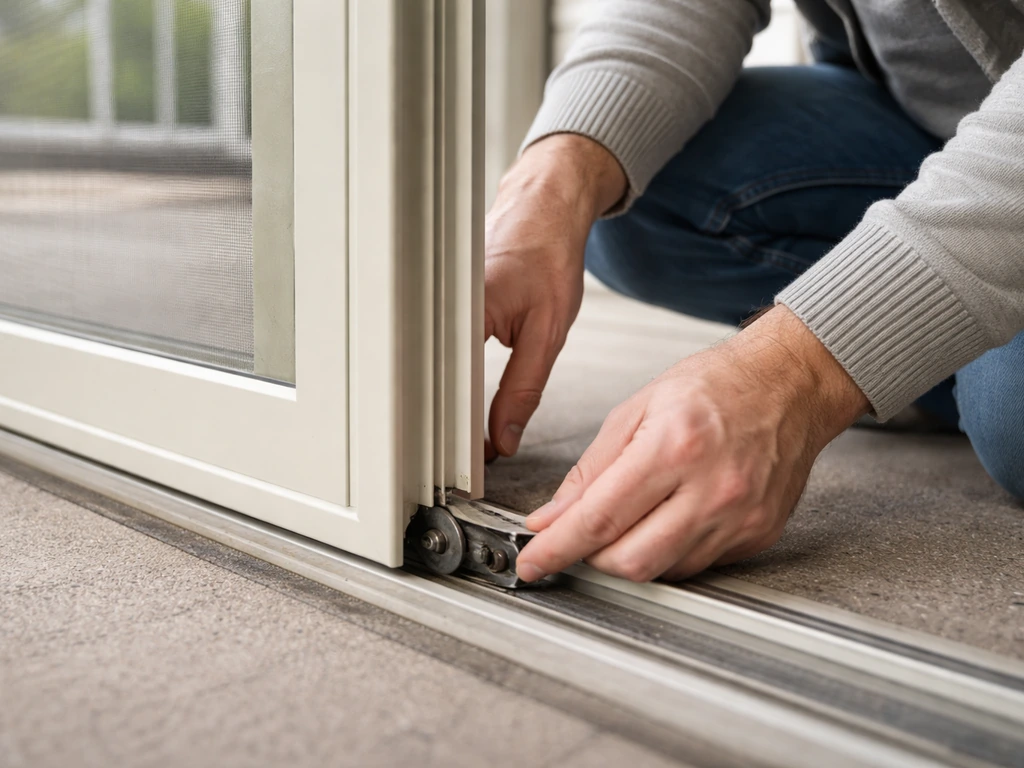
To remove a sliding patio screen door, lift it straight up into the top track until there's enough clearance, then tilt the bottom edge outward and pull the door free. That works on most standard aluminum or vinyl screen doors. If yours won't budge, you likely need to retract the rollers first using an adjustment screw at the bottom corners, or remove a head stop trim piece at the top of the frame before the door has room to lift. This guide walks you through the whole process, including the parts that usually trip people up.
How to Remove a Patio Screen Door Step by Step

Jamie Archer
30 Apr 2026
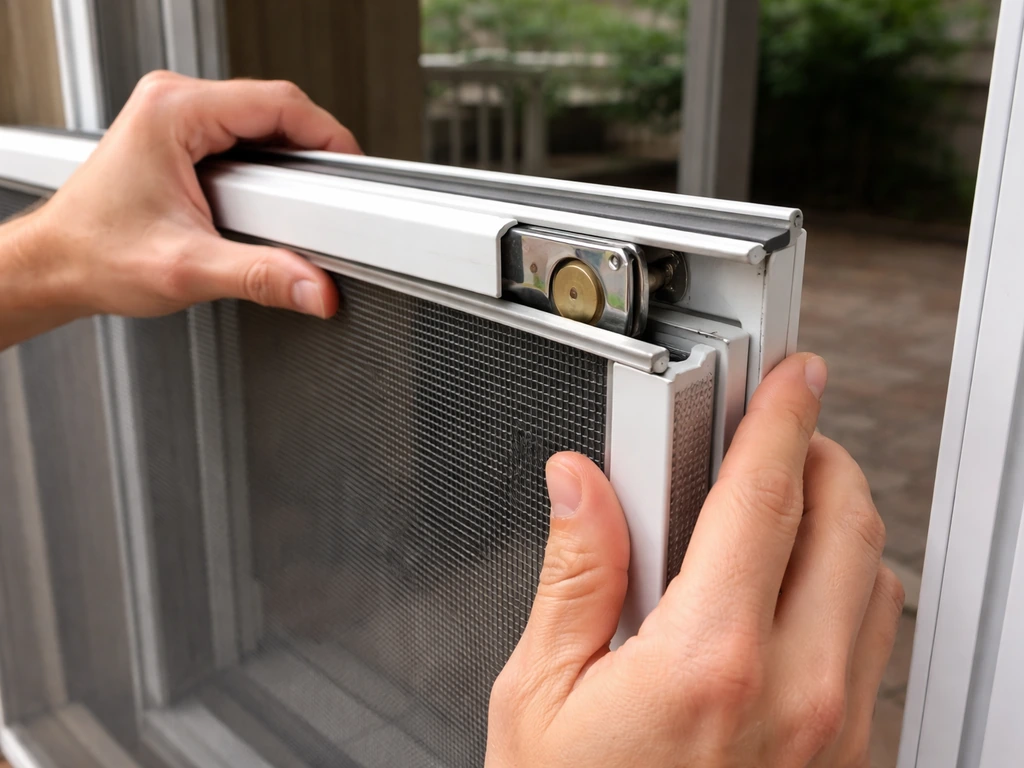
First, figure out which type of patio screen door you have
Before you touch anything, spend two minutes identifying your door. The removal method varies by frame material, roller type, and track system, and guessing wrong can damage the frame or screen mesh.
Check the frame material first. Most residential patio screen doors are aluminum or vinyl. Aluminum frames are stiffer and more durable but can bend if you twist them. Vinyl frames flex more and scratch easily, so they need a gentler touch during removal. Older homes sometimes have wood-framed screens, which are heavier and often painted or swollen into the track.
Next, look at the bottom corners of the door. On most standard sliding screen doors you'll find small roller assemblies, sometimes called roller housings, at the bottom corners. Look for a small slot or cap covering an adjustment screw. On some doors (including certain Andersen gliding insect screens) the roller adjustment screw is actually on the face of the door panel rather than the bottom edge, so check both spots if you're not finding it right away.
Also check the top of the door frame. Some doors have a fixed top roller or guide that slides into a channel in the upper track. Others just rely on the top rail fitting into the upper track groove. Knowing this matters when you go to lift the door out.
Finally, confirm whether you have a standard sliding screen door or a retractable screen door. A retractable screen rolls into a housing cassette mounted to the door frame and is removed completely differently. If your screen disappears into a box on the side of the door frame, skip to the special cases section below. Everything else in this guide is for standard sliding screen doors on tracks.
Tools and prep: what to grab before you start
This job doesn't need much, but having the right tools on hand prevents damage and frustration mid-removal.
- Flathead screwdriver (standard size, for adjustment screws and prying caps)
- Phillips screwdriver (for head stop screws if your door has one)
- Butter knife or thin putty knife (useful as a non-damaging lever)
- Vacuum with a crevice attachment (to clear the track before and after)
- Work gloves (aluminum edges are sharp, especially on older frames)
- A second person for heavier doors (full-height sliding screen panels can be awkward alone)
Clear the area on both sides of the door before you start. Move any patio furniture, potted plants, or rugs that could cause you to trip while you're holding a door panel. Lay a blanket or moving pad flat on the patio surface nearby so you have a safe place to set the door down without scratching or bending it.
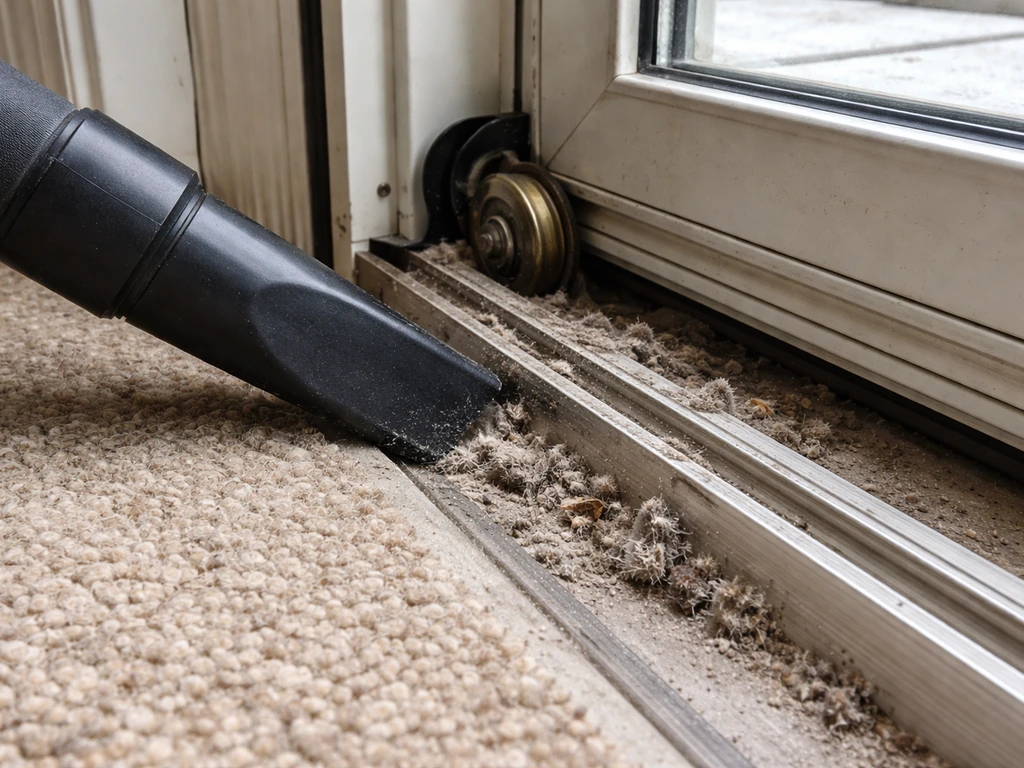
Slide the door to the open position and take a close look at the track. Packed dirt, debris, and dried grease in the bottom track are one of the most common reasons screen doors seem stuck. Vacuum out the bottom track now. It takes 60 seconds and sometimes solves the problem entirely before you even attempt removal.
How to remove a sliding patio screen door from the track
Work through these steps in order. Don't skip ahead to forcing the door if an earlier step hasn't been done.
- Slide the screen door to the fully open position. This puts it in the best spot to remove without interference from the door frame or fixed glass panel.
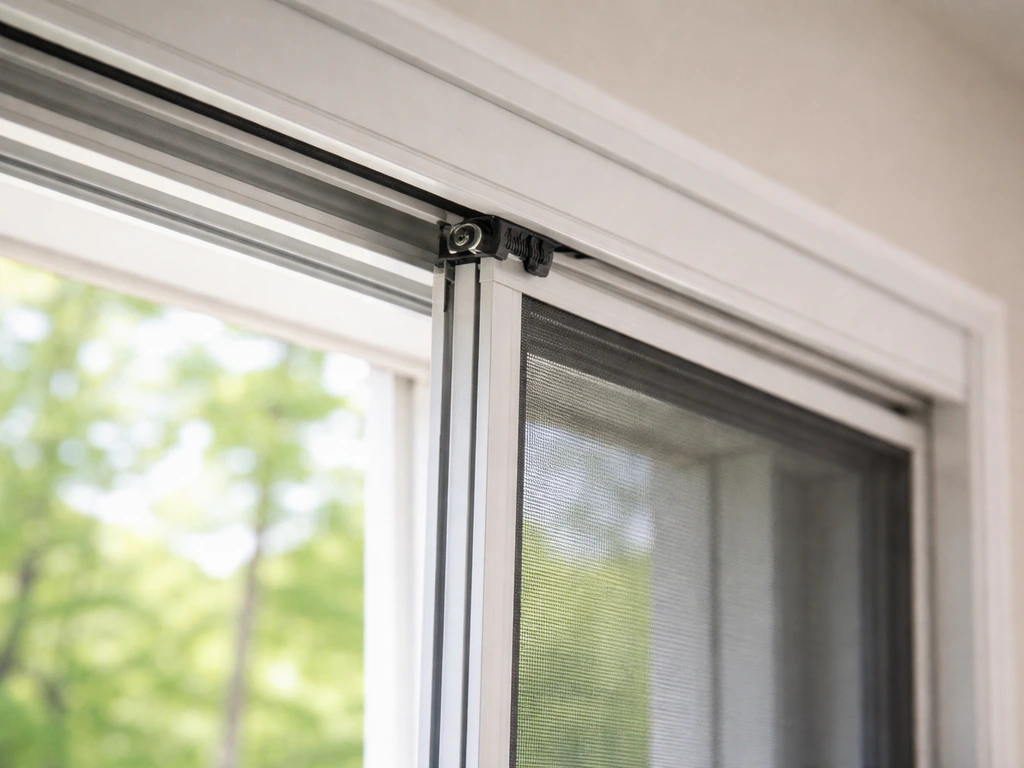
- Check for a head stop. Look at the top of the track where the door sits at the fully open position. Some installations have a small trim piece or plastic stop screwed into the head frame to prevent the door from sliding out accidentally. If you see it, back out its screws with a Phillips screwdriver and set it aside.
- Retract the rollers. Using a flathead screwdriver, locate the roller adjustment cap at the bottom corner of the door (you may need to pop off a small plastic cap first using the screwdriver or butter knife). Turn the adjustment screw counterclockwise to retract the roller upward. Do this on both bottom corners. Do not remove the roller bolts completely, just loosen them enough to raise the door's clearance in the track.
- Grip the door firmly on both sides with both hands, or have a helper hold the opposite side. Keep your grip near the top rail so you have control.
- Lift the door straight up into the top track channel. You're compressing the door into the upper groove to create clearance at the bottom. Most top tracks have about half an inch of extra depth for exactly this reason.
- Once lifted, tilt the bottom edge of the door outward toward you while keeping the top rail in the upper channel. The bottom rollers should clear the bottom track rail.
- Lower the door out at an angle and set it flat on your blanket or pad on the patio. Keep it upright or lay it carefully flat, never lean it unsupported against a wall where it can fall and bow the frame.
The whole process takes under five minutes on a door that's in decent shape. If you get stuck at any of these steps, keep reading.
Troubleshooting: when the door refuses to come out
Rollers won't retract or are seized
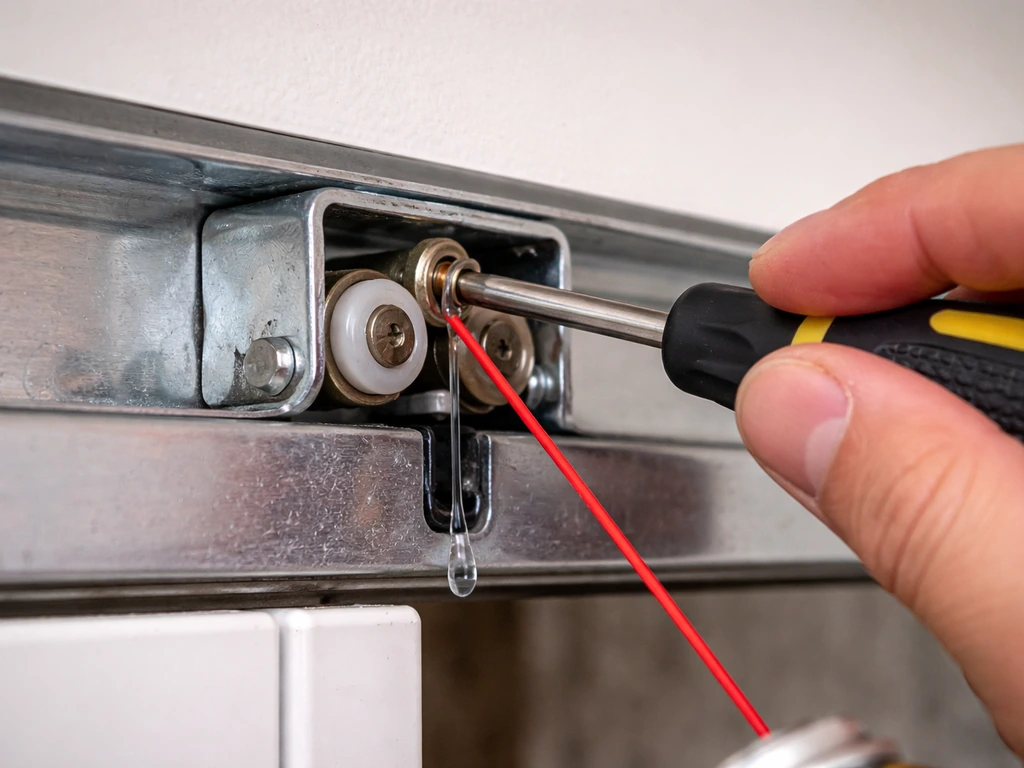
If the adjustment screw turns but nothing happens, the roller assembly may be corroded or packed with debris. Spray a small amount of penetrating lubricant into the roller housing, wait a few minutes, and try again. If the patio screen door is still stuck after lubrication, follow the rest of the steps for how to fix a patio screen door so it can lift out and slide smoothly again how to fix patio screen door. If the roller housing is the problem, fixing or replacing the damaged roller parts can get your patio screen door back on track. If the screw just spins without engaging, the roller mechanism is stripped. In that case, you can sometimes force the door up with a helper, one person lifting at each bottom corner while a third person guides the top rail, but this risks bending the frame. A better move is to call a screen door specialist if you're working solo.
Door won't lift high enough into the top track
This almost always means the head stop is still in place or the rollers haven't been retracted enough. Go back and double-check both. Also look for any screws or clips on the top rail of the door itself that might be catching in the upper channel.
Bottom track is jammed or the door drags badly
Heavy debris, dried grease, and small stones can pack into the bottom track groove and physically block the roller wheels. Vacuum the track thoroughly, then use a flathead screwdriver wrapped in tape to scrape out any compacted buildup without scratching the track surface. Once the track is clear, retry lifting the door.
Bent frame or warped bottom rail
A bent frame usually shows up as a door that binds in one spot even after the track is clean and rollers are retracted. Look along the bottom rail and side stiles for any visible bowing. If the frame is slightly bent, you may be able to ease it free by lifting one corner at a time while a helper works the other side. If the frame is severely bent or the aluminum is cracked, you're better off removing the screen mesh and replacing the door frame entirely rather than fighting it.
Rust on the track or roller hardware
Surface rust on the bottom track rail is common on older steel tracks. It creates a rough surface that catches the rollers. Apply penetrating lubricant and let it soak for 10 to 15 minutes before attempting removal. If the track itself is heavily corroded and pitted, plan to replace the track when you reinstall. Trying to run new rollers on a badly rusted track just recreates the problem.
Special cases: retractable screens, off-track doors, and different guide styles
Retractable screen doors
Retractable screen doors like those made by Larson are mounted differently from standard sliding screens and come out differently too. The screen housing is attached to the door frame with screws through the housing flange (typically four screws) and the sill has additional attachment screws at the bottom track bracket. To remove the unit, back out the housing flange screws first, then remove the sill screws. Do not try to pull the housing free before all screws are out, as the housing is light but the attachment points are close to where the spring mechanism sits and you can damage it.
Off-track doors
If your door has already jumped its track before you started, it's actually easier to remove in some ways because the bottom is already partially free. The risk is that the door is unstable and could fall. Have a helper hold it vertical while you guide the top rail out of the upper channel by tilting the door toward you at the top. Once the top rail is free, lower the whole door out. If the door is badly off-track and wedged, you may need to temporarily remove the bottom guide (the small plastic or metal piece that keeps the bottom of the door aligned) by backing out one or two screws before the door will come free without forcing. Putting the door back on track after repair is covered in the reinstall section below, and this is one of the more detailed sub-topics if you want to dig deeper into just that aspect of the job. If you need step-by-step help getting the rollers and top rail positioned correctly, follow the reinstall section for instructions on how to put a patio screen door back on track Putting the door back on track.
Removing the bottom guide
Some patio screen doors have a bottom guide, a small plastic or metal bracket in the center of the sill track that the bottom rail of the door straddles. If yours has one and it's preventing you from tilting the bottom of the door out, look for a screw holding it to the sill. Back that screw out and set the guide aside. These guides are inexpensive and easy to replace if they break.
Vinyl vs. aluminum frames: handling differences
| Frame Type | Main Risk During Removal | Handling Tip |
|---|---|---|
| Aluminum | Bending or creasing the corners | Lift evenly from both sides, avoid twisting |
| Vinyl | Cracking corner joints if cold, scratching if dragged | Work in warm conditions, use padded surfaces |
| Wood | Swelling in track, paint bonding to frame | Score the paint line with a utility knife first if stuck |
| Retractable housing | Damaging spring mechanism or mesh cassette | Remove all mounting screws before pulling the housing |
Reinstalling and checking your work
Before you put the door back, clean both the bottom sill track and the top head frame channel. Use a vacuum, then wipe both channels out with a damp cloth. Any grit left in the track will just grind against the new or repaired rollers and restart the problem. This step is worth doing right.
Reinstallation is the reverse of removal, but the sequence matters. Always seat the top of the door into the upper track channel first. Angle the door so the top rail goes up into the head frame groove, then swing the bottom in and lower the rollers down onto the bottom track. A thin screwdriver or putty knife used as a light lever at the bottom corner can help guide the roller wheel over the track rail edge if it's catching.
- Clean both tracks thoroughly before starting.
- Retract the rollers (turn adjustment screws counterclockwise) so the door is at its shortest height, giving clearance for installation.
- Angle the top rail of the door up into the head frame channel first.
- Swing the bottom of the door inward and lower the bottom rollers onto the bottom track.
- Adjust the roller height by turning the adjustment screws clockwise to lower the rollers until the door rides smoothly and the top rail doesn't rattle in the channel.
- Replace the head stop if your door had one.
- Reinstall the bottom guide if you removed it.
Final checks before calling it done
Slide the door back and forth several times. It should glide without catching, dragging, or wobbling. If it feels heavy or rough, the rollers probably need to come down a bit more (clockwise on the adjustment screw) or the track still has debris in it.
Check the latch. Open and close the screen door latch a few times and confirm it engages the strike plate cleanly. If the latch misses, you need to adjust the roller height slightly until the latch lines up. Most standard patio screen door latches have a little vertical play built in, so a small roller height adjustment is usually all it takes.
Finally, check the weather seal fit. Close the screen door and look along the sides and bottom for daylight gaps. A properly seated screen door should sit flush against the door frame's weatherstripping or pile seal. If you see a gap at the top or side, the rollers are probably set too high and the door is riding too low in the frame. Back the roller adjustments off slightly until the fit is snug. Getting this right is what prevents insects from finding their way around the door edge, which is the whole point of having a screen door in the first place.
If after reinstalling you're still dealing with the door popping off the track repeatedly, the issue is likely worn rollers that need replacing, a damaged track section, or a frame that's no longer square. Those are all fixable repairs that are worth tackling before buying a new door, and they follow naturally from the removal process you've already completed here.
FAQ
How do I remove a patio screen door safely if it feels heavy or unstable?
Wear gloves and eye protection, then support the door with a helper when you lift. Even “standard” sliding screens can drop a few inches when the bottom rollers clear the track, and that can bend the bottom rail if it hits the patio or catches on furniture.
My patio screen door won’t lift even after I try the roller adjustment screw. What should I check first?
Look for small plastic caps at the bottom roller housings and at the ends of the top rail. If you see a screw but it does not move the roller, the cap may be blocking access or the adjustment screw may be stripped, in which case lubrication and avoiding forced lifting is the safer first step.
What’s the best way to free the roller adjustment screw if it’s stuck or painted over?
If a cap or slot is sealed with paint or corrosion, warm the area with a hair dryer for a minute or two, then try the screw again. For stuck fasteners, penetrating lubricant works better than dry spraying, and you should wait a few minutes before retrying to avoid stripping the screw head.
Should I clean the top track too, or is cleaning the bottom track enough?
Yes. Before removal, vacuum the bottom track and also check the top track channel for grit, especially if the door has squealed or scraped before. Wiping the top channel matters because dirty rollers can re-cock the door on reinstall and make removal harder the next time.
Can I still remove the door if the frame looks slightly bent or bowed?
If the door is bent but you still want to remove it, lift one bottom corner at a time while your helper steadies the opposite side. Go slowly and stop if you feel a hard bind, because forcing can crack aluminum or distort the top rail so it no longer sits in the upper channel.
What should I do if the door is severely wedged in the track?
Remove the mesh from the frame rather than trying to wrestle a badly wedged door out, especially if you see cracks or severe deformation near the bottom corners. A frame replacement is typically less risky than repeatedly forcing a twisted guide rail that keeps catching.
My door has a bottom guide. How do I know if I should remove it before lifting?
If the door has a bottom guide bracket (often in the center of the sill), confirm whether it is screwed to the sill track or clipped in. Backing out the correct screw for that guide usually prevents bending the bottom rail and avoids damaging the guide when you tilt the door out.
What’s the safest way to guide the roller wheel over the track edge if it’s catching?
Use the smallest lever pressure possible at one corner, and avoid prying against the screen mesh. If a putty knife or thin screwdriver helps you “walk” the roller over the track edge, keep it controlled, because excessive leverage can scratch the frame or warp the roller housing.
How can I tell whether the problem is the rollers versus the track?
Replace the roller housings or roller wheels if you see wobble, flat spots, or visible corrosion on the roller itself. Also inspect the track surface for pits or grooves, because new rollers on a rough track often fail quickly and can make removal feel stuck again.
After reinstalling, my latch misses the strike plate. How should I adjust without creating gaps?
If your latch does not engage after reinstall, adjust the roller height in small increments and verify that the door closes with the weather seal lightly compressed. If you adjust too far, you can create gaps at the top or sides that defeat the whole insect barrier purpose.
Is it harder or easier to remove a patio screen door that already jumped its track?
Yes, doors can be removed even when off-track, but stabilize first. Have a helper hold the door vertical, then guide the top rail out of the upper channel by tilting toward the patio, and only remove the bottom guide as needed when the door is wedged.
Next Article
Fix Patio Screen Door: DIY Troubleshooting and Repairs
Step-by-step fixes for a patio screen door: troubleshoot sagging, misalignment, broken rollers, latch issues, and wind l