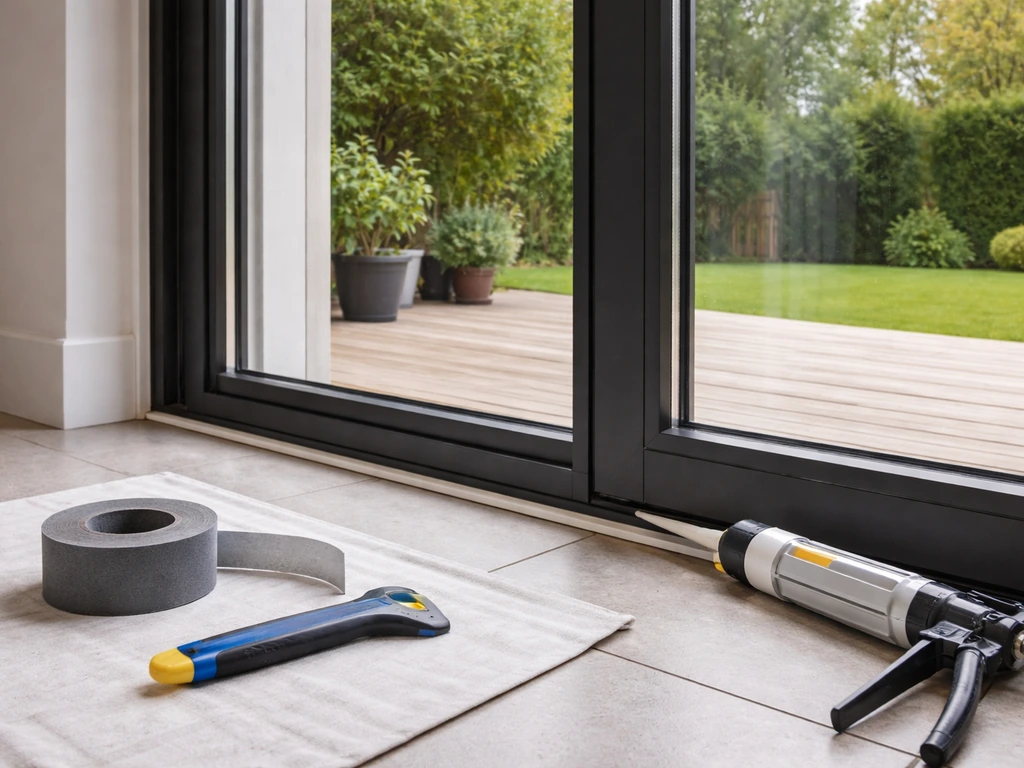
The fastest fix for patio door privacy today is window film for a permanent-feeling solution you can install in an hour, or a floor-length curtain rod mounted 4–6 inches above the door trim if you want something you can open and close. Either works well, but the right choice depends on how much privacy you actually need, whether you rent or own, and whether you want to block the view completely or just soften it. Here's how to pick, measure, and install the option that fits your door and your situation.
How to Cover Patio Doors for Privacy: DIY Options

Jamie Archer
23 Jun 2026
Quickly choose the right privacy level (and day/night expectations)
Before you buy anything, be honest about when you actually need privacy. Daytime-only exposure (neighbors can see in while you're having coffee) is a very different problem from night privacy (everyone outside can see you clearly when the lights are on inside). This distinction matters because the most common mistake people make is installing reflective or one-way window film and assuming the job is done, then discovering at night that the effect completely reverses. One-way mirror film works because of a light differential: when it's brighter outside than inside, you see out but they can't see in. After dark, that flips. If you have interior lights on, you become the bright side, and anyone outside can see right in.
Privacy screens, freestanding panels, and frosted film block views in both directions regardless of time of day, so those are better all-day-and-night options if that's what you need. Curtains and blinds work around the clock as long as you actually close them, but sheers alone won't cut it at night. A layered approach (sheers during the day, opaque curtains or blinds closed at night) gives you the most flexibility for a sliding glass door that also serves as a main light source in your room.
| Option | Day Privacy | Night Privacy | Blocks Light | Renter-Friendly | Door Still Opens |
|---|---|---|---|---|---|
| Reflective/one-way film | Yes | No (reversal) | Partial | Yes (static cling) | Yes |
| Frosted/etched film | Yes | Yes | Partial | Yes (static cling) | Yes |
| Sheer curtains | Partial | No | No | Yes | Yes |
| Opaque/blackout curtains | Yes | Yes | Yes | Yes | Yes |
| Vertical blinds | Yes | Yes | Adjustable | Yes | Yes |
| Roller/panel track shade | Yes | Yes | Adjustable | Yes | Yes |
| Freestanding privacy screen | Yes | Yes | Partial | Yes | Yes (outside door) |
Measure your patio door and check constraints before you buy
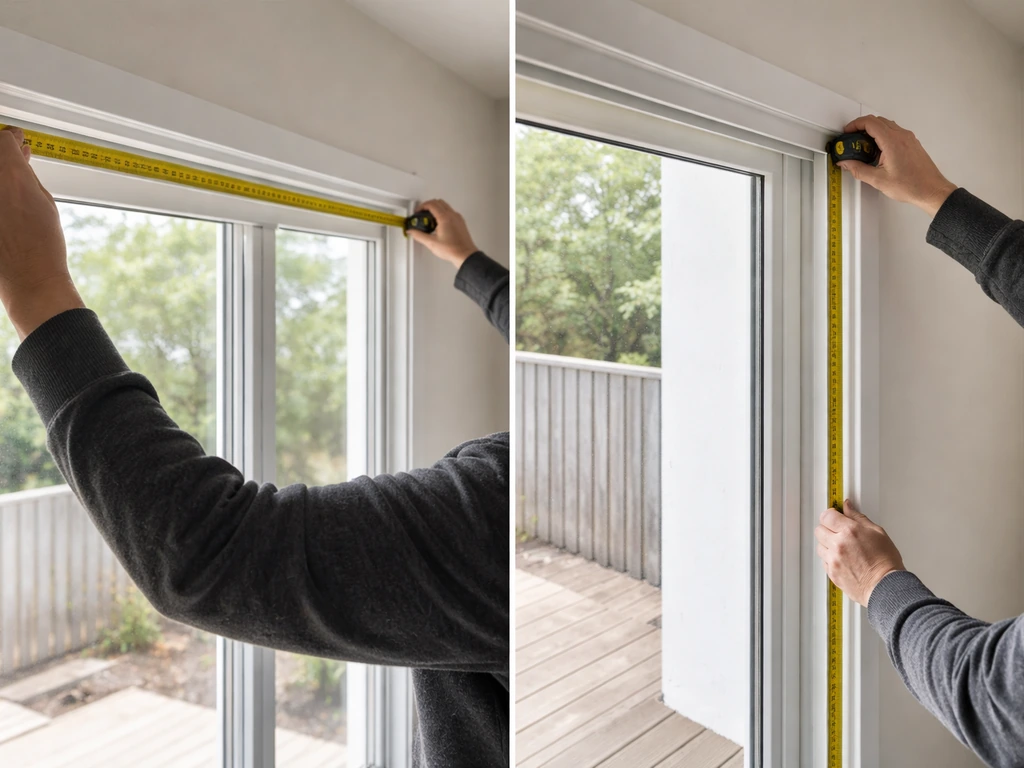
Get your tape measure out before ordering anything. A standard sliding glass door panel is typically 60–72 inches wide and 80 inches tall, but the full door assembly including trim can be several inches wider on each side. Measure the actual glass width (inside edge to inside edge of the frame), the full frame width including trim, and the height from the floor to the top of the trim. Write down all three numbers because inside-mount and outside-mount options use different measurements.
Inside mount vs outside mount
Inside mount means the hardware sits within the door frame recess. The problem with sliding patio doors is that the frame depth is often very shallow, and the door handle sticks out into that space. Vertical blinds and roller shades with an inside mount frequently hit the door handle or the door itself as it slides, which causes snags, damage, and gaps.
Outside mount (hardware mounts on the wall or trim face, outside the frame opening) almost always works better for patio doors because you're not fighting handle clearance. For outside-mount blinds or shades, add at least 3 inches of overlap on each side past the molding edges, which gives you a 6-inch total overlap for light blocking. Panel track systems recommend at least 4 inches of overlap on each side (8 inches total) for full coverage.
Renters vs owners
If you're renting, your best options are anything that doesn't require drilling into walls or door frames: tension rod curtains, static cling window film, freestanding privacy screens, and temporary adhesive hooks. Static cling film is the cleanest renter option because it leaves zero residue and peels off when you move out. If you're an owner, all options are on the table and outside-mount hardware gives you the most flexibility long-term.
Curtains and drapes: how to hang them so they actually slide and close properly
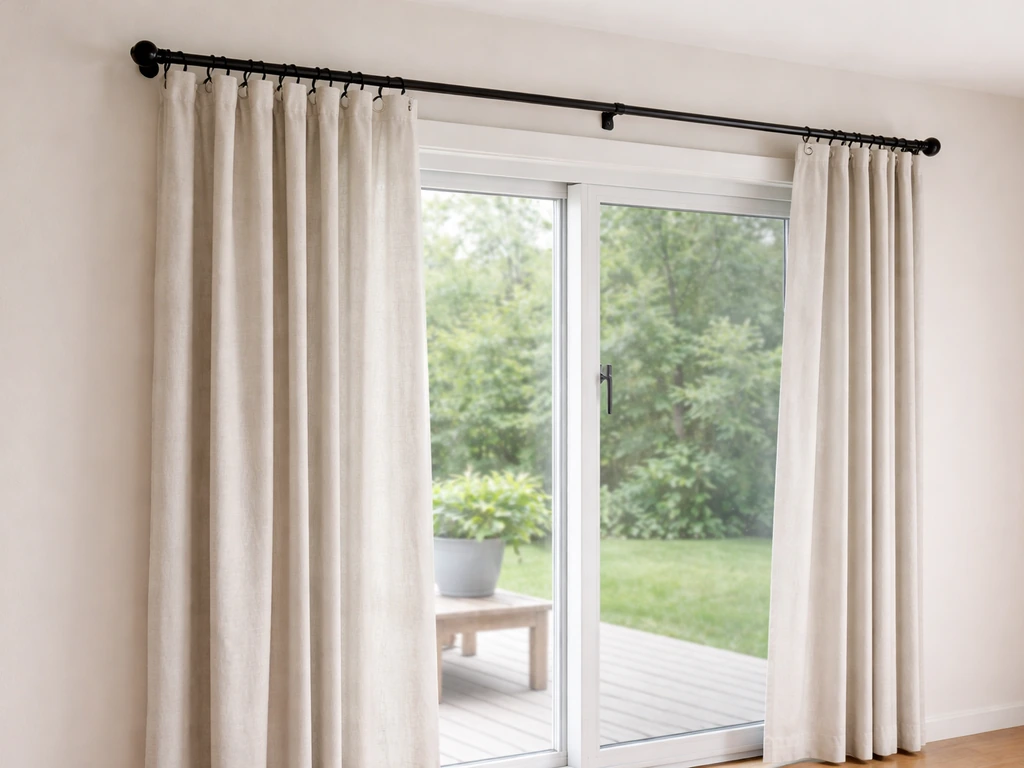
Curtains are the most popular patio door privacy solution and they work great when installed correctly. The key is mounting the rod high and wide enough that the curtains can actually travel and cover the full opening without bunching, snagging on the trim, or leaving gaps at the edges. If you want, you can also apply these same measuring tips to how to cover patio doors when you choose film, blinds, or curtains.
Rod placement and sizing
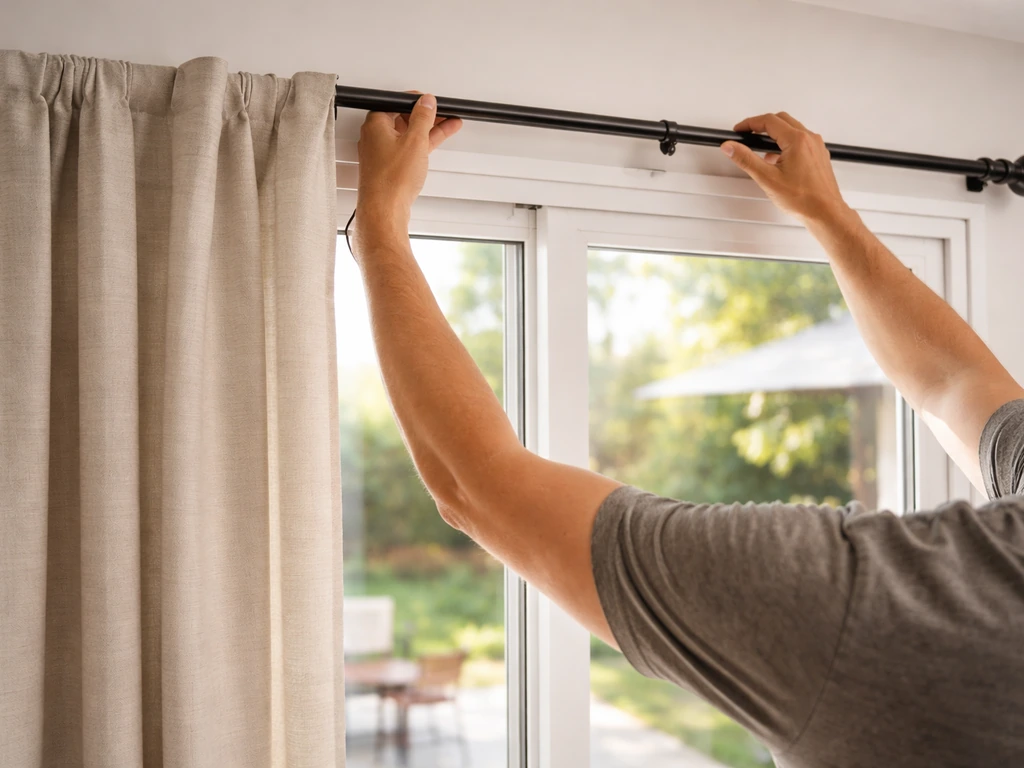
Mount the rod 4–6 inches above the door trim, or higher if you want a ceiling-height look that also reduces top-edge light gaps. [Extend the rod 6–12 inches beyond the door frame on each side. ](https://www. hunker.
com/2062748/cover-sliding-glass-doors-hang-curtain-to-ceiling/) This extension is critical: it gives the curtain panels a place to stack when the door is open, so the fabric isn't hanging in front of the sliding path. It also means when you close the curtains, they overlap the wall on each side rather than barely reaching the frame edge. Overlap of 4–6 inches past each side of the door frame is the minimum for preventing side-gap light bleed.
Floor-length panels (with about a half-inch clearance from the floor, or a slight puddle if you prefer that look) close off the bottom gap better than panels that stop at the sill.
Choosing the right curtain system for a sliding door
A traverse rod with a center-open draw is the most functional option for sliding glass doors because it splits the curtain panels and each side slides independently, matching how the door operates. Bypass rings on a standard rod also work. What doesn't work well is a simple rod with grommets where you have to physically push panels all the way to one end to open the door, which creates a bulky stack that can interfere with the sliding path and looks messy. For nighttime privacy, use lined or blackout curtain panels. Sheer panels layered behind them give you daytime softness while you keep the blackout panels open.
Day and night layering
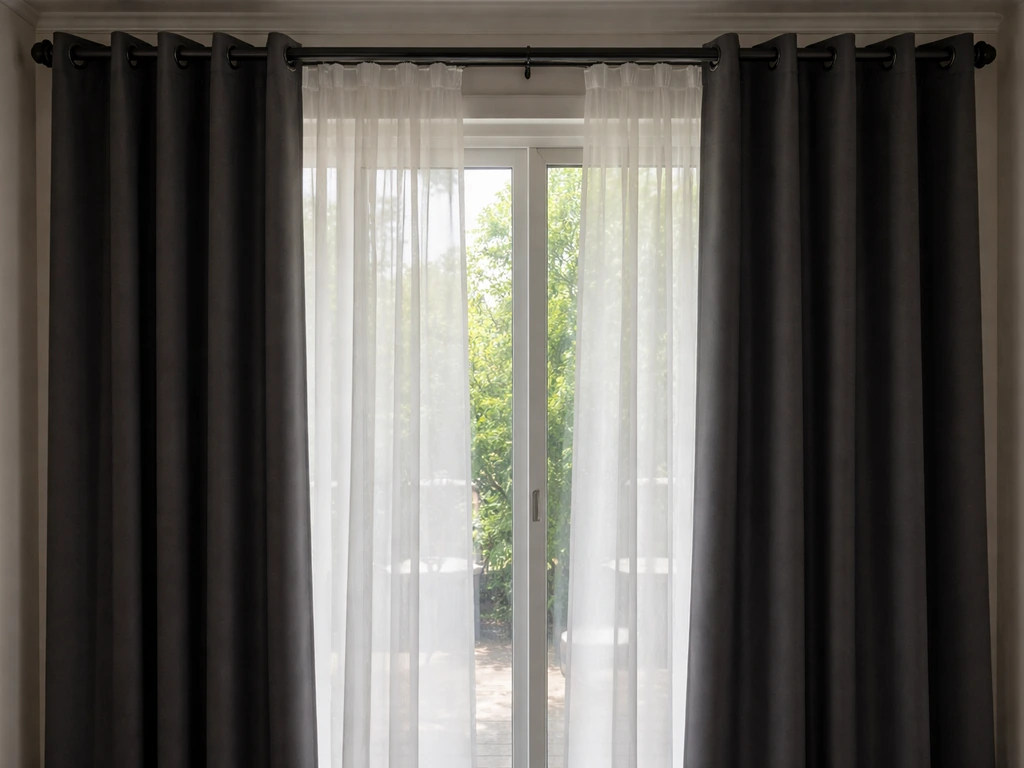
The cleanest setup for a street-facing or neighbor-facing patio door is a double rod: sheer panels on the inner rod for daytime diffusion, blackout or opaque panels on the outer rod for night. During the day you close the sheers and the view from outside is blurred. At night you close the opaque panels and nothing shows through. This approach also works well if you care about insulation in winter, since layered fabric adds a meaningful thermal barrier.
Blinds and shades: inside vs outside mounting for patio doors
Vertical blinds have been the default patio door treatment for decades for a good reason: the vanes pivot to control light and angle, and the whole system slides along its track the same direction the door does. They work. The main complaints are about gaps between vanes and the light that bleeds through at the edges, both of which are solved by going outside mount with adequate overlap.
Vertical blinds
For outside-mount vertical blinds, measure the full width of the door opening including trim, then add 3 inches on each side (6 inches total) for light blocking overlap. For height, measure from the mounting point down to the floor and subtract about 3/4 inch so the vanes don't drag. Dragging vanes wear out faster and leave gaps as they angle away from the floor. Outside mount avoids the door handle clearance problem entirely and is the recommended approach for most sliding patio doors.
Panel track shades
Panel track systems are a modern alternative to vertical blinds that use wide fabric panels on a ceiling or wall-mounted track. They look cleaner and offer the same function. For outside mount, overlap the opening by at least 4 inches on each side. The headrail adds height, so account for it in your measurement from ceiling/mounting point to floor. Panel tracks work best when the track is installed well above the door frame so panels can stack to the side without blocking the door.
Roller shades
A single roller shade over a patio door works if you don't need to use the door frequently. It's less practical for a door you open multiple times a day because you have to raise it fully to clear the opening. That said, for a door you use occasionally (like a back patio door in winter), a blackout roller shade is an excellent privacy and insulation solution.
If you want a more snug, draft-reducing setup, follow the Frost King patio door insulation kit instructions for measuring, placement, and sealing along the edges. If you go inside mount, check your frame depth first: shallow frames will cause the bracket to protrude into the room, which may interfere with the door itself. Outside mount is again the safer choice.
Window film and removable privacy options
Window film is the best option when you want privacy without changing the look of the room much, want to keep natural light flowing, or can't or don't want to hang hardware. There are two main types that apply to patio doors: frosted/etched film and reflective/one-way film. Both go directly on the glass and don't affect how the door slides.
Frosted and etched film
Frosted film diffuses the view through the glass in both directions. People outside see shapes and light but not detail. It works during the day and at night, which makes it more reliable than reflective film for around-the-clock privacy. Light still comes through, which is a big plus for doors that serve as your main natural light source. Static cling versions (no adhesive) are the easiest to install and remove with no residue, making them ideal for renters. Adhesive versions bond more firmly and look slightly cleaner long-term but require more care to remove.
Reflective and one-way film
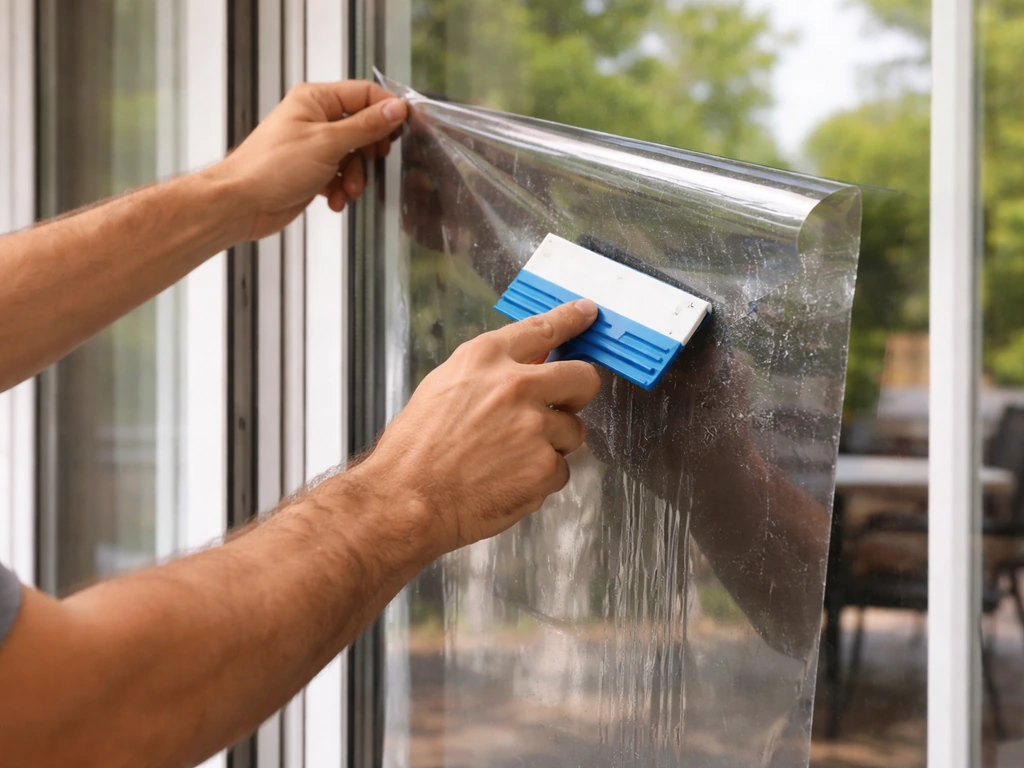
Reflective film gives a mirror appearance from outside during the day, meaning people outside see their reflection rather than your interior. It genuinely works well for daytime privacy, especially on street-facing doors where you want to keep the glass look without curtains. The limitation is night performance: once your interior lights are brighter than the outside, the mirror effect reverses and you become visible. You need a supplementary option (closing curtains, turning off interior lights, or using exterior lighting to rebalance the differential) for night privacy if you go this route.
How to install window film on a patio door
- Clean the glass thoroughly with a streak-free cleaner. Film adhesion and cling performance both depend on a dust- and oil-free surface.
- Cut the film slightly larger than the glass panel, about 1/2 inch extra on each edge.
- Spray the glass generously with a water and mild soap solution (a few drops of dish soap per quart of water).
- Peel the backing and apply the film to the wet glass, starting from the top.
- Use a squeegee to push air and solution out from the center toward the edges in firm, overlapping strokes.
- Trim the edges with a utility knife and straight edge, leaving a clean line at the frame.
- Let it cure for 24–48 hours before evaluating clarity and adhesion.
Removing film if you need to
Use a hair dryer on medium heat to warm the film before peeling. Work in small sections, keeping the heat moving so you don't concentrate it in one spot (prolonged heat in a single area can stress the glass). Peel slowly at a low angle. Any adhesive residue left behind comes off with a little rubbing alcohol on a soft cloth. This process is straightforward on static cling film since it pulls off cleanly without heat.
Privacy screens and external covers that don't block the door
Sometimes the right solution is on the outside of the door rather than on the glass or in the frame. External privacy screens are especially useful when you want to create a private patio area without doing anything to the door itself, or when interior treatments would block too much light or feel claustrophobic.
Freestanding privacy panels
Freestanding privacy screen panels can be positioned on your patio to block sightlines from a neighbor or street without touching the door frame at all. They're typically 6 feet tall and can be arranged in an L or straight line to cover the viewing angle you're worried about. These work especially well for ground-floor patio doors where the exposure is from ground level. They're completely renter-friendly, portable, and don't interfere with the door's operation, lock, or track in any way.
Retractable outdoor screens and side awnings
Retractable side-mount privacy screens are wall-mounted near the door and extend outward to create a screen barrier on the patio. They're designed to be retracted when not in use, which keeps them out of the way when you want open access. These need to be mounted to a wall surface adjacent to the door (not to the door frame itself), and you should verify they don't obstruct the door's sliding path or screen door operation when extended. Check the door swing and screen door path before placing any external screen anchors.
What about your existing screen door?
A standard insect screen door provides airflow but zero privacy. If you want airflow and privacy from a screen door, there are retractable screen systems available for patio doors that include a privacy mesh rather than standard insect mesh. These are more of a replacement/upgrade than a cover, but they're worth knowing about if you use your patio door primarily for ventilation and don't want to block that with film or blinds.
Installation tips, troubleshooting, and keeping privacy without killing security
Common installation problems and how to fix them
- Curtains snagging on the door trim or handle: The rod isn't extended far enough past the frame. Extend brackets so curtain panels stack fully clear of the door opening when open.
- Light gaps at the sides of blinds or shades: You need more overlap. Add 3 inches per side minimum for vertical blinds and 4 inches per side for panel tracks and roller shades.
- Film bubbling or not adhering: The glass wasn't clean enough before application, or you didn't use enough soapy water during install. Static cling film can be peeled off and reapplied. Adhesive film that has cured with bubbles needs to be removed and replaced.
- Vertical blind vanes dragging or uneven: Bottom clearance is too close to the floor. Remeasure and shorten vanes so they stop 3/4 inch above the floor.
- Curtains too heavy to slide smoothly: Switch to a traverse rod with carriers, which slides fabric panels much more smoothly than ring-on-rod systems, especially for heavier blackout panels.
- Film peeling at corners: The edge wasn't trimmed close enough to the frame, leaving an exposed flap. Re-trim tightly with a utility knife and press edges firmly into the frame seal.
Don't let your privacy solution create a security problem
Any covering that hangs in front of the door needs to be clear of the lock and door handle. If you have to push fabric aside or lift a blind to operate the lock, that's a setup you'll stop using, which means you'll stop locking the door consistently.
Make sure vertical blind carriers or shade brackets don't interfere with the latch mechanism or the door's secondary security bar (a cut-down rod or security bar in the track is common and effective). Timeless roller shade installation instructions from SelectBlinds include inside-mount bracket mounting guidance and diagram marking points to help position the headrail brackets so they don't intrude into door hardware zones, supporting smoother latch operation [shade brackets don't interfere with the latch mechanism](https://cdn. selectblinds. com/documents/rollershades/installation-instructions/timeless-roller-shades-installation-instructions.
pdf). Film doesn't interfere with any hardware at all, which is one of its underrated advantages. If you're using a secondary bar or pin in the track for security, make sure any outside-mount bracket placement doesn't block access to it.
Maintaining light and airflow while staying private
The biggest complaint about patio door privacy treatments is that they kill the natural light that made the patio door worth having in the first place. Frosted film is the best at preserving diffused light while blocking views. Sheer curtains do the same during daylight hours. Vertical blinds and panel tracks in a semi-opaque fabric let you angle the vanes or panels to control both light and privacy simultaneously.
If airflow is also a priority, film is your only treatment that provides privacy without any blockage of the door opening itself, since you can still slide the door open fully behind it. If you also want to soundproof patio doors, focus on sealing gaps around the frame and using heavier insulating treatments or acoustic weatherstripping how to soundproof patio doors.
A quick note on related door improvements
If you're already improving your patio door setup, it's worth thinking about whether the door also has gaps around the frame that affect insulation or whether the door needs weatherstripping work done alongside your privacy treatment. Once you’ve tightened up the insulation and weatherstripping around the frame, add a winter-ready curtain, shade, or film layer to reduce drafts through the glass too insulation around the frame. A layered curtain setup that improves night privacy also adds meaningful thermal insulation, which connects directly to keeping the door performing well through winter. Similarly, any film or screen solution you install now should be compatible with any seasonal weatherproofing work you might do later.
FAQ
How do I get privacy at night without giving up the option to use the patio door normally?
Choose treatments that block from both sides at night, like frosted film, blackout or lined curtains, or blackout roller shades. If you use reflective film, pair it with a nighttime plan (close curtains or turn off interior lights) because the mirror effect reverses when indoor lighting is brighter.
Will window film still provide privacy if my patio door is close to a bright interior light?
It can, but placement and lighting matter. If you have strong lamps close to the glass, reflective film is more likely to lose effectiveness after dark. For consistently reliable privacy, frosted or etched film is the safer choice because it works in both directions day and night.
What’s the best way to prevent light gaps at the sides and top of curtains?
Mount the curtain rod outside the frame (extend 6 to 12 inches past the door on each side) and set the rod high (4 to 6 inches above trim, higher for a ceiling-height look). Use floor-length panels and aim for a small clearance at the bottom so the gap is minimal when the curtains close.
Can I use an inside-mounted blind or shade on a sliding patio door?
Sometimes, but shallow frames and protruding handle clearance often cause snags and leave gaps. If the blind or shade bracket hits the door handle or interferes with the track movement, switch to an outside-mount system, which avoids the recess depth problem entirely.
How much overlap should I use for vertical blinds versus panel track systems?
For outside-mount vertical blinds, plan at least 3 inches past each side of the opening (about 6 inches total). For panel track systems, aim for at least 4 inches past each side (8 inches total) to reduce edge light bleed.
What’s the safest renter-friendly option if I can’t drill into the wall or frame?
Static cling window film is usually the cleanest no-drill choice because it removes without residue. Other renter-friendly options include tension rod curtains, freestanding privacy screens, and temporary adhesive hooks, but always verify they do not interfere with the sliding path or lock hardware.
If I want to use sheer panels during the day, what do I do for true night privacy?
Use a layered setup with an outer set of opaque or blackout curtains (or panels) for nighttime. Sheers alone soften the view in daylight but typically do not stop detailed visibility after dark when indoor lights are on.
How do I choose between a single rod and a double rod for a street-facing patio door?
A single rod works if you only need daytime privacy or you are fine with curtains being the main nighttime barrier. A double rod is better when you want flexible control, outer blackout or opaque panels for night, inner sheers for daytime diffusion, and a cleaner “nothing shows through” result after dark.
My curtains bunch when I open the door. What should I adjust?
Most of the time, the rod position or placement beyond the frame is wrong. Make sure the rod is mounted high enough and extends well past the opening (6 to 12 inches each side) so panels can stack on the wall instead of hanging across the sliding path.
Can I combine patio door privacy treatments with security features like a secondary lock bar?
Yes, but confirm clearance. If you use a secondary bar or pin in the track, ensure brackets and curtain hardware do not block access or interfere with how you lift or slide the security mechanism. Film is usually the least disruptive because it sits on the glass only.
What’s the best privacy option if I also want airflow and I use the door frequently?
Window film is often the best fit because it does not block the opening, and you can still slide the door fully. If you want ventilation through a screen, look for retractable privacy mesh screen systems rather than standard insect screens, which provide little to no privacy.
How can I keep privacy treatments from interfering with the door handle and lock?
Clearance is the key. When installing any hanging solution, confirm the lock and handle remain reachable without moving fabric or lifting panels. For blinds or shades, outside mount typically prevents bracket-to-handle interference common with inside mount on sliding doors.
Next Article
How to Soundproof Patio Doors: DIY Steps That Work
Step-by-step DIY guide to soundproof patio doors: seal gaps, fix tracks and glass, add layers, and maintain securely.