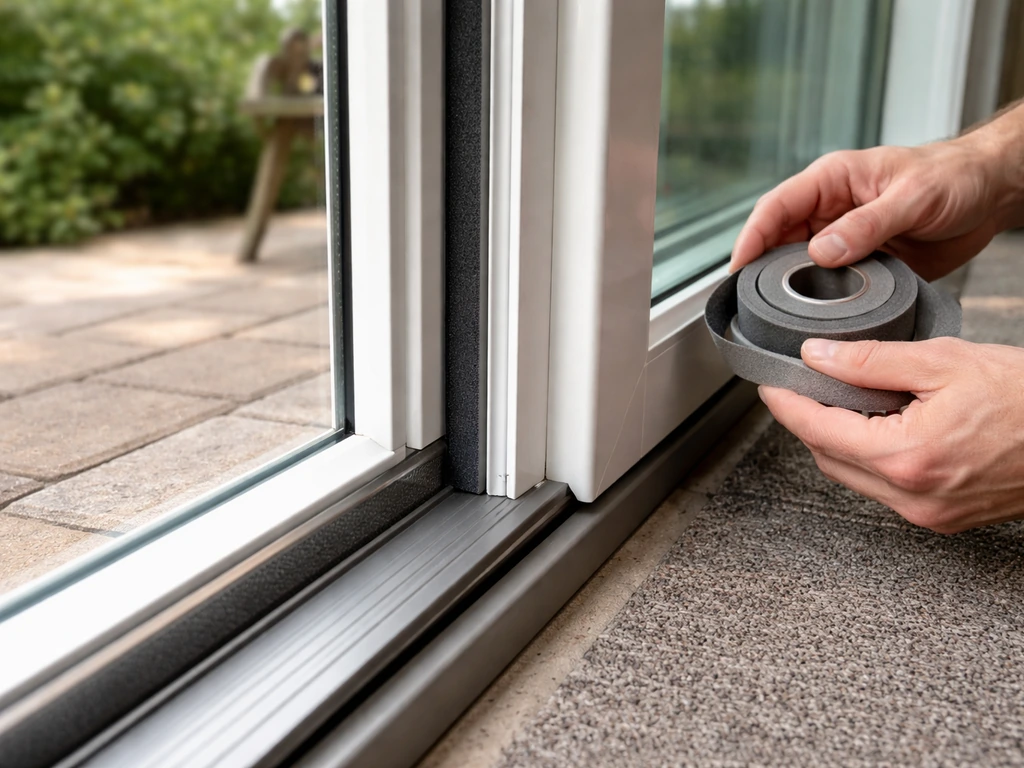
The best way to cover a patio door depends on what you're actually trying to solve. For privacy and light control, vertical blinds, panel track blinds, or cellular shades are the go-to options. If you specifically want how to cover patio doors for privacy, vertical blinds, panel track blinds, or cellular shades are usually the easiest ways to get both coverage and smooth operation. For insulation and draft sealing, you want weatherstripping on the frame plus either a cellular shade or an interior storm panel over the glass. For a decorative or semi-permanent fix to the glass itself, adhesive window film works well and installs in under an hour. The main challenge with patio doors, especially sliding ones, is choosing a covering that doesn't interfere with how the door moves, locks, or stacks when open. Get that part right from the start and the rest is straightforward.
How to Cover Patio Doors: Sliding and Window Options

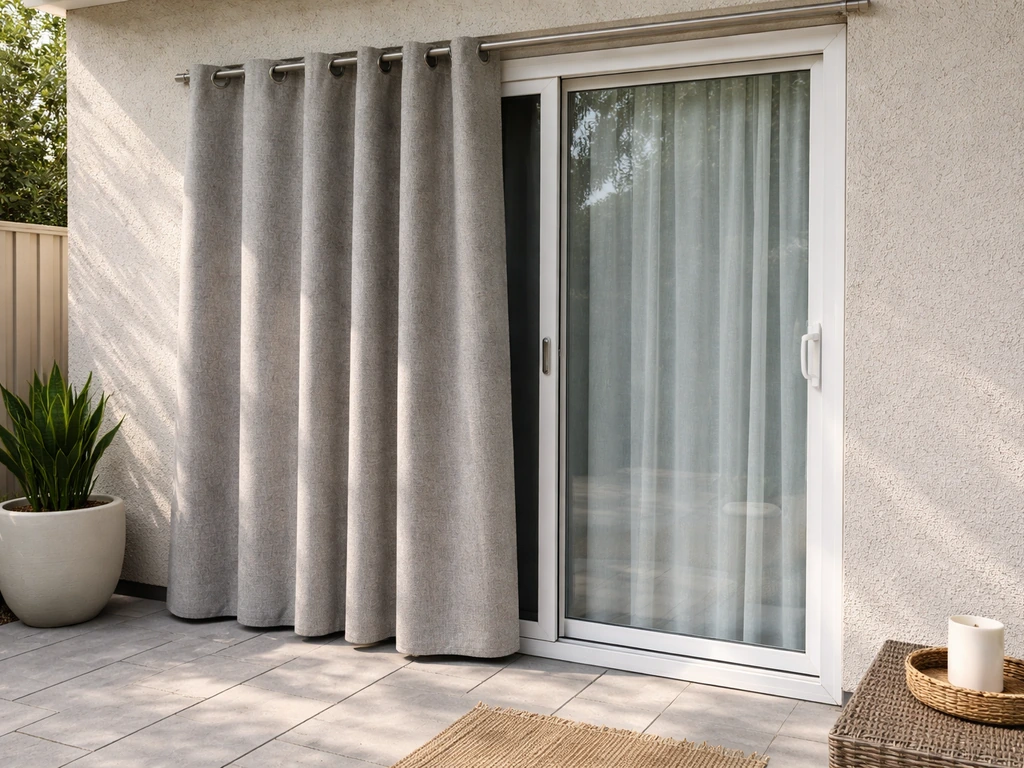
What's your actual goal? Privacy, insulation, light control, or weatherproofing
Before you pick a product, be clear about what you need, because the right answer changes a lot depending on your priority. These four goals often overlap, but they don't always call for the same solution.
| Goal | Best covering type | Notes |
|---|---|---|
| Privacy (daytime and night) | Cellular shades, vertical blinds, window film | Film works 24/7; shades/blinds can be adjusted |
| Light control / blackout | Cellular blackout shades, panel track with blackout fabric | Look for a tight side-channel system to kill edge glow |
| Insulation / heat loss | Cellular (honeycomb) shades, interior storm panel, magnetic storm insert | Cellular shades with side tracks add the most R-value |
| Weatherproofing / draft sealing | Center-post weatherstrip, door frame weatherseal, door sweep | Frost King patio door weatherstrip targets the gap between glass panels |
| Security / forced-entry resistance | Security film on glass, sliding door bar, secondary lock | Covering doesn't replace a physical security device |
If you want insulation specifically, the covering for the glass is only part of the picture. Gaps at the center post (where the sliding panel meets the fixed panel) and along the door frame are often where the most cold air gets in. Covering the glass with a cellular shade helps, but pairing it with a good weatherstrip on that center gap will make a bigger difference than either fix alone. That draft-sealing side of things is closely related to full winter weatherproofing, worth reading up on that topic separately if cold air is your main complaint.
Sliding patio doors vs. swinging patio doors: covering them differently
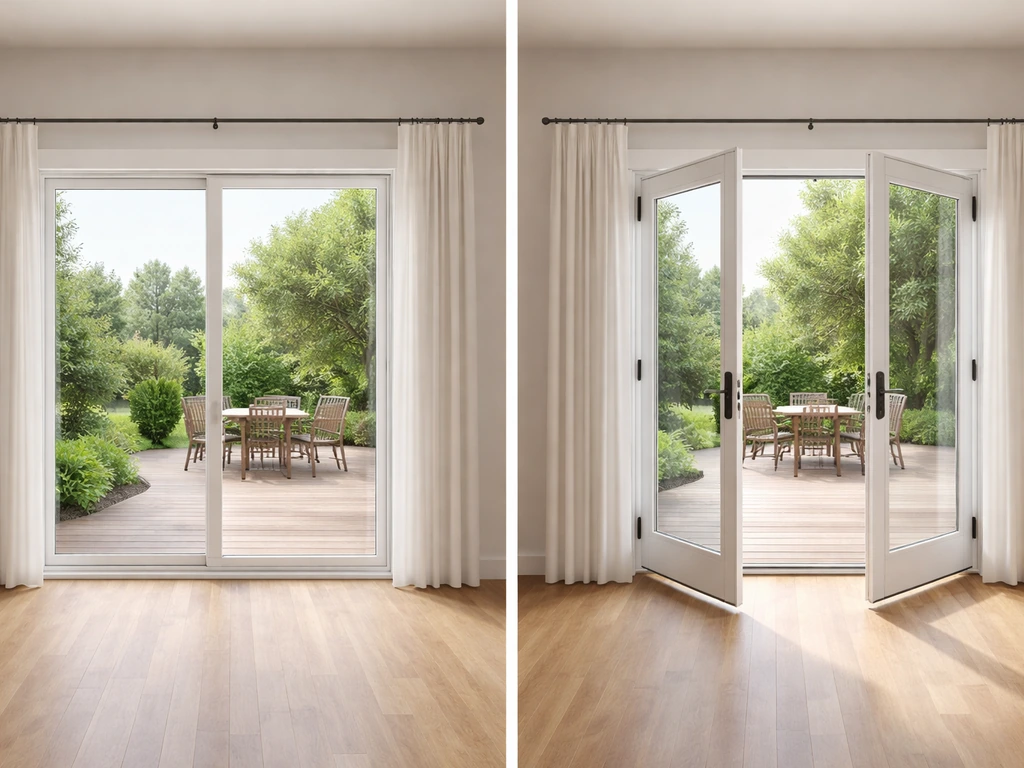
Sliding doors and French-style swinging patio doors have completely different operational constraints, and those differences should drive your covering choice.
Sliding patio doors
The sliding panel stacks behind the fixed panel (or into a pocket) when you open it. That means your covering needs to either stack out of the way with the door or be mounted on the wall beyond the door's travel range. Vertical blinds are the classic choice here because the vanes rotate open and the whole stack swings clear of the door opening. Panel track blinds work similarly. A cellular shade mounted above the door can work too, but only if it's raised fully before you slide the door open, otherwise you'll bang the shade into the door frame or snag it on the handle.
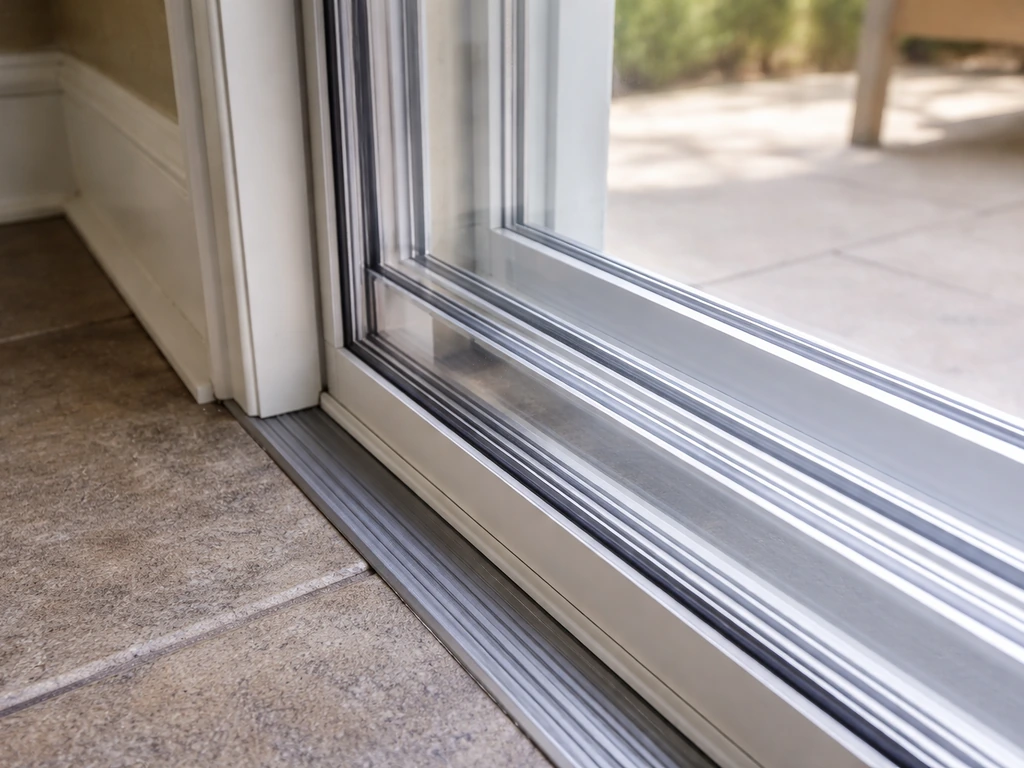
Also think about the track and screen. Your floor track needs to stay clear. Don't use floor-length drapery panels that pool on the floor near the track, and don't mount a cornice or hardware so low that it blocks the door handle or the screen door from sliding. Measure the handle clearance before you order hardware.
Swinging (French) patio doors
French doors swing inward or outward, which eliminates the sliding-stack problem but creates a different one: anything mounted on the door itself has to travel with the door, and anything mounted on the frame has to be completely clear of the swing arc. The most practical coverings for French doors are either panel-specific solutions (small Roman shades or cellular shades mounted directly on each door panel, one per panel) or a wide drapery panel that's hung far enough from the door to let it swing freely. If you mount a shade on each door panel, use a hold-down bracket at the bottom so the shade doesn't swing and flap every time you use the door.
How to cover patio door windows (the glass itself)
Covering the glass is often the core of the project. Here are the realistic options, with honest notes on each.
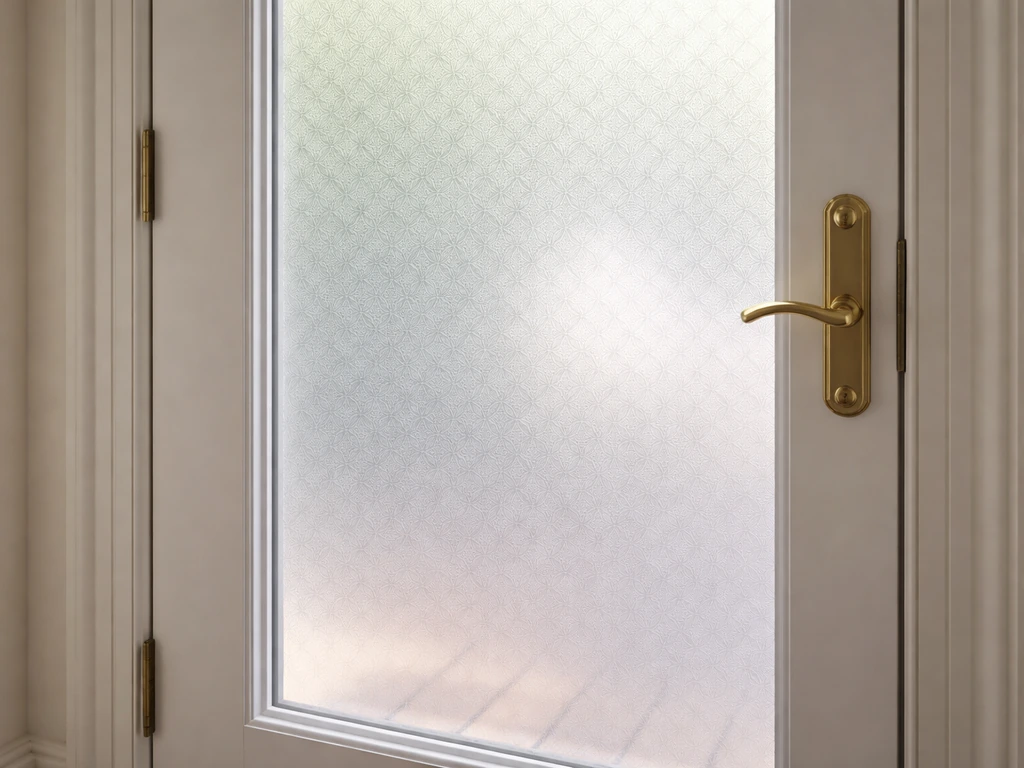
Adhesive window film
Adhesive window film is the easiest DIY option for the glass. It adds privacy (frosted, tinted, or one-way mirror styles) and can block UV without changing how the door operates at all. It installs directly on the glass surface with a wet-application method: you mist the glass with a soapy water solution, apply the film, then squeegee out bubbles and trim the edges. The key prep steps are cleaning the glass thoroughly and letting the film acclimate to room temperature for about 24 hours before you handle it, both steps genuinely improve adhesion and reduce bubbling. Full adhesion cure takes a few days, so don't scrub the film right after installation. This is a solid permanent-ish solution (typically lasts 5 to 10 years on interior glass) and costs around $20 to $60 for a standard door panel.
Cellular (honeycomb) shades
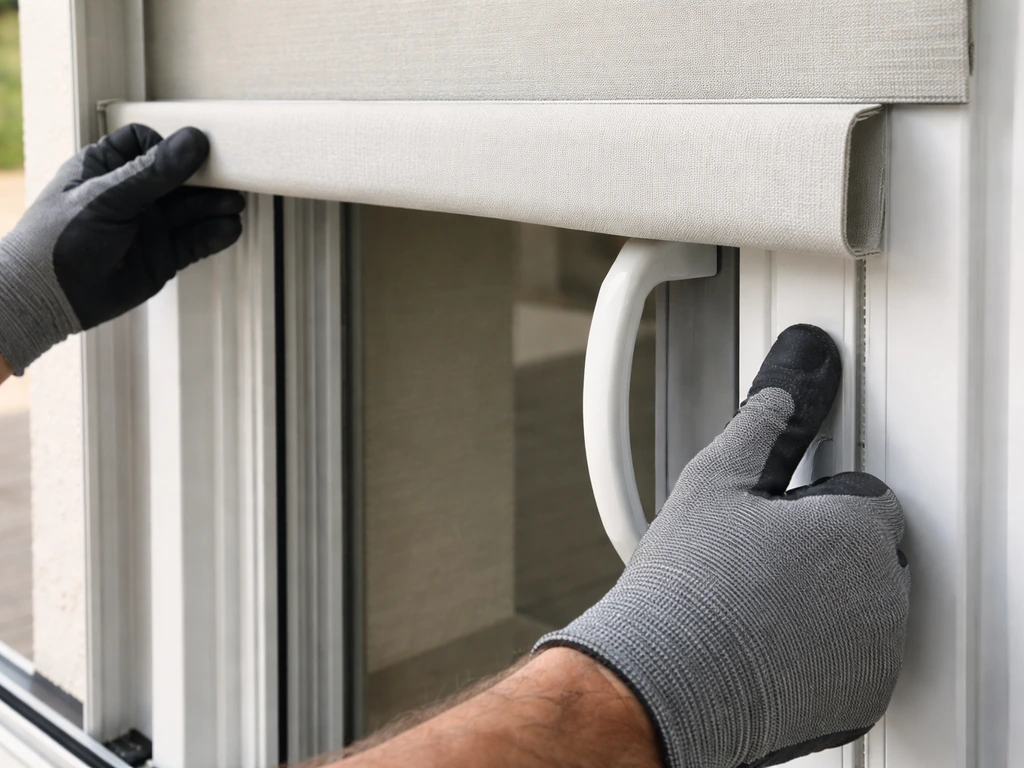
Cellular shades are the best combination of light control, insulation, and clean look for patio door glass. The honeycomb cells trap air and add meaningful insulating value. For a sliding door, you'll typically mount one shade on the fixed panel and one on the sliding panel, or one wide shade above the entire door opening that you raise fully when using the door. Inside-mount shades look cleaner; outside-mount gives you more light-blocking coverage at the edges. Measure carefully: for inside mount, take the smallest width and smallest height of the opening to the nearest 1/8 inch. The shade manufacturer will usually deduct a small amount for operational clearance, so give them the actual opening dimensions. If you want the shade to extend past the glass onto the frame, plan for about 1.5 inches of overlap on each side.
Interior storm panels (magnetic inserts)
A magnetic interior storm panel is a rigid acrylic sheet that seals against the window frame using pressure-sensitive rubber magnetic strips. You adhere the magnetic strips to the frame, then the acrylic panel snaps on magnetically, creating an insulating air gap between the acrylic and the glass. It's removable, which is useful if you want to take it down in summer. This works especially well for the fixed panel of a sliding door. For a sliding panel, it gets more complicated since the panel moves, most homeowners skip the storm insert on the sliding panel and focus it on the larger fixed pane.
Vertical blinds and panel tracks
These don't cover the glass directly, they hang in front of it. Vertical blinds are mounted above the door opening, either on the ceiling, a mounting board, or the wall above the frame. Panel tracks work the same way. Both are the most sliding-door-friendly option because they slide and stack completely out of the operating path when you want them out of the way. They offer light control and privacy but don't contribute much to insulation on their own.
Drapery and curtain panels
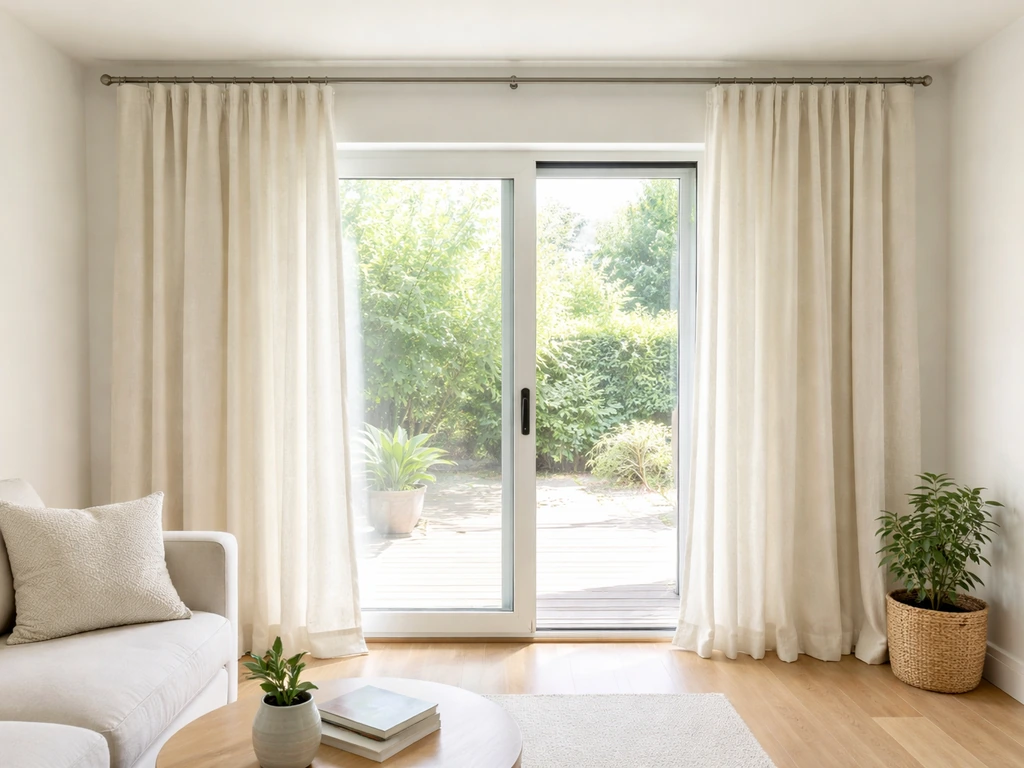
Standard curtain panels work fine on sliding doors if you mount the rod wide enough on both sides so the panels stack off the glass entirely when open. A rod that extends 12 to 18 inches past the door frame on each side is a common rule of thumb. For a 72-inch wide door, you'd want a rod that spans roughly 96 to 108 inches total. Thermal-lined or blackout-lined curtains add some insulating effect, but they won't seal drafts, they just slow air movement.
Step-by-step installation for the most common covering methods
Installing adhesive window film
- Let the film roll sit in the room for 24 hours before you start.
- Clean the glass with a glass cleaner and a lint-free cloth. Any dirt or grease under the film will create permanent bubbles.
- Mix a solution of water with a few drops of dish soap in a spray bottle.
- Mist the glass surface thoroughly with the soapy solution.
- Peel the film backing away from one corner, misting the adhesive side as you go to keep it wet and workable.
- Apply the film to the glass, starting at the top. Smooth it roughly into position—it can be repositioned while wet.
- Use a squeegee or credit card to push bubbles and water toward the edges, working from the center outward.
- Trim excess film at the edges using a straightedge and a sharp utility knife. Leave a small gap (1/16 inch) from the frame.
- Squeegee once more after trimming. Small remaining bubbles usually disappear within a few days as the adhesive cures.
- Avoid cleaning the film for at least 3 days after installation.
Installing a cellular shade (inside mount, above sliding door)
- Measure the width at the top, middle, and bottom of the opening. Use the smallest measurement. Measure height on the left, center, and right—use the smallest. Record to the nearest 1/8 inch.
- Order your shade based on exact opening dimensions. The manufacturer will deduct for clearance.
- Hold the mounting brackets in position at each end of the headrail (and a center support for spans over 48 inches) and mark the screw holes with a pencil.
- Use a level across all bracket marks before drilling. If the brackets aren't level, the shade will hang crooked and the lift cord will bind.
- Drill pilot holes and screw the brackets in place. Check depth clearance: the headrail needs enough room to snap in without the shade fabric touching the door frame or glass.
- Snap the headrail into the brackets and confirm it's secure. Give it a gentle tug.
- Lower the shade and check that it hangs flat and parallel to the door.
- Test the lift mechanism several times before considering it done.
Installing Frost King center-post weatherstrip
- Identify the gap between the sliding glass panel and the fixed glass panel at the center post when the door is closed.
- Clean the surface where the weatherstrip will adhere. Use rubbing alcohol on both the door frame and the panel edge. Let it dry completely.
- Check the temperature: apply only when temperatures are between about 20°F and 120°F. Below that range, the self-adhesive won't bond reliably.
- Cut the weatherstrip to the full height of the door panel gap.
- Peel the backing and press the strip firmly onto the center post or the edge of the door panel, depending on the specific product design.
- Close the door and check for light gaps. Press the weatherstrip firmly into contact by closing and reopening the door a few times.
- Allow at least one hour before testing in wet or cold conditions.
Getting a clean look, smooth operation, and a good seal
The most common mistake with patio door coverings is treating them like they're going on a standard window. Patio doors move, they have tracks and handles, and they're often an egress exit. Because 24 CFR § 3280.106 addresses egress windows, it cautions that integral rolled-in screens are not permitted in an egress window unless the window is hinged-type). Soundproofing patio doors usually starts with improving the seals and adding the right interior coverings for the glass and frame soundproof patio doors. Here's what separates a clean install from one you'll be frustrated with in two weeks.
- Check handle clearance before you mount anything. On a sliding door, the handle typically sticks out 2 to 3 inches from the panel face. Your headrail, rod, or hardware needs to clear this. Measure the door handle protrusion and compare it to your bracket depth.
- Don't let the covering interfere with the screen door. Many sliding patio doors have a screen that slides in a separate track. Make sure any floor-length covering doesn't drag across or block the screen track.
- For sliding doors, mount wide. A rod or track that extends well past the door opening lets coverings stack entirely off the glass when the door is open—this is worth the extra hardware cost.
- Use a level every time. A shade or blind headrail that's even 1/4 inch out of level looks sloppy, and the lift mechanism will wear unevenly.
- For weatherstripping adhesives, clean and dry surfaces are non-negotiable. Frost King's silicone weatherseal and similar products simply won't bond to dusty or oily surfaces, no matter how hard you press.
- On French doors, add a hold-down bracket at the bottom of any shade mounted on the door panel. Without it, the shade swings open and damages the bottom rail.
- Don't cover an egress door in a way that would slow emergency exit. The door needs to be openable quickly from the inside in an emergency. Avoid latching mechanisms on the covering, and make sure any lock or bar you add to the door itself doesn't require a key to release from the inside.
Measuring right, checking hardware compatibility, and fixing common problems
Getting your measurements right the first time
For inside-mount shades, measure width at three points (top, middle, bottom) and use the narrowest. Measure height at three points (left, center, right) and use the shortest. Always measure to the nearest 1/8 inch. For outside-mount, decide how far past the frame you want the shade to extend, 1.5 inches of overlap per side is a good starting point, more if you want a blackout effect. For curtain rods, measure the full span you want the rod to cover, not just the door opening width.
One thing people miss: measure the depth of the window frame (from the front of the frame to the glass surface). Inside-mount cellular shades typically need at least 2 to 3 inches of mounting depth so the shade can operate without hitting the glass. Select Blinds’ legacy cellular shade installation instructions also stress using the proper mounting depth and keeping the brackets level so the shade operates without hitting obstructions need at least 2 to 3 inches of mounting depth. If your frame is shallow, outside mount is the better call.
Hardware compatibility with sliding door tracks and frames
Most sliding patio door frames are aluminum or vinyl, which means you'll be screwing into a hollow or thin-walled extrusion. Standard drywall screws won't work here, you need short, self-tapping screws or toggle bolts if you're mounting into the wall above the frame. When in doubt, mount into the wall studs above the door frame rather than directly into the aluminum extrusion. If you're installing a track system (for vertical blinds or panel tracks), a 1x4 or 1x6 wood mounting board screwed to studs gives you a solid, screw-anywhere surface.
Troubleshooting common problems
| Problem | Likely cause | Fix |
|---|---|---|
| Shade won't raise or lower smoothly | Brackets not level, or headrail not fully snapped in | Re-check bracket level with a spirit level; re-seat the headrail |
| Draft still coming through after weatherstrip | Surface wasn't clean when applied, or strip is too thin for the gap | Remove strip, clean with alcohol, let dry, reapply; size up to a thicker foam or fin-style strip |
| Window film bubbling after installation | Dirt under film or adhesive not fully cured | Small bubbles disappear in 3 to 5 days; large bubbles mean re-installation with better surface prep |
| Covering catching on door handle | Not enough clearance between headrail and door panel face | Add a spacer block behind the bracket or switch to an outside-mount approach |
| Curtain panels blocking track or screen door | Rod not extended wide enough past the door frame | Extend rod or move brackets further from door opening so panels stack completely off the door |
| Vertical blinds binding when sliding door opens | Vanes positioned in the operating path of the sliding panel | Rotate vanes open before operating door; or remount track to extend past the door's full-open position |
| Film peeling at edges | Film trimmed too close to frame, or frame has residual moisture | Apply a bead of clear window film sealant along the trim edge; ensure no condensation on surface before applying |
When to call a professional
Most of these installations are genuinely DIY-friendly. The one situation where I'd say bring in a pro: custom motorized shades on an oversized sliding door (anything over 96 inches wide), or if you're installing window film on tempered or Low-E glass and aren't sure about heat buildup compatibility. If you are using a Frost King patio door insulation kit, follow the included instructions for sealing and fit before winter weather hits custom motorized shades. Some window films can void glass warranties or cause thermal stress cracking on certain glass types, check the film manufacturer's compatibility specs before you buy. For everything else covered here, a weekend afternoon and basic tools are all you need.
FAQ
How do I cover a patio door if it’s also an emergency exit (egress)?
Keep coverings fully operable from the inside without tools. For sliding doors, avoid long drapery that can snag in the track area, and choose blinds or shades that lift fully out of the door path. If you use blackout or heavier fabrics, confirm the door can be opened end to end while the covering is in its “closed” position.
What should I do if my sliding patio door handle hits the shade when I open it?
Check handle clearance before installing, not just the shade height. Use the manufacturer’s operational clearance, then physically dry-fit the shade brackets and raise/lower the shade with the door closed and fully open. If there’s any contact risk, switch to a wall-mounted vertical blind or a panel track system that clears the handle sweep.
Can I use one wide curtain rod on a patio door that’s next to a wall or has limited side space?
Yes, but measure the room needed for curtains to fully stack off the glass. A common approach is placing the rod far enough past each side so the fabric clears the opening, then verifying the overlap doesn’t block the door when it swings or stacks behind the sliding panel. If side clearance is tight, consider a panel track blind or vertical blinds instead of full-length drapes.
Are adhesive window films safe for Low-E or double-pane patio door glass?
They can be, but compatibility matters. Check the film label for Low-E or tempered glass compatibility and whether it’s approved for the specific glass type. If the patio door is in direct sun and gets very hot, confirm the film’s heat buildup guidance to reduce risk of warranty issues or thermal stress cracking.
What’s the best way to reduce drafts if my cellular shade still isn’t stopping cold air?
Focus on sealing first: weatherstrip the frame and address gaps at the center meeting point where panels join. Then ensure the shade fits the opening correctly, with enough mounting depth for smooth operation and minimal air leakage around the edges. Even an excellent shade will underperform if the frame gaps are open.
Will a storm panel help more on the fixed panel or the sliding panel?
It typically helps more on the fixed panel because the acrylic sheet can stay aligned and seal consistently. For the sliding panel, the moving door makes alignment and magnetic attachment harder, so many homeowners concentrate on the fixed side plus weatherstripping around the sliding panel’s perimeter.
How do I prevent window film bubbling and edge lifting?
Clean the glass thoroughly, apply at room-temperature, and allow the film to acclimate before installation. After applying, squeegee carefully and trim edges with a precise cut to avoid lifting points where moisture can get under the film. Avoid scrubbing or repeated wiping during the first few days while the film is curing.
What’s the right mounting depth for inside-mount cellular shades on patio doors?
Plan for at least 2 to 3 inches of depth so the shade doesn’t hit the glass or interfere with door operation. Measure from the front of the frame to the glass surface at multiple points, then verify the bracket depth and the shade’s operational clearance based on the opening dimensions you’re actually ordering.
Can I mount blinds or a panel track onto the aluminum/vinyl frame?
Usually not directly. Use the wall studs above the frame when possible, or install a mounting board (like a 1x4 or 1x6) screwed into studs for track systems. If you must secure to the extrusion, use appropriate short self-tapping hardware, but studs are the more reliable long-term option.
When should I consider a professional instead of DIY?
Consider a pro for motorized custom shades on large oversized sliding doors (for example, very wide units), and when dealing with window film on tempered or Low-E glass if you’re unsure about compatibility and heat buildup behavior. Also get help if measurements are complicated by unusual molding, deep recesses, or limited clearance for door movement.
How to Insulate Sliding Glass Patio Doors: DIY Guide
Step-by-step DIY plan to stop drafts from sliding patio doors using seals, sweep, track gap sealing and glass insulation