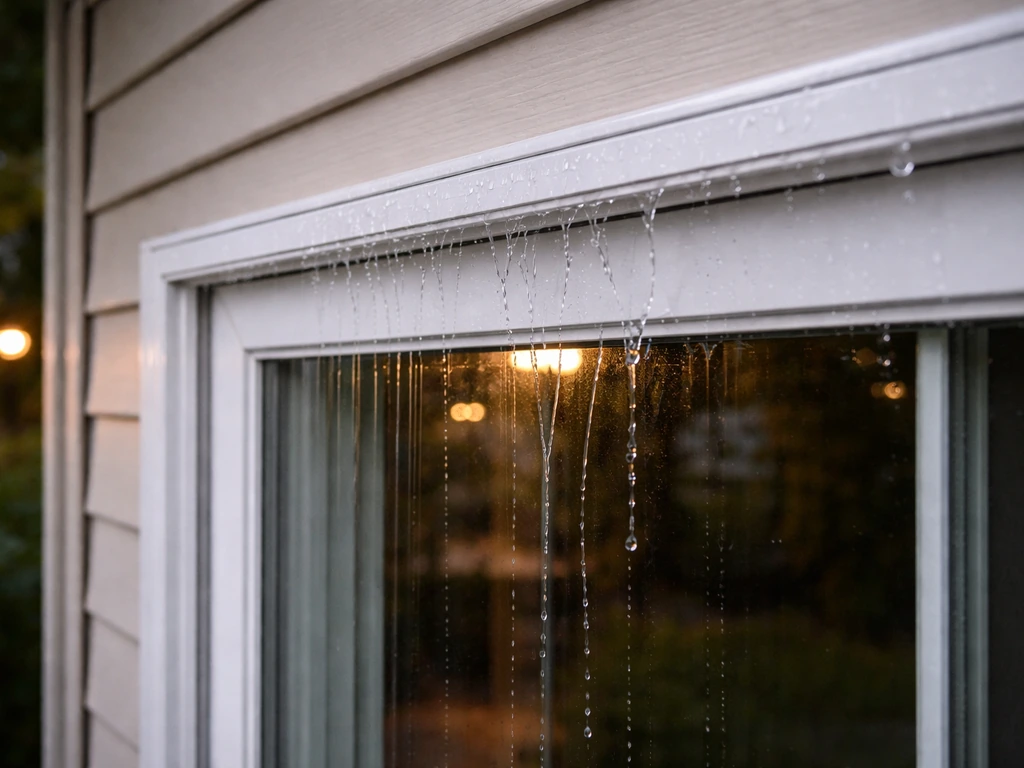
French patio doors leak when it rains because water is finding at least one of four entry points: failed or compressed-out weatherstripping along the door edges, gaps in the caulk or flashing around the frame, a threshold or sill that is cracked, clogged, or sitting too low, or door panels that are slightly out of alignment and not compressing their seals properly. The fix depends entirely on which of those is actually happening, so the first job is figuring out where the water is coming in before you reach for anything. A patio door fix typically starts the same way: identify the exact water entry point, then correct the specific seal or drainage issue causing the leak.
French Patio Door Leaks When It Rains: Fix Guide

Jamie Archer
28 Apr 2026
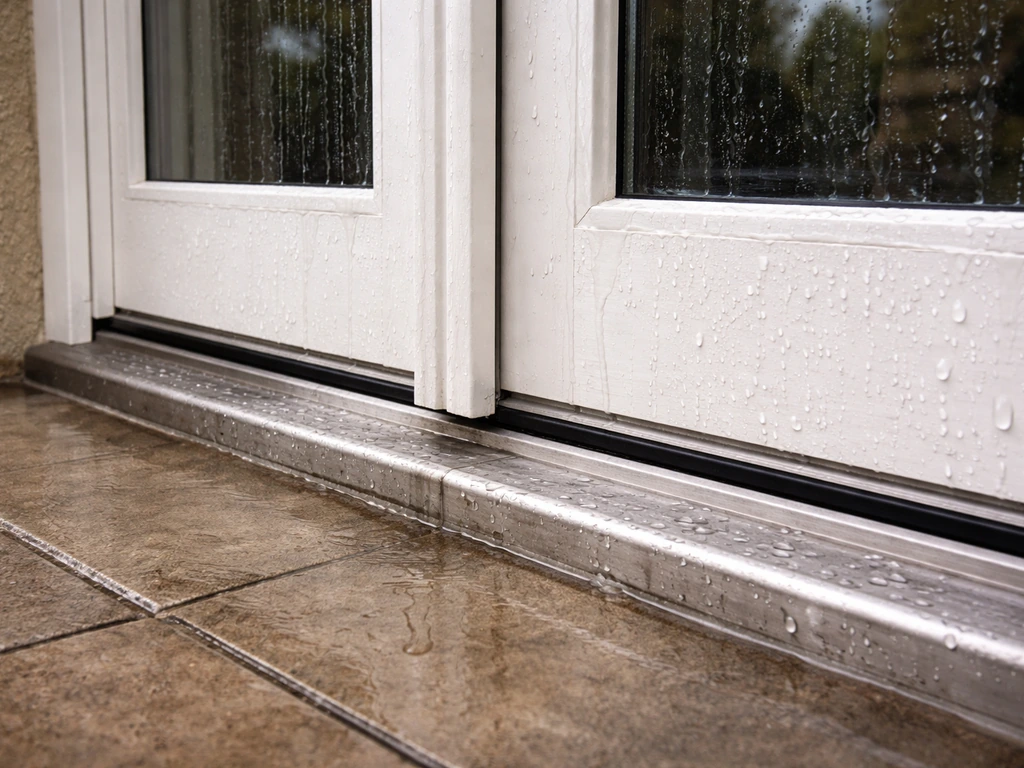
Quick diagnosis right after a rainstorm
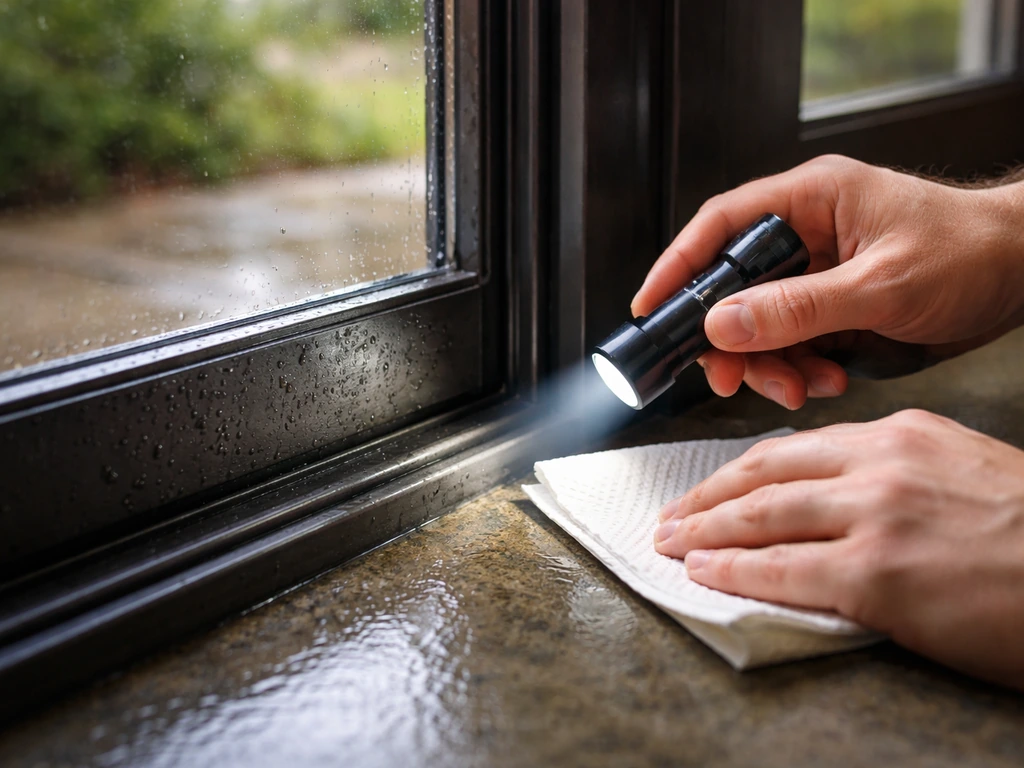
The best time to investigate is while the rain is still falling or within an hour of it stopping. Grab a flashlight and a dry paper towel and walk through this quickly before things dry out and you lose the trail.
- Look for the wet spot on the floor or sill and trace it upward. Water travels, so the actual entry point is almost always higher than where you find the puddle.
- Run the flashlight along the full perimeter of both door panels: the meeting rail (where the two doors meet in the center), the top rail, both vertical sides, and down to the threshold. Look for glistening, drip trails, or dark wet streaks.
- Press a dry paper towel against each section of weatherstripping as you go. If it comes away wet or damp, you have found a leak zone.
- Check the corners of the frame, especially where the side jambs meet the head jamb at the top. Corner gaps are one of the most common and most overlooked leak points.
- Look at the threshold from the outside. If water is pooling against the door rather than draining away, the sill slope or weep holes are likely part of the problem.
- Note whether the leak only happens with wind-driven rain or also in steady vertical rain. Wind-driven leaks point toward seal compression failure or frame gaps; vertical-rain-only leaks point toward threshold or sill drainage issues.
If the storm has passed and things are dry, you can recreate the problem with a garden hose. Work from the bottom up: start at the threshold, then move up the sides, then across the top. Have someone inside watching while you spray each section for 30 to 60 seconds. When they see water appear, you have your zone. This method, used by building scientists and home inspectors alike, is far more reliable than guessing based on where the puddle lands.
Common causes of French patio door leaks
French doors are hinged pairs, and that design creates more potential leak points than a single door because you have a meeting rail in the center where the two active panels come together. Here are the most common culprits, roughly in order of how often I see them.
Worn or compressed weatherstripping
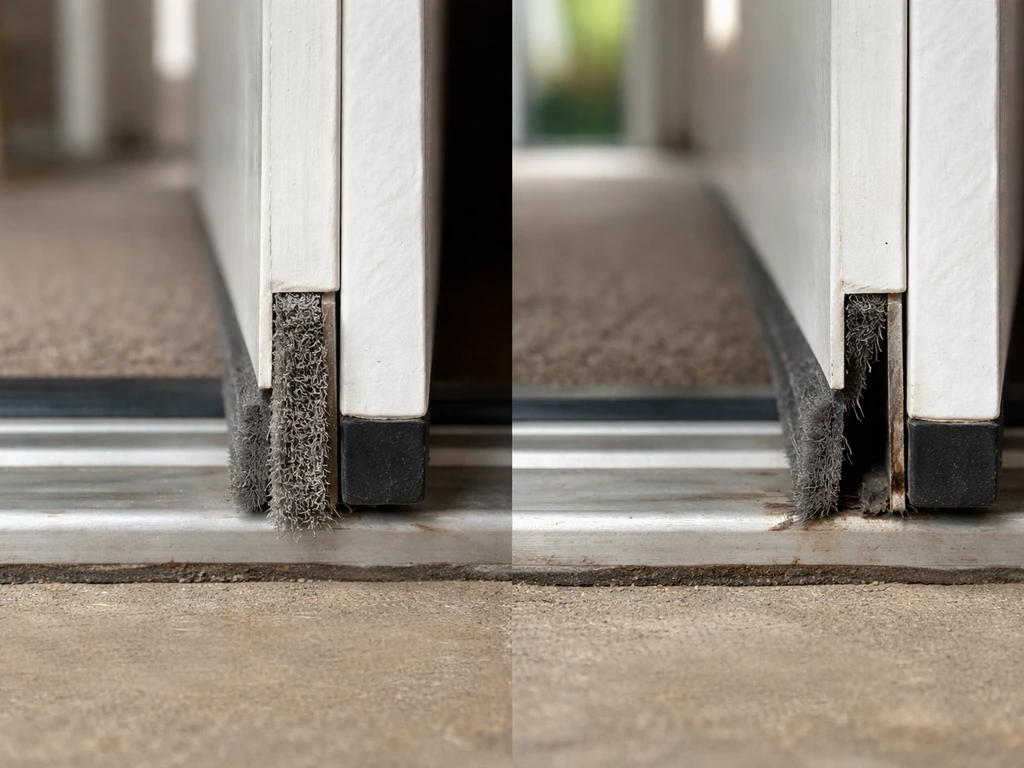
Foam, rubber, or pile weatherstripping has a lifespan. Foam compresses permanently over time, rubber cracks and hardens, and pile loses its density. When the weatherstripping can no longer fill the gap between the door panel and the frame (or between the two meeting rails), wind-driven rain pushes straight through. This is the number one cause of French patio door leaks, and it is almost always DIY-fixable.
Gaps in exterior caulk or flashing
The bead of caulk between your door frame and the exterior wall is not permanent. It typically lasts 5 to 10 years before it cracks, shrinks, or pulls away from one surface. When it fails, water gets behind the frame and can travel a surprising distance before it shows up inside. Flashing at the top of the frame (head flashing) is even more critical because water that gets in there runs straight down inside the rough opening.
Threshold and sill problems
The threshold is the piece the doors close onto at the bottom. It usually has a rubber or vinyl gasket that the door panel compresses when closed. If that gasket is gone, cracked, or the threshold itself is cracked, water gets under the door every time it rains hard. A sill that does not slope outward (typically a minimum 5-degree slope) also lets water pool and eventually work its way under.
Door alignment issues
Hinged doors sag over time as hinges loosen, wood frames settle, or the door itself warps slightly with seasonal moisture changes. Even a 1/8-inch gap at the meeting rail or along one vertical edge is enough for driving rain to penetrate. You may not notice the gap at all in dry conditions, but the door is not compressing the seal the way it should.
Lock and hardware not fully engaging
French doors often have a multi-point lock system or a center lock with top and bottom shoot bolts. If the lock is not pulling the door tight against the frame and threshold, the seal compression that weatherstripping depends on simply does not happen. This is especially common when one of the panels is slightly misaligned with the strike plate.
Where to inspect first: the water path priority order
Water follows gravity and finds the easiest path. When you are doing your inspection, work through these areas in order. Each one rules out (or confirms) a specific cause.
| Location | What to look for | Likely cause if wet |
|---|---|---|
| Threshold / sill | Standing water, cracked gasket, damaged threshold body | Threshold seal failure or poor drainage slope |
| Bottom corners of frame | Wet streaks running inward from frame corners | Failed caulk or flashing at frame base |
| Meeting rail (center seam) | Moisture along the vertical seam where doors meet | Worn center weatherstripping or lock not compressing seal |
| Side jambs | Wet streaks on interior jamb face | Weatherstripping failure or frame caulk gap on exterior |
| Top corners | Drips or stains in upper corners of interior frame | Head flashing failure, top weatherstripping gap, or exterior caulk crack |
| Glass pane edges | Moisture around glass perimeter inside frame | Failed glazing gasket or glazing compound |
The threshold and sill are the right starting point in almost every case. ENERGY STAR recommends a simple paper test to check seal tightness by closing a window on a piece of paper and seeing if it holds Sealing Behind Window & Door Trim Project.
Even if the main leak is higher up, a degraded threshold gasket is often a secondary entry point you will want to fix anyway. If rainwater is getting in at the threshold or along the frame, use the same patio door fix approach to confirm the exact water entry point before you replace anything.
A patio door bug seal can also help reduce gaps and keep drafts and pests from getting in, but you should still confirm the main water entry point first. From there, move up. Top-corner leaks that track down the frame and show up at floor level are very common and easy to misread as a threshold problem.
DIY fixes you can do today
Most French patio door leaks can be fixed in an afternoon with basic tools and materials you can pick up at any hardware store. Here is what to tackle and how. A patio door fix starts the same way: identify the entry point, then repair the specific component that is failing.
Replacing weatherstripping
This is the fix that resolves the majority of cases. Before you buy anything, remove a small section of the existing weatherstripping and take it to the store to match the profile exactly. French doors commonly use one of three types: foam tape (least durable, easiest to install), rubber bulb or V-strip (more durable, good for side jambs and meeting rails), or door bottom sweeps (for the door base). For the meeting rail between the two panels, a rubber bulb gasket or a compression strip works best.
- Open the door fully and peel off the old weatherstripping. Use a putty knife or plastic scraper to remove adhesive residue, then wipe the surface clean with isopropyl alcohol.
- Measure the length of each run before cutting. Cut slightly long (a few millimeters) for a snug corner fit.
- For adhesive-backed foam or rubber: peel and stick, pressing firmly every few inches. Start at the top and work down.
- For V-strip or door bottom sweeps with screws: position the piece, drill pilot holes if needed, and fasten from the center outward to keep alignment.
- Close the door and check for even compression all the way around. You should feel light resistance when closing and the paper test (try pulling a sheet of paper through the closed door) should show the paper gripping firmly rather than sliding freely.
Recaulking the exterior frame
Use a paintable exterior-grade silicone or siliconized latex caulk rated for doors and windows. Fully remove the old caulk first with a caulk removal tool or utility knife before applying new material. Applying new caulk over old, cracked caulk does not work and will fail again quickly. Clean the surface, let it dry, apply painter's tape to keep lines neat, then run a smooth continuous bead. Tooling the bead (smoothing it with a wet finger) presses it into the joint and dramatically improves adhesion. Pay extra attention to the top corners and any spot where you can see daylight or feel a draft.
Fixing threshold and sill gaps
If the threshold gasket is worn, replacement gaskets are available at hardware stores and from door manufacturers. Most just pull out of a groove in the threshold and press back in. If the threshold itself is cracked or corroded, replacement is straightforward for aluminum or composite thresholds: unscrew the old one, take it to the store for a match, and install the new one with the same screw pattern.
For a threshold that sits too low or has settled unevenly, shim it from below or apply a bead of caulk between the threshold and the subfloor on the interior side to block the water path. Also check whether the weep holes (small slots or holes in the sill) are clogged with debris. Clear them with a toothpick or compressed air. Blocked weep holes cause water to back up and overflow inward.
Glass, hinge, and lock issues that cause leaks
Hinge adjustment for better seal compression
A sagging door panel is a hinge problem first. Tighten all hinge screws before anything else. If the screw holes are stripped, remove the hinge, fill the holes with wooden toothpicks and wood glue, let it cure fully (usually 24 hours), then reinstall. For doors that sag at the latch side, modern adjustable hinges let you shift the door up and over without removing it. If your hinges are not adjustable, you can add a thin cardboard shim behind one hinge leaf to shift the door panel slightly. The goal is to get the door panel sitting square in the frame so the weatherstripping compresses evenly all the way around.
Lock alignment and strike plate adjustment
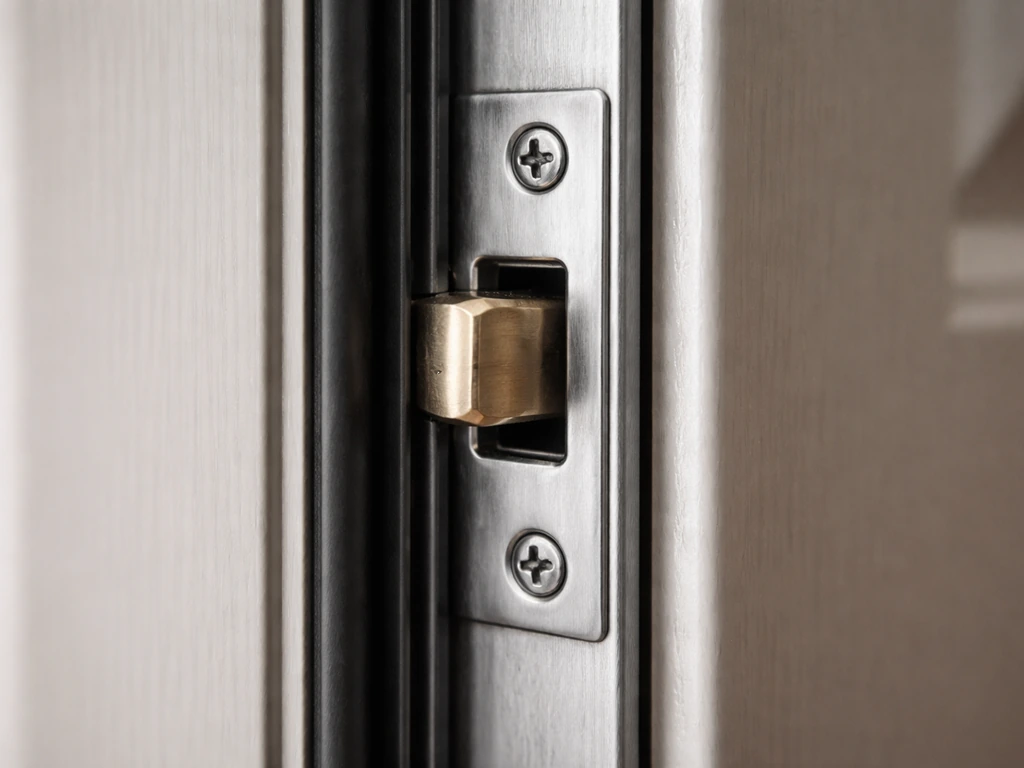
If the lock engages but the door still feels slightly loose or you can see daylight along the meeting rail when locked, the strike plate is not pulling the door far enough into the frame. First, try adjusting the strike plate position: loosen the screws, shift the plate a couple of millimeters toward the stop, and retighten. Some French door lock systems have an adjustment screw on the latch body itself that controls how far the bolt extends. For multi-point lock systems, each shoot bolt point needs to engage cleanly. If one point is not catching, the door will be held only at that one lock point and will flex under wind pressure, breaking the seal at the unengaged points.
Glazing gasket failure
If water is showing up around the glass panes themselves (not the frame), the glazing gasket or glazing compound around the glass insert has failed. For rubber glazing gaskets, these can sometimes be pressed back into their channel if they have just slipped out. If the gasket is cracked or hardened, it needs to be replaced by removing the glass stop bead, pulling the old gasket, and pressing in a new one of the same profile. This is a manageable DIY job for someone comfortable handling glass panels, but take care: large glass panes in French doors are heavy and should be supported properly.
When the problem is bigger than a DIY fix
Some leaks are symptoms of a more serious problem that weatherstripping and caulk will not solve. Call a professional if you find any of these conditions.
- Soft, spongy, or discolored wood around the door frame or in the sill area. This is rot, and it means the water has been getting in for a long time. Rotted framing needs to be cut out and replaced before any door repair will hold.
- Visible gaps between the door frame and the rough opening (the structural opening in the wall). This indicates the original installation lacked proper flashing or the frame has shifted, and fixing it requires pulling the door and reinstalling with correct flashing.
- Water staining or damage on the interior wall, drywall, or ceiling above the door. This points to a waterproofing failure behind the finished surfaces, not just a surface seal issue.
- A door frame that has visibly racked or is no longer square. This is a structural settling issue that needs a carpenter or structural specialist.
- Repeated failure of repairs: if you have replaced weatherstripping and recaulked and the door still leaks in the same spot, the water management layer (housewrap, flashing tape, or pan flashing at the rough sill) has failed and needs to be properly repaired.
The honest reality is that an imperfect original installation will not stay watertight indefinitely no matter how much surface maintenance you do. Building science research is clear on this: even a well-sealed installation will eventually allow some water past the first line of defense. The difference between a leak that stays manageable and one that causes rot and mold is whether the secondary water management layers (flashing, drainage plane, weep paths) were installed correctly in the first place. JLC Online describes sill pan flashing as a way to catch water that makes it through to the rough opening and drain it to the exterior blank" rel="noopener noreferrer">secondary water management layers. If they were not, a professional re-installation is the right call.
How to prevent future leaks before the next storm
Keeping French patio doors watertight long-term is mostly about staying ahead of the wear curve. A short annual inspection catches problems before they become rainstorm emergencies.
Seasonal maintenance checklist
- Each spring and fall, do the paper test on all four sides of each door panel. If the paper slides freely anywhere, that section of weatherstripping needs attention.
- Inspect all exterior caulk lines around the frame. Press on the bead with a fingernail. If it is hard, crumbly, or pulls away easily from either surface, plan to recaulk before winter.
- Clear the threshold weep holes and the sill channel of any debris, leaves, or dirt buildup. A plugged weep hole is the most underrated cause of threshold leaks.
- Lubricate hinge pins with a few drops of 3-in-1 oil or a light spray of silicone lubricant. This keeps hinges moving freely and reduces the tendency for door panels to sag over time.
- Check and tighten all hinge screws. Even a quarter-turn of tightening on loose screws can restore proper door alignment and seal compression.
- Inspect the threshold gasket visually. If it is compressed flat, cracked, or has gaps, replace it before the rainy season hits.
- From the outside, look at the top of the door frame. Make sure the head flashing (if visible) is still properly lapped over the exterior casing and that caulk at the top corners is intact.
Between storms
Keep the sill and threshold area free of debris year-round. Dirt and leaf buildup against the base of the door traps moisture and accelerates weatherstripping and threshold gasket wear. If you live somewhere with significant seasonal temperature swings, check your weatherstripping after the first cold snap each winter. Materials that were fine in summer can become brittle and lose their seal in low temperatures.
One last thing worth mentioning: a French patio door that leaks at the top specifically, or that leaks in a pattern that does not match any of the weatherstripping or threshold zones, may have a flashing issue that deserves its own focused investigation. Similarly, if you are dealing with leaks on a sliding patio door elsewhere in your home, the track and roller system creates a different set of entry points than the hinged French door setup described here. Both situations have their own repair paths but share the same principle: find the actual entry point first, then fix it.
FAQ
How can I tell if the leak is coming from above versus the threshold area when I see water inside near the floor?
Follow the hose or flashlight trail upward, not just sideways. Start at the threshold and sides, but also inspect the head flashing and top corners, then check the inside trim for signs of water staining that darken upward. Water can travel behind the frame before it shows up, so the “puddle location” is not the entry point.
What should I do if the door looks level and the threshold gasket seems intact, but it still leaks during wind-driven rain?
Check compression at the meeting rail and latch side. Even small gaps (too tight or too loose lock engagement) can prevent weatherstripping from compressing. Verify the door is pulling fully into the frame by checking for visible daylight when locked and confirm each shoot-bolt point is engaging properly.
Can I fix a French patio door leak by simply replacing caulk, or do I need to remove the old caulk first?
You generally should remove the failing caulk before applying new material. Caulking over cracked or detached caulk often leads to quick re-failure because you are bonding to a layer that has already lost adhesion. Use a caulk removal tool or utility knife to get to sound material, then apply a continuous door and window-rated bead.
How do I confirm whether my weatherstripping is worn versus the problem being a cracked threshold or clogged weep holes?
Do a targeted test: clear the threshold area and inspect for clogged weep holes, then run a short hose test starting at the threshold for 30 to 60 seconds. If water appears quickly at the base even when the seals look good, investigate threshold cracking, low sitting, or weep blockage, because back-up water can overflow inward.
What’s the best way to match replacement weatherstripping profiles for foam, rubber V-strip, or bulb gaskets?
Bring a sample to the store after removing a small section from the exact location type (side jamb, meeting rail, or bottom). The profile matters, including the bulb diameter or V-angle and how it compresses against the frame. Don’t buy based on “similar size” because the seal only works if it compresses correctly.
Should I adjust hinges or shims if the door is leaking at the meeting rail or latch side?
Yes, if the meeting rail shows daylight or the latch does not pull the door evenly. Tighten hinge screws first, then correct alignment so weatherstripping compresses across the full perimeter. If you shim, do it behind the hinge leaf on the hinge side creating the gap, and re-test compression after locking.
How do I prevent damaging the glass if I suspect the leak is around the panes instead of the frame?
Support the glass panel before removing any glass stops, and avoid forcing glazing components. Large panes are heavy, and incorrect handling can crack glass or break the stop bead. If the gasket is hardened, replacement requires removing the stop bead and pressing in a matched-profile glazing gasket.
Why do some French doors leak only after heavy rain, not during light rain?
Heavy rain and wind pressure overwhelm the drainage and secondary management layers. A small gap that air-drafts under light conditions may not fully penetrate until water volume and pressure increase, especially around top corners, meeting rails, or a partially blocked drainage path.
How can I tell if I have a flashing or installation problem rather than a simple seal replacement?
If water enters at the top and tracks down inside the frame or you cannot find a consistent wet entry zone along weatherstripping, caulk lines, or threshold areas, suspect flashing or the drainage plane. Persistent top-corner patterns, recurring leaks after correct DIY resealing, or signs of water getting behind the exterior wall layer are common triggers to call a professional.
Is it safe to use a hose indoors while someone watches for leaks?
Yes, but limit exposure and be deliberate. Use short spray durations (30 to 60 seconds per section) and have someone monitor from a protected area with towels ready, then dry the area promptly afterward. If you notice active water infiltration behind trim that could spread quickly, stop and reassess the entry point before continuing.
Next Article
Patio Door Leaking at Top: DIY Troubleshooting Fixes
Find why a patio door leaks at the top, test with water, and DIY fix alignment, weatherstripping, and rollers.