The fix starts with figuring out exactly what's wrong at that transition point. Is the door dragging because of debris in the track? Are the rollers worn down so the door sits too low and scrapes the threshold? Is the patio surface itself unlevel, creating a step-up or lip that makes the door bind? Each of those has a different fix, and most of them you can handle in an afternoon with basic tools. Here's how to work through it systematically.
Steps From Sliding Door to Patio: DIY Fix Checklist

Jamie Archer
11 May 2026
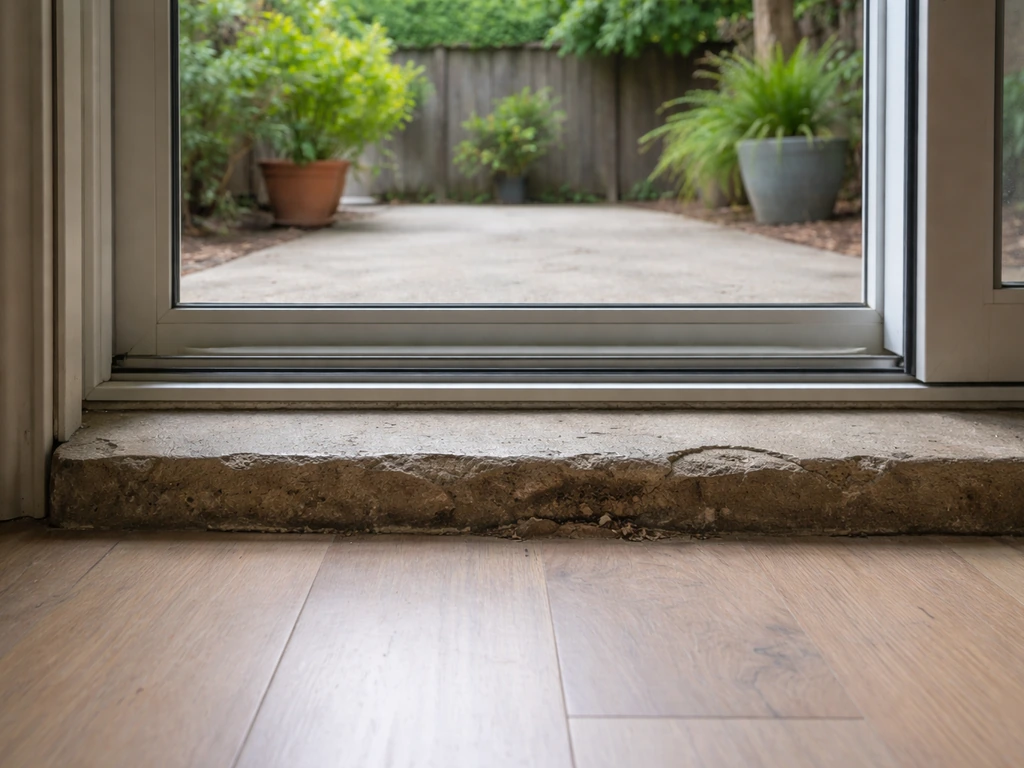
Figure out your door type and the exact problem first
Before you grab any tools, spend two minutes getting specific. Sliding patio doors come in a few varieties: aluminum-framed, vinyl, or wood-clad, each with slightly different roller and track systems. Screen doors ride on their own separate upper and lower tracks. French-style sliding doors (sometimes called gliding doors by brands like Andersen) use similar hardware but with some quirks around the adjustment plug access points. Knowing which you have matters because the roller adjustment access holes are in different spots.
Now, narrow down the actual symptom. The most common problems people notice at the sliding door-to-patio transition are: the door drags or skips when sliding, there's a noticeable uneven step or lip at the threshold, the door won't fully close against the strike, it lets in a draft even when closed, or water is pooling in the track. Each symptom points to a different cause, so pick your main complaint before you start diagnosing.
Step-by-step assessment: track, rollers, threshold, and patio alignment
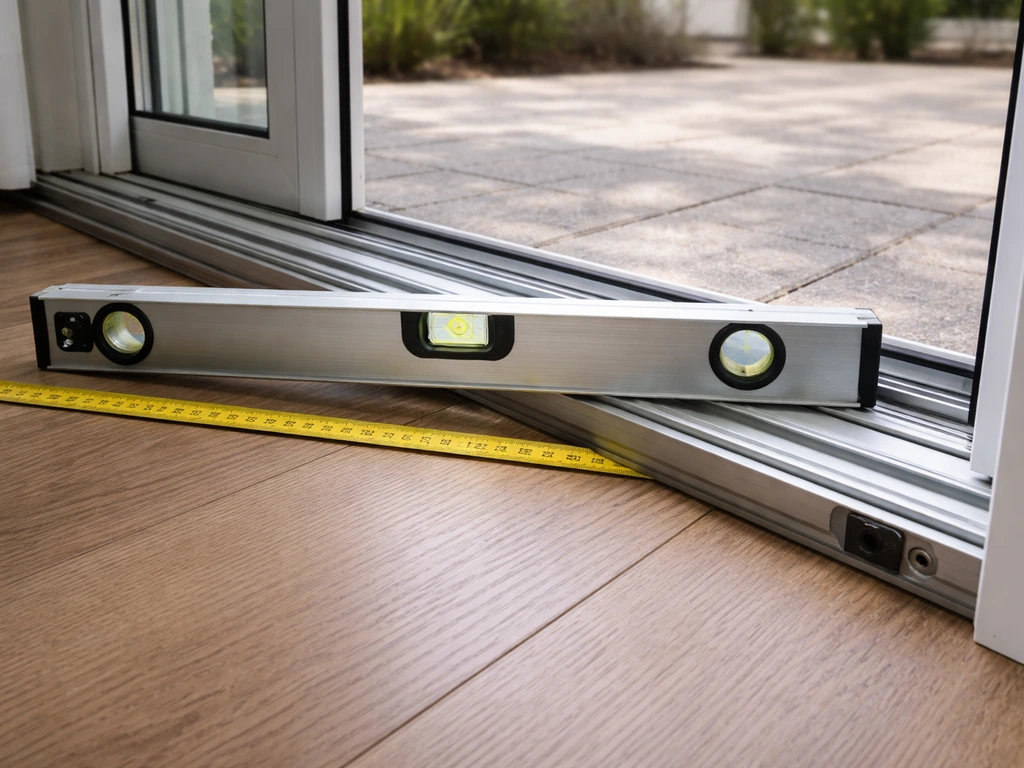
Run through this checklist in order. It takes about 15 to 20 minutes and will tell you almost everything you need to know before touching an adjustment screw.
- Slide the door fully open and look down the entire length of the bottom track. You're looking for debris buildup, bent track sections, cracks in the track channel, or visible rust.
- Crouch down and look at the rollers (the small wheels at the bottom corners of the door). Are they visibly cracked, flat-spotted, or missing chunks? Do they spin freely when you rotate them by hand?
- Check the threshold height. Use a straightedge or long level laid across the top of the track—it should be level or very slightly angled toward the outside for drainage. A noticeable slope toward the interior means either the patio has settled or the threshold itself has shifted.
- Step outside and look at the patio surface right in front of the door. Is it cracked, heaved, or sitting higher or lower than the threshold? A patio that has heaved up even half an inch creates exactly the kind of obstructive step people notice.
- Grab the door panel at the top and gently push it side to side. There should be minimal play. Excessive wobble usually means worn rollers or a door that's riding too low in the track.
- Check the lock engagement. Close the door and operate the lock handle. Does it engage smoothly, or do you have to lift the door or force the handle? Difficult lock engagement is often a roller height problem in disguise.
Clearance and surface checks: level, debris, and wear points
Once you've done the basic assessment, look more closely at the three areas where wear and obstruction tend to hide.
Track and sill debris
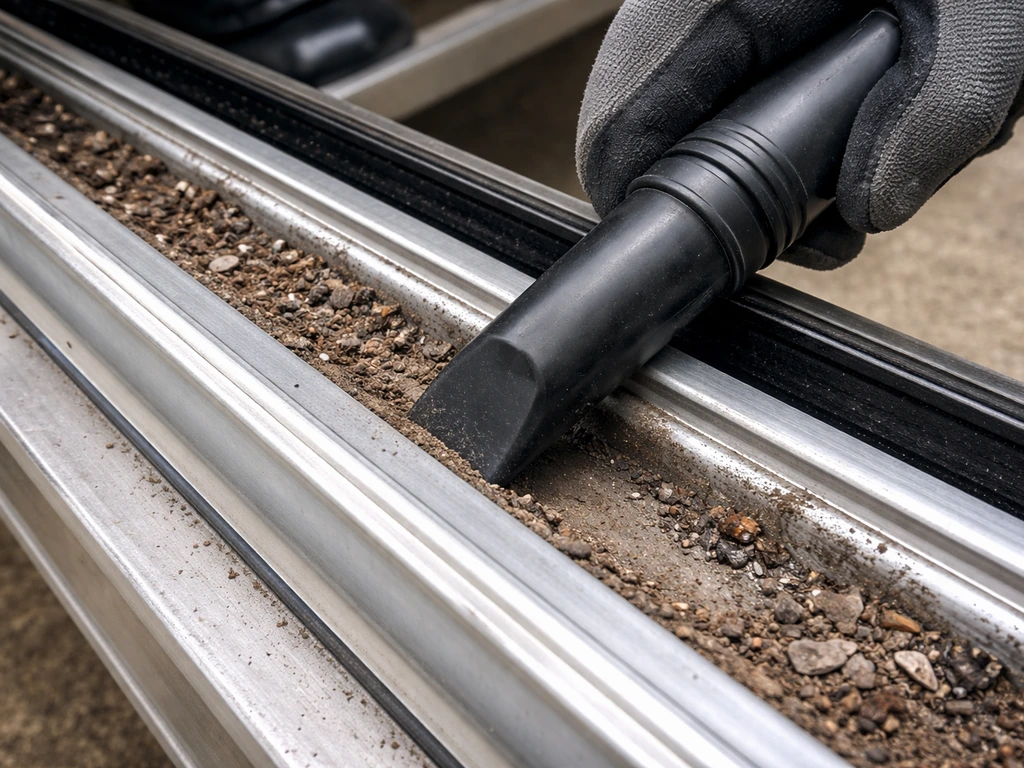
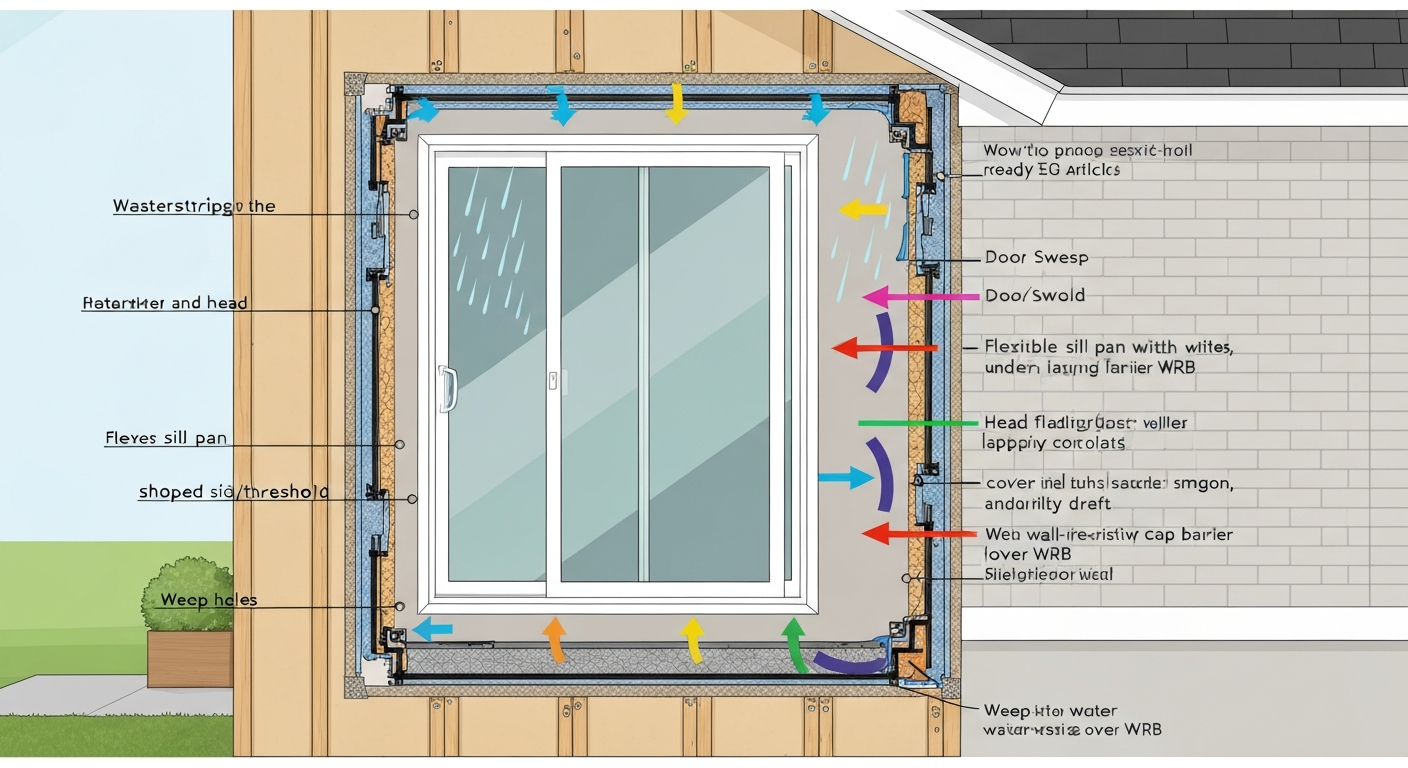
The bottom track channel collects an impressive amount of grit, dead insects, paint chips, and compacted dirt over time. Even a small amount of packed debris raises the effective floor of the track, which lowers the door relative to the frame and causes it to drag or bind at the threshold. Use a stiff brush or old toothbrush to loosen everything, then vacuum it out. While you're in there, check the weep holes. These are small slots or holes at the base of the outside track, and their entire job is to drain water out of the sill. Milgard specifically calls out keeping the sill and outside track clear of dirt and debris because blockage causes water to back up into the track rather than drain away. Poke a thin wire or toothpick into each weep hole to clear any blockage.
Roller wear inspection
Rollers are typically made of nylon or steel, and they wear down over years of use. A worn roller doesn't just make the door feel rough, it changes the door's ride height, which throws off the clearance at the threshold and the alignment at the lock strike. Compare the rollers at both bottom corners: if one looks noticeably smaller or more worn than the other, the door is probably tilting, and that tilt is creating the uneven step or binding you're feeling.
Threshold and patio surface
Lay your level across the threshold cap and check in both directions. Then go outside and check the first 12 inches of patio surface for heaving or settling. If those first sections near the door look uneven, you may be dealing with patio steps from the sliding door that need leveling or repair before the threshold will sit right first 12 inches of patio surface. Concrete slabs near doors commonly crack and shift over time, especially in areas with freeze-thaw cycles. If the patio surface has moved up relative to the threshold, you'll feel it as a physical step when you try to slide the door. This is worth noting separately because it changes whether you're looking at a door repair or a patio repair.
DIY fixes for the most common causes
Stuck or dirty track
After vacuuming and brushing out the track, wipe it down with a damp cloth and let it dry. Then apply a dry silicone spray lubricant along the entire track channel. Avoid WD-40 or oil-based lubricants here because they attract more dirt and make the problem worse within a few weeks. Once lubricated, slide the door back and forth several times to work the lubricant in. If it still drags in one spot, look for a dent or bend in the track at that location. A bent aluminum track can sometimes be carefully worked back into shape with a rubber mallet and a wood block, but if the track is cracked or severely deformed, it needs to be replaced.
Roller issues
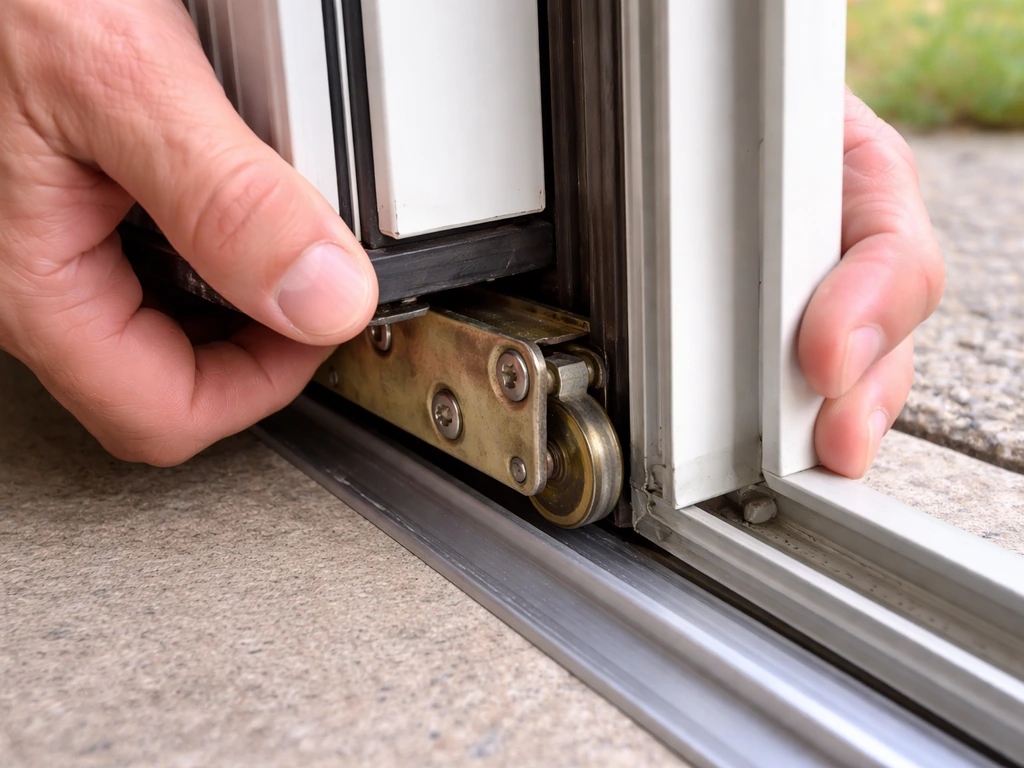
If the rollers are visibly worn or cracked, replacement is the right call. Rollers are inexpensive (typically $5 to $20 for a set) and available at most hardware stores or online using your door brand and model number. To replace them, you'll usually tilt the door panel slightly inward at the bottom and lift it out of the track. The rollers themselves unscrew or pop out from the bottom corners of the panel. If the rollers look okay but just need adjustment, look for the adjustment access holes. On most sliding doors, these are small slots or holes in the bottom rail or the side stile near the bottom corners, sometimes covered by a small plug. All About Doors notes that these roller adjustment access holes may require removing an adjustment plug, and that the turn direction can vary by roller design (for example, clockwise may raise while counterclockwise may lower). Andersen specifically notes that the adjustment plug may need to be removed to access the roller adjustment for certain series. Use a Phillips or flathead screwdriver (depending on your door brand) to turn the adjustment screw. Turning it clockwise typically raises the door; counterclockwise lowers it.
Threshold problems
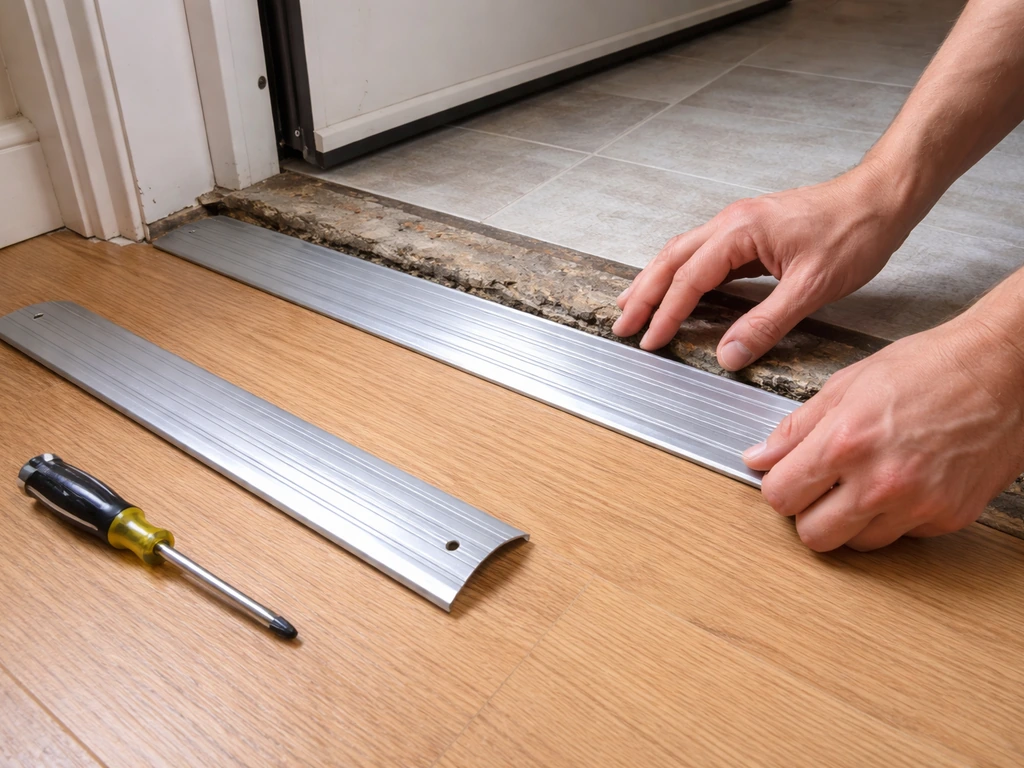
If the threshold cap is cracked, warped, or missing a section, it's worth replacing it. Threshold caps are usually held in place by screws or adhesive and can be sourced from your door manufacturer or a home center. When reinstalling, make sure the new threshold has a slight outward slope (away from the house interior) to encourage water to drain toward the outside. Crestline's installation documentation for vinyl sliding patio doors includes weep hole sealing as a specific step during installation, which is a reminder that the threshold system is a managed drainage system, not just a step. If your threshold has cracked weep hole covers, those are replaceable too: you simply press the new cover into the slot with one side first, then snap the other side in.
Test fit and adjust: roller height, track alignment, and lock calibration
After any repairs, reinstall the door panel and run through a proper fit test before buttoning everything up. This takes about 10 minutes and saves you from having to pull the door back out again.
- Slide the door fully open and then fully closed three times. It should glide smoothly without any scraping, skipping, or noticeably stiff spots.
- With the door closed, check the gap between the door panel and the frame on both sides. The gap should be consistent top to bottom. A gap that's wider at the bottom than the top (or vice versa) means the roller height on one side needs more adjustment.
- Check the threshold clearance. There should be consistent, minimal contact between the bottom of the door panel and the top of the threshold. The door shouldn't drag, but it shouldn't have a visible gap either.
- Test the lock. The handle should engage smoothly with normal hand pressure. If you still have to lift the door or push it inward to get the lock to catch, adjust the lock strike. Pella's service documentation specifically calls out the lock strike screws as adjustable and notes that turning the adjustment screw changes the end height of the door side to correct engagement issues. Locate the strike plate on the door frame, loosen its mounting screws slightly, and reposition it up or down as needed.
- Stand inside with the door closed and have someone shine a flashlight along the exterior perimeter. If you see light coming through at the corners or bottom, the door isn't sealed and needs roller or sweep adjustment before weatherproofing.
Weatherproofing after repairs
Any time you adjust rollers, replace a threshold, or remove the door panel, you risk disturbing the sealing components. Don't skip this step even if the repair seemed minor.
Door sweep and brush seals
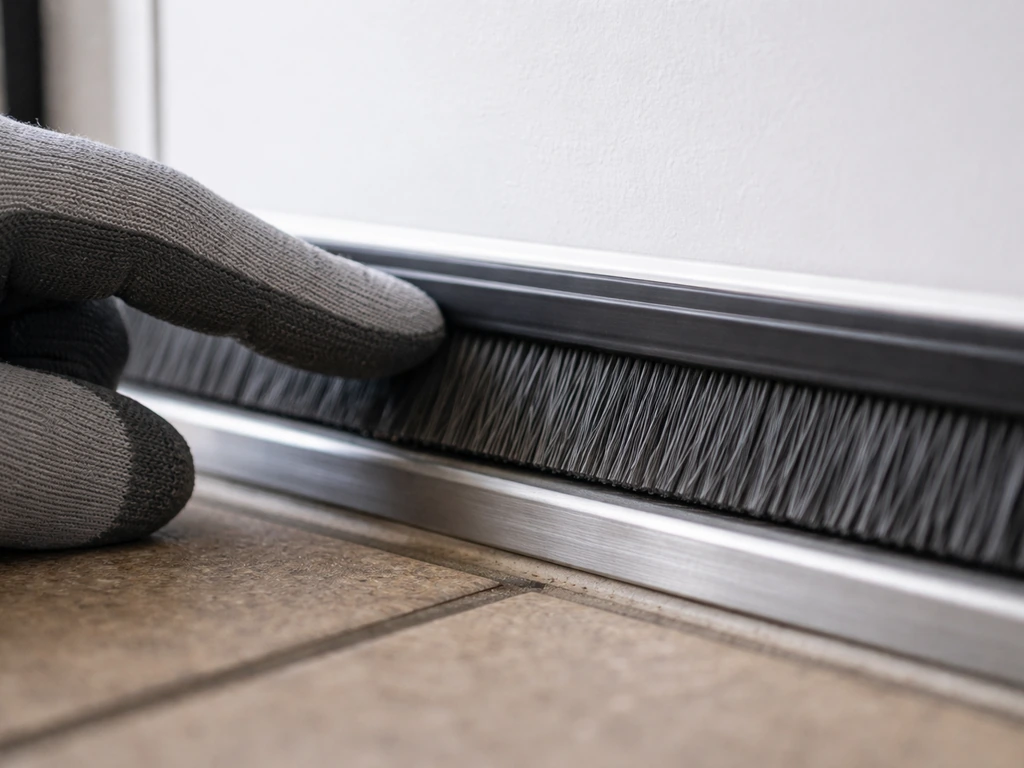
The door sweep is the flexible fin or brush strip that runs along the bottom of the door panel and makes contact with the threshold. Inspect it now. If it's torn, compressed flat, or missing sections, replace it before calling the job done. Replacement sweeps are sold by the foot at hardware stores, or as door-specific kits from your door manufacturer. Most are held by screws in a channel along the bottom rail and can be swapped in about 10 minutes. The brush seal (if your door has one along the interior edge) should spring back when compressed. If it's matted down, it's no longer sealing and needs replacement.
Draft and water management
Recheck the weep holes after any threshold or track work. It's easy to accidentally pack them with debris during cleaning. Clear them again and confirm water can flow out freely. If your track had standing water in it before you started, investigate why. Milgard's guidance is direct here: water naturally accumulates in the outside track during rain, and that's normal, but only if the weep holes are clear enough to drain it back out. Blocked weep holes turn a drainage system into a puddle. Once weep holes are confirmed clear, run a bead of exterior silicone caulk along any gaps where the door frame meets the wall or siding, but leave the weep holes themselves uncovered.
When to stop and call a pro
Most sliding door transition problems are genuinely DIY-friendly, but there are a few situations where you should put the tools down and get a professional involved.
- The glass panel is cracked or has a broken seal (fogged interior): handling large glass panels without the right equipment is a real injury risk, and sourcing the correct replacement glass requires precise measurements that vary by manufacturer and series.
- The door frame itself is warped, twisted, or has pulled away from the rough opening: this points to structural movement in the wall or subfloor, which is beyond a door adjustment fix.
- The patio slab has heaved significantly (more than half an inch) or is actively cracking: this is a concrete or foundation issue, not a door issue, and lifting or grinding a slab to restore clearance requires professional equipment.
- Multiple adjustments haven't solved the problem and the door still binds in the same spot: at that point there's likely a frame or track deformation that isn't visible from the surface, and a door technician can assess it properly.
- The door is a large multi-panel system or a lift-and-slide door: these panels can weigh 300 pounds or more, and removing them without the right support equipment can cause serious injury or damage.
If you're dealing with French-style patio doors rather than sliding panels, or with a standard sliding glass door that has a separate step structure built into the patio itself, the diagnostic approach is similar but the fix may branch in a different direction depending on whether the threshold is part of the door system or part of the patio construction. Those are worth treating as their own projects once you've confirmed the door hardware itself is correctly adjusted and sealed.
FAQ
How can I tell if I should adjust the rollers or fix the patio height first?
Before turning any roller adjustment screw, confirm the door is fully supported, close-to-fully shut, and not under load. If you adjust with the door partially stuck on debris or a high patio lip, you can raise one side and make the misalignment worse, leading to a harder bind and poorer latch contact.
What’s a safe way to adjust without creating a worse uneven threshold step?
Use a marker or tape to note where the door sits on the threshold after you clean and lubricate the track, then re-check after each small adjustment. If you see the latch engagement get better but the physical step at the transition still remains, the patio or threshold cap alignment is likely the limiting factor rather than roller height.
Is it normal to find water in the track, and when should I worry?
Standing water can be normal during rain, but it should drain within a reasonable time afterward. If the outside track stays wet or you see puddling that returns even after cleaning, recheck the weep holes for debris and also inspect the exterior caulk line at the frame (gaps can block drainage pathways or let water pool inside).
Can I apply lubricant right away if the track looks dirty or damp?
Yes, but only after the track is clean and dry. If you spray silicone lubricant over wet grit, you can create a sticky paste that traps debris and brings the problem back quickly. Clean first, let it dry, then apply dry silicone to the track channel and work the door to distribute it.
Why not use WD-40 or oil-based lubricants on sliding door tracks?
Avoid oil or penetrating greases in this area because they turn dust and grit into a buildup. Stick to dry silicone spray on the track channel, and if you accidentally used oil earlier, plan on more thorough cleaning before re-lubing.
What’s the best way to clean the weep holes without damaging anything?
If you only clear the main track channel but miss the weep holes, water will still back up and you can get binding from compacted muck. After cleaning, poke a thin wire or toothpick through each weep hole, then confirm drainage by running water along the sill and watching for outflow.
How do I diagnose whether the problem is a bent track versus a roller or height issue?
Check for a bent track by looking at the binding location after you lubricate and slide the door repeatedly, watching where it “catches.” If the catch point moves after you adjust roller height, it’s probably roller alignment. If it stays at one spot with repeatable binding, inspect the track for dents, kinks, or deformation.
What if brushing and vacuuming the track doesn’t fully remove debris?
If the bottom track is packed tight with hardened paint chips or compacted debris, a brush and vacuum may not fully remove it. Use gentle scraping with a plastic tool (not a metal edge that can gouge) to lift paint chips, then vacuum again and clear weep holes before lubricating.
The door closes but still lets in drafts, what should I check first?
If your door lets in a draft even when it closes, inspect both the bottom sweep and any secondary brush seals along interior edges. A sweep that is compressed flat or missing sections will not maintain consistent contact with the threshold, and latch adjustment alone cannot fix an air leak caused by seal wear.
How do I know I reinstalled everything correctly after removing the door?
Yes. After you replace rollers, swap a threshold, or remove the panel, the sealing components can shift or lose compression. Do a recheck for sweep contact and ensure the door sits level, then confirm weep holes remain open and caulk lines do not cover drainage pathways.
When should I replace the threshold cap instead of adjusting the door?
If the threshold cap is cracked or warped, don’t just patch it, replace it when it affects the door’s ride height. A missing or uneven cap can create the exact lip you feel during sliding, and a patch can leave water routing uneven and reduce sealing.
How far from the door should I check for patio heaving or settling?
For patio surface issues, work backward from the distance that is uneven. If only the first section near the door is raised, the door-to-patio step may need leveling or repair before fine roller adjustments will stay correct long term.
What should I do if the roller adjustment access plug won’t come out?
If the adjustment plug is stuck, don’t force a screwdriver against the frame. Use light pressure after applying a small amount of penetrating lubricant at the plug interface (not on the roller system) or carefully remove the plug per manufacturer guidance, then adjust the screw in small turns.
When is this no longer a DIY-friendly job?
Get professional help if you see structural patio movement (large shifts), repeated track deformation after minor “fixes,” broken threshold drainage components you cannot replace cleanly, or any issue involving glass panel removal that puts you at risk of damaging the door or losing glazing alignment.
Next Article
How to Protect Patio Door from Rain: DIY Fixes, Steps & Costs
How to protect patio door from rain: step-by-step DIY fixes, tests, tools, seasonal tips, and when to call a pro.