Most patio door repairs come down to one of five problems: dirty or damaged tracks, worn-out rollers, a door that's dropped out of alignment, a faulty lock or latch, or weatherstripping that's given up. All of these are fixable without replacing the whole door, and most take under two hours if you know what you're looking at. The trick is diagnosing the right problem first, then going straight to the fix rather than guessing. Many of the troubleshooting steps above also answer the question can patio doors be repaired, whether the issue is alignment, rollers, the track, or weatherstripping.
How to Repair a Patio Door: DIY Fixes for Common Problems

Jamie Archer
5 May 2026
Step 1: Figure out what's actually broken
Before you grab any tools, slide the door back and forth a couple of times and pay attention to what it's telling you. Is it heavy and dragging? Does it jump or wobble? Does it slide fine but won't latch? Each symptom points to a different cause, and fixing the wrong thing wastes time.
- Hard to slide or sticking: Usually debris in the track, worn rollers, or a door that's dropped and is rubbing the frame.
- Wobbles or feels loose on the track: Rollers are worn or broken, or the door has dropped and shifted out of alignment.
- Door slides okay but won't latch or lock: The lock hardware is misaligned with the strike plate, or the latch mechanism itself is worn.
- Drafts or air coming through the edges: Weatherstripping has compressed, torn, or fallen off. Also check whether the door sits evenly in the frame.
- Squeaking or grinding noise: Dry rollers and tracks, or debris caught between the roller and the track surface.
- Screen door is hard to open, won't stay on track, or has mesh damage: Screen-specific roller or mesh issue, covered separately below.
If the door has dropped noticeably (one corner is visibly lower, or there's an uneven gap between the door and the frame), that's an alignment problem caused by roller wear or adjustment. If you also notice rotted wood at the base of the frame, or the door frame itself looks warped or water-damaged, those are structural issues that go beyond a basic tune-up.
Tools you'll need and when to stop and call someone
Most patio door repairs need only a handful of basic tools. Gather these before you start so you're not hunting mid-job.
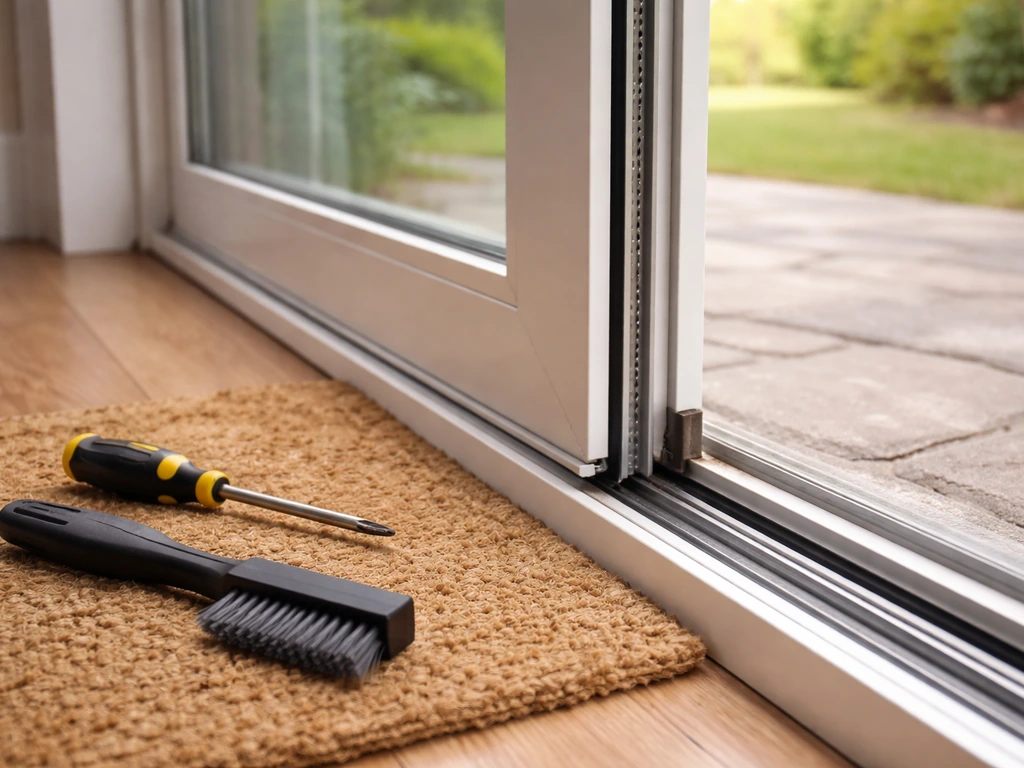
- Phillips-head screwdriver (for roller adjustment screws and hardware)
- Flathead screwdriver (for prying weatherstripping and popping adjustment port plugs)
- Vacuum with a narrow attachment (for track debris)
- Stiff nylon brush or old toothbrush (for scrubbing track grime)
- Silicone-based spray lubricant (dry silicone, not WD-40 or oil-based products)
- Mild household cleaner or dish soap
- Clean rags or paper towels
- Tape measure (for checking gap evenness and weatherstripping lengths)
- Pliers (for stubborn hardware or bending minor track deformations)
- Replacement parts as needed: rollers, weatherstripping, lock hardware
Know when to stop
A few situations call for a professional rather than a DIY fix. If the glass panel is cracked or broken, do not attempt to handle it yourself. Tempered sliding door glass shatters into thousands of pieces and the panel itself is extremely heavy. Call a glass professional. Similarly, if the door frame is warped, rotted, or structurally compromised, patching rollers won't solve anything, and you'll need a frame repair or full door replacement. If the rotted wood is under a patio door, you may need to remove and replace the damaged threshold or frame section before addressing alignment or rollers. If the track is badly bent and won't straighten with hand pressure and pliers, replacement is the smarter call. For a dropped door that won't respond to roller adjustment, it's worth having a pro assess whether the frame itself has shifted.
Step-by-step fixes for the most common problems
Fix 1: Clean and lubricate a dirty, sticking track
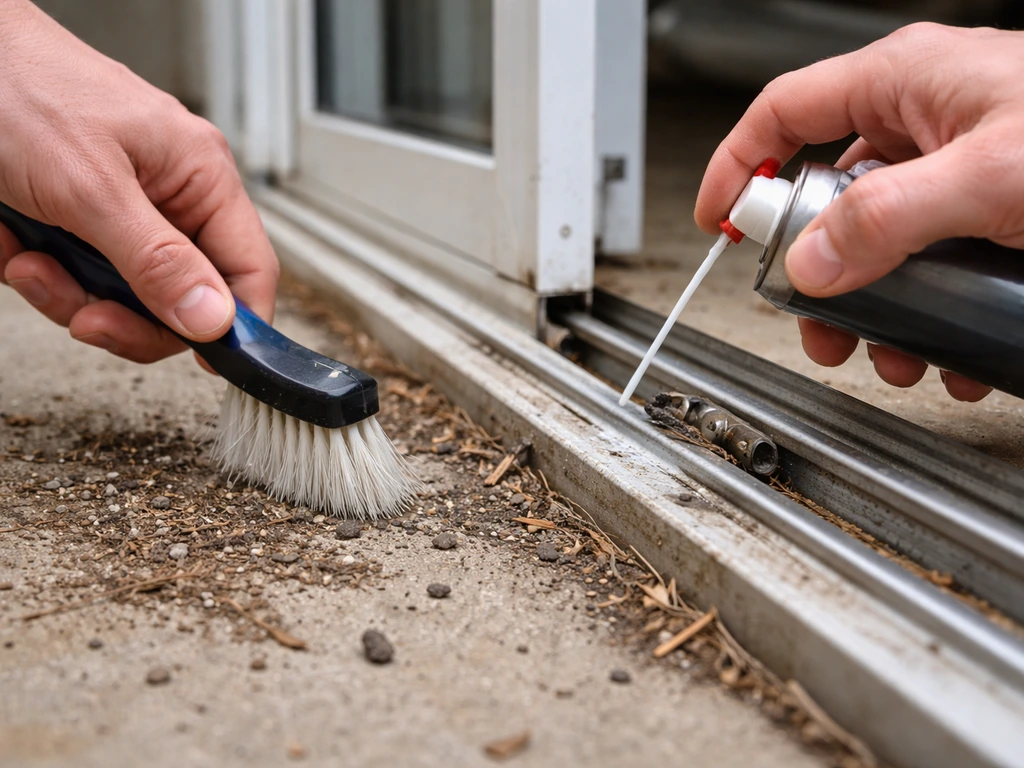
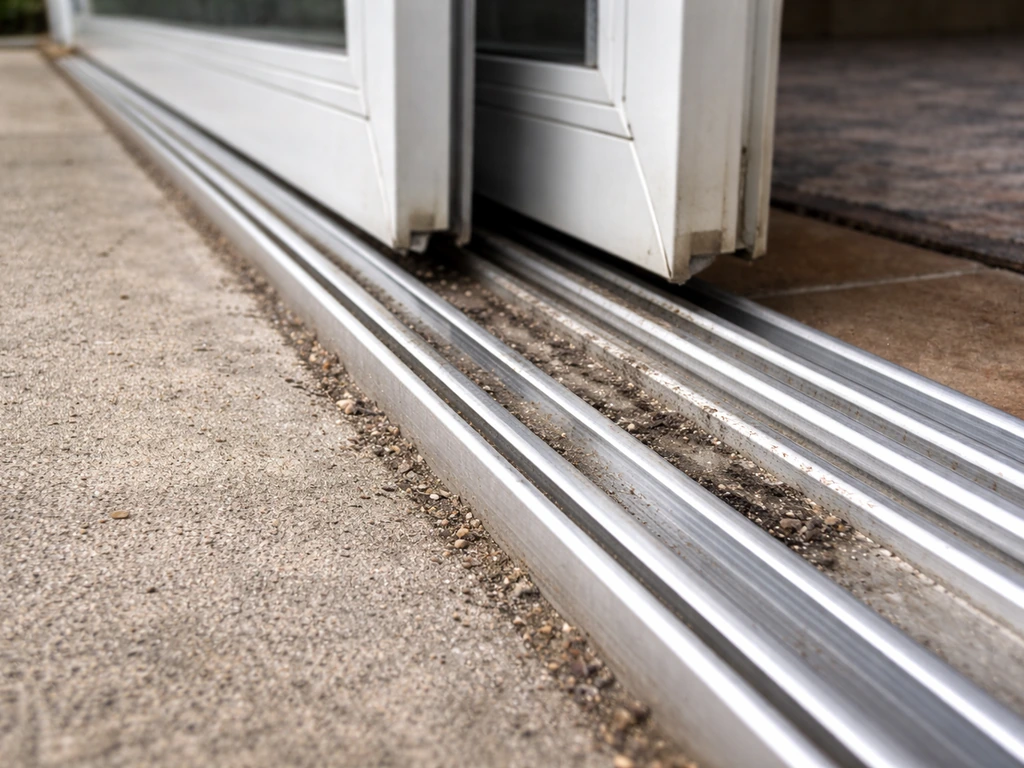
This is the most common cause of a hard-to-slide door and the easiest fix. Start by sliding the door fully open and vacuuming the bottom track with a narrow attachment to pull out loose dirt, hair, and debris. Then scrub the track with a stiff nylon brush and a mild cleaner to lift built-up grime, especially in the channel where the roller sits. Wipe it dry. Before you add lubricant, slide the door slowly back and forth to feel for any remaining friction points or debris you missed. Once the track is clean and dry, apply a dry silicone spray along the track surface and the roller contact points. Oil-based products like WD-40 attract dirt and make the problem worse over time. Wipe off any excess lubricant so it doesn't stain flooring or the door frame.
Fix 2: Adjust the rollers to fix a door that's dragging or misaligned
If cleaning the track didn't solve the sticking, the rollers probably need adjustment. On most sliding glass doors, there are two roller adjustment ports on the bottom edge of the door, one near each side. They're usually covered with small plastic plugs. Pop the plugs out with a flathead screwdriver. Inside each port is a Phillips-head screw that raises or lowers that corner of the door by moving the roller up or down.
- Slide the door toward the door jamb and look at the gap between the door edge and the jamb. It should be even from top to bottom. If it's wider at the top, that corner is too low.
- Turn the adjustment screw clockwise to raise that corner of the door, counterclockwise to lower it. Make quarter-turn adjustments and check the gap after each one.
- Do the same check on the opposite side. The goal is an even reveal all the way around.
- Once the door slides smoothly and gaps are even, re-insert the plastic plugs to keep debris out of the adjustment ports.
- Test the latch. If alignment was off, fixing the roller height often resolves latching problems at the same time.
Fix 3: Fix a lock or latch that won't engage
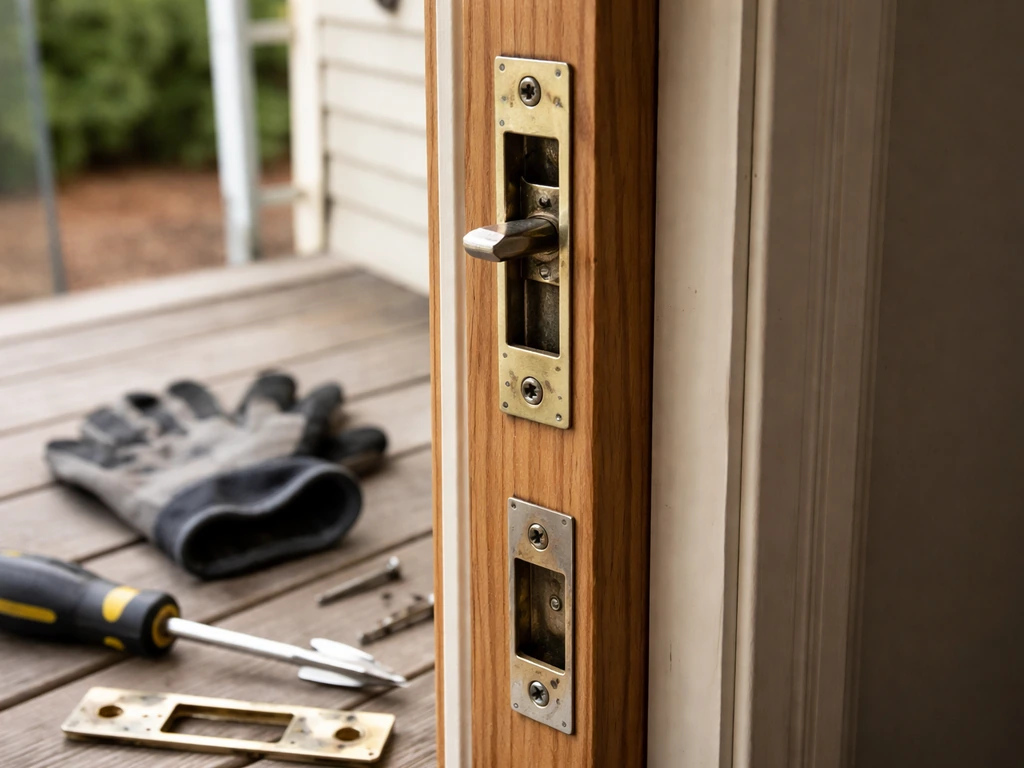
If the door slides and closes fine but the lock won't catch, the latch and the strike plate in the door frame are out of alignment. This is almost always caused by the door sitting too low. Raising the rollers as described above often fixes it immediately. If the roller height is already correct and the latch still misses the strike, loosen the screws holding the strike plate and shift it slightly up or down until the latch engages cleanly, then retighten. If the latch handle itself is broken, stiff, or won't return to position, the lock mechanism needs replacement. Most are held in by two or three screws and swap out in under 20 minutes with a matching replacement part from the door manufacturer.
Replacing worn components: rollers, tracks, weatherstripping, and locks
Replacing rollers
If the door still drags after cleaning and adjustment, or if you can hear or feel grinding from the bottom of the door, the rollers are likely worn or seized. To replace them, you'll need to remove the door from the track. Have a second person help with this since sliding glass door panels are heavy. Lift the door straight up into the upper track, tilt the bottom edge outward, and lower it out. Lay it flat on a padded surface. On most doors, the roller assembly is held by one or two screws on the bottom rail. Remove the screws and pull out the old roller assembly. On some Pella models, you'll also remove a plastic protector covering the adjusting hole before the roller can slide out. Match the replacement roller exactly by brand, model, and wheel diameter before buying. Install the new roller, reinstall the door by hooking the top into the upper track first, then swinging the bottom in, and adjust as described above.
Fixing bent or damaged tracks
Minor track dents can be carefully straightened with pliers and a block of wood to protect the track surface. Work slowly and check roller fit after each adjustment. If the track is cracked, corroded through, or bent in multiple places, replacement is the right call. Track sections are available from door manufacturers and most home improvement stores, though cutting and fitting them correctly takes more patience than most other repairs here.
Replacing weatherstripping
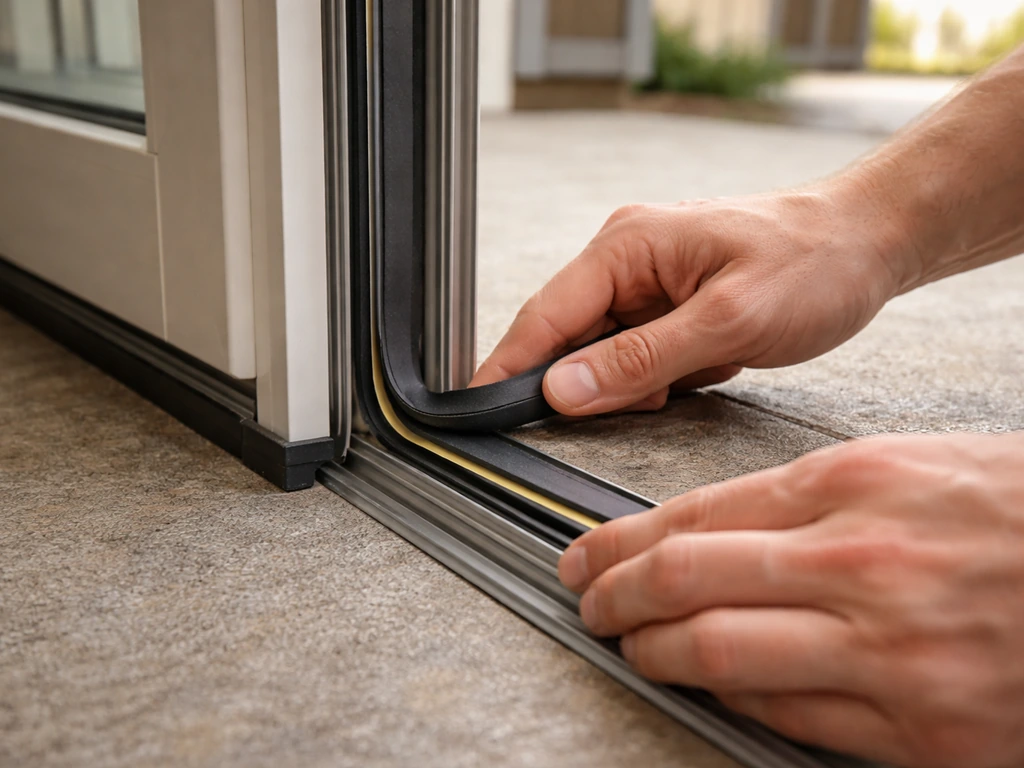
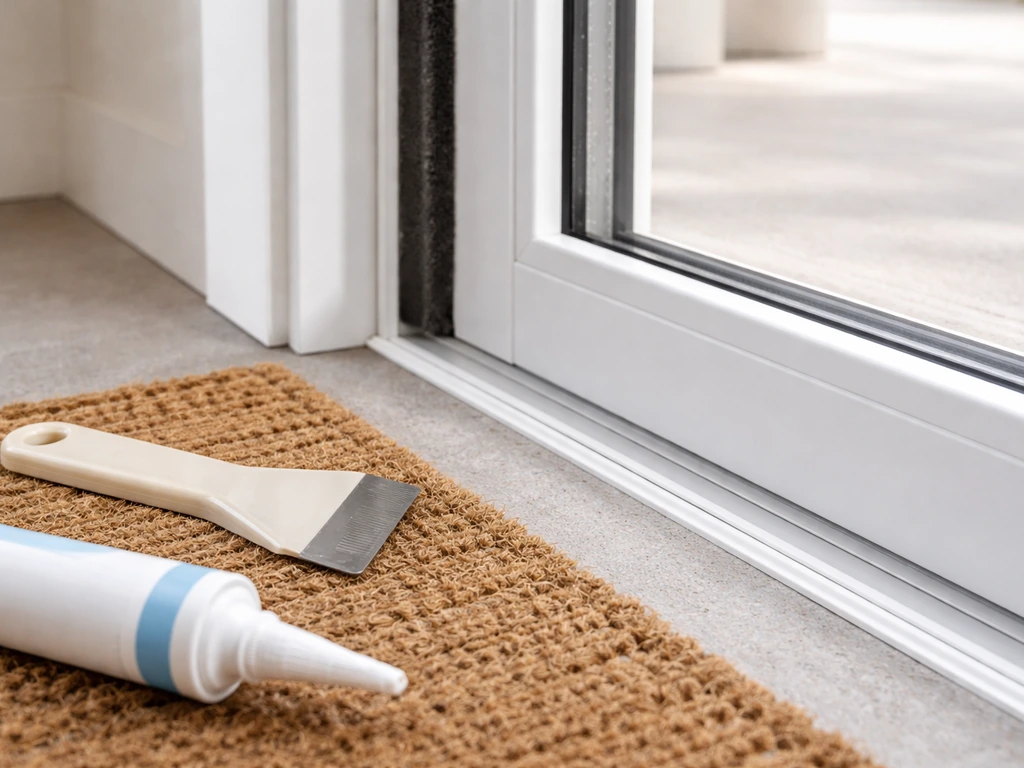
Drafts along the edges of a patio door almost always mean the weatherstripping has worn out. If you suspect a leak, check the weatherstripping and seals first, then follow the door alignment and track steps described earlier. Check it annually and plan to replace it if it's compressed flat, cracked, or has gaps. To remove old weatherstripping, pull it out of its channel (most is friction-fit or adhesive-backed) and clean the channel thoroughly. Measure the lengths you need before cutting the new strip. Press the new weatherstripping firmly into place, starting at a corner and working around. For foam tape types, make sure the door frame is dry and clean before pressing the adhesive side down. Test the door after installation to confirm it closes snugly without being hard to shut.
Replacing the lock mechanism
Patio door locks are fairly standard. Remove the interior handle/lock assembly by taking out the mounting screws, disconnect the linkage rod if there is one, and swap in the matching replacement. The strike plate on the frame side may need minor adjustment to align with the new latch position. Always test locking and unlocking several times before considering the job done.
Screen door repairs vs. sliding glass door repairs
Screen doors and sliding glass doors share the same basic track-and-roller concept, but they're lighter, more flexible, and easier to work with. The roller wheels are smaller, the frames are usually aluminum, and the whole door can typically be removed and reinstalled by one person without much effort.
Removing and reinstalling a screen door
To remove a sliding screen door, hold it firmly, lift up to compress the bottom rollers, and tilt the bottom edge outward to clear the bottom track, then lower it free. Before reinstalling, vacuum the bottom track thoroughly since debris is the most common reason screens feel sticky or jump off track. To reinstall, hook the top wheels onto the upper track first, then swing the bottom in and lower the bottom rollers onto the lower track rail. Most screen doors have a roller adjustment screw on the bottom rail. Turn it clockwise to raise that corner, counterclockwise to lower it, until the door rolls smoothly without gaps at top or bottom.
Replacing screen rollers
Screen door rollers wear out faster than glass door rollers because they're smaller and lighter. If the screen is hard to slide even on a clean track, pop the door off and inspect the wheels. If they're cracked, flat-spotted, or don't spin freely, replace them. Match the roller type from the manufacturer before buying since screen roller dimensions vary significantly between brands and models. Installation is straightforward: loosen the adjustment screw, slide the old roller out, press the new one in, and retighten.
Fixing damaged screen mesh
Small holes in screen mesh can be patched with a patch kit from any hardware store. For tears larger than a few inches, or if the mesh is sagging or full of holes, it's better to re-screen the entire panel. Pull out the rubber spline that holds the mesh in the frame channel, remove the old mesh, cut new mesh slightly larger than the opening, press it into place, and re-install the spline with a spline roller tool. It takes about 30 minutes and costs a few dollars in materials.
| Issue | Screen Door Fix | Sliding Glass Door Fix |
|---|---|---|
| Hard to slide | Clean track, adjust or replace small rollers | Clean track, adjust or replace heavy-duty rollers |
| Off track | Lift, tilt out, reinstall top-first | Requires two people; heavier procedure |
| Drafts | Check frame fit and brush seals | Replace weatherstripping; adjust rollers for even gap |
| Mesh/glass damage | Patch or re-screen mesh panel | Call a glass professional |
| Roller replacement | One person, 20-30 minutes | Two people recommended, 45-60 minutes |
How to keep the door working well long-term
Most patio door problems are caused by neglect, not age. A consistent maintenance routine keeps everything running smoothly and catches small issues before they become expensive ones.
Cleaning and lubrication schedule
Clean the tracks every three to six months, more often if you live somewhere dusty or near the ocean. Vacuum loose debris, scrub with a mild cleaner, dry thoroughly, then apply a dry silicone spray to the track surface and roller contact points. Don't skip the drying step since lubricant applied over damp grime just turns into a paste that makes things worse. Wipe off any excess spray so it doesn't attract more dirt.
Roller and alignment checks
Once a year, check that the door still sits level by looking at the gap between the door edge and the frame. It should be even top to bottom. If one corner has dropped, make a small clockwise adjustment to that roller's screw before the door starts dragging and the track gets scored. Catching roller wear early is much cheaper than replacing a gouged track.
Seasonal weatherproofing
Check your weatherstripping every year, ideally in early fall before heating season. Press on it with your finger: if it doesn't spring back or has gaps, replace it. A well-sealed patio door makes a noticeable difference in heating and cooling costs. Also check the door's threshold seal and the top sweep if it has one. These wear independently of the side weatherstripping and are often overlooked. If drafts are coming through even with good weatherstripping, adjust the rollers so the door presses more firmly into the frame seals when closed.
If you're dealing with something more specific, like a door that's dropped significantly on one side, a leaking frame after rain, rotted wood at the base, or a frame that's visibly out of square, those issues each have their own repair path that goes deeper than this general guide covers.
FAQ
How can I tell whether the problem is still the track or it’s the rollers?
After cleaning, the door should feel smooth at multiple points along the travel, not just near the center. Open it fully, close it slowly, then partially open to the same spots again. If the sticking happens only at one end, it usually points to a localized track problem or debris lodged near that roller, not general lubrication.
What lubricant should I use, and what should I avoid when repairing a patio door?
Do not use WD-40, motor oil, or any wet oil. The recommended dry silicone spray works because it reduces friction without turning grime into paste. If the door already has oily residue, wipe the track and roller contact areas with a dry cloth first, then reapply silicone only after the surfaces are fully dry.
Why does my patio door go back out of alignment even after I adjust the rollers?
If the door drops again after you adjust the rollers, check for a more fundamental cause: worn rollers, a dented or shifted track, or a frame that has moved after water exposure. Persistent failure to hold adjustment is a sign the roller or track condition is beyond a simple height tweak.
How do I make sure I buy the correct replacement rollers for my patio door?
Measure the roller wheel diameter and match the roller assembly by brand and model, not just “same style.” Even when two rollers look similar, wheel diameter and axle shape can differ, which leads to gaps, uneven contact, or premature wear.
What should I check if the door makes grinding noises after cleaning?
If you can hear rubbing but the door is not obviously misaligned, start by checking the bottom track for dents, high spots, or corrosion. If the track has multiple bent areas or is cracked, straightening often makes the fit worse, replacement is usually the smarter fix.
When adjusting rollers for latch problems, how much should I move them?
A common mistake is adjusting one roller corner, then forcing the door to latch. Make incremental changes, then re-test smooth travel and latch engagement. If the door is closing hard, you may be raising the corner too much, which can cause the latch to miss or the weatherstripping to bind.
Can uneven gaps mean the frame is out of square, not just the door rollers?
Yes, uneven gaps can be caused by a frame that is out of square, not just roller height. Look along the entire perimeter and compare the gap at top and bottom corners. If gaps change differently across the door, you may need frame repair assessment instead of further roller adjustment.
Is it ever safe to remove and reinstall a cracked patio door glass panel as a DIY fix?
If the glass is cracked or the panel has shifted, do not reinstall or “test” it by moving the door. Tempered sliding door glass is dangerous and extremely heavy, and a mis-seated panel can also damage tracks and rollers, so use a glass professional.
Do I need to replace the threshold before aligning a door that sits on rotted wood?
For threshold issues, the first decision is whether the rotted wood is localized to the threshold strip or extends into the surrounding frame. If the wood under the door is soft or missing, you typically need to replace the threshold or damaged wood section before doing roller alignment, otherwise the door will keep dropping.
How do I confirm weatherstripping is installed correctly after repair?
Yes. After weatherstripping replacement, test closure force and sealing without forcing the handle. If the door becomes very hard to shut, double-check that the strip thickness matches the original and that you did not install it twisted or with gaps at corners.
Why am I still getting drafts after replacing the side weatherstripping?
If you notice drafts at only the top or only the sides, do not assume side seals. Check the top sweep (if your door has one) and the threshold seal separately, because they compress differently and often wear out on a different schedule.
My patio door lock feels stiff. Should I lubricate the mechanism or replace it?
If the lock handle feels gritty or fails to spring back, lubrication can temporarily mask a problem but does not fix broken internal parts. When the latch mechanism is stiff or the handle does not return, replace the lock assembly and then fine-tune the strike plate position as needed.
Next Article
How to Seal a Patio Door: Step-by-Step DIY Guide
Step-by-step DIY guide to seal a sliding patio door, stop drafts, seal frame gaps, and test for air leaks.