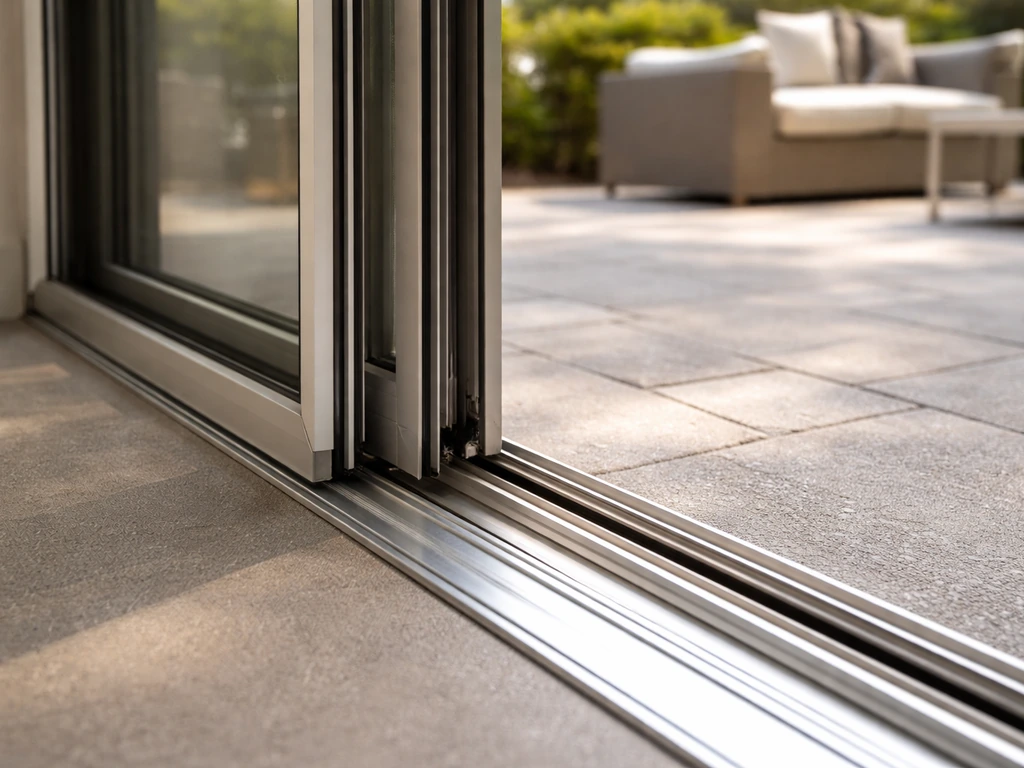
The most reliable way to keep a patio door open in wind is a combination of the right hold-open hardware and a well-maintained door that actually sits in its track correctly. A rubber wedge or purpose-built door stop handles most situations immediately, but if your door still drifts shut or rattles like crazy, the real fix is usually a roller adjustment and a clean track. Both things matter, and this guide covers both.
How to Keep Patio Door Open in Wind Safely

Jamie Archer
9 Jul 2026
Safety and risk check before you prop anything open
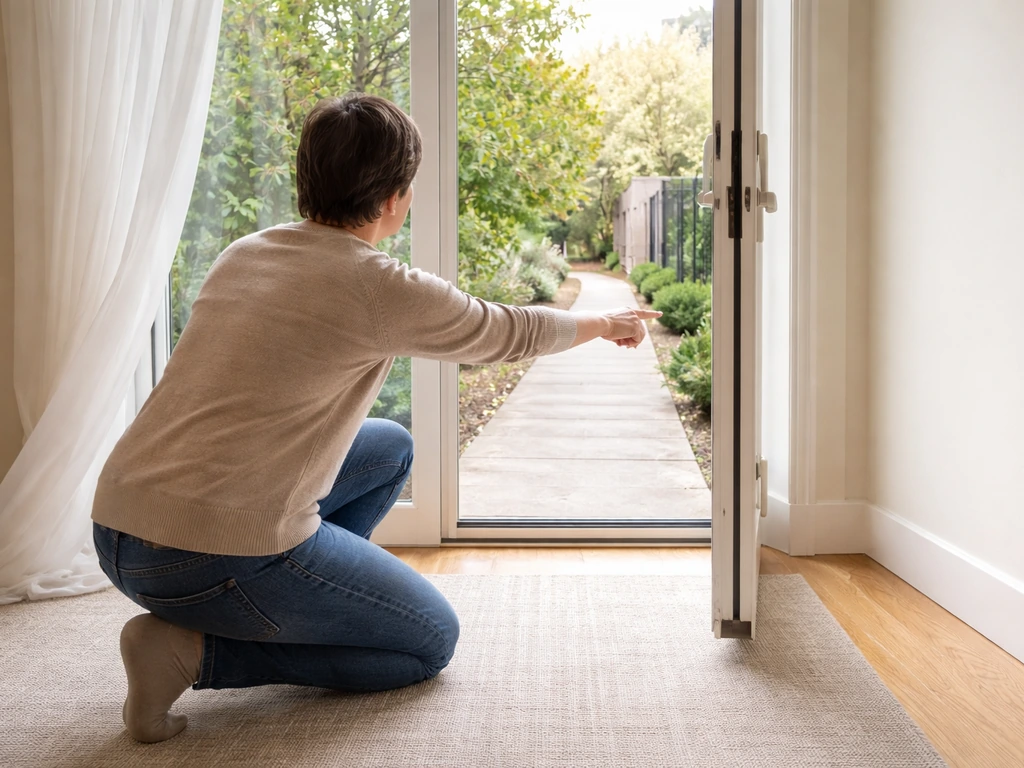
Keeping a patio door open in wind is not automatically a bad idea, but there are a few things worth checking before you wedge it in place. First, know your egress situation. If the door is on a fire-escape or second-exit path, wedging it open could be a problem in an emergency because the door needs to be closeable fast. This is less of an issue for a residential back patio than a commercial or multi-unit building, but it is worth being aware of.
- Check that the door frame and surrounding trim are in good condition. A wind gust hitting a door held open by a small wedge puts lateral stress on the door and frame. If your frame is already damaged or your rollers are worn, that stress can worsen existing problems.
- Never permanently modify the latch, lock, or track to hold the door open. Temporary stops and wedges are fine. Bending hardware or jamming something into the locking mechanism is not.
- If you have kids or pets, make sure whatever hold-open method you use cannot be bumped loose, causing the door to swing hard and fast.
- Remove wedges and stops whenever you are not actively present near the door. A door held open and unattended in a windstorm can become a projectile hazard.
- If your patio faces a direction that funnels wind directly at the door (common with houses that have a corridor effect between structures), consider how much the door will actually move if the wedge gets bumped. A heavier door stop or a strap limiter is a smarter choice in those conditions.
The bottom line on safety: use purpose-built hardware, keep it temporary, and remove it when you leave. That covers 99 percent of normal residential situations.
The best hardware for holding a patio door open in wind
Not all door stops are equal when wind is involved. A standard plastic wedge that works great on a calm day can vibrate loose the moment a breeze hits. Here is what actually works and when to use each option.
Rubber wedge door stops
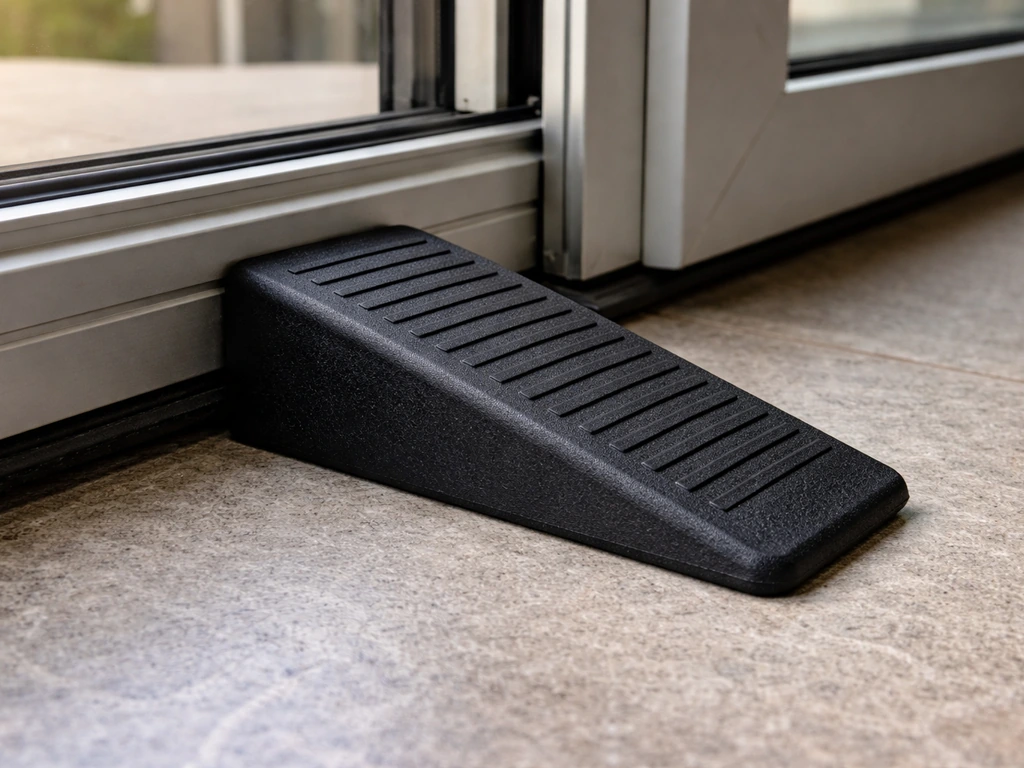
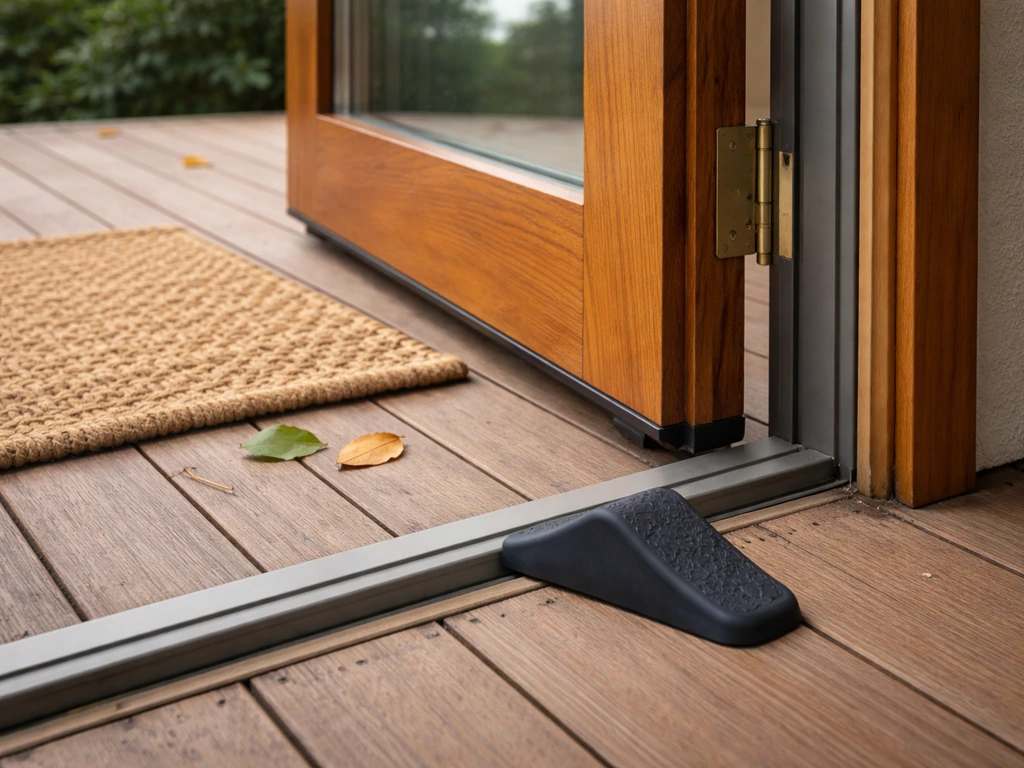
A heavy rubber wedge is the fastest and cheapest fix. The non-skid base grips the floor and the door base simultaneously, and the flexibility of rubber means it absorbs vibration rather than bouncing out of position. Look for options marketed as super wedges or heavy-duty rubber door stops. The National Marker super wedge style (a flexible rubber wedge that holds at any position without mounting) is a good example of what you want. Slip it under the bottom rail of the sliding door panel or behind the door if you have a swinging screen. It takes about five seconds to deploy.
Purpose-built hold-open door stops
Hold-open door stops (sometimes sold as kickdown stops, plunger stops, or hook-style hold-opens) are designed specifically to keep a door in the open position rather than just limiting swing. These mount to the door itself or to the floor and are far more secure than a wedge in higher winds. For a sliding glass door that you open to the same position every day, a floor-mount stop with a rubber tip that catches the door edge is a clean, reliable solution. Doorware-type retailers carry these in both surface-mount and recessed styles.
Strap limiters and cord stops
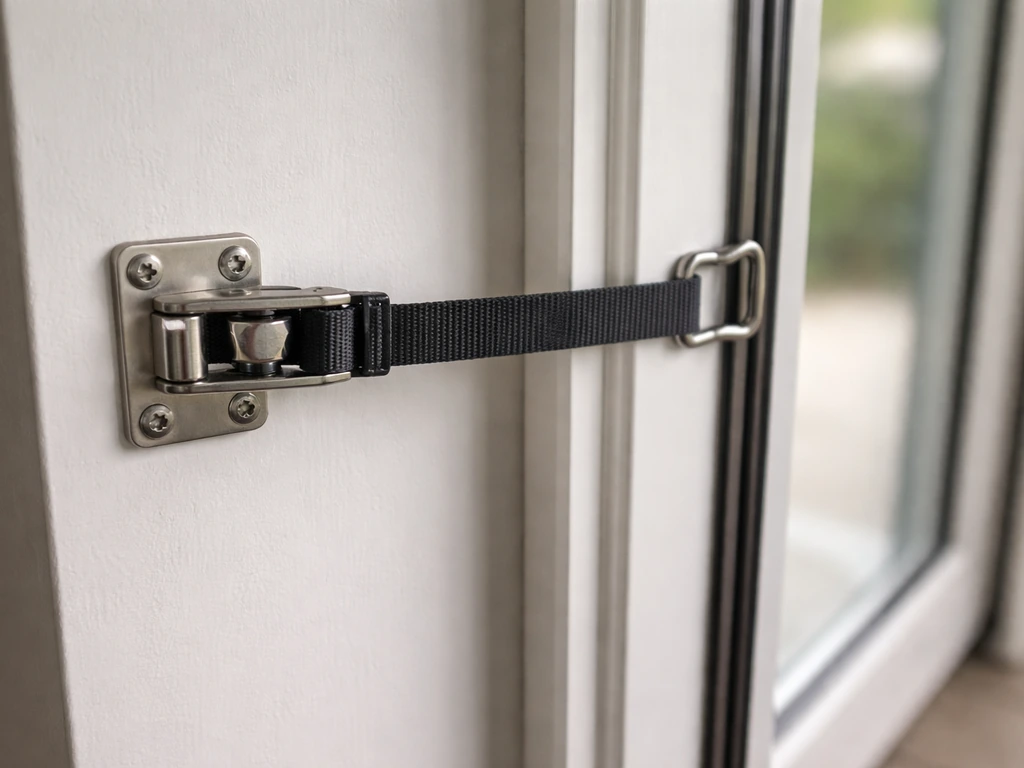
A strap or cord limiter lets you set exactly how far the door opens and physically prevents it from being blown further or slammed back. You anchor one end to the door frame and the other to the door itself, and the strap goes taut at whatever length you set. This is a particularly smart option if your concern is the door being caught by wind and swung hard against a wall or fence, which is a real way to crack glass or bend a screen frame. Some homeowners use a simple carabiner and nylon strap rigged between anchor points. It is not the most elegant solution, but it works and costs almost nothing.
Engineered hinge and closer hardware
For swinging-style patio doors (French doors or hinged screen doors), there are engineered hold-open hinges and door closer units with a back-check feature. If you are dealing with a swinging door that keeps moving, the hold-open hinge and closer options below are the same kind of approach as learning how to stop patio door swinging open in the long run hold-open hardware choices. The back-check slows and holds the door at a set open angle, preventing the door from being caught by a gust and slammed. If you have a heavy glass French-style patio door that opens outward, this is worth the investment. Budget around $40 to $100 for a decent hydraulic closer with back-check, and a couple of hours to install it.
| Hardware Type | Best For | Wind Resistance | Approx. Cost | Mounting Required |
|---|---|---|---|---|
| Rubber super wedge | Quick daily use, sliding or screen doors | Moderate (calm to light gusts) | $5-$15 | No |
| Hold-open floor stop (kickdown) | Consistent open position, daily use | Good | $15-$40 | Yes (floor) |
| Strap/cord limiter | Windy locations, preventing slam damage | High (physically limits travel) | $10-$25 | Yes (door + frame) |
| Hydraulic closer with back-check | Heavy hinged patio/French doors | High (controlled motion) | $40-$100 | Yes (door + frame) |
Stopping drafts and rattle while still getting airflow
Rattling is usually a sign that the door panel has some play in the track, meaning it can vibrate back and forth a few millimeters under wind pressure. This is a maintenance and alignment issue as much as a hardware one. But there are also things you can do right now to reduce rattle without a full adjustment.
- Position the door at a point where the panel naturally rests against the door stop or weather stripping on one side. Many sliding doors have a slight natural resting position partway open where the panel is least likely to vibrate.
- Use a foam or rubber door gasket or strip along the door frame edge where the open panel sits. This absorbs vibration and seals the small gap that causes draft noise.
- For screen doors, check that the screen is fully seated in both the top and bottom tracks. A screen that is even slightly out of track will rattle intensely in wind.
- If airflow is the goal but rattle is the problem, try opening the door to a wider position where the panel is braced against the stop hardware rather than floating in the middle of the track.
- For drafts coming around a partially open sliding glass door, a draft blocker or foam backer rod pressed into the open gap on the latch side can reduce whistling noise without blocking airflow through the screen.
It is worth noting that if stopping the door from swinging closed in wind (rather than just staying open) is your main concern, that is a slightly different problem covered in the troubleshooting section below. If your patio door is currently stuck open and you need to unfreeze it, follow the unfreezing steps for your door type so you do not damage the track or seals how to unfreeze patio door.
Roller and track adjustments that make a real difference
A door that drifts shut or vibrates closed in wind almost always has a track or roller issue underneath the hardware problem. If you want the patio door to close more reliably, check the track, rollers, and latch so it can fully engage instead of drifting or rattling how to close patio door. If your door does not sit evenly in the frame, wind can push it along the track far more easily. Fixing the roller alignment is the real long-term solution.
How to inspect and adjust your rollers
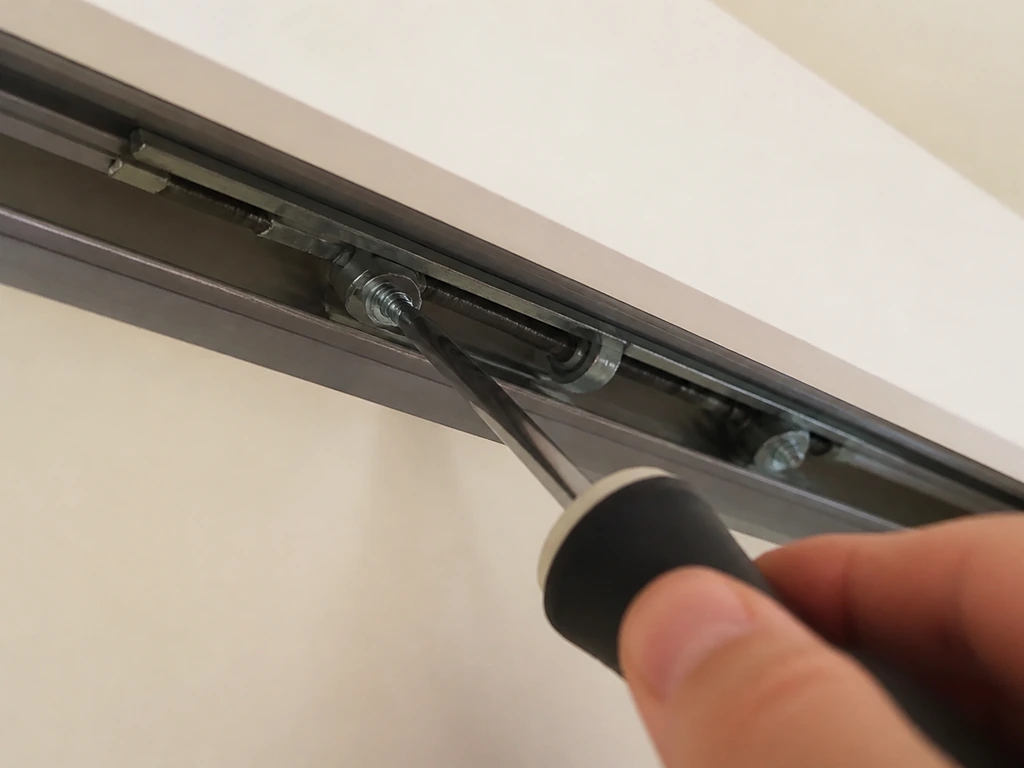
- Open the door fully and look at the gap (called the reveal) between the door panel and the frame on the sides and top. If the gap is wider at the top than the bottom, or uneven side to side, the rollers need adjustment.
- Find the roller adjustment screws. They are usually at the bottom of the door panel, on each side, accessible from the inside face of the door. You may need to remove a small plastic cover cap to see them.
- Use a Phillips or flathead screwdriver (check your door brand's specs) and turn the screw clockwise to raise that corner of the door, or counterclockwise to lower it. Turn in small increments, about a quarter turn at a time.
- After each adjustment, slide the door open and closed to check how it moves and re-check the reveal. You want an even gap all the way around.
- Once the gap is even, test the latch. If the latch or keeper does not align after a roller adjustment, loosen the keeper screws, slide the keeper plate up or down until the latch catches cleanly, and re-tighten.
- If the adjustment screws will not turn (common with older doors where the screw slots are rusted or stripped), apply penetrating oil, wait 10 minutes, and try again. Seized adjustment hardware is a common reason doors stay misaligned for years.
Track cleaning: do this first, actually
Before you touch the roller screws, clean the track. Stanek notes that the sliding-window and patio-door tracks (including the rollers and balancers) should be cleaned regularly to prevent rattling and sticking tracks (and rollers/balancers) should be cleaned regularly. Debris, dirt, and hardened grime in the bottom track raises the door slightly off its intended running surface, which changes the effective roller height and can cause the door to sit crooked. Use a stiff brush, a vacuum, and then a damp cloth to clean the full length of the bottom track. Dry it, then apply a silicone-based spray (not WD-40, which attracts dirt) to help the door slide smoothly. You will be surprised how often a track cleaning alone fixes a drifting or rattling door.
When to replace rollers instead of adjusting them
If you clean the track, adjust the screws, get an even reveal, and the door still drifts or rattles within a few weeks, the rollers themselves are probably worn. Worn rollers are flat-spotted or cracked and no longer roll smoothly. Replacement rollers for most standard sliding patio door brands cost $10 to $30 for a pair, and replacing them is a genuine DIY job that takes about an hour. You remove the door panel, pop out the old roller carriers from the bottom edge, and snap or screw in the new ones.
Screen door vs. sliding glass door: what's different and what breaks
Sliding glass doors and screen doors share the same general track-and-roller logic, but they have different failure points when it comes to wind.
Sliding glass doors
The main wind-related issues on a sliding glass door are drift (wind pushing the heavy panel along the track) and rattle (the panel vibrating in the frame). If freezing weather is making your patio door hard to move, you will want to tackle ice buildup and add cold-weather weatherstripping before you start adjusting tracks freezing weather patio door. Drift usually comes from roller misalignment or a latch that does not fully engage. Rattle usually comes from a worn weather strip or a panel that sits too low and has excess play. The glass panel is heavy enough that it takes a significant gust to move it, but if the latch mechanism is worn or the keeper is misaligned, even moderate wind can push it off the stop point. Check the latch throw (the distance the latch bolt extends) and replace the latch assembly if it is visibly worn or no longer catches reliably.
Sliding screen doors
Screen doors are much lighter and far more susceptible to wind movement. The most common failure points are small plastic rollers that flatten or crack (causing the door to drag and then pop out of track), track debris that raises the bottom of the door off its proper running line, and latches that no longer have enough spring tension to catch. DoItYourself.com notes that sliding screen doors commonly fail at small plastic rollers, track debris that lifts the door off its running line, and latches that lose enough spring tension to catch small plastic rollers that flatten or crack. Screen door latches are often just a simple spring-loaded hook or pin, and when the spring weakens, the door will not stay closed or stay at a set position.
For retractable screen doors, wind resistance is an engineered feature rather than something you can easily DIY. Andersen, for example, designs their retractable screens to release from the track under pressure specifically to protect the mesh and retracting mechanism. That means trying to wedge or hold a retractable screen fully open in wind can actually damage it. If you have a retractable screen and wind is a constant issue, the right move is to keep the screen in the retracted position during high-wind periods, not to force it open and try to hold it there.
For standard sliding screen doors that lack a functional latch or keep-closed feature, aftermarket universal latch kits are available at most hardware stores for under $15. Milgard and other manufacturers also offer brand-specific screen lock and roller kits that are worth checking if you have a name-brand door.
| Issue | Sliding Glass Door | Sliding Screen Door |
|---|---|---|
| Wind drift along track | Roller misalignment or worn latch | Light weight makes it easy to drift; check rollers and latch spring |
| Rattle in frame | Worn weather strip, door sitting too low | Screen loose in track, bent frame, or debris in track |
| Blown out of track | Rare; usually needs significant impact | Common with worn plastic rollers or debris in track |
| Latch won't hold open position | Worn latch throw or misaligned keeper | Weak latch spring; replace with aftermarket kit |
| Hold-open hardware options | Floor stop, strap limiter, rubber wedge | Rubber wedge, strap limiter; avoid forcing retractable screens |
Step-by-step setup for today, plus what to do if it still blows shut
Here is how to approach this practically, starting with what you can do right now and working toward longer-term fixes if the first steps do not hold.
Immediate setup (do this today)
- Clean the bottom track with a stiff brush and vacuum. This alone often reduces drift and rattle significantly.
- Spray silicone lubricant into the clean track and along the top track. Wipe off excess.
- Slide the door to your preferred open position and place a heavy rubber wedge under the bottom rail of the door panel. Make sure it is snug and the door cannot move over it.
- If you want a more secure hold, add a strap limiter anchored to the door frame to physically cap how far the door can travel in either direction.
- Test by pressing the door firmly in both directions. It should not move more than a few millimeters. If it does, use a heavier wedge or add the strap.
If the door still drifts or blows shut after hardware is in place
- Check the reveal (the gap around the door panel). If it is uneven, do the roller adjustment described earlier. An uneven door sits crooked in the track and is much easier for wind to push.
- Inspect the latch and keeper. If the latch bolt does not extend fully, or the keeper plate is bent or misaligned, the door has no natural stop point and will drift. Adjust the keeper plate or replace the latch assembly.
- Check the bottom rollers directly. Lift the door slightly at the bottom (have a helper hold the top steady) and look at the rollers. If they are cracked, flat-spotted, or seized, replace them before anything else.
- Look at the weather stripping along the door frame and the door panel edges. If it is compressed flat or missing sections, the door panel has extra play in the frame and will rattle and drift more easily. Replace worn weather strip.
- If you have a screen door and the roller adjustment screws are corroded and will not turn, apply penetrating oil and wait. If they are stripped, you will need to replace the roller carriers. This is about a $15 part and a 45-minute job.
When the problem is bigger than a DIY fix
If you have done the track cleaning, roller adjustment, latch alignment, and weather strip check, and the door still will not stay put or rattles badly in any wind, the frame itself may be out of square or the door panel may be warped. A visibly bent or twisted door panel cannot be adjusted into proper alignment with roller screws alone. At that point, a door replacement or professional frame assessment is the honest next step. It is worth getting one or two quotes before assuming the worst, since sometimes a frame can be re-shimmed by a pro in a single visit.
One more thing worth knowing: if your concern is more about the door swinging shut and latching accidentally while you are in and out, that is a slightly different scenario from wind-driven drift. The latch tension and handle mechanism are the focus there, not roller alignment. Similarly, if your patio door is a French-style or hinged door rather than a slider, the hold-open hardware choices are different and the hinge-based solutions described earlier become your primary option.
FAQ
What’s the safest way to keep a patio door open during high winds if I need to access it frequently?
Use a purpose-built, heavy-duty rubber wedge or a mounted hold-open stop, and keep it temporary. Before leaving the house, remove the wedge and test the door closes fully, so you do not end up with a door that cannot latch properly during the next gust.
How do I choose between a wedge, a floor-mounted hold-open stop, and a strap for wind?
If you only need a quick, occasional hold, start with a heavy rubber wedge. If the door needs to stay at the same open position in repeated high winds, use a floor-mount stop with a rubber tip. If you’re specifically worried about the door being blown farther and striking a wall or fence, use a strap or cord limiter so the movement cannot exceed your set angle or opening length.
My wedge keeps sliding out in gusts, what should I check first?
Confirm the wedge is gripping both the floor and the door bottom edge at the same time, not just one surface. Also re-check track cleanliness, because debris in the bottom track can lift the door slightly, reducing the wedge’s grip and letting vibration walk it out.
Can I wedge a retractable screen door fully open in wind?
It’s usually a bad idea. Retractable screen systems are designed to release under pressure to protect the mesh and mechanism, so forcing it open with a wedge or hold-open method can cause damage. If high winds are common, keep the retractable screen retracted during those periods.
Do I need to worry about fire egress if I wedge a patio door open?
Yes, if the door is part of a required exit path. Wedges can slow or prevent fast closing in an emergency. For residential back patios this is often less critical, but in multi-unit or commercial settings, verify that your door remains closeable immediately.
What’s the difference between wind preventing a sliding door from closing and wind causing it to slam or swing hard?
Drift and rattle are about the door moving along the track or vibrating in place, fixable with track cleaning, roller alignment, and latch engagement. Slamming or hitting surfaces happens when the door is allowed to move beyond your intended open position, which is better controlled with a strap/cord limiter or a properly installed hold-open stop.
How can I reduce rattle immediately without adjusting rollers?
Clean the entire bottom track thoroughly first, then lubricate with a silicone-based spray (not WD-40) to improve sliding. If the door sits slightly low or uneven due to grime buildup, cleaning alone often reduces rattle right away.
If the door still rattles after cleaning and roller adjustment, how do I tell whether rollers are worn?
Look for flat-spotted, cracked, or visibly damaged rollers, and watch for continued vibration after the latch engages normally. Worn rollers typically cause a recurring problem within weeks even after alignment, which is the usual trigger for roller replacement.
What latch check should I do for a sliding glass door that drifts closed in wind?
Verify the latch throw, meaning how far the latch bolt extends when the door is closed. If the keeper is misaligned or the latch is worn and not catching deeply, wind can push the panel off the stop point even when the door looks closed.
Do screen doors need different fixes than glass patio doors for wind issues?
Yes. Screen doors are lighter and more sensitive to wind, so common causes include cracked or flattened plastic rollers, track debris that lifts the door off its running line, and weak spring tension in simple latches. A glass-door solution like roller alignment may help, but check screen-specific roller and latch condition first.
Is there a rule of thumb for how long to leave a wedge in place?
Keep it truly temporary. Use the wedge only while you’re actively using the door, then remove it. After you remove it, test the door closes and latches securely, because a misaligned door can still be moved by wind once the wedge is gone.
What should I do if the frame seems out of square and wind keeps pushing the door off its hold position?
If you have cleaned the track, adjusted rollers, ensured even alignment, and the problem persists, the frame may be out of square or the panel warped. In that case, a pro frame assessment or a second opinion is often more cost-effective than repeatedly re-adjusting hardware that cannot correct the underlying geometry.
Next Article
How to Keep a Patio Door Open: Fix Sliding and Screen Doors
Step-by-step fixes to keep sliding and screen patio doors open: clean tracks, adjust rollers, stop sagging, disengage la